The modular Nex Band makes smart alerts more customizable than ever

It does a little bit of everything, but is a world of possibilities too much to handle?

(credit: Valentina Palladino)

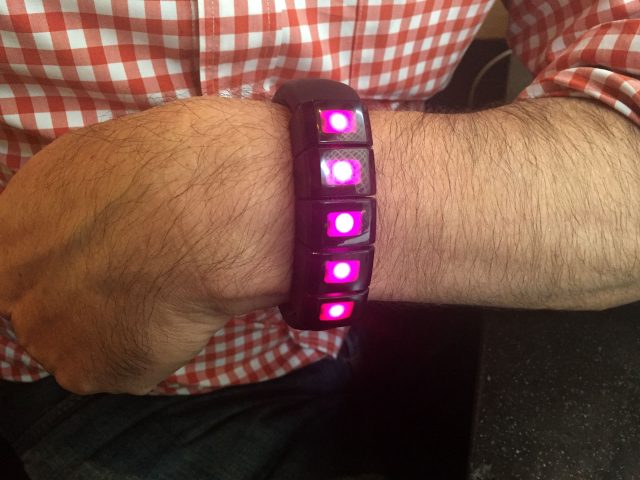
We're still trying to figure out what we want our wearables, particularly wristbands, to do for us. There are a number of devices including some smartwatches and fitness trackers that are truly multipurpose, but we have yet to see what features will stick in the long run. Now, a company called Mighty Cast is taking a slightly different approach to smart wristbands with its Nex Band—it's made to do pretty much anything that an existing fitness tracker or smartwatch can already do. It monitors activity and receives smartphone alerts, but you can personalize notifications and actions as much as you want by "hacking" its small, removable modules, creating numerous possibilities for new features.

The Nex Band has been floating around for the past couple years, but it has the chance to entice the most enterprising wearable users by giving them more personalization options than any other wristband. Mighty Cast bills it as a hackable smart band because you can assign functions to each of its five "mods" that are all independent from each other and can relate to different things. You might tap on of your mods to turn on your living room lights, while the mod next to it flashes when you receive an e-mail from your boss. A nearly infinite number of functions can be customized from within the Nex Band's companion app, and it's also compatible with all of IFTTT's control combinations.

When I sat down with Mighty Cast's CEO Adam Adelman to learn more about the Nex Band, I was initially confused as to how it worked. However, you don't need to be a developer or have special tech skills to "hack" the band—it's all done from the companion app. Once you choose which mod you want to customize, a basic hack has a two-step "when X happens, do Y" formula. It's really similar to how IFTTT sets up its automated actions by integrating social media, smartphone alerts, IoT products, and other devices to work more for you. For example, you could program a hack that say "when I double-tap, play My Workout Playlist." Then when you completed that action on that mod, your smartphone will start to play that particular playlist.

Read 6 remaining paragraphs | Comments
The science behind the insane popularity of “react” videos on YouTube

Controversial theory may explain why we love watching people experience stuff.

The video that got me hooked on Five Nights at Freddy's. | Source: YouTube, REACT

Recently I've fallen in love with a horror game I've never even played. It's called Five Nights at Freddy's, and I discovered it through a series of YouTube videos. I watched as four to five players sat down at their PCs and started from the same point in the game. All I could see were their faces. Their brows furrowed, their faces wrinkled as they winced at false jump-scares, their hands flew over their mouths when some terrifying animatronic popped out and killed them—and I did all the same things along with them. I could feel the anxiety showing on their faces. I felt the weird excitement and exhilaration they got from being scared, even though I never saw a single frame of Five Nights. The videos were so much fun that I wanted more. But I didn't download the game. Instead, I searched for more videos of people reacting to things.

Videos of people reacting to games—or commercials, or the deaths of legendary pop stars, or old-school computer software—are incredibly popular online. Lots of people make them, but the reigning champs are comedy duo Fine Brothers. Their various YouTube channels have over 20 million subscribers, and their channel devoted to nothing but reaction videos—simply titled "React"—has over 903 million views.

Recently the Fine Bros got into hot water when they tried to trademark the word "react". It was part of their React World project, in which people pay the duo to create reaction videos. The backlash was swift and loud, and the Fine Bros backed off. Too many people are invested in making their own react videos to allow just one pair of creators to own the idea. React videos have tapped into some part of our nature that relishes watching other people experience stuff.

Read 11 remaining paragraphs | Comments

Fitbit Blaze, Alta devices sell over 1 million units each in first month

The surprise success of the new devices may calm investors’ fears (for now).

(credit: Valentina Palladino)

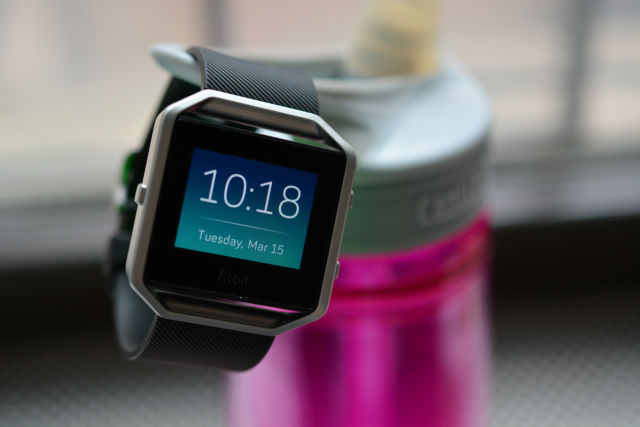
Fitbit's newest trackers have made quite an impression with customers, despite only being available for less than a month so far. The company announced that it has shipped over 1 million units of the $200 Blaze smart fitness watch and 1 million units of the $130 Alta bracelet-esque tracker since they became available in early March.

This comes as a surprise since most people, particularly Fitbit investors, were confused when the Blaze was announced at this year's CES. Although it was never meant to be an Apple Watch killer, it certainly looked similar at first glance and that raised a lot of eyebrows. Immediately after the Blaze launch, Fitbit stock dropped 18 percent.

The Alta was announced shortly after the Blaze as a more stylish alternative to the existing Fitbit Charge. In terms of features, however, the Alta and the Charge have few differences, and their prices are identical at $130. At first it was unclear where these devices fit into Fitbit's llineup, but if these sales are any indication, it appears customers are embracing the new devices.

Read 2 remaining paragraphs | Comments

Amazon expands Dash with Red Bull, Trojan, Starbucks, and more

Get condoms, energy drinks, and granola bars with the touch of a button.

Source: YouTube, Amazon

A year after Amazon announced Dash, the small buttons intended to make reordering household supplies almost too easy, the company is expanding the program. Amazon announced a slew of new Dash Buttons today, adding brands such as Clorox, Doritos, Red Bull, Slim Jim, and Trojan to the list and tripling its offering of Dash Buttons to more than 100.

When Dash Buttons first came out (around April Fool's Day 2015, leading many to think the idea was a joke), the first ones let customers order mostly household supplies and some food items from brands including Cottonelle, Gillette, Hefty, Kraft, and Maxwell House. According to a statement from Amazon, customers have been asking for more. "We heard loud and clear from customers that they wanted more brands, more categories, and more products in the program," Daniel Rausch, director of Amazon Dash, wrote in the statement.

It seems those customers got their wish—now you can order condoms, chips, coffee, feminine napkins, skincare products, and much more with the additional Dash Buttons. In the past three months alone, Amazon's Dash Button sales have gone up 75 percent according to the retailer; there's no doubt that Amazon is hoping to see those sales spike even higher with these new options.

Read 2 remaining paragraphs | Comments

Acer’s new, premium Chromebook offers up to 14 hours of battery life

Acer’s first all-aluminum Chrome OS notebook features a 14-inch IPS display.

(credit: Acer)

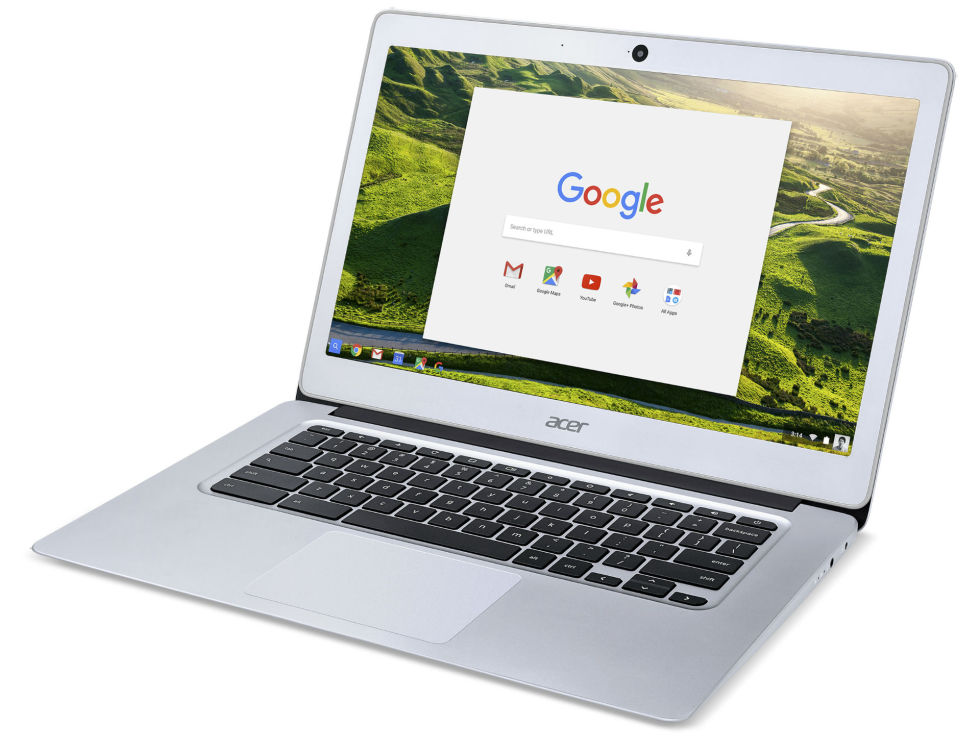
Chromebooks continue to be some of the more affordable laptops available, but many manufacturers are trying to make their cheapest notebooks stand out. Acer just added the Acer Chromebook 14 to its lineup, which addresses two of the bigger issues for Chrome OS users by offering 14 hours of battery life and 4GB of RAM.

First, let's talk about the Chromebook 14's design. This is Acer's first all-metal Chromebook, featuring an aluminum chassis with rounded corners that weighs just 3.42 pounds. The initial images of the Chromebook 14 show a sleek laptop but not necessarily an inspired design. One of the first Chromebooks to look like a MacBook Pro clone was the Toshiba Chromebook 2, and Acer's Chromebook 14 fits that bill as well.

Another first for Acer comes in the laptop's display: it's the company's first Chromebook to sport a 14-inch IPS screen, which is notable as most Chromebooks still suffer from lackluster displays. However, the screen is also a key factor in battery life. The Chromebook 14 is available with 1080p and 1366×768 screen options, and you'll have to get the regular 1366×768 model for the 14-hour battery life. The 1080p model should get at least 12 hours on a single charge.

Read 3 remaining paragraphs | Comments

Xiaomi introduces Mi Ecosystem with new smart rice cooker

The sub-brand will launch a number of other connected devices in the future.

(credit: Xiaomi)

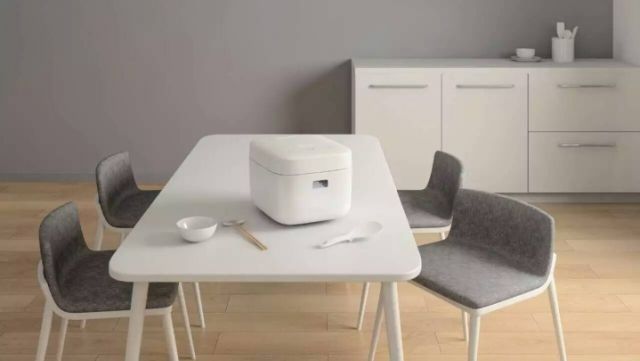
Xiaomi is expanding its horizons, looking beyond cheap yet surprisingly good smartphones and affordable fitness trackers to target the Internet of Things space. The Chinese company announced the Mi Induction Heating Pressure Rice Cooker as the first device in its new "Mi Ecosystem" sub-brand.

The rice cooker is strategic first product. There's no doubt that rice cookers are already crucial kitchen products for many, but according to some reports, Xiaomi CEO Lei Jun wanted to create a Chinese-made rice cooker that could stand up against the more advanced (and expensive) Japanese devices from the likes of Toshiba and Tiger. Enter Xiaomi's smartphone-connected rice cooker, which not only cooks rice via pressure and induction heating but is also much cheaper than its Japanese competitors at 999 yuan (about $150).

Another thing to note is that, like Xiaomi's smartphones, the smart rice cooker features a pleasantly minimalist design which will certainly add to its appeal. In addition to using pressure cooking technology, it comes with a gray cast-iron inner pot which will help the rice cook evenly. Users will be able to scan the barcode on their rice bags so the device can best cook the rice according to brand, type, and origin. The app can currently  identify 200 brands, of rice and that library will be expanded in the future.

Read 1 remaining paragraphs | Comments

Redbox may launch a new video streaming service soon, dubbed Redbox Digital

The DVD rental company could try to secure its own piece of the streaming pie.

Redbox might try its hand at online video streaming again, according to a report from Variety. "Sources familiar with the company’s plans" told the entertainment news site that Redbox is getting ready to launch a new video streaming service called Redbox Digital. One source claims that a beta testing may begin soon.

Details of the Redbox Digital are still nebulous, and the company isn't giving up any more information. A Redbox representative told Variety, “Redbox continually looks for ways to enhance our customer experience. For tens of millions of consumers, Redbox is their source for new release rentals without a subscription. As such, we regularly conduct tests of potential new offerings, that may or may not be brought to market, as part of our ongoing commitment to provide additional value.”

A few design concepts of the service have leaked, showing that Redbox Digital could offer online video rental and purchase options that would be integrated with Redbox's current video offerings. The store would be accessed through Redbox's website through the "Digital" tab, and users could earn "Play Pass" points on each rental or purchase through the company's existing loyalty program. Pricing information isn't certain, but the design renders show different prices for standard-definition video rentals and purchases compared to HD content. Reports also suggest that this service would be integrated into Redbox's mobile apps and compatible streaming devices such as Rokus and Chromecasts, which would make it easier to watch Redbox content from all kinds of devices.

Read 2 remaining paragraphs | Comments

Polar A360 reviewed: Another fitness tracker with smartwatch envy

The $199 tracker is the first with Polar’s own wrist-bound heart rate monitor.

Video shot/edited by Jennifer Hahn. (video link)

At the end of last year, both Garmin and Polar introduced new fitness trackers that incorporate a few smartwatch features. Garmin's is the formidable Vívosmart HR and Polar's is the A360. Both combine heart rate monitors with daily activity tracking and smartphone notifications to make all-purpose devices that are meant to live on your wrist. Polar's $199 A360 is a little more customizable than the Garmin device, and it borrows features from Polar's other trackers that are ideal for anyone doing regular, serious training sessions.

Design: A little bulky, but it could be worse

The A360 is the slightly chunkier cousin of Polar's Loop 2, with its thumb-sized module and stretchy silicone band. Its 160×80-pixel color LCD touchscreen is bold and easy to use, while the button on the bottom left corner is awkward at first, particularly if you wear the A360 on your left wrist like I did. But you get used to it after a day or so. Like many other wristbands, the A360's display lights up to show the time when you flick your wrist.

Read 14 remaining paragraphs | Comments

Google releases new tool to scan Android apps for accessibility issues

The Accessibility Scanner can tell if parts of your app are difficult to use.

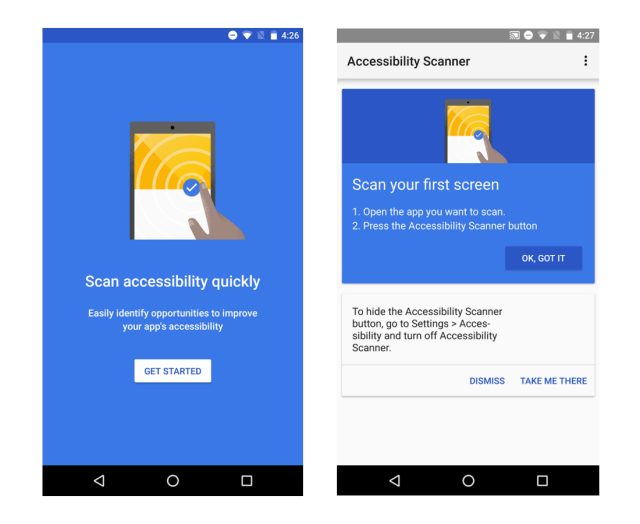
For anyone designing Android apps, Google just released a tool that will help make your apps more accessible for all users. The company's new Accessibility Scanner looks at any Android app and will call out aspects of it that could be improved, particularly for differently-abled users. The app will even suggest ways you can alter things for the better

It seems pretty simple to use: just download the Accessibility Scanner to your mobile app, go to Settings and Accessibility, and turn on the Accessibility Scanner tool. You can then open the app you want to test and press the small blue button appearing on the screen. The tool scans that screen and then provides ways you could improve design element all over that screen, including larger text, color choices, navigational tools, and more.

Long-pressing the button will let you move it to a different screen in the app, and you can keep scanning from there. These improvement suggestions are meant for both developers and users alike, since you could benefit from simply increasing your mobile device's text size or something similar.

Read 1 remaining paragraphs | Comments

Pebble to lay off 25 percent of workforce

The smartwatch company wants to “be careful” with its money going forward.

(credit: Valentina Palladino)

As more and more companies develop smartwatches, we're starting to see which will stick around and which will fall behind. Pebble is hoping that it could become one of the former companies—but it's cutting costs to stay afloat. In an interview with Tech Insider, Pebble CEO Eric Migicovsky revealed the company would lay off 40 employees, or about 25 percent of its entire workforce.

Migicovsky was slightly cryptic when explaining the reason for the layoffs, but he did say that Pebble would be carefully considering how to spend its money over the next year. "We've definitely been careful this year as we plan our products," Migicovsky told Tech Insider. "We got this money, but money is pretty tight these days."

According to the interview, Pebble has raised $26 million over the past eight months, which is in addition to its original $20 million raised back in February of 2015 when it launched its Pebble Time Kickstarter campaign. Migicovsky claims Pebble will focus its wearable device efforts on the health and fitness market going forward, and it will also start selling smartwatches in India via Amazon next month.

Read 2 remaining paragraphs | Comments