Xiaomi’s Mi Band 2 is the company’s first tracker with a screen

Just $23 for activity tracking and heart rate monitoring.

(credit: Xiaomi)

Chinese company Xiaomi continuously pumps out low-cost electronics, and now it has released an upgraded fitness tracker. The Mi Band 2 is the first activity tracker the company has made with an OLED display, allowing the device to show step count, time, and heart rate. According to Forbes, the Mi Band 2 will cost 149 RMB ($23) in China once it's available.

This is Xiaomi's third fitness tracker: the company's ultra-cheap $13 Mi Band 1 debuted two years ago, and following that was a pulse-monitoring device called the Mi Pulse. The Mi Band 2 keeps the simplistic design of the previous two devices, featuring a thin silicone band and a oval-shaped module, but it adds the .42-inch OLED display, an "upgraded pedometer algorithm," and a 20-day battery life. It also has a single button at the bottom of the screen that will let you scroll through different displays.

In addition to tracking steps, the Mi Band 2 will monitor sleep, and it will vibrate to let you know if you've been sedentary for too long. Still, the display and optical heart rate monitor are key to this device. The display makes it easier to glance down at the device to either check the time or view your step progress, which is something many fitness trackers can do now (though some, like Misfit's products, still go the way of design simplicity). The heart-rate monitor is important not because it's unique technology but because at $23, the Mi Band 2 will be the cheapest device to include one. Most trackers with built-in heart rate monitors, including those from Fitbit and Garmin, are priced at $100 or more.

Read 1 remaining paragraphs | Comments

LG’s Stylus 2 Plus is the midrange competition for Samsung’s Note phones

With a 5.7-inch display, there’s a lot of room to scribble on this handset.

My favorite video

LG is challenging Samsung's Note smartphones with a new stylus-equipped handset of its own. While the Stylus 2 was announced earlier this year, the Stylus 2 Plus builds on that phone's design and improves the guts for a more powerful device.

The two biggest improvements are in the Stylus 2 Plus' screen and processor. Rather than the 5.7-inch, 1280×720 display on the first model, the new model has the same size screen but with a 1920×1080 resolution. The processor has also been upgraded to a 1.4GHz octa-core chip from the first phone's 1.2GHZ quad-core CPU.

The Stylus 2 Plus will also have 16GB of onboard storage, a 3,000 mAh battery, and a fingerprint sensor on the back of the handset. The cameras will change depending on where the device is sold: some markets will get a 16-megapixel rear camera and an 8MP front-facing camera. Others will have the same 13MP rear camera and 5MP front-facing camera in the original Stylus 2. RAM will change depending on region as well, with some countries receiving 3GB of RAM and others getting 2GB.

Read 2 remaining paragraphs | Comments

Watch a giant ORCA machine eat up hotel food scraps

Breaking down thousands of pounds of organic waste is nothing for this machine.

Video shot and edited by Nathan Fitch. (video link)


New York City is doing what it can to be more eco-friendly. We're not just talking recycling plastic bottles or taxing plastic bags; we're also talking about behind-the-scenes efforts that tackle waste before it hits the streets. Starting July 19, 2016, many hotels, wholesalers, and other large vendors in New York City will be required to separate their organic waste and recycle it. Businesses can dispose of the waste themselves, or they can coordinate a pick-up from a third party.

Another option is for the businesses to process the waste on-site, which means recycling it on their own. That's where the ORCA comes in—ORCAs are big, steel machines that basically eat and digest organic waste. Using continuous motion and waste-eating biochips, all of the food remnants and organic matter dumped into an ORCA are processed down to slightly murky water that's then pushed into the sewer system.

Read 2 remaining paragraphs | Comments

Reddit forsakes Imgur with launch of native image upload tool

Will people choose an all-Reddit experience or still default to Imgur?

How Reddit's native image/gif upload tool appears when you want to post (credit: Reddit)

A big change is rolling out on Reddit that will affect the way you post and view images on the site. Through a thread created by a Reddit product team member named Andy (u/amg137), the site announced that it's launching an image-upload tool for single photos and GIFs on select subreddits. This means the site is shifting away from its informal partner Imgur, which currently hosts the majority of Reddit's uploaded images.

With the tool, users will be able to upload images up to 20MB and GIFs up to 100MB in size directly to Reddit. When viewing a thread that started with an image or a GIF, users will click on the thread and be taken to the thread page, with the media at the top and the comments below.

With Imgur-hosted images, clicking on the Reddit link takes you directly to that image on Imgur's site. To see thread discussion, you had to click on the "comments" link directly below it. Andy explains in the post that the company is hoping the native image tool will make the Reddit experience more seamless. "For a long time, other image hosting services have been an integral part of how content is shared on Reddit—we’re grateful to those teams, but are looking forward to bringing you a more seamless experience with this new feature," he writes.

Read 4 remaining paragraphs | Comments

Apple said to open up Siri with SDK, debut an Amazon Echo competitor

More versatility for Siri—and maybe even a new device for her to call home.

Enlarge / Apple CEO Tim Cook. (credit: Chris Foresman)

On the heels of Google announcing its Home voice assistant device, Apple isn't far behind with its own competing software and hardware. A report from The Information claims the company will open up Siri, its voice assistant launched in 2011, with an SDK, and it will soon reveal a device equipped with Siri to compete with Google's upcoming product and Amazon's Echo.

According to "a person with direct knowledge of the effort," Apple could release the Siri software developer kit at its annual WWDC event in June. It would allow app developers to integrate their programs into Siri so users could access the app's features with voice commands. Through direct deals with companies including Yelp, Siri can already access some apps, but the SDK would open up this integration to any developer that wants to use it. Developers would also be responsible for making sure Siri is connected to their apps "when appropriate."

As for the Amazon Echo competitor, it seems like it's only a matter of time before Apple does something to get into this space. The unlikely success of Echo and its Alexa voice assistant already brought Google into the space with its tabletop Home device. According to The Information's report, though, Apple's voice-assistant device has been in the works since before Amazon came out with Echo.

Read 3 remaining paragraphs | Comments

Pebble’s Core is a tiny Android computer that tracks runs and plays Spotify

New Pebble 2 and Pebble Time 2 sport heart rate monitors as well.

(credit: Pebble)

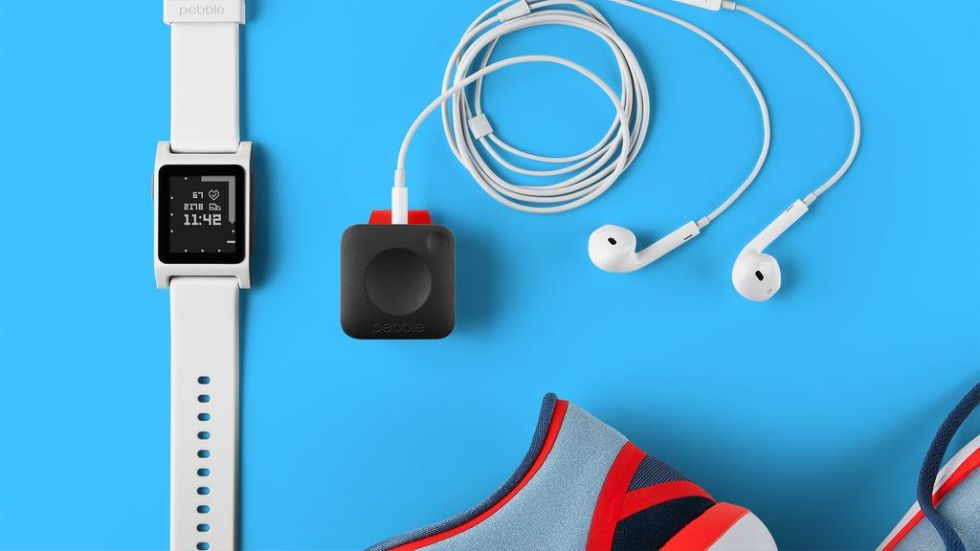
As the wearable space becomes increasingly crowded, Pebble is holding strong amid stiff competition. Companies like Fitbit and Garmin are trying to turn fitness trackers into all-purpose smartwatches, but Pebble's CEO Eric Migicovsky is making sure that Pebble does "a couple things really really well." That's the premise behind Pebble's newest and most unique device, the Pebble Core smart running module. It's a tiny computer that tracks running and can sync with your Spotify account so you really don't have to take your phone with you on a workout anymore.

Run free

The Core is Pebble's first non-smartwatch product. It's a small square with rounded edges and two circular indents on its front. The larger is the main button for starting and stopping tracking, and the smaller one in the corner, in true Pebble fashion, can be hacked to perform a number of features. You could program it to send an emergency text to someone when you leave your phone at home, call an Uber when you find yourself in a pinch, or a number of other things. On the top side of the core is a hold slider and a headphone jack, and the device is Bluetooth ready so you can connect wired or wireless headphones to it.

Aside from Bluetooth, the Core is Wi-Fi ready, and it has a 3G modem, 4GB of storage, and a GPS to map runs. Migicovsky describes it as a "tiny computer running Android 5.0," so it could end up being much more than a clip-on running monitor. Migicovsky went so far as to say that you might be able to use the Core's smaller button to open your garage door or even find your keys if you leave the device attached to a key ring. Pebble's history of making its devices open to the developer community makes a device like the Core quite appealing since its small size lets it take on many functions depending on the features people develop for it.

Read 10 remaining paragraphs | Comments

Review: Garmin’s Vivoactive HR is more hardcore than Fitbit’s Surge

$250 tracker sits right in the middle of Garmin’s convoluted lineup.

Video shot/edited by Jennifer Hahn. (video link)

Garmin makes over 25 different fitness wearables that range from $99 to as high as $699. You can say this for Garmin—confusing as that lineup can be, the company has made a device for everyone.

The goal of its newly released $250 Vivoactive HR is to compete directly with the king of fitness trackers: Fitbit. With the same price and a nearly identical design, the Vivoactive HR and Fitbit's Surge go head-to-head in nearly every respect. By combining smartphone notifications with numerous fitness and sport tracking features, Garmin's new device is also stiff competition for other trackers like the Microsoft Band. The Vivoactive is neither the most expensive nor the cheapest product in Garmin's line, but for hardcore fitness enthusiasts, it could be the one that provides the best value for your money.

Read 19 remaining paragraphs | Comments

Fitbit acquires “wearable payment assets” from startup Coin

“No plans” for integration into products in 2016, but 2017 is a whole new year.

(credit: Valentina Palladino)

Fitbit devices are known for being easy-to-use, fitness-first products, but now the company that makes them may be planning to tack on extra features. Fitbit released a statement today announcing that it has acquired "wearable payment assets" from the Silicon Valley company Coin.

According to the statement, Fitbit gains "key personnel and intellectual property" from Coin's wearable-payments platform in the deal. However, it excludes smart-payment products such as Coin 2.0, a singular smart card meant to replace the many credit and debit cards stuffed in your wallet. Coin's website shows that Coin 2.0 has sold out, and Coin's own statement about the acquisition, the company says it will no longer continue to sell its smart payment products. Existing Coin users will be able to use their devices for the duration of their "lifetime"; the card itself can last two years without any recharging.

Fitbit also says in its statement that there are no plans to integrate Coin's mobile payment technology into any 2016 products. Fitbit recently launched the Alta fitness tracker and the Blaze smartwatch a few months ago, and while the company could launch another product or two before the year is up, it likely won't have time to thoughtfully integrate mobile payments into any of them. The statement did say, though, that the deal "accelerates Fitbit’s ability to develop an active NFC payment solution that could be embedded into future Fitbit devices, broadening its smart capabilities."

Read 3 remaining paragraphs | Comments

Amazon to expand Prime benefits, open more brick-and-mortar stores

Although where, and how many more stores, remains unclear.

(credit: Amazon)

While still a primarily online store, Amazon isn't turning its back on physical retail establishments. After opening its first brick-and-mortar store in Seattle last year, the company's CEO Jeff Bezos confirmed at Amazon's shareholder meeting that more stores are coming.

"We’re definitely going to open additional stores; how many we don’t know yet,” Bezos said at the meeting according to a report from The Wall Street Journal. “In these early days, it’s all about learning rather than trying to earn a lot of revenue."

Currently Amazon's Seattle location is mostly a bookstore, and the company is already building another location in San Diego. Amazon has also said it would build smaller kiosks in cities like San Francisco and Sacramento, but there's no indication if those locations will sell only books or other items as well. Back in February, General Growth Properties, Inc. CEO Sandeep Mathrani said in an earnings call that he estimated 400 more Amazon Books locations to open in the future.

Read 1 remaining paragraphs | Comments

Trainerbot will push your ping-pong skills to the limit

Train yourself or remotely kick all of your friends’ butts.

Video shot/edited by Jennifer Hahn. (video link)

Playing ping-pong has always been a two-person experience—until now. Trainerbot is a new household robot that is almost guaranteed to be your toughest ping-pong opponent. Brothers Alex and Harrison Chen developed Trainerbot after years of playing ping-pong with each other. While away at college, Harrison developed the first Trainerbot prototype out of a garbage can so he could practice in secret while away from his brother. A dozen or so prototypes later, the newest version of Trainerbot is going up on Kickstarter today.

Read 1 remaining paragraphs | Comments