Sony’s new Xperia XA Ultra has a 16MP camera and a huge 6-inch display

A mid-range handset made for taking, viewing, and editing photos

(credit: Sony)

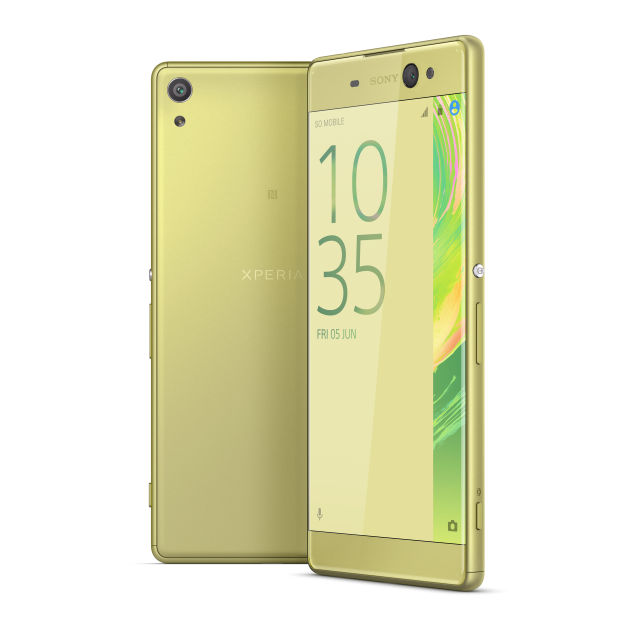
Amidst the rumors that it could be killing off some of its smartphone lines, Sony just announced a new Xperia smartphone. The Xperia XA Ultra is being pushed as the "perfect nighttime selfie" phone with its 16-megapixel front-facing camera, low-light sensors, and optical image stabilization for blur-free shots.

The "selfie" appeal comes from the powerful front camera, but the rear camera is formidable as well at 21.5MP. The front camera also has a "gesture control" feature which lets you wave your hand in front of the lens to start a shutter timer. Aside from strong cameras, the Xperia XA Ultra is designed with a huge, 6-inch borderless screen and is supposed to last up to two days on a single charge. That's quite a claim since the handset only has a 2,700 mAh battery. A quick charger will be available for the handset, allowing it to get 5.5 hours of battery life with just 10 minutes of charging.

While Sony's previously announced Xperia X and X Performance tout top specs, the XA Ultra instead will impress with its cameras and large display. It's powered by an eight-core MediaTek MT6755 processor and comes with just 3GB of RAM and 16GB of internal storage, which is expandable via microSD card to 200GB.

Read 2 remaining paragraphs | Comments
Amazon will start selling its own private-label groceries, diapers, and more

You could soon buy Amazon-brand nuts, coffee, and spices. But at what cost?

(credit: soumit)

Amazon's Fresh delivery service is only the tip of the online retailer's grocery iceberg. According to a report from The Wall Street Journal, Amazon will soon sell private-label goods on its website, including perishable food, starting as early as the end of May.

Happy Belly, Wickedly Prime, and Mama Bear are among the names of new brands Amazon will sell, and the company will stock items such as nuts, spices, baby food, and coffee. According to the report, Amazon has been developing private-label products for many years. The company reached out to branding consultants and manufacturers like TreeHouse Foods, Inc. to get ready for the launch.

Amazon is following in the footsteps of many large brick-and-mortar retailers like Walgreens and Sephora, who have their own private-label brands and products. Amazon already sells some private-label goods under its Amazon Basics brand, but those items are mostly limited to electronics like HDMI cables, batteries, and power strips. The company's currently private-label products have had some issues in the past. In 2014, Amazon had to recall its Elements diaper brand because of a design flaw. Undoubtedly, branching out into food, particularly perishable food, will pose its own unique challenges for Amazon.

Read 1 remaining paragraphs | Comments

Lenovo ThinkPad X1 reviewed: a hybrid for the workaholics among us

With three attachable modules, this 2-in-1 has versatility on its side.

Video shot/edited by Jennifer Hahn. (video link)


PC companies want to make products that combine the best of both worlds—and we're talking about multiple dichotomies, too: thin but powerful, business-ready but play-capable, high-end but also (semi) affordable, tablet but also a laptop, and more. We've seen it recently with Microsoft's Surface Book and Surface Pro line of hybrids, HP's newest Spectre laptop, and many more. Lenovo's designs (the Yoga line in particular) have always been good at marrying these elements to one another, and its ThinkPad X1 tablet is an attempt to deliver a Surface competitor for businesses.

The X1 takes the convenience of a tablet, incorporates a metal kickstand, and attaches a solid keyboard to the bottom so it can become a laptop at any time. So as not to overwhelm consumers with a ton of unnecessary features, Lenovo build three custom "modules" for the X1 which can turn it into a projector, a 3D scanner, and a longer-lasting, port-happy work device. Without any modules, the X1 starts off at a hefty $1,029. I recently lived with the mid-tier module ($1,349) for awhile and, although it's a powerful and capable device, I'm not sure I'd want it to replace my regular laptop.

Read 24 remaining paragraphs | Comments

Withings Go reviewed: this button-sized fitness tracker left me wanting more

It could help you develop new healthy habits, but otherwise it’s unremarkable.

Video shot/edited by Jennifer Hahn. (video link)

The French company Withings made one of the first truly fashionable smartwatches. The $450 Swiss-made Activitè pulled double-duty as an elegant timepiece as well a basic activity and sleep tracker. It was luxurious to say the least. So to make its brand more accessible, Withings followed that release up with more affordable versions of the Activitè.

In many ways, the $80 Withings Go tracker is a departure from the design language of the Activitè series, but it still manages to look at home with the rest of the company's product line. The tiny disk tracker has all of the same activity monitoring features of the full watches, but without any of the high-end materials that push the other devices' prices over the edge. At less than $100 it's at the cheaper end of the fitness tracker market, but it has to compete with other trackers from big companies that want provide your go-to, affordable fitness device.

Read 13 remaining paragraphs | Comments

One year after Alexa: Amazon’s Echo has found a small but smart niche

Review: Alexa helps me begin and end my day, but I don’t depend on her (yet).

Video shot/edited by Jennifer Hahn. (video link)

No one knew what to make of the Amazon Echo when it first debuted. Originally described as a Siri-like, tube-shaped home assistant, how could this glorified speaker be more useful than similar phone features? But in its year-plus of existence, the Echo has been quietly taking over households everywhere. Amazon hasn't released official sales information, but we can deduce the device has experienced some success based on more than Alec Baldwin's endorsement. According to Slice Intelligence, the Echo's sales grew an average of 342 percent during Q3 and Q4 of 2015. And a new report from Consumer Intelligence Research Partners estimates that 3 million Echos have been purchased in the US since 2014.

Clearly, Amazon isn't going to let the Echo go anywhere any time soon. The company even recently expanded the Echo family with Dot and Tap, giving customers more affordable hardware options for Alexa access. While often compared to Siri, Microsoft's Cortana, and Google Now's nameless voice assistant, using Alexa feels fundamentally different. And after just a few weeks living with the Amazon Echo, I can see how—and in what capacity—I could be convinced to use a virtual assistant.

Read 26 remaining paragraphs | Comments

YouTube may take a slice of the streaming pie with “Unplugged”

$35 per month for channel bundles, but no network deals have been made yet.

YouTube may be the next tech giant to fight for a piece of the television world. The online video company has been reportedly working on a subscription-based online video streaming service called "Unplugged." According to the Bloomberg News report, Unplugged would offer online video and live TV channels in bundles from media providers for a $35 monthly fee.

YouTube has apparently been working on Unplugged for a while. The report suggests that the company started working on a TV streaming service in 2012, but it has since sped up its efforts due to looming competition from companies like Dish and Sony that already have their own streaming platforms. The entirety of YouTube's architecture has reportedly been revamped to support such a service, and it could debut as early as 2017.

YouTube already has its Red subscription service, which lets users stream ad-free videos, watch videos offline, and listen to ad-free music. Unplugged would be different since it would have live TV channels and other exclusive content. YouTube has reportedly been in talks with Comcast's NBCUniversal, Fox, CBS, and Viacom to stream content from those networks, but it has yet to secure any rights. This part of the business has proven difficult for other companies looking to get into TV streaming, including Apple.

Read 2 remaining paragraphs | Comments

Triby review: A speaker, message-board device is an obvious home for Amazon’s Alexa

Alexa-enabled devices have potential, but they also have some flaws to overcome.

(credit: Valentina Palladino)

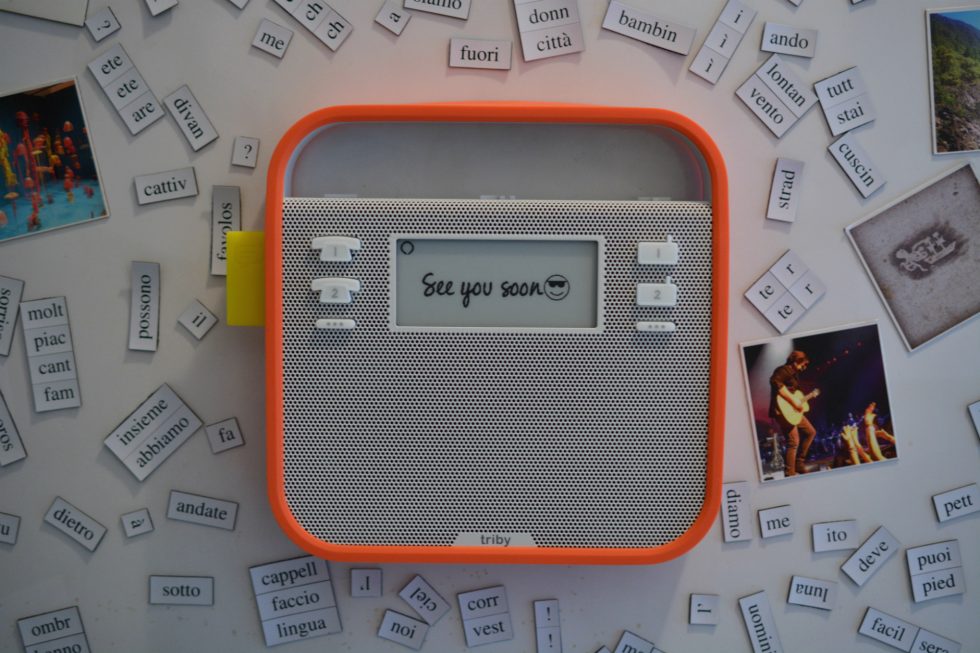
Amazon's Alexa has made its way into many homes, but now she's branching out. The voice assistant has always been an open platform, and we've seen a number of companies add support for Alexa to their services over the past year. Now, we're starting to see Alexa in products other than Amazon's Echo devices—the first one is a cute little speaker named Triby. The $199 multitasking device is a message board, radio, speaker, and an Alexa vessel all in one, and with its magnetic back, it's being billed as a perfect kitchen companion.

Triby will give us some idea of how well other companies will be able to integrate Alexa into their products. But also, and arguably more interestingly, it shows how companies are thinking about third-party hardware for Alexa and what these devices could and should be.

Design: Little refrigerator bot

Triby doesn't resemble the sleek, modern devices we're used to seeing today. It's got a square, bumper-encased body and a handle on top, and it resembles a flattened lunch box. The bumper helps protect Triby from unexpected falls, and that plus the rounded corners make it safe for kids to manhandle. The rest of its surface is covered in holes, since it's mostly a portable speaker, and it has a couple of physical buttons on its face for making calls, switching between radio stations, and playing or pausing music. Its rectangular e-ink display shows the date, time, and temperature by default. Since it's supposed to be a kitchen companion, it has two large magnets on the back so you can stick it to your refrigerator.

Read 18 remaining paragraphs | Comments

Apple Music reportedly getting redesigned, will be unveiled at WWDC 2016

Reports suggest the music streaming service needs a new look to attract new users.

(credit: Apple)

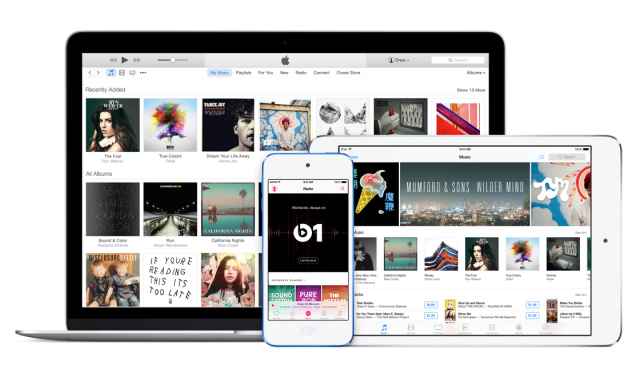
Nearly a year after being introduced, Apple Music might be getting a much-needed revamp. A Bloomberg report suggests that Apple plans to redesign the music streaming service with a more "intuitive" interface and better integration with its other music offerings.

According to "people familiar with the product," Apple's goal is to make Apple Music more user-friendly. It also plans to marry its music download and streaming options better in iTunes while also expanding its radio service. According to the report, content head Robert Kondrk and Trent Reznor of the band Nine Inch Nails are overseeing the redesign, which should debut at Apple's annual Worldwide Developers Conference in June.

The report also suggests that Apple has been struggling with how to best intertwine its download-based iTunes store with its subscription-based music streaming service. Doing this is crucial as it would make the entirety of Apple's music offerings easier for customers to use. The heaviest criticism of Apple Music when it debuted was its confusing interface, so now Apple's challenge is twofold: making the app's UI more intuitive and adding music download capabilities and expanded radio service features into the mix.

Read 1 remaining paragraphs | Comments

Garmin’s new Vivomove fitness tracker masquerades as an analog watch

The $149 watch packs all of Garmin’s basic features into a sleek frame.

(credit: Garmin)

Garmin continues to add to its wearable family with a new device that could redefine the brand's name—at least when it comes to style. Garmin announced the Vivomove tracker today, an analog watch designed to be worn all day as it monitors activity and sleep.

The first thing you'll notice about the Vivomove is that it's Garmin's most traditional-looking tracker. It's an analog watch with a case finished in numerous colors, including black, white, rose-gold, gold, and silver, with both silicone and leather band options. Yes, it follows the general formula of other fitness-tracker watches we've seen debut recently, but for Garmin, that is a departure from the norm. On the watch face are two small, curved bars: one that fills in black showing progress toward your daily activity goal, and one that fills up in red when you've been inactive for too long. These bars seem like a good way of making important stats glanceable without cluttering up the simplicity of an analog watch face.

It's clear that the design is the focus of the Vivomove because its features are the same as many other Garmin devices. It monitors all-day activity, inactivity, and sleep, syncing to Garmin's Connect system to keep track of progress. It's also water resistant up to 50 meters and has a one-year battery life, which is welcome for a device that you're supposed to treat as a regular watch.

Read 3 remaining paragraphs | Comments

Amazon Prime Now arrives online with one-hour delivery service

It’ll cost you $7.99, but two-hour delivery is free.

Amazon launched Prime Now, its super-fast local delivery service, via its mobile app nearly a year-and-a-half ago, and now the company is bringing the service to the web. Amazon's PrimeNow.com is the new website that lets customers place orders to be delivered within within one or two hours, expanding the service beyond the mobile app for the first time.

One-hour delivery will cost $7.99, and it's only available for current Amazon Prime subscribers. The two-hour delivery window is free, so you'll save a few bucks if you can wait the extra hour. Currently the service isn't available if you want to purchase through Amazon's main site—you must go to PrimeNow.com to order anything. That seems to be due to the fact that the service isn't available everywhere yet. You'll have to input your zip code to see if Prime Now is serving your area upon visiting the site. According to some reports, Prime Now delivers to two dozen metro areas in the country so far.

Prime Now specializes in delivering food, groceries, health, beauty, and home products. You can also order pet supplies, some electronics, and not surprisingly, a slew of Amazon-made products, including Kindles and Fire TVs. Depending on where you live, you'll also be able to order from a number of food stores and restaurants. For example, shopping within the 10011 New York City zip code lets one place orders at Eataly, West Side Market, Union Square Wine and Spirits, Gourmet Garage, and D'Agostino. While Prime Now remains limited by its inventory and select cities where it operates, Amazon is clearly making the service a priority by opening it up to the web rather than just keeping it a mobile feature.

Read on Ars Technica | Comments