HP Spectre 13 reviewed: Remarkably thin, but not light on power

Trying to out-svelte the svelte masters, HP’s shiny notebook starts at $1,169.

Video shot/edited by Jennifer Hahn. (video link)

Your smartphone isn't the only thing that companies are obsessed with making thinner. Focus has turned to laptops as well, with the belief that making thin-as-paper and light-as-air notebooks will draw in more of the forever-on-the-go working professionals. Thinness also lends itself to design challenges that both excite and loom over OEMs—on one hand, thin laptops should be inherently sexy, but on the other hand, it can be a challenge to make a truly powerful, performance-driven pancake notebook.

Enter HP's new Spectre 13 laptop. The company bills it as the thinnest notebook in the world, and its sleek, metallic-accented design complements that title. However, unlike Apple's newest MacBook, HP managed to fit full Core i5 and i7 processors into the Spectre, in addition to three USB Type-C ports and a 4-cell battery. While it doesn't come cheap with a starting price of $1,169, it does do its best to offer more power and a fresh design compared to the likes of the MacBook and Dell's XPS 13.

Read 17 remaining paragraphs | Comments

You can get an unlocked Galaxy S7 Edge for $589 on eBay right now

Over $200 off the sleek Samsung flagship.

(credit: Samsung)

If you've been lusting after Samsung's Galaxy S7 Edge but leery about paying $800 for it, now's your chance to get it for less. One eBay vendor is selling black, gold, and silver models of the S7 Edge for $589, the lowest price we've seen on the new flagship.The sale was first spotted by Android Police.

Each 32GB device is unlocked so you can use it on any GSM carrier. It's also a dual-SIM handset, meaning you can have two SIM cards in the phone at once, or a SIM card and a microSD card. It's also worth noting that these models are not used or refurbished—they appear to be brand-new S7 Edge handsets, making the price even more tempting.

The eBay seller is based in Florida and ships to most areas of the United States, except for Alaska and Hawaii. International shipping is also available.

Read on Ars Technica | Comments

Huawei MateBook reviewed: A Surface clone that puts style first, work second

The MateBook enters a crowded space with few things that truly set it apart.

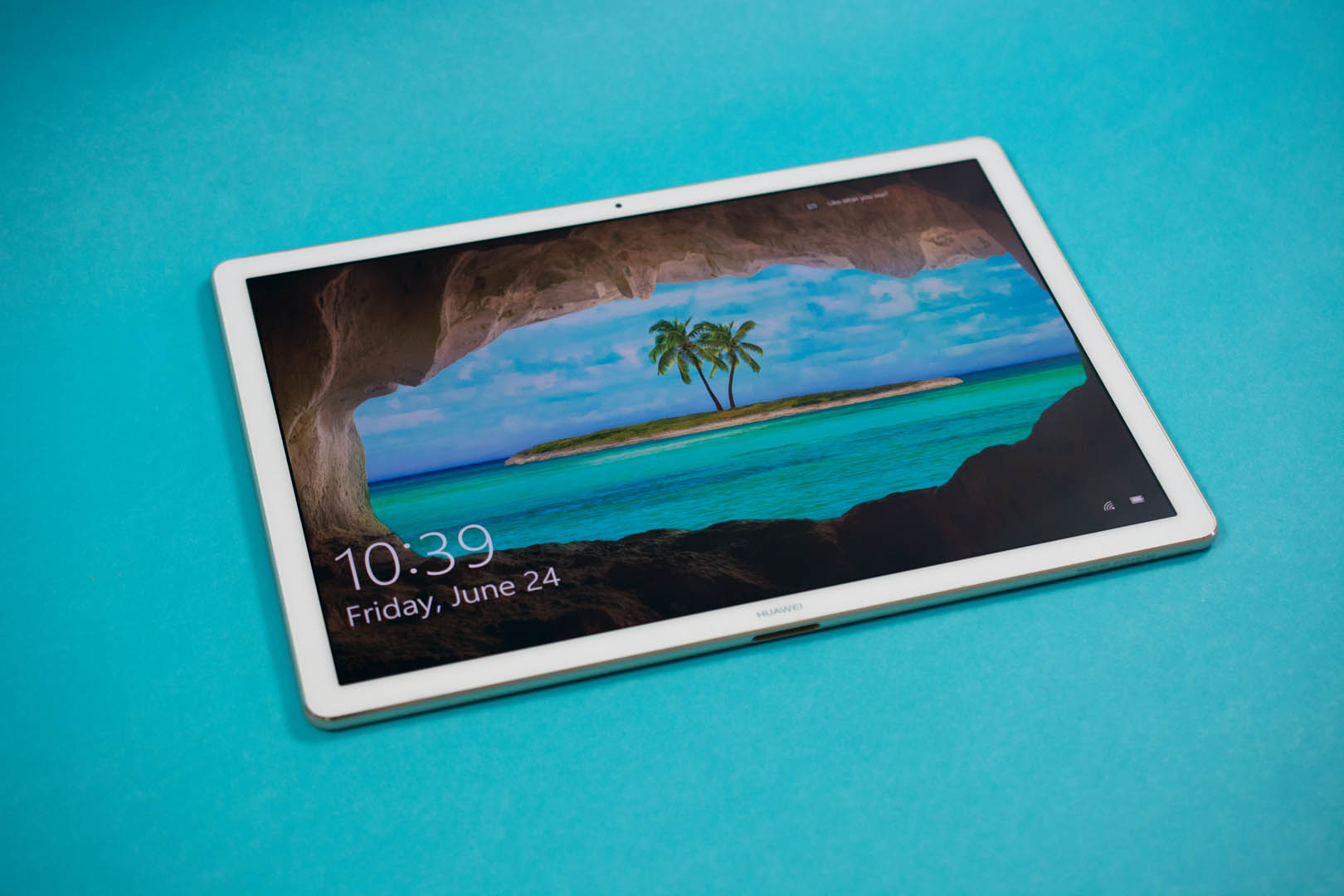
Another company is getting into the hybrid space. Chinese manufacturer Huawei, known primarily for its smartphones, released the MateBook for people who want tablet features in a device that can also stand in for your regular laptop. There's a bunch of competition in this space: Microsoft has its Surface line of two-in-ones and the Surface Book; Lenovo has its new ThinkPad X1 hybrid along with its Yoga series; HP and Dell each have their own entrants; and you can even lump Apple into this category with its iPad Pro devices, too.

With its first two-in-one, Huawei tried to make the MateBook stand out. The 12-inch tablet is powered by Core M processors, has a side fingerprint sensor, and has keyboard, pen, and docking accessories to suit every type of user. But really, what it comes down to is the twofold experience of using a hybrid: How well does it work as a tablet, and how well does it work as a laptop? If any hybrid is lacking in either respect, it'll be hard to make a case for spending hundreds of dollars on it. Thanks to steep competition, Huawei's $699 MateBook has an uphill battle to set itself apart from the competition.

Look and feel

Huawei's MateBook takes notes from the playbooks of Microsoft's Surface line and Samsung's TabPro S. The tablet itself is a 12-inch rectangle with a 2160 x 1440, IPS touchscreen display surrounded by a 10mm bezel. It has a metal unibody design so there's no hardware interrupting the satin-finished back of the device (there isn't even a rear camera, which is important to note if you have a habit of taking photos with your tablet). The tablet alone weighs just 1.5 pounds (or about 690 grams) and measures 6.9mm thick, so it is heavier than the iPad Air 2 (.95 pounds) and just a hair thicker than that device as well (6.6mm).

Read 20 remaining paragraphs | Comments
Instagram will start automatically translating image captions soon

The new “See Translation” button will convert posts, comments, and profiles.

(credit: Instagram)

On the heels of announcing that it has reached 500 million active monthly users, Instagram says it will soon add a translation feature to its app. Through a post on the image-sharing app, the company announced that within a month, users will be able to translate image captions, comments, and profile bios using a new translate button.

The Facebook-owned social media app will structure its translations similarly to its parent company. When you come across a post you want to translate into a language that isn't your default language, you can hit the "See Translation" button to convert it into the language you've chosen in your profile's language settings. Both Facebook and Twitter have translation features already, so this addition brings Instagram up to par with its competition in that respect. Considering that 80 percent of Instagram's user base lives outside the United States, this feature will likely be welcomed by many.

There's no word on how many languages Instagram will support with the first rollout of this feature. The company does explain on its Help website that if a translation isn't showing up, it might be because the app doesn't currently support that language or couldn't detect the initial language being used. It also warns users that translations may not be available for older posts. The full translation feature should be ready for most users by July. Here's hoping we'll be able to post in Klingon (@arstechnica) by August.

Read on Ars Technica | Comments

YouTubers are expanding their fanbases—using books

Strangely, YouTubers are writing books to enhance their video careers.

(credit: YouTube—Ricky Dillon)

A lot of YouTubers are getting book deals now, including many of the big names like Tyler Oakley, PewDiePie, Miranda Sings, and Shane Dawson. It's easy to dismiss these books as money-grabs by publishers desperate to gain new customers or fame-grabs by YouTubers who want another thing to put their faces on. But these books aren't all terrible. YouTubers have produced some interesting stories that are (believe it or not) best told via the written word rather than on video.

How the publishing industry found YouTube

The YouTuber book trend began a couple of years ago. One of the first YouTubers to cross over to the printed page was Hannah Hart from My Drunk Kitchen. In August 2014, she released My Drunk Kitchen: A Guide to Eating, Drinking, and Going with Your Gut, a part cookbook-and-cocktail-guide, part personal story book. Quick to follow in her footsteps was Rosanna Pansino; The Nerdy Nummies Cookbook she released is based off her YouTube cooking show where she makes Pokemon Pokeball cake pops, light saber popsicles, and more.

While both Hart and Pansino are arguably two of the most popular YouTubers, with more than eight million subscribers combined, it's refreshing to know that the big guns are not the only ones writing books. The Korean food star Emily Kim, better known as Maangchi, released her first cookbook Maangchi's Real Korean Cooking in 2015. Kim is an interesting case: unlike the teenagers and early-twentysomething YouTuber stars who get all the press, Kim uploaded her first YouTube video as an adult back in 2007. After seeing others try (and fail) to create authentic Korean dishes, she decided to show them how to make the dishes of her country correctly. "Korean food is so new to many people, so we really needed to start from the very first step of explaining what Korean food is, and what it tastes like," Kim told Ars in an e-mail.

Read 16 remaining paragraphs | Comments

Amazon’s new Kindle is only $80 and comes in white

Now with 512MB of RAM for storing all the books!

(credit: Amazon)

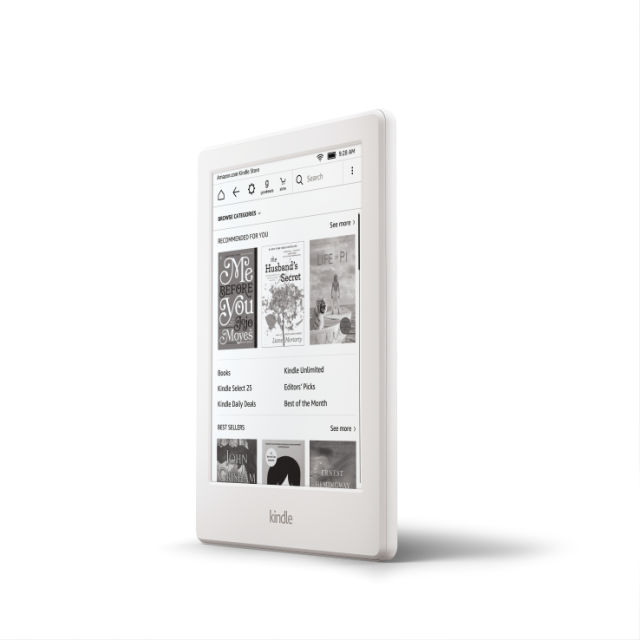
The luxurious $290 Kindle Oasis moves out of the spotlight so another Amazon e-reader can be highlighted today. Amazon announced a new, more-affordable Kindle that's just $80 and will be available in white and black. The new model replaces the cheapest version of the e-reader that has been available for a while, and it doubles the memory, bringing it up to 512MB.

In addition to the extra memory, the $80 Kindle will have a slightly thinner, lighter, and more rounded design than its predecessors. It will have a touchscreen display as well, but it won't be the 300 PPI screen that the $120 Kindle Paperwhite has (it will sport a 167 PPI display instead). Some reports also suggest that the new Kindle will come with Bluetooth support so blind readers can hook up a pair of wireless headphones to listen to books, along with a note-sending feature that will let you send yourself messages and highlights, which can be exported as PDFs or spreadsheets.

Amazon has not provided an exact battery life estimate, but it did say the new device will last "weeks" on a single charge. What will really set the $80 e-reader apart is Bluetooth support, as other Amazon Kindles do not have that capability (at least, not yet). If you don't need the Bluetooth features right away, the Kindle Paperwhite still offers a sharper (and backlit) display.

Read 1 remaining paragraphs | Comments

Apple reveals new version of watchOS at WWDC

WatchOS 3 will come to Apple Watches everywhere soon.

Today at Apple's annual Worldwide Developers Conference, the company announced watchOS 3, the latest version of its operating system for the Apple Watch. Apple's main focus with this watchOS update is making the device easier and more intuitive to use.

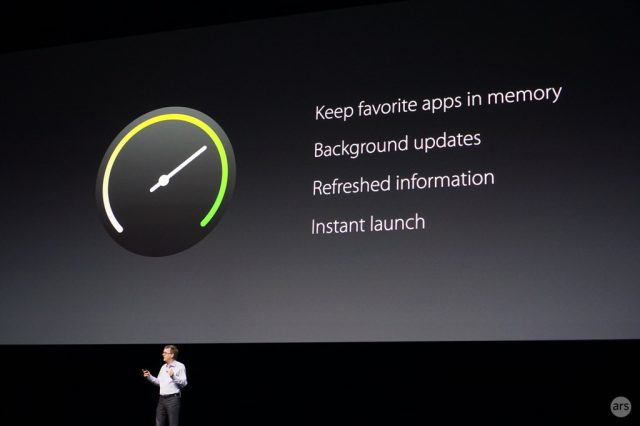
First, Apple's Kevin Lynch showed off how much faster watchOS 3 is compared to the previous version. Watch apps now launch instantly, rather than taking a few seconds to load. Overall, watchOS 3 is about seven times faster than watchOS 2, which should make all activity on the watch more seamless.

Apple also added a number of UI updates to the watch to make it easier to use and more "familiar." There's a new dock where you can set your favorite apps for quick use, and a Control Center you can access by swiping up from the bottom of the Watch's display. When it comes to texts, you can now see "smart replies" on the display as well, so you can choose a reply to send to someone to answer their message.

Read 2 remaining paragraphs | Comments

Gear Fit 2 review: A thoughtful marriage of smartwatch and fitness band

Samsung’s $179 Gear device improves upon the first and should make others sweat.

Video shot/edited by Jennifer Hahn. (video link)

It has been a couple of years since Samsung upgraded its Gear Fit activity tracker, and the new Gear Fit 2 is competing in a much more crowded market. While Fitbit still reigns as king, Apple unveiled its Watch and Microsoft came out with two versions of its own band. That's also not to mention that what people expect from their fitness trackers has changed rapidly: built-in heart rate monitors are now commonplace, and the basic step and distance tracking and calorie counting metrics just aren't enough to warrant a permanent spot on your wrist. Samsung clearly took all of that into account when making the Gear Fit 2 and, in turn, created a strong device that's made even stronger by its competitive $179 price.

Design: Gadget-y done right

The slightly redesigned Gear Fit 2 is a subtle improvement on the original. But more importantly, it's what the newest Microsoft Band should have been. The Gear Fit 2 is rounder and more seamless than the first, blurring the lines that separate the band from the display module. The band is your typical silicone wrap that we're used to seeing on fitness trackers now, and the closure is a simple snap-in design. The band comes in small and large sizes, so the Gear Fit 2 is easy to put on and even easier to wear, even if it's not the most fashionable piece.

Read 21 remaining paragraphs | Comments

Tony Fadell leaves Nest, Marwan Fawaz to be CEO

Fadell “won’t be present day to day” at Nest, but he remains at Alphabet.

Tony Fadell. (credit: BBC News)

After six years at the smart home company Nest, Tony Fadell will be stepping down as CEO. He announced his decision via a Nest blog post, which details that Fadell will be transitioning to an advisory role at Alphabet, the parent company of Google. Google bought Nest back in 2014.

The new Nest CEO will be Marwan Fawaz, who previously worked at Motorola Mobility as executive vice president. The blog post sites Fawaz's engineering and connected home background as well as his "experience with global service providers" as credentials for his leadership role at Nest. It also stated that Nest has a two-year product roadmap already in place for Fawaz to take over as he begins.

Fadell's transition has been in the works since "late last year," and his new role at Alphabet will give him the flexibility to dabble in other fields. Here's Fadell's statement:

Read 1 remaining paragraphs | Comments

Samsung splurges on GPS in new Gear Fit 2 fitness watch

$179 for a heart rate monitor, GPS, and 4GB of storage for music.

NEW YORK—Samsung came out with the original Gear Fit activity tracker in 2014, but the company has remained mostly quiet about this device line until now. At an event today, the company announced an upgrade to its fitness tracker offerings with a new model, the Gear Fit 2. It'll cost $179 (the first Gear Fit came out priced at $200).

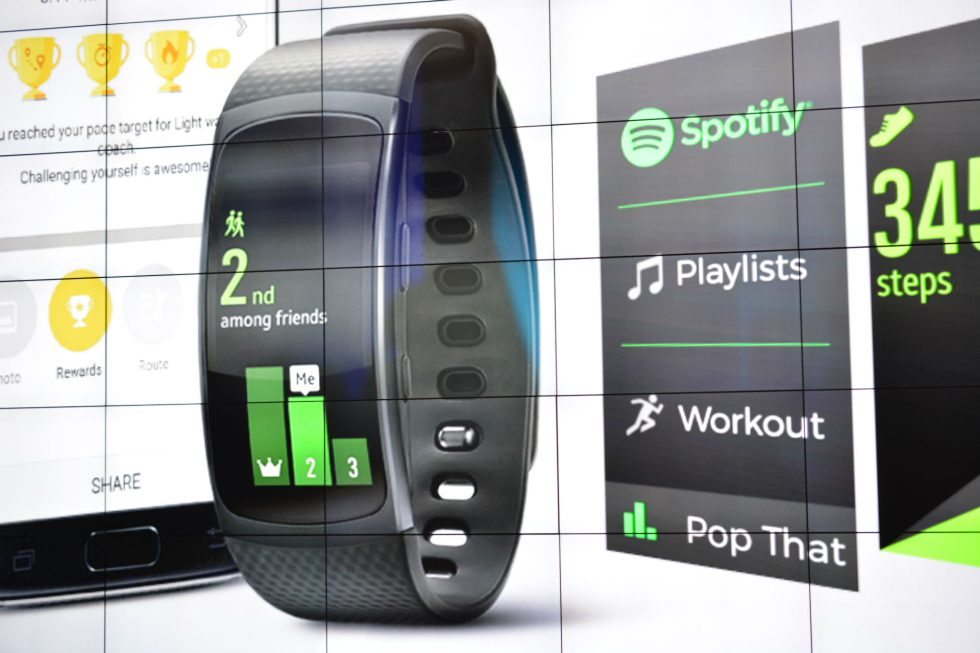
The new wearable matches the leaks we've witnessed within the past few weeks. While it looks very similar to the original Gear Fit, the Fit 2 is more curved to better hug the wrist. Its 1.5-inch super AMOLED display takes up most of the module that sits on the top of your wrist, and its band is nicely flexible. The curvier design should make the Gear Fit 2 easier to wear since there's much less distinction between the module and the surrounding band.

To upgrade the fitness specs, Samsung added a GPS to the Gear Fit 2. Both the original Gear Fit and this new device have heart rate monitors, but as wrist-bound HRMs become increasingly common, GPS has become more of a differentiator. This feature also tends to increase the size of a device (since it's a separate chip) and usually the price, too. Surprisingly, the Gear Fit 2 has been slimmed down from the original design in spite of the addition. Samsung also emphasized the ability to track a workout using the GPS and share it to Facebook instantly.

Read 3 remaining paragraphs | Comments