Fitbit attempts to win over fashionistas with new Alta wristband

The $129 tracker is customizable with metal, leather, and plastic bands.

(credit: Fitbit)

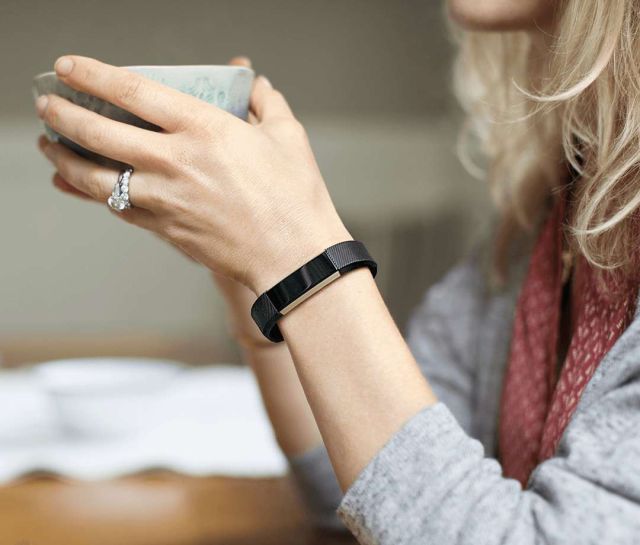
Fitbit isn't starting off 2016 slowly. The company announced the new Blaze fitness watch at CES last month, and another device is coming from the king of the activity-tracker world. Today Fitbit announced the $129 Alta, a slender activity tracker with customizable bands meant to appeal to those who don't want to be identified as "that person wearing a tracker on their wrist."

Let's examine the Alta in comparison to its price twin, the $129 Fitbit Charge. First and most important is the difference in design. While the Charge's plastic band comes in various bright colors, the Alta comes with a few colored plastic options, but you can buy $99 metal and $59 leather accessories as well. The Charge has a small digital display and companion button for scrolling through time, activity progress, and call alerts. The Alta is Fitbit's first lower-cost tracker with a full OLED touchscreen that you can tap to see similar information. The Alta will also show you a few more notifications, including text and calendar alerts, which are synced from your smartphone.

In terms of what they track, the Alta and the Charge are nearly identical. They both monitor steps, workouts, and sleep, although the Alta will send you inactivity alerts. The Alta also has the Smart Track feature, which will automatically recognize when you're doing a specific activity like running, cycling, playing soccer or basketball, and more. Interestingly, the Charge lists an altimeter in its spec list, which helps it track stairs climbed, while the Alta does not. Also, the Alta has a slightly shorter battery life compared to the Charge—just five days compared to seven to 10 days—but that can likely be attributed to its full touchscreen.

Read 3 remaining paragraphs | Comments

HP teams up with designer Isaac Mizrahi to make a flashy women’s smartwatch

The $249 device is blingy to say the least.

(credit: HP)

Another smartwatch hit the market today with a considerably quieter launch compared to most others. HP has collaborated with fashion designer Isaac Mizrahi to create the Isaac Mizrahi Smartwatch, a $249 luxe timepiece for women featuring Swarovski crystals, multicolored leather bands, smartphone notifications, and activity tracking.

Following in the footsteps of Fossil, HP says it wanted to give women a watch that uses smart features "without sacrificing style." The device has a traditional analog face and a discreet OLED display at the bottom of the face. That screen will light up to show smartphone notifications, including text, call, and calendar alerts, while the rest of the device functions as a normal watch. The watch's design falls in line with Mizrahi's other timepieces, which feature Roman numeral time indications and interchangeable genuine leather bands. The smartwatch is made of stainless steel and is available with a silver- or gold-colored face, both of which are outlined in a circle of Swarovski crystals.

The Isaac Mizrahi Smartwatch is compatible with Android and iOS devices and will pair with them via Bluetooth as most smartwatches do. The device will track daily activity as well, and it's water-resistant up to 30 meters. One peculiar feature is that the watch will have a direct feed to Isaac Mizrahi's Twitter account, so his tweets will show up on the watch's subtle display.

Read 2 remaining paragraphs | Comments

Apple recalls two-prong AC adapter over shock risk

The company will exchange all affected plugs to avoid user injury.

(credit: Apple)

Apple has voluntarily recalled certain two-prong AC wall adapters because some of them could break and potentially give users an electrical shock if touched.

The affected AC adapters were sold between 2003 and 2015 with Mac and some iOS devices in Europe, Australia, New Zealand, Korea, Argentina, and Brazil. Adapters sold to consumers in the US, UK, Canada, Japan, and China are not part of the recall and are safe for normal use, as are Apple's USB power adapters. Apple also says that users of its World Travel Adapter Kit may also be affected.

You can tell if your wall adapter needs to be exchanged if it has four or five characters, or no characters, on the inside slot where it attaches to an Apple power adapter. Apple provided detailed instructions on how to identify if your adapter is under recall and how you can get a new one from the company for free.

Read on Ars Technica | Comments

The first pieces of useful smart clothing will tackle body temperature

Some scientists forgo fitness to focus on heating and cooling the body.

(credit: Valentina Palladino)

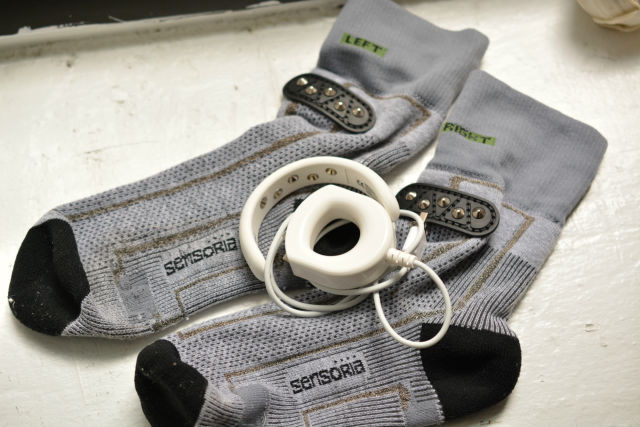
Most of the smart clothing in the spotlight until now has been fitness-related: socks that monitor running strides, shirts that measure heart rate, and other similar devices. While fitness is an obvious avenue for intelligent garments, some scientists are focusing on a more simple approach to smart fabrics. A recent New Scientist article highlights a number of research groups developing smart clothing and fabrics that "adapt to the environment of the wearer's body" to control body temperature.

These early developments are essentially about comfort, the premise being that a smart shirt could help you stay warm in a freezing office and cool when you step outside of the office into blistering summer heat. The report notes that aside from keeping us covered, clothing "controls air circulation and alters the amount of heat escaping from the body"; researchers are figuring out how they can best manipulate that process to make our clothing work a little harder for us in any weather.

One of those research groups is taking inspiration from squid—yes, squid. A team from the University of California, Irvine headed by Alon Gorodetsky is trying to control radiative heat similarly to how cephalopods such as squid change colors by reflecting visible wavelengths of light. While the group won't give any specifics of its technique, they are developing a similar process for longer wavelengths that carry heat. The team has partnered with Under Armour on this project, which isn't a surprise considering that Under Armour has years of experience in the athletic clothing industry and is also getting into more connected devices with the recent release of its Gemini 2 smart sneakers and HealthBox all-in-one fitness tracking package.

Read 3 remaining paragraphs | Comments

Nabu Watch reviewed: Razer gets into smartwatches in a big way (literally)

The $150 smartwatch makes a statement with its design, but it’s otherwise basic.

Razer added to its wearable collection at CES not with a smartwatch but with "a watch that's smart." That's how the company bills its new Nabu Watch, a G-Shock-esque device that doesn't have any bling but is big enough to catch everyone's eyes. It's a full chronograph timepiece with a digital display in addition to a secondary ticker screen for smartphone notifications. On top of that, it tracks daily activity as well.

The Nabu Watch is Razer's way of getting into the smartwatch world while still staying true to its customer base by making devices that are "by gamers, for gamers." The watch certainly embraces the same aesthetic of Razer's other products—jet black with bright lime green detailing. At $149, though, the Nabu Watch might be best suited for the Razer-obsessed. It's lackluster for everyone else.

Design: An acquired taste

Razer channels Casio's ostentatious yet iconic G-Shock line of watches with its Nabu Watch. I like big watches in general, but this one looks hilarious on my small wrist. It's bulky with a number of raised, oblong accents that make it look like something a post-apocalyptic video game character would wear.

Read 17 remaining paragraphs | Comments

Samsung’s gold Gear S2 Classic to cost thousands less than Apple Watch Edition

The rose gold and platinum watches hit China first, then the rest of the world.

(credit: Andrew Cunningham)

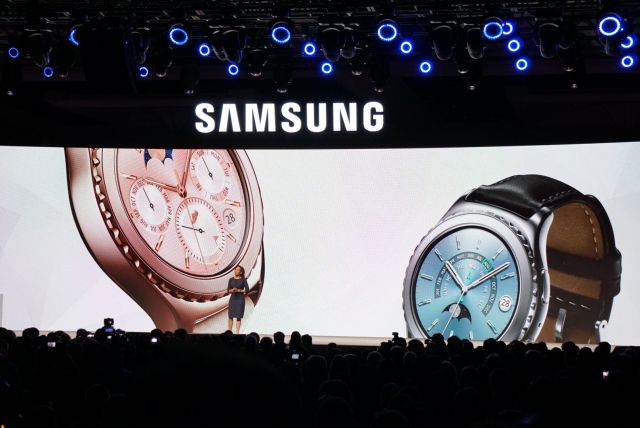
If you've had a hankering for a gold smartwatch, you may have a more affordable option soon. Samsung announced the global launch of its new Gear S2 Classic smartwatch, which it revealed at CES a few weeks ago. While the company did not officially release pricing of the new Gear S2 Classic models, some reports spotted the watch up for preorder in Europe for €480. That would make the watch about $520 when it comes to the United States.

To put that in perspective, Apple's gold smartwatch will cost you about $17,000—but there's a key difference between Apple's device and Samsung's. The Gear S2 Classic has a stainless steel body (like the original) that now comes plated in rose gold or platinum. Apple's smartwatch is made of solid gold, which explains its hefy price tag.

The new Gear S2 Classic models are made of more premium materials than the original Classic, and they will have a few new matching watch faces to go along with the color schemes. Other than the new materials, the new Classic has the same specs as the original. While the original Gear S2 has a nice, rounded design, it sports a much more futuristic look than the Classic models, which provide a more traditional, modern style.

Read 2 remaining paragraphs | Comments

Atlas Wristband review: Finally, a fitness tracker for the gym rats among us

This $250 rep tracker is for those who do more than just run all day.

Valentina Palladino reviews the Atlas Wristband. Video shot/edited by Jennifer Hahn. (video link)


Let's face it, most fitness trackers are for runners. It's a natural progression for a smart pedometer to go from tracking steps to tracking a lot of quicker steps during a certain period of time. Some devices like the Microsoft Band are trying to break away from that bubble, incorporating guided workouts that include moves like crunches and mountain climbers. But really, what most of these devices do best is monitor fast movements that involve the swinging of arms and jostling of legs.

Read 25 remaining paragraphs | Comments

Razer will sell all of its peripherals at 50 percent off for one day only

Limit one item per customer, and you must have a Razer Insider ID.

Razer isn't slowing down, even after releasing a slew of products at last week's CES. The company announced a huge sale on all of its peripherals—50 percent off—for one day only, starting at 6PM PST on January 14.

There are a few rules you'll need to stick to if you want to buy stuff: the sale is limited to one item per customer, and only Razer Insiders can participate. If you're not already a member of the Razer community, you can sign up for an account at any point (and Razer even gives you step-by-step instructions on how to do so). Razer also has a handy micro-site with countdowns to the sale for different time zones, just in case you have a hard time deciphering when you can start buying.

Unfortunately, the sale is on peripherals only—Razer mice, keyboards, headphones and other accessories. Razer systems are excluded from the deal. So no, you can't get the new Blade Stealth gaming ultrabook for half price. Nevertheless, it's a great sale if you're in the market for a new gaming mouse or glowing keyboard.

Read on Ars Technica | Comments

GoPro to cut seven percent of workforce after lackluster 2015 sales

Sales were particularly low in Q4 as GoPro’s Hero 4 failed to wow.

(credit: Amsterdamized)

GoPro has been the king of action cams for the past few years, but it seems like its reign could be faltering. In a statement released today, GoPro says it will cut about seven percent of its global workforce as it plans to "better align resources to key growth initiatives."

In the same statement, the company disclosed its Q4 2015 earnings, which are lukewarm at best. GoPro expects its revenue to be $435 million for the fourth quarter and about $1.6 billion for the 2015 calendar year. The fourth quarter earnings are down nearly $200 million from 2014's Q4 revenue projection of $633.9 million.

It's noticeably different from 2014, when GoPro's CEO cited selling "1,000 units per hour" for the entire fourth quarter. This time around, however, the company appears to have overestimated how many of its action cams would fly off the shelves around the holiday season. "Fourth quarter revenue reflects lower than anticipated sales of its capture devices due to slower than expected sell through at retailers, particularly in the first half of the quarter."

Read 1 remaining paragraphs | Comments

New Balance will make a runner’s Android Wear watch powered by Intel

The smartwatch is part of a new “Digital Sport” range of connected devices.

(credit: New Balance)

The world of wearables is taking a turn as we see more nontraditional entrants into the smartwatch and fitness tracker market. The newest to jump into the game is the sportswear company New Balance, announcing that it will make its own Android Wear running watch by the end of 2016. The device will be just one part of a larger collection of "Digital Sport" wearables, although we don't currently know much about the other products in the line.

According to some reports, the running watch will have a built-in GPS as well as enough onboard storage to keep some music locally for playback without a smartphone nearby. Many sports watches have these features already, with one of the newest being the Moto 360 Sport. As with Fossil's and Tag Heuer's smartwatches, Intel will provide the chips for New Balance's device, and the company has been working with other developers at Strava and Zepp to finalize it. While plenty of fitness trackers and smartwatches are compatible with the cycling and running app Strava, Zepp is a particularly interesting company for New Balance to partner with as it makes a line of "swing" tracking devices for sports, including baseball, golf, and tennis.

Other than the Android Wear watch, no other specific devices from the Digital Sport range have been announced. However, New Balance is looking into embedding small sensors into clothing and footware, which would make it one of the many companies experimenting with smart clothing now. Smart shoes appear to be the first step for many companies looking to get into connected clothing; Under Armour announced the SpeedForm Gemini 2 smart shoes at CES last week (in addition to its new HealthBox), which have accelerometers embedded into the soles and may not require regular charging.

Read 1 remaining paragraphs | Comments