Amazon’s new Echo Dot is a mini speaker that brings Alexa to any room

The $89 device is meant to be attached to premium speakers for better music.

(credit: Amazon)

Amazon wants its voice assistant Alexa to be a major part of your entire home. The company just launched a new product that makes this setup easier to achieve: Amazon's Echo Dot is a miniature version of the original Echo with nearly identical features but a smaller speaker so you can connect it to your preferred audio system.

The device looks like a shrunken Echo, as it's a short, cylindrical gadget with that characteristic blue ring around the top. If you're not familiar with Echo, that ring shows you that Alexa is always listening, so you can ask it questions from across the room and Alexa will answer. Just like the original Echo, you can ask Dot to do things like check the weather, summon Uber, control smart devices around your home, and play music.

Music is the key to Dot. The original Echo has fairly powerful speakers, making it sufficient for listening to music in any room you decide to place it in. But Amazon didn't make the Echo with the best speakers in the world—the company created Dot so you can connect your favorite speakers or audio system to it via an included audio cable or Bluetooth. This lets you control your preferred speakers using Dot by commanding it to play music from places like iHeartRadio, Pandora, Spotify, and others.

Read 2 remaining paragraphs | Comments
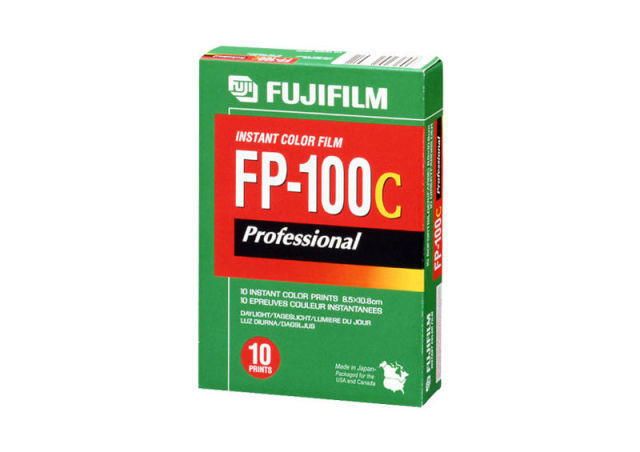
Fujifilm will stop making FP-100C Polaroid-compatible film

Stock up now—the peel-apart film won’t be around for much longer.

(credit: Fujifilm)

Still using an old Polaroid camera? Fujifilm has some bad news for you, as it has announced (in Japanese) that it will cease production of its FP-100C peel-apart film, which has kept many of the Polaroid cameras from the 1960s and '70s in operation today. The film is compatible with any instant camera that takes 3.25×4.25-inch photos, and Fujifilm's website describes it as ideal for ID and passport pictures.

However, its "fine grain and rich tonal gradation" weren't enough to save it from slumping sales. "Sales volume has declined significantly from year to year," Fujifilm stated. The company will end shipment of the FP-100C this spring, but according to some reports, there will still be film available for some time after that (likely while Fujifilm sells off the rest of its inventory).

This discontinuation may not spell doom for some Polaroid fans. The Impossible Project still makes film for Polaroid's SX-70 model, and it's less of a hassle to use since it foregoes the peel-apart technology of old-school film. But Fujifilm's decision isn't a shock. Fujifilm originally made black-and-white film at two speeds in addition to this color film back in the early days of instant photography. Since then, Fujifilm has killed off the two black and white options, and now the color film is on the chopping block.

Read 2 remaining paragraphs | Comments

Hexoskin smart shirt reviewed: Measuring your vitals so you don’t have to

But at $400, jumping on the smart clothing bandwagon is a big investment.

Video shot/edited by Jennifer Hahn. (video link)

A world where you can slip on a tank top and gym shorts that track all of your workouts is a reality now—but it comes at a steep price. Hexoskin was one of the first companies to put out a range of smart exercise clothing, complete with shirts and tanks for men and women that monitor not just steps and calories but also heart rate, breathing, and more.

But being one of the first means jumping over many hurdles—not just in getting a product right, but also in getting users to buy it. A Hexoskin bundle includes a sensor-laced shirt, "brain pack" with the battery and Bluetooth sensors, and a charging cable costs for $399. That's a lot of money to pay for a garment that's going to get sweat on more often than not, but Hexoskin is hoping the technology underneath the surface will persuade serious gym-goers and athletes to take the plunge.

Read 17 remaining paragraphs | Comments

Garmin brings wrist-bound HRM to new Vivoactive HR, adds to Vivofit line

A hardcore Fitbit Surge competitor, and another Jonathan Adler-wrapped wearable.

Garmin isn't waiting for the start of Mobile World Congress to reveal its latest wearables. The company announced two new fitness trackers ahead of the conference in Barcelona next week: the premium $249 Vivoactive HR, featuring the company's new wrist-bound heart rate monitoring technology, and the more affordable $99 Vivofit 3.

The Vivoactive HR takes all of the features from Garmin's original Vivoactive sports watch and pairs it with a heart rate monitor and a new design. It looks surprisingly similar to Fitbit's Surge, with a wide silhouette and a rectangular touchscreen display. You will be able to switch out the bands with different colored ones (something you cannot do with the Surge), and its body looks slightly thicker than the original Vivoactive, as it contains a heart rate monitor on the underside of the module.

Garmin's Elevate HRM, which was introduced with the Vivosmart HR earlier this year, lets the tracker monitor heart rate all day long and activity intensity during workouts. The Vivosmart HR is also ANT+ compatible, meaning you could connect a chest strap heart-rate monitor to the device if you prefer; there's currently no indication that the Vivoactive HR has the same compatibility.

Read 4 remaining paragraphs | Comments

Inside the 2016 New York Toy Fair: Every kid’s dream expo

3D-printed action figures, STEM toys, a whole bunch of Legos, and much more.

Video shot/edited by Jennifer Hahn. (video link)

NEW YORK—There exists a place in the world where toys rule, wall to wall, and that place is the annual New York Toy Fair. It's where all the biggest names in fun (think Lego, Mattel, and similar companies) gather to announce the next big things hitting toy store shelves. Much to the dismay of kids everywhere, the Toy Fair is an industry-only event, so we wanted to give you an inside look at the newest toys that may make it into your living room.

The toys shown off at the fair ran the gamut from educational and interesting to fun and lighthearted. Of course there was a new Barbie Dreamhouse that's bigger than many dog houses, and new Star Wars Lego sets featuring Stormtroopers, Rey, and Kylo Ren. Mattel took a break from Barbie hype to also announce the $300 ThingMaker 3D printing toy machine, which lets kids make their own toys by using a simplified 3D printing app with designs that can be sent to the ThingMaker for creation.

Read 3 remaining paragraphs | Comments

Kids will soon make their own toys with Mattel’s $300 ThingMaker 3D printer

The 3D printer and companion app will let kids customize their trinkets.

Mattel is getting super creative this year by giving more freedom to the toy experts of the world: kids. At this year's New York Toy Fair trade show, the company announced its new ThingMaker, a $300 3D printer that will let kids make their own toys. The device will work in conjunction with a 3D printing app called ThingMakerDesign, which was created in collaboration with the software company Autodesk.

While 3D printers are getting more affordable for the average person to buy, the software that goes along with them can be confusing and certainly isn't kid-friendly. According to other reports, Mattel wanted to make its ThingMaker as appropriate as possible for kids to use and experiment with. Available for Android and iOS, the ThingMaker Design app has templates for kids to use to make all kinds of toys, including action figure-like statues, dolls, bracelets, and rings.

Kids will also be able to design toys from scratch once they feel comfortable with the software. All of the toys can be customized with different colors and textures, and the ThingMaker prints out parts of each toy so kids can assemble them on their own. The new ThingMaker is definitely the 2016 iteration of Mattel's original ThingMaker, which debuted in the 1960s and let kids pour liquid plastic into toy molds and then bake them in the oven to create figurines.

Read 3 remaining paragraphs | Comments

Jaybird Reign fitness tracker review: Keeping you honest with heart rate variability

This $150 tracker tells you if you’re actually ready for a hard workout.

Video shot/edited by Jennifer Hahn. (video link)

A lot of popular fitness trackers aren't very active at all. They sit on your wrist counting each step you take, how long you sleep, and maybe a few workouts here and there. Jaybird's $150 Reign tracker is trying to do something a bit different. Instead of focusing on steps, Reign gets to know your body when it's both fatigued and recovered from strenuous exercise. It uses heart rate variability to tell you if your body is ready for physical activity, and it determines how much activity you should aim for when you want to push yourself further each day. Since it's not your typical smart pedometer, there is a slight learning curve when first using Reign, but it's an interesting option for those who believe stagnancy is just as harmful to your health as immobility.

Design: different, but not too different

When the Jaybird Reign monitors daily activity from your wrist, it looks futuristic without making a bold statement. It's made of a silicone band that comes in two parts: one that holds the module and the other than comes in three different sizes so you can get the wristband as tight as you want. They fit together using magnetic pins, so you can stretch the bottom part of the band to fit your hand through it and it won't pop off or go flying when you do so.

Read 18 remaining paragraphs | Comments

Under Armour and HTC’s HealthBox: Decent together, weak individually

Review: At $400, the whole package doesn’t come cheap.

Video shot/edited by Jennifer Hahn. (video link)

In the connected fitness world, we have yet to see one truly all-purpose device. There are a number of high-end gadgets, including the Garmin Vivoactive and the Fitbit Surge, that have many important features for workout tracking. However, health is measured by much more than how many times you hit the gym. Under Armour wants to expand personal fitness tech from just one device to an entire ecosystem of hardware and software that works together to help you understand your body.

That's what HealthBox is—inside the physical box, you get a wristband tracker, a heart rate chest strap monitor, and a smart scale. On your smartphone, you have Under Armour Record for keeping track of all your health data, as well as other Under Armour-owned apps including MapMyRun and MyFitnessPal. HealthBox is basically your one-stop shop for connected fitness, giving you three essential devices you need to start reaching new health goals. However, at $400, it doesn't come cheap, and each device could use some fine-tuning. It's a big investment to make, and anyone thinking about it should be serious about fitness so none of the HealthBox items get left behind in a bedside drawer.

Read 21 remaining paragraphs | Comments

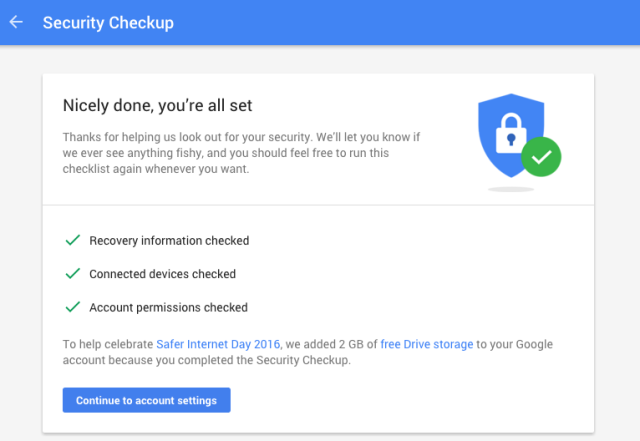
Today you can get 2GB of Google Drive storage for free

Yet another annual promotion from Google, marking Safer Internet Day 2016.

You can never have too much Google Drive space, right? At least that's what Google thinks, and it's giving away 2GB today to anyone that wants it.

This has become a yearly tradition for the company, with today's offer specifically honoring Safer Internet Day 2016. To get the extra Drive space, all you have to do is sign into your Google account and review your security settings, including factors like two-step verification, authorized devices, account verification settings, and a couple more. The process takes just a few minutes, and once you complete the check-up, you'll be awarded the extra 2GB of permanent Drive space for free.

Those who took advantage of the same Google promotion last year can rejoice, as they are welcome to snatch up this year's promotion as well. There's no word on when this 2GB offer will expire, but you have at least one week to complete the security check-up.

Read on Ars Technica | Comments

Under Armour’s Gemini 2 sneakers make running smarter without extra baggage

Review: Connected shoes take the intelligence (and the weight) off you wrist.

Video shot/edited by Jennifer Hahn. (video link)

Under Armour has been quietly building a connected fitness empire for a while. Over the past couple of years, the sports apparel company has purchased MyFitnessPal, Endomondo, and MapMyRun, and recently it launched a number devices at CES to accompany those integral software pieces. One of those things—the $150 Speedform Gemini 2 smart running shoes—are smart in the most subtle way. The shoes have sensors built into their soles, allowing them to track running stats including distance, calories, and pace.

Since Under Armour has been designing athleticwear for years, it's a strategic move to take one of its most beloved sneaker designers and incorporate connected components into it. While the shoes are more limited than other $150 fitness trackers, they make up for it by being especially convenient.

Read 17 remaining paragraphs | Comments