Western Digital makes a $46, 314GB hard drive just for the Raspberry Pi

“PiDrive” is based on WD Blue, has intro price of $31.42.

(credit: Western Digital)

The Raspberry Pi 3 was released earlier this month with some significantly improved hardware, including a quad-core 64-bit ARM CPU, an upgraded GPU, and embedded wireless—updates that will let people use it for a wider variety of tasks than before. For people whose use cases require a decent amount of storage, Western Digital has just announced a specialized low-profile hard drive called the PiDrive.

The 314GB drive, which will normally cost $45.81 but is currently available for $31.42, is a 7mm-high drive based on the basic Western Digital Blue drives that still ship in many budget and mid-end laptops and PCs. The difference is the interface, which has been changed from SATA to USB and is designed to connect to the Pi directly without drastically increasing the footprint of the device. WD says it has customized the drive in order to "reduce the electrical power load of the hard drive on Raspberry Pi while still maintaining sufficient performance to deliver maximum USB data transfer rate." It's also a cheaper solution than the 1TB PiDrive kit the company already sells for $79.99.

Western Digital says that the 314GB PiDrive will come with the BerryBoot bootloader to make it as easy as possible to install and run multiple operating systems from the same drive. The new PiDrive is compatible with WD's existing PiDrive cables and enclosures and is available for purchase today.

Read on Ars Technica | Comments

Silver Gamer: “Beschäftigt euch mit ernsten Themen für ältere Spieler!”

Computerspieler sind jung und hip? Stimmt nicht, sagt Bob De Schutter. Der Professor für Gamedesign an der Miami University hat mit Golem.de über die etwas älteren Gamer gesprochen. (GDC 2016, Interview)

Computerspieler sind jung und hip? Stimmt nicht, sagt Bob De Schutter. Der Professor für Gamedesign an der Miami University hat mit Golem.de über die etwas älteren Gamer gesprochen. (GDC 2016, Interview)

AT&T defeats class action in unlimited data throttling case

Throttled users forced into arbitration, but AT&T still faces FTC and FCC wrath.

(credit: Chris Young)

Customers who sued AT&T over its practice of throttling unlimited data plans will not be able to pursue a class-action lawsuit against the company. AT&T argued that the customers could only have their complaints heard individually in arbitration, and Judge Edward Chen of US District Court in Northern California has sided with the cellular company.

The customers' contracts with AT&T required them to arbitrate disputes with AT&T on an individual basis. But customers argued that the arbitration cause would violate their First Amendment right to petition a court for a redress of grievances. While the arbitration clause allowed claims to be brought in small claims court, the plaintiffs argued that such a court would not be an adequate forum.

But Chen accepted AT&T's argument, noting that the Supreme Court previously upheld AT&T's arbitration provision in a 2011 decision. In the 2011 case, AT&T Mobility v. Concepcion, the Supreme Court found that the Federal Arbitration Act preempted a California state law that limited the power of companies to force customers into arbitration.

Read 7 remaining paragraphs | Comments

Internet der Dinge: Huawei entwickelt Industrieroboter mit deutscher Kuka

Huawei will neuartige Industrieroboter für das Internet der Dinge mit einem Augsburger Unternehmen entwickeln. Auch mit Intel wurde eine Partnerschaft geschlossen. (Cebit 2016, Intel)

Huawei will neuartige Industrieroboter für das Internet der Dinge mit einem Augsburger Unternehmen entwickeln. Auch mit Intel wurde eine Partnerschaft geschlossen. (Cebit 2016, Intel)

Deals of the Day (3-14-2016)

Deals of the Day (3-14-2016)

The Dell XPS 13 line of laptops are thin and light, and they feature remarkably thin bezels around the display, making these 13.3 inch notebook feel more like a 12 inch model. I reviewed last year’s model, and just about the only thing I don’t like about the design is the camera placement (it’s below […]

Deals of the Day (3-14-2016) is a post from: Liliputing

February’s global temperatures rose to a startling new high

Month was 0.4°C above last year’s record temperature.

Last year set a rather notable record for the warmest global temperatures, as a strong El Niño bumped up a steady trend of greenhouse warming to push the temperatures well above the previous record. Our report on the temperature record, however, noted that it was likely to be short lived. The El Niño that drove it wasn't going to switch off at the end of the calendar year, and additional time would allow the heat it was pushing into the atmosphere to spread more widely across the globe. As a result, some observers were predicting that 2016 would be even hotter.

So far, those predictions seem to be spot on. Over the weekend, NASA's Goddard Institute for Space Studies released its figures for the month of February, which registered as a startling 1.35°C above the baseline period (1951-1980). The previous monthly record had been 1.14°C; last year's annual record was a paltry 0.84°C.

The graph above shows data from a period that contains all of the 15 warmest years in the instrumental record. The February reading, at the far right, provides some indication on how much of a radical departure this warming is.

Read 3 remaining paragraphs | Comments

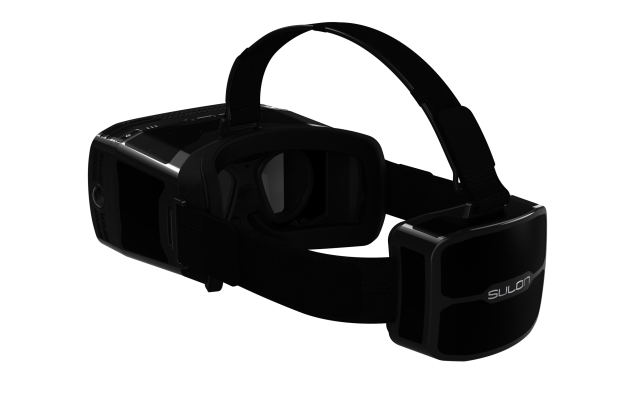
AMD-powered Sulon Q is like wearing a VR-capable Windows PC on your head

“Wear and play” headset gets rid of the competition’s tethers and external trackers.

The AMD-powered Sulon Q sounds like wearing a Windows-powered VR PC on your head.

The growing virtual reality platform wars got a little more complex this morning. That's because graphics chip maker AMD has thrown in with Toronto-based startup Sulon Technologies to unveil the Sulon Q headset, which aims to provide a PC-based, fully tracked virtual reality experience without the need to tether yourself to a computer tower.

According to the announcement, that "wear and play" untethered design makes the Sulon Q quite different from competition like the Oculus Rift or SteamVR-powered HTC Vive, which both need a relatively high-end PC to actually generate the images on the headset. With the Sulon Q, the Windows 10 PC hardware is built into the unit, including an expected four-core AMD FX-8800P processor with a Radeon R7 graphics card.

Add in a built-in 256GB SSD, 8GB of RAM, and a 2560×1440 OLED display with a 110° field of view, and it's a bit like wearing a lower-end (but still apparently VR-capable) PC on your head. AMD isn't specifically discussing the mass of the "lightweight" headset, but it seems likely to be much heavier than tethered headsets where the heavy processing is done externally (or even mobile headsets like the Samsung Gear VR, which are powered by much-more-compact smartphones)

Read 3 remaining paragraphs | Comments

Android 6.0: Marshmallow kommt für Sony-, Samsung- und HTC-Smartphones

Besitzer von Sonys Z5-Serie, dem HTC Desire Eye und Samsungs Galaxy S6 Edge+ können sich freuen: Ihre Geräte erhalten Updates auf Android 6.0. Sony verzichtet dabei auf die Adoptable-Storage-Funktion, bei HTC dürften sich hingegen Micro-SD-Karten wie interner Speicher verwenden lassen. (Android 6.0, Smartphone)

Besitzer von Sonys Z5-Serie, dem HTC Desire Eye und Samsungs Galaxy S6 Edge+ können sich freuen: Ihre Geräte erhalten Updates auf Android 6.0. Sony verzichtet dabei auf die Adoptable-Storage-Funktion, bei HTC dürften sich hingegen Micro-SD-Karten wie interner Speicher verwenden lassen. (Android 6.0, Smartphone)

BREIN Threatens Pirates With High ‘Fines’, Warns VPN Users

Hollywood-funded anti-piracy group BREIN has announced that it will begin pursuing legal action against individual BitTorrent users who share copyright infringing content. These pirates can look forward to settlement demands of several thousands of euros and the group plans to punish VPN users even harder, if they are exposed.

Source: TF, for the latest info on copyright, file-sharing, torrent sites and ANONYMOUS VPN services.

pirate-runningDutch anti-piracy group BREIN has targeted the operators of pirate sites for more than a decade, but more recently it started going after uploaders as well.

Over the past several months the group has tracked down several prolific uploaders and has now announced intentions to take these efforts a step further.

Today the national data protection authority granted BREIN permission to collect the IP-addresses of pirating BitTorrent users, allowing the group to approach uploaders on a broader scale.

According to BREIN Director Tim Kuik they are ready to monitor and crack down on larger groups of file-sharers.

“The trial run is behind us and we will now start collecting IP addresses and evidence. I advise notorious uploaders to think twice, after all, forewarned is forearmed,” Kuik says.

The enforcement efforts will not be limited to pirates who share thousands of titles. BREIN says that people who are found sharing recent titles on a frequent basis are at risk too.

Also, BREIN notes that its enforcement actions are not limited to a specific content category. Those who share films, TV-series, music, books and games are all at risk, Kuik warns.

The magnitude of the proposed settlements will differ based on individual circumstances, but could go as high as 12,500 euros. Those who choose not to settle can look forward a full-blown court case instead.

“Uploading a recent film or an episode of a TV-series you can basically already cost a few thousand euros,” Kuik says. “If there is no settlement, we will go to court to claim full damages and costs.”

Before BREIN can reach out to any alleged pirates they will have to request the personal details from the Internet providers in question.

Several ISPs have already announced that they will not hand anything over without a court order, so this issue will have to be ironed out in court before BREIN can proceed.

Also, there’s a large group of file-sharers who hide behind VPN services, many of which can’t identify their customers through an IP-address. BREIN is aware of this but notes that it’s not always impossible to identify VPN users.

Those VPN users who do get caught using a less secure service can look forward to a higher settlement demand than regular users.

“VPN services can see what you do, you run a security risk and it is possible that you can still be identified, which will result in a higher ‘fine’,” Kuik says.

According to BREIN, VPN users should consider paying for legal content, instead of paying for anonymous access to illegal content, so that creators get properly compensated.

It’s clear that the anti-piracy group is toughening its language. For many years the Netherlands was considered a safe haven for file-sharers, but if left up to BREIN this will no longer be the case.

Source: TF, for the latest info on copyright, file-sharing, torrent sites and ANONYMOUS VPN services.

Künstliche Intelligenz: Gnu-Projekt bekommt eigenes neuronales Netzwerk

Das GNU-Projekt will der Software für künstliche Intelligenz von Firmen wie Google und IBM ein Community-Projekt für neuronale Netze entgegenstellen. Dies erfolgt explizit aus einer ethischen Motivation heraus. (Neuronales Netzwerk, IBM)

Das GNU-Projekt will der Software für künstliche Intelligenz von Firmen wie Google und IBM ein Community-Projekt für neuronale Netze entgegenstellen. Dies erfolgt explizit aus einer ethischen Motivation heraus. (Neuronales Netzwerk, IBM)