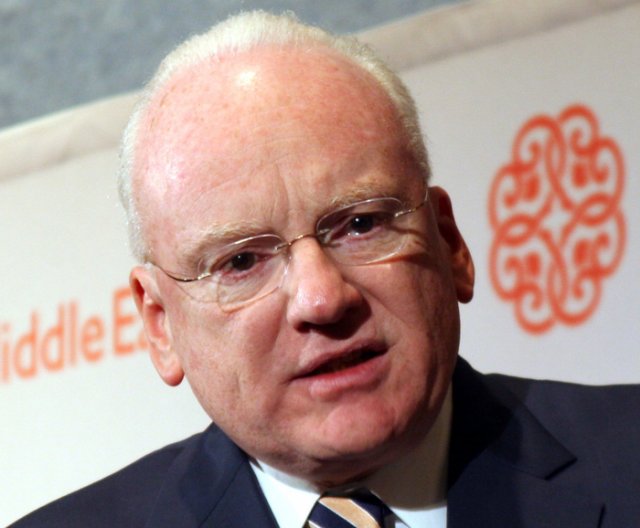
Richard Clarke, former White House cybersecurity czar, says the government has always put limits on what it would do to fight terrorism, and the FBI's demands of Apple overstep them. (credit: Aude)
Another former national security official has spoken out forcefully against the FBI's quest to get Apple to write code to unlock the iPhone 5c used by San Bernardino mass shooter Syed Farook. Richard Clarke served as the National Security Council's chief counter-terrorism advisor to three presidents (George H.W. Bush, Bill Clinton, and George W. Bush) before becoming George W. Bush's special advisor on cybersecurity. He told National Public Radio's David Greene today that "encryption and privacy are larger issues than fighting terrorism," taking issue with the FBI's attempts to compel Apple's assistance.
Clarke added that if he was still at the White House, he would have told FBI Director James Comey to "call Ft. Meade, and the NSA would have solved this problem…Every expert I know believes that NSA can crack this phone." But the FBI wasn't seeking that help, he said, because "they just want the precedent."
Clarke explained that the FBI was trying to get the courts to essentially compel speech from Apple with the All Writs Act. "This is a case where the federal government using a 1789 law trying to compel speech. What the FBI is trying to do is make code-writers at Apple, to make them write code that they do not want to write that will make their systems less secure," he said. "Compelling them to write code. And the courts have ruled in the past that computer code is speech."
Read 2 remaining paragraphs | Comments

 Entwickler dürfen nun Onlinematches zwischen Spielern auf Konsole und PC ermöglichen, etwa in Rocket League. Sogar Mitglieder anderer Konsolennetzwerke könnten laut Microsoft gegen Spieler auf der Xbox One antreten - Sony dürfte darauf allerdings keine Lust haben. (

 Philips hat sein Hue-Sortiment erweitert und bietet jetzt ein Leuchtmittel namens Philips Hue White Ambiance an, dessen Farbtemperatur sich per App passend zur Situation verändern lässt. Wer will, kann mit den LEDs auch Sonnenauf- und untergang im Wohnzimmer simulieren. (


 Damit in der virtuellen Realität das Gefühl von Präsenz nicht durch Ruckler zunichte gemacht wird, ist zum Teil deutlich schnellere Hardware erforderlich, als sie HTC für das Vive empfiehlt. (

 Eine zwei Jahre alte Sicherheitslücke in Oracles Java-Umgebung ist offenbar nur unzureichend gepatcht worden. Die Lücke lässt sich potenziell auf Millionen von Geräten mit Java noch immer ausnutzen, ein funktionierendes Update ist nicht in Sicht. (