
Pirate Site Blocking Boosts Interest in VPNs, Research Shows

New research from Carnegie Mellon University shows that UK pirate site blocks increase people’s interest in VPN services. However, the blocks also decrease the overall numbers of visits to pirate sites, while boosting the use of legal services such as BBC’s iPlayer and Netflix.

Source: TF, for the latest info on copyright, file-sharing, torrent sites and ANONYMOUS VPN services.

stop-blockedFollowing a series of High Court orders, six of the UK’s major ISPs are required to block access to dozens of the world’s most popular ‘pirate’ sites.

The measures were supposed to make it harder for UK Internet subscribers to access these sites, but the effects on actual behavior are widely debated.

A new study published by Carnegie Mellon University and Wellesley College researchers aims to provide some empirical evidence on this issue.

The researchers investigated the effects of a 2014 court order that required ISPs to block an additional 53 pirate sites. Using data from a panel of 58,809 UK Internet users, they then reviewed the changes in browsing patterns among these users.

Not surprisingly, visits to the blocked sites dropped dramatically, 90% in this case. However, the researchers didn’t observe an increase in visitors to pirate sites that remained unblocked.

“We found that these blocks caused a 90% drop in visits to the blocked sites while causing no increase in usage of unblocked sites. This led to a 22% decrease in total piracy for all users affected by the blocks”

This suggests that the pirate site blockades are indeed effective to a certain degree. However, as anecdotal evidence has shown in the past, they also boost the interest in circumvention tools such as VPNs.

“Some users of the blocked sites, however, did seem to employ technical workarounds to continue usage of the blocked sites,” the researchers reveal.

The data show a marginally significant effect which indicates that “for every 10 additional visits to blocked sites before the blocks, a consumer increased their visits to VPN sites after the blocks by an additional 30%.”

In other words, while some pirates may drop out, there are also those who actively try to circumvent the blockades.

Overall, however, the researchers conclude that there’s a decrease in piracy and an increase in use of legal services. This effect is most pronounced for ad supported streaming services, and to a lesser degree (and only a 75% confidence level) for paid services.

“We also found that these blocks caused a 6% increase in visits to paid legal streaming sites like Netflix and a 10% increase in videos viewed on legal ad supported streaming sites like BBC and Channel 5.”

One should take into account that the results are based on data from 2014, after several large pirate sites were blocked already. This means that other pirates may have already dropped out after earlier blocks, while the more persistent pirates remain.

This may also explain why there was a stronger effect on visits to legal services in a previous study. That said, the additional blocking measures still change people’s behavior.

“The evidence suggests that blocking large numbers of sites can still ‘move the dial’ in terms of consumer behavior, but that there may be diminishing returns as remaining pirates may be more dispersed or else have lower willingness to pay for legal content.

“Nonetheless, such blocks can serve to mitigate the possibility of a long-term return to the prior status quo,” the researchers add.

The research was carried out as part of Carnegie Mellon University’s Initiative for Digital Entertainment Analytics, which received a generous donation from the MPAA. However, the researchers suggest that their work is carried out independently.

That said, the results are likely to be used by the entertainment industries to justify additional blocks around the world.

Source: TF, for the latest info on copyright, file-sharing, torrent sites and ANONYMOUS VPN services.

Netflix: VPN Blockade Backlash Doesn’t Hurt Us

Netflix CEO Reed Hastings says that the recent crackdown on VPN and proxy users hasn’t hurt the company’s results. The VPN blockade only affects a small but vocal minority, according to Hastings, and there are no signs that hordes of subscribers are abandoning ship.

Source: TF, for the latest info on copyright, file-sharing, torrent sites and ANONYMOUS VPN services.

netflix-logoEarlier this year Netflix announced that it would increase its efforts to block customers who circumvent geo-blockades.

As a result it has become harder to use VPN services and proxies to access Netflix content from other countries, something various movie studios have repeatedly called for.

With the application of commercial blacklist data, Netflix already blocks IP-addresses that are linked to such services, something which also affects well-intentioned customers who merely use a VPN to protect their privacy.

This has resulted in a lot of complaints from users with over 40,000 people signing a petition to lift the VPN ban. In addition, several people claim to have ended their Netflix subscriptions due to the restrictive policies, while others have suggested a return to their old pirate ways.

Some analysts predicted that the outrage might have an effect on the company’s results, but this doesn’t appear to be the case. During the presentation on the first quarter results yesterday, the VPN issue was just a small footnote.

When asked about the impact of the VPN changes on the results, Netflix CEO Reed Hastings brushed the issue aside as a minor detail that doesn’t impact the bigger picture in any way.

“It’s a very small but quite vocal minority. So it’s really inconsequential to us, as you could see in the Q1 results,” Hastings said during the earnings call.

Jumping in, Netflix CFO David Wells stressed that Netflix enjoyed very strong growth in the United States, as well as a successful global expansion. So, overall there is no sign that VPN users are abandoning ship en masse.

While the impact on the company’s revenue turns out to be insignificant, there is of course also a user satisfaction angle which could create a possible PR backlash in the longer term.

Netflix’s management doesn’t address these issues directly. However, it’s clear that hundreds of thousands of people are affected and Netflix can’t be happy with the outpouring of complaints that continues day after day.

Nonetheless, Netflix continues to address the VPN piracy issue. TorrentFreak has spoken to several VPN service providers who have seen an increase in blocking efforts over the past several weeks.

Initially Netflix used static addresses for the geo-blocking checks. As a result, proxy and VPN operators could easily bypass these checks by forwarding this traffic to a ‘clean’ IP-address. However, Netflix recently updated its detection methods and now uses hundreds of regularly changing domains.

“They are now coming from a few hundred different possible subdomains” one VPN operator told us.

“This makes it much more expensive for us to circumvent because we would basically need to forward all Netflix traffic through our servers instead of just the packets that do the geolocation.”

Netflix previously said that, ultimately, it wants to make VPN banning obsolete by licensing all content globally. However, as long as the company still has to block access to some of its own content including House of Cards, there’s still a long way to go

Source: TF, for the latest info on copyright, file-sharing, torrent sites and ANONYMOUS VPN services.

Norwegian Authorities Sued Over Popcorn-Time Domain Seizure

Two digital rights groups have filed a lawsuit to challenge the Government’s seizure of a Popcorn-Time related domain name. The groups believe that the website, which offered information and links to the popular streaming software, did nothing wrong. In any case, a domain name seizure is seen as a disproportionate measure.

Source: TF, for the latest info on copyright, file-sharing, torrent sites and ANONYMOUS VPN services.

popcorntIn recent years the Popcorn Time application has gained popularity worldwide, mostly thanks to its ability to stream torrent files in a Netflix-style interface.

This development raised concern among many movie industry companies, who have been working hard to contain the threat by going after several forks and their developers.

Most recently, Norwegian rightholders reported a local Popcorn Time site to the local economic crime police. Responding to this referral, the authorities seized the Popcorn-Time.no domain name.

Unlike the name suggests, the site didn’t host the application itself but instead posted news articles, as well as links to sites that offered the application.

Many were surprised by the action and legal experts including Professor Olav Torvund of the Norwegian Research Center for Computers and Law openly voiced their concerns.

Not only is the legality of the site debated, but also the use of a far-reaching measure without a proper judicial review.

Responding to these concerns, two digital rights groups have now filed a lawsuit against the authorities. Electronic Frontier Norway (EFN) and the Norwegian Unix User Group (NUUG) want the court to decide whether the domain seizure was appropriate.

“We feel that this is an important case that addresses the limits of free speech,” EFN’s managing director Tom Fredrik Blenning tells TorrentFreak.

“If this procedure is found to be legal, domain name seizures will make it possible for the police to shut down a forum based on mere suspicion that a site discusses potential illegal actions.”

As far as the digital rights groups are concerned the Popcorn-Time information site was operating legally.

But even if there are legitimate legal concerns, they believe that domain name seizures should only be applied in extreme cases where lives are at stake. This was certainly not the case here.

“The decision to seize the domain name was made by a low-ranking lawyer employed by the police,” Blenning says.

“Our position is that this decision may very well be wrong, but even if it is a correct decision, it is one that should be made by a judge in a court of law.”

Through the lawsuit the groups hope to answer two main questions. Firstly, was Popcorn-Time.no violating the law even though it only offered links to and information about the application.

Secondly, is a domain name seizure proportionate when it’s not obvious whether a website is actually breaking the law?

According to the two digital rights groups, the authorities clearly went too far. They hope that the court will agree and that similar broad enforcement measures can be prevented in the future.

Source: TF, for the latest info on copyright, file-sharing, torrent sites and ANONYMOUS VPN services.

Top 10 Most Pirated Movies of The Week – 04/18/16

The top 10 most downloaded movies on BitTorrent are in again. ‘Deadpool’ tops the chart this week, followed by ‘Ride Along 2′ ‘The Revenant’ completes the top three.

Source: TF, for the latest info on copyright, file-sharing, torrent sites and ANONYMOUS VPN services.

deadpoolThis week we have two newcomers in our chart.

Deadpool is the most downloaded movie again.

The data for our weekly download chart is estimated by TorrentFreak, and is for informational and educational reference only. All the movies in the list are BD/DVDrips unless stated otherwise.

RSS feed for the weekly movie download chart.

Ranking (last week) Movie IMDb Rating / Trailer
torrentfreak.com
1 (4) Deadpool (HDrip subbed) 8.6 / trailer
2 (…) Ride Along 2 5.9 / trailer
3 (4) The Revenant 8.2 / trailer
4 (2) Star Wars: The Force Awakens 8.3 / trailer
5 (…) The Witch (Webrip) 7.2 / trailer
6 (8) Mr. Right (Web-DL) 6.4 / trailer
7 (5) Batman v Superman: Dawn of Justice (Cam/TS) 7.5 / trailer
8 (9) The Jungle Book (Hindi Cam) 8.3 / trailer
9 (3) Hail Caesar! (Webrip) 6.8 / trailer
10 (6) Kung Fu Panda 3 (Web-DL) 8.0 / trailer

Source: TF, for the latest info on copyright, file-sharing, torrent sites and ANONYMOUS VPN services.

After 4 Years… Copyright Holders Still Think Megaupload is Alive

More than four years after Megaupload was taken down by the U.S. Government, several prominent copyright holders still ‘think’ that the site is hosting infringing content. Automated bots operated by their anti-piracy partners continue to send Google numerous takedown notices for Megaupload URLs, more than it received when the site was still online.

Source: TF, for the latest info on copyright, file-sharing, torrent sites and ANONYMOUS VPN services.

megaupload-logoWell over four years have passed since Megaupload was shutdown, and as time passes people’s memories of the former Internet giant are fading away.

Interestingly, several copyright holders are keeping Megaupload’s spirit alive. Even though the site hasn’t been online for nearly half a decade, many continue to send out takedown requests targeting the former file-hosting service.

Take Paramount Pictures for example. Earlier this year the Hollywood movie studio asked Google to remove a Megaupload URL claiming that it hosted a copy of the The Big Short, a film that was released in 2015.

Impossible of course, since the movie didn’t even exist when the site was online, but apparently Paramount’s anti-piracy partner IP-Echelon thinks otherwise.

Paramount’s takedown notice

paramega

Ironically, the screenshot above also lists a Hotfile URL, another site that hasn’t been online for years. Just as bad, several of the other links point to content that’s unrelated to The Big Short including Nokia N97 firmware and a porn video.

Another takedown request targeting Megaupload comes from HBO. With help from its anti-piracy partner MarkMonitor, the company asked Google to remove a Megaupload link because it allegedly hosts a nude scene from Marisa Vitali in Bored To Death.

This video did indeed exist five years ago, but the URL hasn’t been active since the Megaupload raid, nor did Google index it recently.

It’s not just Hollywood outfits that make these mistakes. The prominent publisher Taylor & Francis is also frequently targeting the defunct file-hosting service. Most recently, its anti-piracy partner Link-Busters claimed that the site was carrying a copy of the book “Principles and Practice of Head and Neck Surgery and Oncology.”

So, while Megaupload has been offline for more than four years, copyright holders continue to target it. In fact, Google received more takedown notices targeting Megaupload after it was shut down than while it was still up and running.

This is strange, also since Google is no longer indexing any Megaupload URLs. At the time of writing a search for the site only returns four results.

Yes, rightholders are asking Google to remove links that were not even in Google’s index to begin with…

These mistakes are made by automated keyword filters that scour link sites and forums for links to hosting services. These bots don’t bother to check whether Google actually indexes the content, nor do they remove dead sites from their system.

This is not the first time this sloppiness has been brought to the forefront. A few weeks ago researchers from Columbia University’s American Assembly and Berkeley revealed that more than 28% of the takedown requests received by Google are “questionable.”

While the mistakes detailed above haven’t resulted in any serious harm, it’s easy to see how the same broad filtering techniques can also target content or sites that are perfectly legitimate and have a lot more to lose.

Source: TF, for the latest info on copyright, file-sharing, torrent sites and ANONYMOUS VPN services.

The Pirate Bay Offline For 24 Hours

The Pirate Bay has been down for 24 hours, causing concern among many BitTorrent users. The TPB team is aware of the situation and says the problems are being caused by technical issues, so the site is likely to rebounce soon.

Source: TF, for the latest info on copyright, file-sharing, torrent sites and ANONYMOUS VPN services.

pirate bayThe Pirate Bay has been unreachable for more than a day now.

TorrentFreak reached out to the TPB team and we were informed that there appears to be a technical issue with the servers which should be resolved soon.

The Pirate Bay currently displays a CloudFlare error message across all domain names, confirming that TPB’s servers are unresponsive.

In addition to the main thepiratebay.se domain name, various proxy sites are also offline.

tpb-cf

The Pirate Bay has had quite a few stints of downtime in recent weeks. The popular torrent site usually returns after several hours, but this time it’s taking a bit longer.

With the raid of 2014 still fresh in people’s minds, some are quick to spread panic, but these concerns are unwarranted.

In fact, the site is still accessible via the Tor network (through their .oinio address), including the popular Pirate Browser. The Tor traffic goes through a separate server and works just fine.

Source: TF, for the latest info on copyright, file-sharing, torrent sites and ANONYMOUS VPN services.

Judge Allows Popcorn Time “Pirate” to Keep on Torrenting

A federal court in Oregon has signed off on a judgment against a Popcorn Time user who streamed a copy of the Adam Sandler movie The Cobbler. While both parties have already agreed on a permanent injunction, the judge in question stripped the parts requiring the defendant to remove all BitTorrent clients from her computer while observing a P2P software ban in future.

Source: TF, for the latest info on copyright, file-sharing, torrent sites and ANONYMOUS VPN services.

popcorntLawsuits against alleged file-sharers are a common occurrence in United States federal courts.

Hundreds of thousands of people have been accused in recent years, most after using standard BitTorrent clients.

More recently there’s been a specific focus on Popcorn Time users. They were targeted in a series of lawsuits this summer.

One of the cases was filed by the makers of The Cobbler, who listed the IP-addresses of several Popcorn Time users in their complaint. The goal of the filmmakers is to identify the account holders and settle the dispute out of court, which many have done already.

Recently, another Popcorn Time user settled with the movie studio. While the scale of the agreement was not disclosed they usually range between a few hundred and a few thousand dollars.

The defendant in question was allowed to remain anonymous but admitted that her IP-address was indeed used to download and distribute the movie in question. To end the lawsuit, both parties agreed to a ‘consent judgment’ which was signed off by a District Court judge.

While this is a common procedure, Magistrate Judge Stacie Beckerman decided to make several crucial changes to the proposed permanent injunction, even though both parties already agreed on it.

Among the stricken parts is a line that would order the defendant to remove all BitTorrent clients from her computer and observe a ban on P2P software in the future (order: pdf).

“DOE-73.180.17.189 is hereby directed to immediately delete all unlicensed content in which Voltage has any rights or interest including plaintiffs motion picture, together with any and all BitTorrent clients on any computer(s) she owns or controls together with all other software used to obtain media through the Internet by peer-to-peer exchange,” it read.

In recent cases many other judges left this language intact, but for Judge Beckerman it appears to have gone too far.

In addition, the Judge also removed the line preventing the defendant from engaging in any infringing BitTorrent transfers in the future, limiting the scope of the permanent injunction only to titles to which Voltage Pictures holds the copyrights.

While the defendant still has to pay, the changes are important as it allows her to keep using BitTorrent and P2P software in general, which of course have many legitimate purposes as well.

It’s also good to see that judges are not blindly signing off on any order they see before them.

Source: TF, for the latest info on copyright, file-sharing, torrent sites and ANONYMOUS VPN services.

MPAA Wants ISPs to Disconnect Persistent Pirates

The MPAA wants Internet providers and services to take stronger actions against persistent copyright infringers. Ideally, the most egregious pirates should lose their accounts permanently, the group says. To accomplish this ISPs should be required to track the number of notices they receive for each account.

Source: TF, for the latest info on copyright, file-sharing, torrent sites and ANONYMOUS VPN services.

pirate-runningIn recent weeks, many groups and individuals have voiced their opinions about the future of the DMCA, responding to a U.S. Copyright Office consultation.

This includes the MPAA, which acts on behalf of the major Hollywood studios. In a 71-page submission the group outlines many problems with the current law, asking for drastic reforms.

Ideally, the group would like search engines to enforce a “stay down” policy ensuring that content can’t reappear under different URLs. In addition, it would like registrars to suspend domain names of pirate sites, such as The Pirate Bay.

Another point of concern for the movie industry group is that of “repeat infringers,” people who frequently share pirated content. This applies to users of web services such as Facebook and YouTube, but also ISPs.

“The requirement that service providers terminate repeat infringers is critical,” MPAA writes in its submission.

The MPAA points out that the percentage of persistent pirates is relatively low compared to all Internet users who ever have committed copyright infringement online, but that they do pose a significant threat.

“The serial infringers, however, account for a disproportionate share of the overall prevalence of infringing content: They upload and download infringing copies much more heavily than those who do so once or twice; and they keep infringing content online and available for others to stream or download illegally for much longer than do other users.”

In the U.S. it is currently rare for ISPs to disconnect persistent pirates, with many arguing that only a court can decide if someone can be stripped from such an essential service as Internet access.

However, citing several recent legal cases, including the Cox lawsuit, the movie studios argue that ISPs should terminate the accounts of persistent pirates even if there’s no court order requiring them to do so.

According to the MPAA Internet providers “must terminate users who repeatedly and blatantly infringe copyright, regardless of whether there has been a judicial determination that the user is liable for copyright infringement.”

To accomplish this goal service providers should keep track of DMCA notices so they can identify repeat infringers and take appropriate action in response.

“The challenge now will be to have courts consistently enforce these rules against noncompliant services. Courts should also make it clear that an effective and compliant policy must not allow terminated users simply to create new accounts on the same service,” they write.

The Hollywood group’s calls are quite different from the voluntary agreement it currently has with ISPs. Under the Copyright Alert System ISPs are required to forward up to six notices per user account, but permanent Internet connections are not part of the deal.

Needless to say, ISPs are not going to be happy with the demands. In their submission to the Copyright Office they stressed that their subscribers shouldn’t lose Internet access based solely on copyright holder complaints.

With the many conflicting positions we reported on in recent weeks, it’s going to be very hard for the Copyright Office to come up with a plan that will suit everyone. In any case, we can look forward to some heated debates.

Source: TF, for the latest info on copyright, file-sharing, torrent sites and ANONYMOUS VPN services.

Paramount: We Own The Klingon Language

The ongoing lawsuit between Paramount Pictures, CBS Studios and the crowdfunded Star Trek spin-off “Prelude to Axanar” is raising some interesting copyright questions. The spin-off makers argue that several of the Star Trek related elements they use are not copyrightable, but the movie studios clearly disagree.

Source: TF, for the latest info on copyright, file-sharing, torrent sites and ANONYMOUS VPN services.

klingonEarlier this year Paramount Pictures and CBS Studios filed a lawsuit against the makers of the Star Trek inspired fan film, accusing them of copyright infringement.
The dispute centers around the well-received short film Star Trek: Prelude to Axanar and the planned follow-up feature film Anaxar.

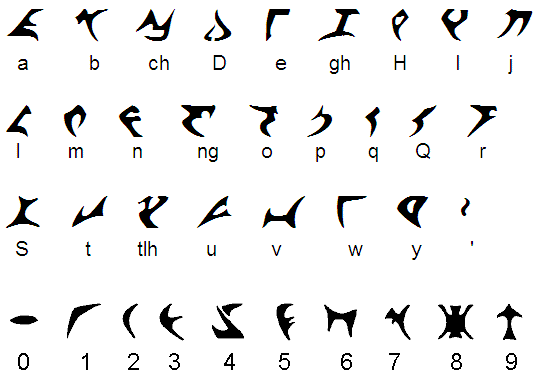
Among other things, the Star Trek rightsholders claim ownership over various Star Trek related settings, characters, species, clothing, colors, shapes, words, short phrases and even the Klingon language.

Axanar productions and Alec Peters, the makers of the fan-spinoff, responded to several of the allegations last month arguing that several of the allegedly “infringing elements” are not protected by copyright at all.

They argued that the Klingon language is not copyrightable because it’s not more than an idea or a system. They therefore asked the court to dismiss or strike the copyright claims in question.

However, Paramount and CBS disagree (bIlughbe’*). In their reply the rightsholders call the argument absurd and among other things, they point out that the language system is not very useful if there are no real Klingons to communicate with.

“This argument is absurd, since a language is only useful if it can be used to communicate with people, and there are no Klingons with whom to communicate,” they write (full filing: pdf).

“Defendants’ use of the Klingon language in their works is simply further evidence of their infringement of Plaintiffs’ characters, since speaking this fictitious language is an aspect of their characters.”

Klingon alphabet (image: wiki)

klingonalpha

In any case, the court should not rule on the matter prematurely, the rightsholders note. The question to what degree various elements are copyright infringing should be decided in future hearings where the issues can be properly addressed.

The same applies to other elements, including spaceships. Axanar productions argues that these general concepts can’t be copyrighted, but Paramount and CBS point out that their specific expression of Klingon warships is.

Klingon ships

klingonships

“Plaintiffs have not merely alleged that the general concepts of a ‘spaceship’ or a ‘spacedock’ have been appropriated – the Complaint’s allegations show that Defendants have misappropriated the expression of these concepts,” the movie studios inform the court.

Citing relevant case law, they argue that Star Trek starships deserve the same protection as the Batmobile.

“Even assuming that Defendants are properly dissecting the elements of the Star Trek Copyrighted Works (and they are not), courts have held that vehicles like the Batmobile are copyrightable as characters, and therefore, specific Star Trek starships are also copyrightable.”

Summing up, Paramount and CBS argue that the infringing status of the various elements should be considered in substantial similarity analysis during the lawsuit. They therefore ask the court to deny Axanar’s motion to dismiss or strike their claims.

*bIlughbe’ means you are wrong, in Klingon

Source: TF, for the latest info on copyright, file-sharing, torrent sites and ANONYMOUS VPN services.

Anti-Piracy Firm Wants ISPs to Pay for Pirating Subscribers

Piracy monetization firm CEG TEK is recommending that the U.S. Copyright Office should hold ISPs responsible for pirating subscribers. Among other things, the company proposes that, after an initial warning, Internet providers should pay a $30 fine each time a subscriber is caught downloading copyrighted content.

Source: TF, for the latest info on copyright, file-sharing, torrent sites and ANONYMOUS VPN services.

cegtekintOver the past weeks dozens of companies and organizations have shared their concerns regarding the current state of the DMCA copyright law.

The responses are part of a consultation launched by the U.S. Copyright Office. Most focus on the effectiveness of the notice and takedown model, and the response of anti-piracy firm CEG TEK International zooms in on how ISPs handle these notices.

The company is well-known for its collaboration with adult video companies, for which it targets individual Internet subscribers with settlement requests. These requests are sent through DMCA notifications, commonly demanding a few hundred dollars.

Some ISPs forward these requests but most large providers have chosen not to do so. This is problematic for CEG TEK as it hurts their business model.

“The problem is the roadblocks to enforcement of copyrights that are put up by online service providers to protect their relationships with their infringing customers,” CEG TEK’s attorney writes.

The anti-piracy outfit points out that they, and others, can easily track the IP-addresses of pirates. But, without cooperation from ISPs this information isn’t very helpful.

“Unfortunately, the ISPs, who rake in millions, and probably billions, of dollars from their infringing customers, do not voluntarily disclose the infringer’s identities,” CEG TEK notes.

Under the DMCA, Internet providers are not required to forward all notices of claimed copyright infringement. CEG TEK recommends changing towards Canada’s model instead, where subscribers must be notified.

“Canada’s ISPs forward such notices at no charge to copyright owners. Setting up forwarding systems is relatively easy and inexpensive, and is similar to ISPs normal bill-forwarding systems,” the company notes .

In this case, CEG TEK would like U.S. ISPs to forward their “bills,” but there is more.

In addition to a forwarding requirement the anti-piracy firm also suggests the introduction of statutory damages for Internet providers, requiring them to pay $30 each time a subscriber doesn’t stop sharing pirated content.

“By statute require ISPs to pay copyright owners $30 for each notice of claimed infringement sent with respect to an Internet account having repeat infringements,” the suggestion reads.

“Do this, and ISPs would actually enforce their own Terms of Use that currently give lip service to the concept that customers are forbidden from engaging in copyright infringement,” CEG TEK adds between brackets.

The submission is written by CEG TEK attorney Ira Siegel, who also represented several rightsholders in various lawsuits against “John Doe” BitTorrent users, as copyright troll watcher FCT points out.

Siegel’s “trolling” connection is relevant as he also proposes several changes to the DMCA in order to make it easier to identify pirates through courts. Among other things, CEG TEK suggests allowing mass-BitTorrent lawsuits, in which tens of thousands of IP-addresses can be grouped (joined) in one complaint.

Such a change would make it cheaper to uncover the identity of alleged infringers, as rightsholders would only have to pay a single filing fee.

The proposals put forward by CEG TEK are among the most far-reaching we’ve seen thus far. They also directly oppose comments made by the U.S. broadband association USTelecom, which asked the copyright office to stop “abusive” notices that include settlement demands.

Source: TF, for the latest info on copyright, file-sharing, torrent sites and ANONYMOUS VPN services.