CDC just says no to opioid prescriptions for chronic pain

New guideline aims to crack down on “doctor-driven” epidemic of overdose deaths.

(credit: frankieleon)

To help curb “one of the most pressing public health issues” of the day—the epidemic of opioid addiction and overdoses—the Centers for Disease Control and Prevention released broad, first-of-its-kind guidelines for the use of the deadly medications.

Of the 12 recommendations in the agency’s guidance, the most prominent is the suggestion that doctors refrain from giving opioid prescriptions for chronic pain—the drugs are OK to use for palliative care, cancer patients, and end-of-life treatments. Patients suffering from chronic pain should explore alternative treatment plans and strategies, such as non-opioid medications and exercise therapy, the agency says. And if a doctor feels an opioid should be used for chronic pain management in a patient, it should be done very thoughtfully and with close monitoring, including urine tests for undisclosed opioid use.

“Plainly stated, the risks of opioids are addiction and death, and the benefits for chronic pain are often transient and generally unproven,” CDC Director Tom Frieden said in a press briefing Tuesday.

Read 6 remaining paragraphs | Comments

When it comes to chats about surgery, iPads > doctors, patients say

Videos about procedure help with fully informed consent, patient preparedness.

As telecommunication with doctors—telemedicine—is an increasingly popular way to skip a trip to the doctor’s office, one group of patients may be clamoring for screen-time even when a doctor is right in front of them.

For 88 patients preparing for surgery, a short medical video viewed on an iPad was overwhelmingly preferred for explaining the procedure and ensuring informed consent over actual face-time with the doctor. The randomized, controlled trial, presented at the annual European Association of Urology Congress being held this week in Munich, suggests that technology may be an effective tool for doctors to better prepare patients for treatments.

“Often doctors work within busy practices and clinical environments with time limiting the quality of a consult and or verbal consent for a procedure,” lead researcher Matthew Winter of the Royal North Shore Hospital in Sydney, Australia, said in a statement. “Through the use of portable video media, a doctor can present his/her own practice and procedural technique in an innovative, dynamic, and engaging manner.”

Read 3 remaining paragraphs | Comments

The FDA quietly changed the rules to block the next Martin Shkreli

Regulatory change fast-tracks generics that would compete with overpriced drugs.

(credit: CSPAN)

With a tiny change to the rules, the Food and Drug Administration made it a bit harder for Martin Shkreli and his ilk to make a killing by jacking up the prices of off-patent drugs.

The regulatory tweak now allows a “priority” or expedited review process for any generic drug that would compete with an off-patent drug that is only made by one company—the kinds of drugs that have seen skyrocketing price tags of late. The faster review process could cut the window for a pharmaceutical company to have a monopoly over the drug from years to months, sharply cutting profits from potential price gouging.

In an e-mail to Bloomberg, FDA spokesperson Sandy Walsh wrote that the agency expects as many as 125 generic drug applications will now be fast-tracked due to the change. The agency previously expedited reviews of generics that would compete with newly off-patent brand name drugs.

Read 6 remaining paragraphs | Comments

Parents’ bad diets may mess with genes, boost kids’ risk of obesity, diabetes

Mouse IVF study suggests genetic switches to blame for metabolic inheritance.

A crummy diet can obviously have a lasting impact on the waistline—but for parents, it may also have a lasting impact on DNA and the family line, a new study suggests.

Compared with skinny mice on a standard or low-fat diet, genetically similar mice that became obese on a high-fat, high-calorie diet were more likely to have obese offspring at risk of developing type 2 diabetes. While researchers have noted such a familial influence on metabolic disorders before, the new study took the extra steps of producing the pups by in vitro fertilization of the sperm and eggs from the obese parents, implanted in slim, surrogate mothers. This experimental setup eliminates confounding influences from mom and dad, such as chemicals in seminal fluid, molecular signals in utero, microbiome transfers, and components of breast milk.

The finding, published Monday in Nature Genetics, provides clean support for the theory that poor diet and/or obesity in parents produces epigenetic changes—chemical tags and other molecular switches of DNA that alter how the genetic code is read and translated, rather than the code itself. And those changes can get passed down to offspring and influence their metabolism and health.

Read 8 remaining paragraphs | Comments

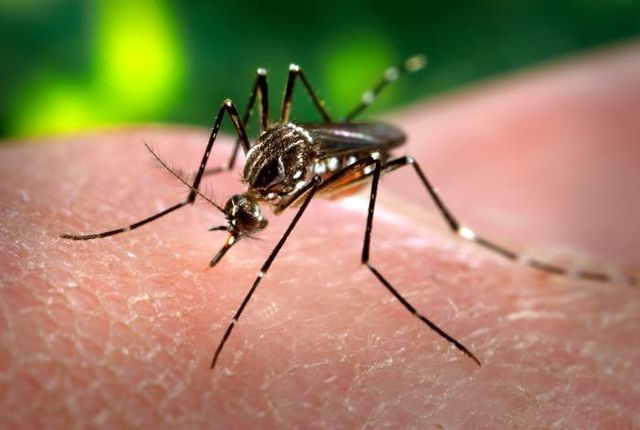
GM mosquitoes clear an FDA hurdle for Florida release, locals angry

Engineered bugs could block spread of Zika, dengue, yellow fever, and chikungunya.

(credit: US DHHS)

Genetically engineered mosquitoes that have been under regulatory review for the past five years have passed one of the last remaining hurdles to gain approval for release in a field trial, the Food and Drug Administration announced Friday.

Oxitec’s OX513A Aedes aegypti mosquito would pose no significant threat to the environment or to people in Key Haven, a community in the Florida Keys where the company proposed the trial, the agency announced in a preliminary finding. The initial judgment of “no impact” from the environmental assessment will be followed up by a 30-day window for public comments. Then, the FDA will make a final decision. If the agency confirms the preliminary green light, the mosquitoes could be released shortly after.

“We look forward to this proposed trial and the potential to protect people from Aedes aegypti and the diseases it spreads,” Oxitec’s Chief Executive Officer Hadyn Parry said in a statement.

Read 5 remaining paragraphs | Comments

“Good” cholesterol can sometimes be bad, study finds

Rare exception to simplistic cholesterol rule found in genetic analysis.

(credit: cristian)

When it comes to cholesterol, it is possible to have too much of a good thing.

High-density lipoprotein (HDL), the molecular packages that scavenge excess amounts of cholesterol from around the body and ferry it to the liver where it gets broken down, has long been considered “good” cholesterol. That’s in contrast to the “bad” low-density lipoprotein (LDL) cholesterol packages that deliver the waxy substance throughout the body where it’s used for the production of cellular products, such as membranes and hormones. Too much LDL—or not enough HDL—and cholesterol can end up getting stockpiled along blood vessels, which hampers blood flow and leads to coronary heart disease.

Thus, heart disease prevention efforts have largely revolved around lowering LDL and raising HDL. However, clinical trials and animal experiments that raise HDL levels have produced mixed results. And in a new study, researchers find that having naturally high levels of HDL can actually be bad.

Read 6 remaining paragraphs | Comments

Three laws could cut US gun deaths by 90%, study says

Researchers analyze gun stats and state laws, but critics say links are weak.

(credit: Michael Saechang)

If the federal government enacted just three gun-control laws—requiring universal background checks for firearms, background checks for ammunition, and firearm identification—gun deaths could fall by as much as 90 percent according to a new study.

The study, published in the The Lancet, tried to tease apart the independent effects that 25 state gun control laws implemented in various states in 2009 had on firearm related deaths (including homicides and suicides) between 2008 and 2010. The analysis, led by researchers at Boston University, also took into account factors related to gun deaths such as unemployment rates and levels of gun ownership.

However, some skeptics of the study wonder if the limited data of just a few years and correlations are enough to draw definitive links. The authors themselves admit that impacts of gun legislation could take several years to unfold in the statistics. And various other factors influencing gun death rates—such as suicide prevention efforts, law enforcement implementation, and demographics—may also skew the analysis.

Read 8 remaining paragraphs | Comments

Nearly half of Americans mistakenly think Zika is fatal

New survey reveals misconceptions about virus spreading in South and Central America.

(credit: CDC)

In a recent phone survey, 42 percent of Americans reported thinking that people infected with the Zika virus were likely to die from the infection.

The survey, conducted by the Annenberg Public Policy Center (APPC), of the University of Pennsylvania, suggests that despite massive news coverage of the ongoing outbreaks, critical information about the virus is not being clearly conveyed.

For the record, infections with the Zika virus, which are mainly transmitted by Aedes mosquitoes, typically result in mild to no illness. In fact, health experts estimate that around 80 percent of those infected will show no symptoms at all. For the remaining 20 percent-or-so that do, the symptoms are generally mild and include fever, aches, rashes, and pink eye.

Read 6 remaining paragraphs | Comments

Sidekick chemicals reverse antibiotic resistance in microbes

Mouse study suggests molecules safely restore antibiotics’ ability to take down MRSA.

Methicillin-resistant Staphylococcus aureus (MRSA), which poses a major public health crisis worldwide. (credit: V. Altounian / Science Translational Medicine (2016)])

As microbes continue to build immunity to antibiotics, researchers are scrambling to design new therapies and figure out ways to restore the killing power of the once-potent medicines. Without such efforts, health experts fear a “post-antibiotic” era in which garden variety illnesses could turn deadly and much-needed surgical procedures might be skipped to avoid infection risks.

While brand-new antibiotics are in the works, a new study reports on two promising molecules that can transform menacing drug-resistant microbes into sitting ducks.

In mice with systemic, lethal infections of methicillin-resistant Staphylococcus aureus (MRSA), a combo of one of the small molecules and a standard antibiotic knocked back the infection. Mice treated with just the antibiotic, on the other hand, remained riddled with MRSA. The findings, reported in Science Translational Medicine, suggest that the small molecules could reverse drug resistance in MRSA and treat infections without toxic side effects.

Read 14 remaining paragraphs | Comments

Creation of mini-organs follows mini-brains; teeny Frankensteins unlikely

Wee livers and heart tissue act like the real thing, may help test new meds.

To go along with mini thinking brain balls grown in lab, researchers have built functional, tiny organs as well—inching closer to the possibility of stitching together teeny-weeny Frankenstein monsters.

While the sci-fi-esque idea of full petri-dish people is just silliness (for now), miniaturized body parts could be highly useful for testing the safety and effectiveness of new drugs—perhaps someday replacing animal testing and some aspects of human trials, researchers speculate. And, in tests with prototypes of tiny, functional livers and hearts, researchers showed that the wee organs could successfully be implanted into living animals. The findings, reported in Nature Materials, suggest that the itsy-bitsy tissues could be used to repair full-sized organs some day, as well as for drug development.

While other lab-made mini organs have come before them, the new design offers a notable improvement to previous versions: vasculature and cell-to-cell connections.

Read 7 remaining paragraphs | Comments