CDC braces for Zika’s US invasion as scientists watch virus melt fetal brain

Experts prepare for pockets of transmission on US mainland as mosquito season begins.

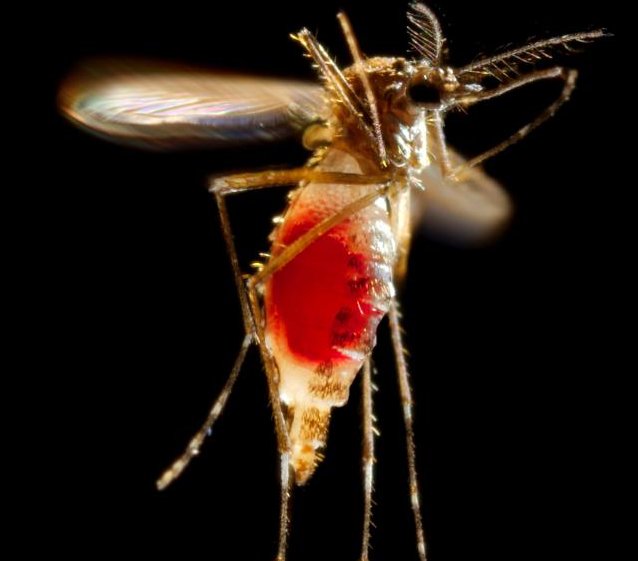
A female Aedes aegypti mosquito takes flight after a blood meal. (credit: CDC)

The Centers for Disease Control and Prevention gathered more than 300 local, state, and federal authorities and experts at its Atlanta headquarters Friday to prepare for clusters of mosquito-transmitted Zika infections on the US mainland.

“The mosquitoes that carry Zika virus are already active in US territories, hundreds of travelers with Zika have already returned to the continental US, and we could well see clusters of Zika virus in the continental US in the coming months,” CDC Director Tom Frieden said in a statement prior to today’s meeting. “Urgent action is needed, especially to minimize the risk of exposure during pregnancy.”

Zika, a virus that has been tearing across Central and South America since last year, is mostly transmitted by mosquito, but it can also be spread through sexual contact. Generally the virus only causes mild illness, with symptoms including fever, rash, pink eye, and aches. But in the recent outbreaks, Zika has been linked to rare cases of paralyzing auto-immune disease, called Guillain-Barré syndrome. Of most concern, it's also linked to devastating birth defects, including microcephaly, in which babies are born with small, malformed heads and brains.

Read 10 remaining paragraphs | Comments

Theranos blood tests often wildly wrong and may be shut down by feds

Report shows tests fail even internal company standards.

Founder and CEO of Theranos, Elizabeth Holmes at TEDMED 2014. (credit: https://www.youtube.com/watch?v=dBvzKp0AERE)

Late Thursday, federal regulators released a redacted 121-page inspection report of a Newark, California Theranos facility, which revealed that the company’s high-profile finger-prick blood tests failed quality control checks nearly 30 percent of the time.

Theranos and its CEO, Elizabeth Holmes, made waves last year with claims that they could carry out more than 200 medical tests with their Edison devices using just a few drops of blood from a finger prick—rather than a full vein draw taken by a needle. With promises that the cheap and easy finger-prick tests could revolutionize medical diagnostics, the company was valued at $9 billion.

However, since the initial buzz, the company has been hit with a series of questions, criticisms, and federal regulatory snags surrounding the accuracy and validity of its tests. In the latest setback, the Centers for Medicare and Medicaid Services (CMS) released a redacted inspection report that seems to substantiate concerns and whistleblower reports of the Edison’s failings.

Read 6 remaining paragraphs | Comments

POTUS advisors vote for Superbug Czar but go soft on farm antibiotic use

Critics say experts are not doing enough to curb use of drugs in agriculture.

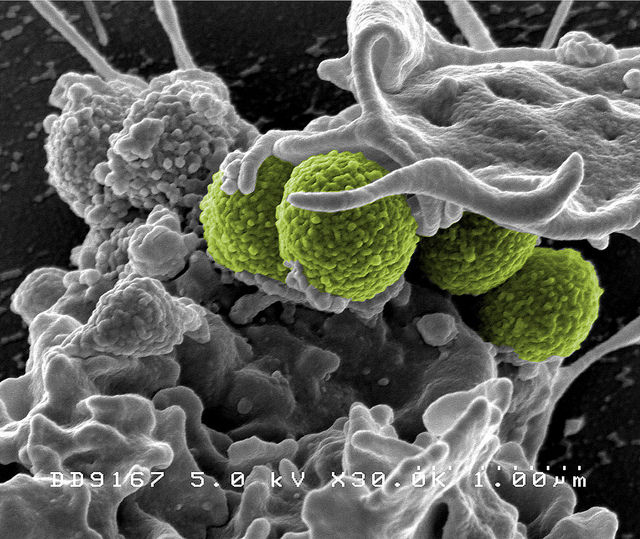
Hospital-Associated Methicillin-resistant Staphylococcus aureus (MRSA) Bacteria (credit: NIAID)

WASHINGTON—The rise of antibiotic-resistant bacteria that trek between farms and clinics and across international boarders is unquestionably one of the most serious public health threats of our time. They currently sicken around two million people in the US each year, killing at least 23,000. To tackle the issue, the Obama Administration last year released a National Action Plan and established a panel of diverse experts to research and guide the government’s efforts to squash those deadly superbugs.

That 15-person panel, called the Presidential Advisory Council on Combating Antibiotic-Resistant Bacteria or PACCARB, convened this week in Washington, DC to discuss and vote on its first progress report and key recommendations, which now head to the president’s desk. Thursday, the council unanimously voted for six recommendations, which spanned calls for funding and collaboration. But chief among them is the call for the president to establish a White House-level leader that could coordinate all of the government agencies’ efforts to fight drug resistance.

Such a leader would be critical, several panel members as well as panel chair Martin Blaser, told Ars. Currently, efforts to fight off drug resistant germs are scattered among several agencies, including the Centers for Disease Control and Prevention, the Food and Drug Administration, the Department of Agriculture, the Centers for Medicare and Medicaid Services, the Department of Defense, and several others—all of which have different priorities and budgets. The piece-meal approaches even made it difficult for the panel to assess what government agencies were up to and how they overlapped.

Read 15 remaining paragraphs | Comments

Long-awaited Theranos data shows irregularities that could affect care

Company, which still has not published data, criticized new independent study.

Founder and CEO of Theranos, Elizabeth Holmes at TEDMED 2014. (credit: https://www.youtube.com/watch?v=dBvzKp0AERE)

Finger-prick blood test results from Theranos, Inc., the beleaguered medical start-up once valued at $9 billion, had more irregularities than those from the top two clinical laboratory testing services, LabCorp and Quest Diagnostics, according to a new study.

Though Theranos’ results mostly fell in line with those from the other labs, researchers say that some of the discrepancies could lead to additional testing and medical costs, or incorrectly sway medical decisions.

The results, published in The Journal of Clinical Investigation, are the first published, peer-reviewed data on the company’s finger-prick blood tests.

Read 11 remaining paragraphs | Comments

Having a fridge laser could spare you from food poisoning

New method promises to cheaply and easily detect wriggling bacteria on your grub.

(credit: Tomaž Štolfa)

While figuring out whether the leftovers in your fridge have gone bad or not, the sniff-test just doesn’t cut it. But unfortunately, there are virtually no consumer-based tests to assure you that your food hasn’t turned, which is a huge public health problem. Each year, around 50 million Americans get food poisoning, and around 3,000 die.

Now, a research group in South Korea has come up with a possible solution, which can be briefly summarized with: pew, pew, nom, nom.

That’s right, researchers at the Korea Advanced Institutes of Science and Technology have developed a fridge-mountable laser that detects the squirming movements of microbes on the surface of your chow. The method is cheap, easy to use, and requires no contact with the contaminated food, making it an ideal solution to a common health problem, the authors suggest.

Read 4 remaining paragraphs | Comments

Scientists regenerate spinal cord in injured rats with stem cells

Stem cell patch reconnects critical nerves; long road ahead to human trials.

With patches of stem cells on their broken spinal cords, partially paralyzed rats once again reached out and grabbed distant treats, researchers report in Nature Medicine.

While previous studies have shown progress in regenerating certain types of nerve cells in injured spinal cords, the study is the first to coax the regrowth of a specific set of nerve cells, called corticospinal axons. These bundles of biological wiring carry signals from the brain to the spinal cord and are critical for voluntary movement. In the study, researchers were able to use stem cells from rats and humans to mend the injured rodents.

“The corticospinal projection is the most important motor system in humans,” senior author Mark Tuszynski at the University of California, San Diego said. “It has not been successfully regenerated before. Many have tried, many have failed—including us, in previous efforts.”

Read 5 remaining paragraphs | Comments

Best way to stop overprescribing antibiotics? Public shaming, of course

Doctors may be as irrational as the rest of us mere mortals, researchers say.

(credit: Public Domain)

The Centers for Disease Control and Prevention estimates that about half of outpatient antibiotic prescriptions are unnecessary. Most of those unneeded drugs are given to treat viral colds despite the fact that antibiotics only treat bacterial infections—and not even all of those infections require an antibiotic.

The consequence of such overzealous prescribing is that more bacteria get exposed to drugs, giving them the opportunity to develop resistance. And subsequent drug-resistant bacteria can trigger difficult- or impossible-to-treat infections, which are now a critical public health threat. As many as two million people are sickened with antibiotic-resistant bacteria each year in the US, and 23,000 of those die from the infection.

Getting doctors to simply stop overprescribing sounds pretty easy. But as data on failed public health campaigns shows, it is not. Simply reaching out and informing doctors of the ills of overprescribing don’t work, largely because doctors are already aware of the problem. Yet, due to other factors, they keep overprescribing. Those other factors may be lack of time to accurately diagnose an infection or pressure from patients who may see an antibiotic as a cure-all and demand a prescription.

Read 5 remaining paragraphs | Comments

Bulging babies: 3 or more antibiotics before age 2 may spur obesity

Studies raise more caution about treating kids, but sizeable debate remains.

(credit: Ravedave)

For decades, farmers have known that the quickest way to fatten up young, healthy livestock is to feed them antibiotics—the drugs will even plump animals on a diet. It’s unclear why the practice, called growth promotion, works. Scientists have a range of hypotheses, including that the drugs may kill off gut microbes that compete for calories or knock back mild infections that would otherwise take energy to fight off. Whatever the answer, one thing is certain: growth promotion spurs drug-resistance in bacteria. And with the rise of infections from such superbugs in people—a major threat to public health—the practice is now squarely discouraged.

Yet, despite the long-held practice in farms, researchers are just beginning to harvest data on whether the drugs have the same effect on human babies in clinics. So far, much of the data—but not all—shows some concerning similarities.

Looking at a population-representative sample of nearly 22,000 children in the United Kingdom, researchers found that giving children three or more courses of antibiotics within the first two years of life modestly increased the likelihood that they would be obese at age four. The study, being published in Gastroenterology, follows several smaller studies that hinted at such a connection, particularly for antibiotics used in the first six months of life.

Read 15 remaining paragraphs | Comments

From daredevil to chicken: Scientists find off-switch for risky behavior

Firing up specific brain cells—linked to gambling in people—turns rats cautious.

(credit: Geffen Pictures/Warner Bros.)

Whether you prefer to play it safe or wade into risky business for larger payoffs, your decision process may largely depend on a tiny bundle of cells deep in your noggin.

By tagging and tweaking those cells in the brains of high-rolling rats, researchers were able to turn them from ballsy to cautious decision-makers. More specifically, the rodents switched their preference away from pulling a lever that released a jackpot of sugary treats 25 percent of the time to another lever that served up smaller-sized treats 100 percent of the time.

The finding, published in Nature, backs up previous studies in humans showing that drugs that interfere with those same brain cells can lead to gambling problems. The study also offers a neurological explanation for differences in risk-taking behavior as well as a target for new treatments for gambling addictions.

Read 9 remaining paragraphs | Comments

Zika may have skulked around Brazil for more than a year unnoticed

Genetic study pegs virus’ arrival to 2013, letting 2014 World Cup off the hook.

(credit: Agência Brasil)

While ongoing scandals and indictments rocked the International Federation of Association Football (FIFA) during the 2014 World Cup Tournament in Brazil, there’s one thing the group was likely not guilty of—introducing Zika to the Americas.

The first case of the mosquito-transmitted virus in the Americas was documented in May of 2015 in Brazil. And some researchers had speculated that the large, international crowds of athletes and sports fans that flocked to the game may have unwittingly delivered the virus.

But a new genetic study, published Thursday in Science, suggests that the virus arrived in Brazil between May and December of 2013, well before the tournament. Around that time, the authors noted, Brazil saw a boost in travelers from areas that where then experiencing Zika outbreaks, including French Polynesia and New Caledonia. But, that travel surge was not likely linked to a specific events—sporting or otherwise—the authors emphasized.

Read 7 remaining paragraphs | Comments