What do you want to know about your microbiome?

uBiome opens poll on which of 6 top projects should win $100K in research help.

The more we learn about the microbes that inhabit the nooks and crannies of our bodies and wield profound influence on our health, the more questions arise from scientists and patients alike. Now, thanks to the microbial genomics company uBiome, we all have a chance to vote on which questions are most pressing.

The company opened a research grant competition that aims to “fast track an innovative study that has potential to affect human health and well-being.” Out of all of the submissions, uBiome’s scientists have selected six top entries and is asking the public to help pick the winner. The successful project will receive up to $100,000 worth of research assistance in the way of microbiome sampling kits and genetic analysis help.

After the voting, which you can do here, the winner will be announced in May.

Read 7 remaining paragraphs | Comments

Mysterious mutants: 13 masked people should have devastating diseases—but don’t

Their puzzling genetic resilience could hold clues to curing crippling diseases.

(credit: Jeremy Brooks)

With a deluge of DNA sequences pouring in from various studies, researchers diving in are finding that Mendelian genetics may be a lot muddier than expected. Wrinkled peas aside, certain bad mutations may not always be bad.

After sifting through the genetic codes of nearly 600,000 adults, researchers discovered that 13 of them were healthy despite carrying mutations that were thought to guarantee devastating childhood disorders, such as cystic fibrosis and those that cause severe skeletal malformations. The authors, led by Stephen Friend of the Icahn School of Medicine at Mount Sinai in New York, hypothesize that these 13 apparently normal adults have other genetic elements that compensate or buffer the effects of those mutations. If that’s true and researchers can pinpoint the source of their genetic resilience, the findings may offer critical information about how to cure these diseases in the not so genetically lucky, the authors report in Nature Biotechnology.

Most research in the past has focused on finding the cause of a disease, Friend said in a teleconference with media. But, he added, “finding the gene that is causing the disease is not the same as trying to find a way to prevent those symptoms.” A few years ago, he and a colleague came up with the idea of looking for cures not in the sick, but in people who should have gotten sick—people who look healthy and normal.

Read 8 remaining paragraphs | Comments

Mounting data suggest antibacterial soaps do more harm than good

Few pros, but cons include upped risk of infection, microbiome changes, drug resistance.

(credit: UGA)

Whether you’re coming home from an airport fluttering with international germs, a daycare full of sticky-fingered toddlers, or just a grimy office building, scrubbing your hands with bacteria-busting soap seems like a great idea. But the data that have washed up on the cleansers in recent years suggest that they actually do more harm than good—for you, those around you, and the environment.

Scientists report that common antibacterial compounds found in those soaps, namely triclosan and triclocarban, may increase the risk of infections, alter the gut microbiome, and spur bacteria to become resistant to prescription antibiotics. Meanwhile, proof of the soaps’ benefits is slim.

There are specific circumstances in which those antimicrobials can be useful, civil engineer Patrick McNamara of Marquette University in Milwaukee told Ars. Triclosan, for instance, may be useful to doctors scrubbing for minutes at a time before a surgery or for hospital patients who can’t necessarily scrub with soap but could soak in a chemical bath. Triclosan and triclocarban do kill off bacteria during long washes. But most people only clean their hands for a few seconds. “There’s evidence that there is no improvement with using soaps that have these chemicals relative to washing your hands under warm water for 30 seconds with soaps without these chemicals,” he said.

Read 15 remaining paragraphs | Comments

Sweet drug clears cholesterol, reverses heart disease—and was found by parents

Here’s how parents of kids with rare disease found what may be blockbuster drug.

Two parents’ quest to save their twin daughters’ lives from a rare, degenerative genetic disorder may end up saving and improving the lives of millions.

After digging through medical literature and fitting pieces of data together, the non-medically trained couple contacted German researchers and suggested that a chemical called cyclodextrin may be able to treat atherosclerosis—the hardening of arteries with cholesterol-rich plaques, which is a precursor to heart attack, stroke, and other cardiovascular diseases.

The researchers, Eicke Latz at the University of Bonn and colleagues, followed up on the parents’ hypothesis and found that in mice, cyclodextrin indeed blocked plaque formation, melted away plaques that had already formed in arteries, reduced atherosclerosis-associated inflammation, and revved up cholesterol metabolism—even in rodents fed cholesterol-rich diets. In petri dish-based tests, the researchers found that the drug seemed to have the same effects on human cells and plaques.

Read 16 remaining paragraphs | Comments

After stand-off with Congress, White House robs Ebola fund to pay for Zika

Administration urges Republicans to approve money to prevent US outbreaks.

(credit: CDC)

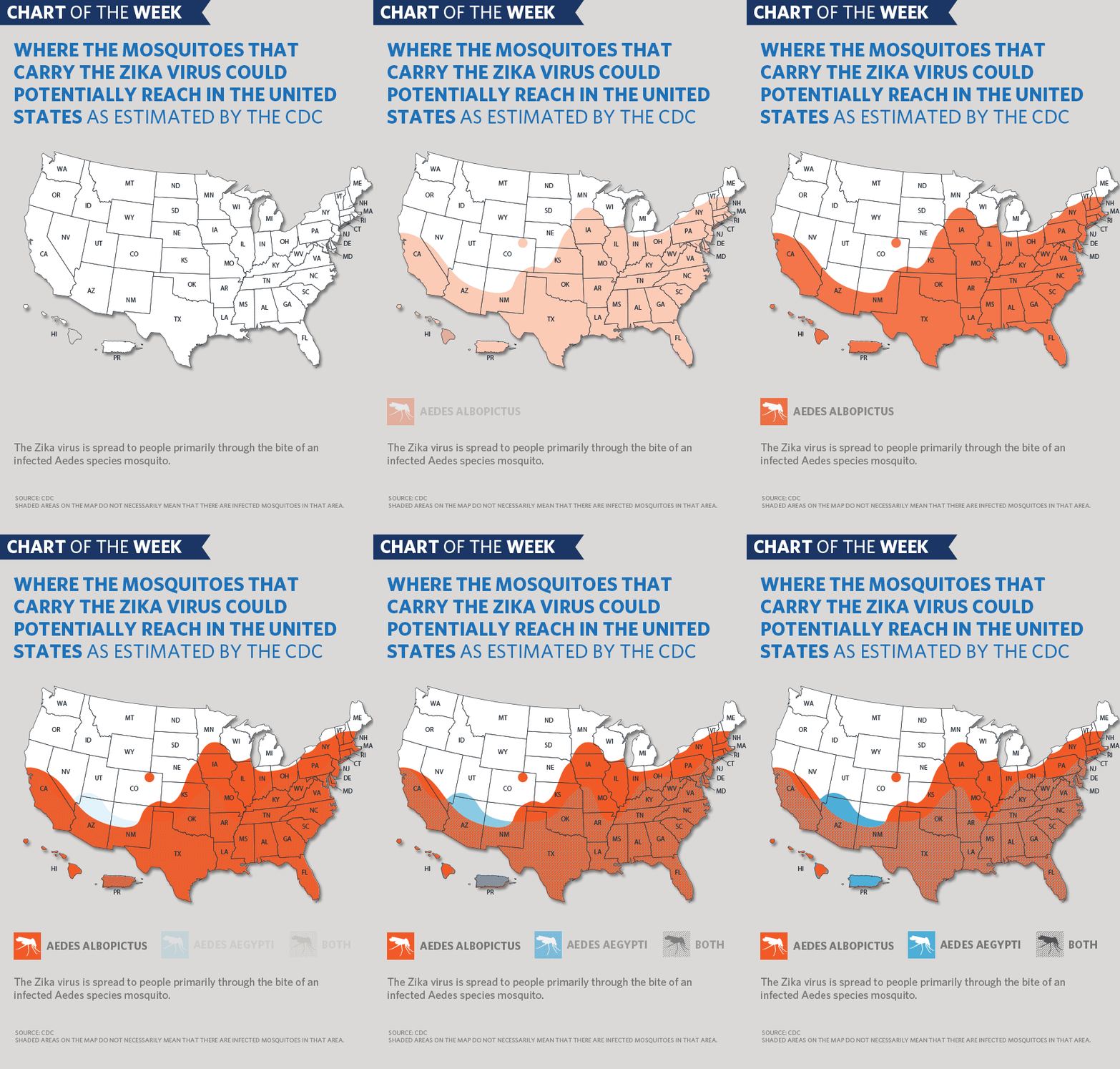
As health experts brace for the possibility that Zika will invade the mainland US, politicians are squabbling over funding for domestic defense systems, including mosquito control and vaccine development.

In February, the Obama Administration requested $1.8 billion in emergency funds to fight off the virus. But Congressional Republicans argued that money allotted to fight Ebola in West Africa could be used instead. On Wednesday, after a two-month-long impasse, the White House announced that $510 million of the $2.7 billion earmarked to battle Ebola would be transferred to the Zika fight. The administration will repurpose an additional $79 million from other accounts, including funds for emergency medical supplies during epidemics and national vaccine stockpiles.

(credit: White House/CDC)

But even with the $589 million, health officials and the administration argue that they need more funding to fight Zika. The money would go to developing diagnostics and a vaccine, as well as to mosquito surveillance and control.

Read 5 remaining paragraphs | Comments

Researchers keep pig heart beating in baboon belly for >2 years—a new record

The cross-species transplant is a step closer to using pig parts in humans.

(credit: Nick Saltmarsh)

While waiting for an organ donor, patients in need of a transplant may one day have the option of taking out a loaner organ—from a pig.

Researchers report Tuesday that they were able to keep pig hearts alive and beating in the abdomens of five baboons for record amounts of time—a median of 298 days and a max of 945 days. Previous benchmarks were set at a median of 180 and a max of 500 days, respectively.

Data from the prolonged ticker swap, published in Nature Communications, highlights scientists’ progress at breaking down the biological barriers of cross-species organ donation, inching closer to using animal organs in humans in desperate need of transplants. Currently in the US, 22 people die every day just waiting for organs, which are in constant short supply.

Read 7 remaining paragraphs | Comments

Essence of stem cells found: Key ingredients protect, heal the brain

Outside of cells, components spare tissue and cognition from irradiation effects.

Human stem cells. (credit: Nissim Benvenisty)

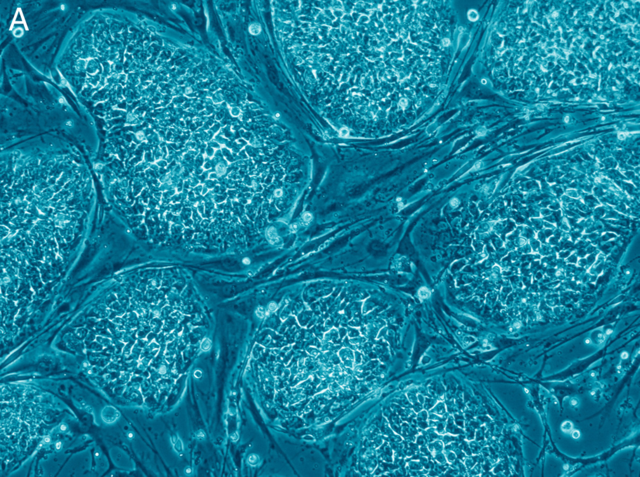
For years, stem cell-based therapies have promised myriad breakthroughs in healthcare—from cancer treatments and re-growing teeth to preventing brain damage and degeneration. While some therapies have met with much more success than others, they all face the same challenge of working with live cells. This work can be tricky. Getting some types of cells can pose ethical issues; a patient’s immune system can attack those cells once they're used; and stem cells can sometimes go haywire and generate tumors.

But for one promising stem cell therapy—one that thwarts brain damage—scientists may have found a way around the problems.

By extracting wee cellular bundles called microvesicles from stem cells, scientists can harness the same neuro-protective and healing properties seen with whole stem cell treatments. Microvesicles normally act like cell-to-cell mail, and they bud from one cell, bearing proteins and snippets of genetic material that tame the immune system and coordinate neighboring cells. In rats with irradiated brains, the bundles safeguarded brain structures, reduced inflammation, and preserved cognitive functions compared with rats that didn’t get the cellular cargo, researchers report.

Read 7 remaining paragraphs | Comments

Functional skin—complete with hair and oil glands—grown in lab

Mouse studies pave the way for implantable skin grafts to treat burns and skin diseases.

Transplantation of the bioengineered, 3D tissue using mouse iPS cells labeled with GFP. (credit: Takashi Tsuji, RIKEN)

For the first time, researchers have coaxed a primordial ball of cells into a multi-layered, transplantable patch of skin, sporting hair follicles and functioning glands.

The mouse-based study, published in Science Advances, brings scientists closer to pulling off the feat in humans, which would provide synthetic skin grafts that could treat burn victims and patients with various skin diseases. “We are coming ever closer to the dream of being able to recreate actual organs in the lab for transplantation and also believe that tissue grown through this method could be used as an alternative to animal testing of chemicals,” lead researcher Takashi Tsuji, of the RIKEN Center for Developmental Biology in Japan, said in a statement.

Researchers have been getting better and better and recreating tissues in lab—but for skin, they had gotten stuck at making simplified versions. Fully functioning skin includes three layers: the epidermis, an outermost protective layer that is mostly waterproof; the elastic dermis layer that gives skin flexibility as well as housing oil and sweat glands, hair follicles, nerve endings, and blood vessels; and the subcutaneous fatty layer that provides padding and insulation.

Read 6 remaining paragraphs | Comments

New nonsurgical weight-loss treatment curbs hunger, melts away pounds

Early clinical data shows method safely led to sustained weight loss in obese patients.

(credit: Public Domain)

Battling bulge can often be a frustrating fight—with tedious calorie counting, rigorous exercise regimens, and invasive and expensive stomach-shrinking surgeries. But a new method to offload the flab promises to be a quick and simple treatment that cuts cravings and leads to sustainable weight loss.

The non-surgical procedure works using tiny, injectable beads that restrict blood flow to the part of the stomach that releases the hunger-sparking hormone, ghrelin. In a pilot clinical trial with seven severely obese patients, the method successfully curbed hunger and trimmed an average of 13.3 percent of excess weight after six months.

Though the clinical data is still preliminary and in a small number of patients, doctors are hopeful that the method, called bariatric arterial embolization (BAE), will be a safe and effective tool for slashing obesity numbers. "These early results demonstrate that BAE appears to be effective in helping patients lose a significant amount of weight in the short and intermediate term," lead author Clifford Weiss, associate professor of radiology at the Johns Hopkins University School of Medicine. said in a statement. Weiss and colleagues presented the clinical results so far at the Society of Interventional Radiology's 2016 Annual Scientific Meeting in Vancouver.

Read 4 remaining paragraphs | Comments

Mild concussion? Simple blood test can detect injury up to a week after

Molecular marker could help treat and prevent brain damage.

(credit: PackInsider)

A barely bruised brain can send out molecular SOS signals in the blood for days after an injury, researchers report this week in JAMA Neurology.

The finding suggests that new blood tests, already in development to detect those signals, may be able to identify even the mildest concussions well after a knock to the head.

“It is common for patients who have had a concussion or mild [traumatic brain injury] not to seek immediate medical attention,” the authors write. Kids, in particular, might have delayed or mild symptoms and go without treatment right away. Letting a concussion go undiagnosed may mean returning to work or school too soon, thwarting the brain's efforts to heal. This can lead to dizziness, memory loss, depression, and headaches. And if a patient returns to play or sports too quickly, further hits to the head could lead to more severe or even permanent damage.

Read 5 remaining paragraphs | Comments