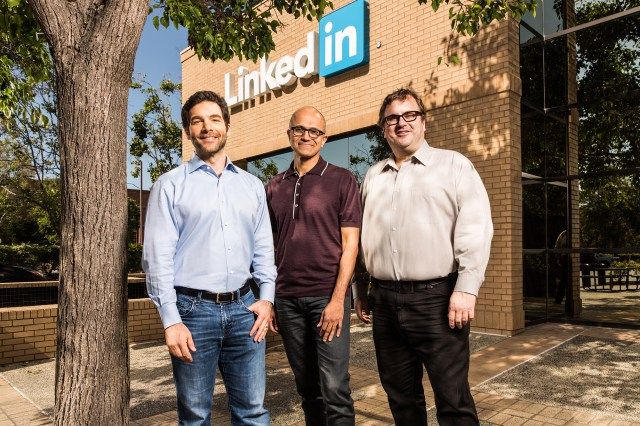
All-cash deal will see LinkedIn retain its distinct brand, independence, and CEO.

Just a few months after launching a $92 smartphone with a 64-bit, octa-core processor and a 5 inch HD display, Chinese phone maker Meizu has unveiled a slightly better model with a slightly higher prices.
The new Meizu M3S looks a lot like the Meizu M3, but the updated model has a fingerprint scanner and a larger battery.
The phone features an all-metal chassis and comes in gold, silver, grey, or pint colors.
Continue reading Meizu M3S is a $106 octa-core smartphone with a fingerprint reader at Liliputing.
Publishers altering efforts that would be “nonresponsive to the national mood.”
Neue Regelungen der EU und der USA könnten die Nutzung freier Router-Firmware wie OpenWRT stark einschränken, fürchten Kritiker. Die Virtualisierung der Funktechnik und des Betriebssystems könnte dieses Problem aber lösen. (Freifunk, WRT54G) 

Neue Regelungen der EU und der USA könnten die Nutzung freier Router-Firmware wie OpenWRT stark einschränken, fürchten Kritiker. Die Virtualisierung der Funktechnik und des Betriebssystems könnte dieses Problem aber lösen. (
Freifunk,
WRT54G)
Zwei umstrittene Unternehmen tun sich zusammen: Der Sicherheitsanbieter Symantec kauft Bluecoat. Zusammen will man Sicherheitslösungen für mobile Geräte und die Cloud entwickeln. (Symantec, Google) 

Zwei umstrittene Unternehmen tun sich zusammen: Der Sicherheitsanbieter Symantec kauft Bluecoat. Zusammen will man Sicherheitslösungen für mobile Geräte und die Cloud entwickeln. (
Symantec,
Google)
Ein neues Buch weckt nicht nur nostalgische Erinnerungen an tolle Atari-Spiele, sondern auch an missglückte. Und will zeigen, wie der Nintendo von den Problemen auf dem US-Markt profitierte. (Atari, Nintendo) 

Ein neues Buch weckt nicht nur nostalgische Erinnerungen an tolle Atari-Spiele, sondern auch an missglückte. Und will zeigen, wie der Nintendo von den Problemen auf dem US-Markt profitierte. (
Atari,
Nintendo)
Für offene Hotspots bietet die Telekom eine Wi-Fi-Plattform, die zusammen mit Lancom entwickelt wurde. Sie soll Städten und Kommunen angeboten werden und auf Rathäusern oder in Flüchtlingsunterkünften stehen. (WLAN, Telekom) 

Für offene Hotspots bietet die Telekom eine Wi-Fi-Plattform, die zusammen mit Lancom entwickelt wurde. Sie soll Städten und Kommunen angeboten werden und auf Rathäusern oder in Flüchtlingsunterkünften stehen. (
WLAN,
Telekom)
Vom Update auf Android Wear 2.0 werden einige Smartwatch-Modelle ausgeschlossen. Damit wird es langfristig auch bei den Uhren die Probleme eines fragmentierten Ökosystems geben. (Android Wear, LG) 

Vom Update auf Android Wear 2.0 werden einige Smartwatch-Modelle ausgeschlossen. Damit wird es langfristig auch bei den Uhren die Probleme eines fragmentierten Ökosystems geben. (
Android Wear,
LG)
Einfach Home-Automation-Komponenten zusammenklicken, statt sie mühselig selbst zu integrieren, das geht mit dem Webservice IFTTT (If This Then That). Es darf aber trotzdem noch selbst Hand angelegt werden. (Hausautomation, Server) 

Einfach Home-Automation-Komponenten zusammenklicken, statt sie mühselig selbst zu integrieren, das geht mit dem Webservice IFTTT (If This Then That). Es darf aber trotzdem noch selbst Hand angelegt werden. (
Hausautomation,
Server)
“50-cent” posters aim to distract from dissent rather than confront it.