OnePlus is done making mid-range phones (no more OnePlus X models)

OnePlus is done making mid-range phones (no more OnePlus X models)

The latest flagship smartphone from OnePlus has the specs of a high-end phone. But with a $399 price tag, the OnePlus 3 is significantly cheaper than the latest flagships from Samsung, HTC, LG, and others.

OnePlus also has a smaller, less powerful phone that sells for just half the price. You can pick up a OnePlus X for just $199… for now.

In the future, OnePlus CEO Pete Lau says the company will focus on its flagship lineup.

Continue reading OnePlus is done making mid-range phones (no more OnePlus X models) at Liliputing.

Xbox Project Scorpio: Will it really do 4K?

Even with 6 teraflops and 320GB/s memory bandwidth, rendering native 4K is a big ask.

While Project Scorpio was no secret before this year's E3, it's safe to say that few expected Microsoft to announce it alongside the slimmed down Xbox One S. Fewer still expected the company to one-up the recently confirmed PlayStation Neo. If the leaked Neo specs are to be believed—and several developers have confirmed the specs to multiple publications, including Ars Technica—Microsoft's Project Scorpio is set to be around 40 percent faster, a reversal of the performance difference between the current Xbox One and PlayStation 4.

It's safe to say that Microsoft was growing tired of all those 1080p resolution memes.

And so gamers have been promised a console for release in 2017 that packs a whopping 6 teraflops of processing power (compared to the current Xbox One's mere 1.31), along with a much improved 320GB/s of memory bandwidth. Even ignoring some of Microsoft's more questionable claims (uncompressed pixels anyone?), those are some impressive specs. Forget 1080p/60fps: Microsoft says that this system is more than enough hardware to push a VR headset (the company isn't saying which one yet, but I'd bet on Oculus), and run regular games at 4K resolution with support for High Dynamic Range (HDR).

Read 8 remaining paragraphs | Comments

Watch live: SpaceX tries to land again—and increase its launch cadence

Another launch to GTO, so another high-energy, high-risk return.

Two communications satellites are today's payload for a SpaceX launch. (credit: SpaceX)

SpaceX has had a very nice run of success since April 8: it's launched three Falcon 9 rockets and landed all three of them on an autonomous drone ship in the Atlantic Ocean. Critically the last two of these rockets have delivered payloads to geostationary transfer orbit, more than 35,000km above the surface of the Earth. The higher energies required to reach this more challenging orbit has made the sea-based landings of the Falcon 9 rocket's first stage considerably more difficult.

On Wednesday the rocket company will go for a hat trick by landing its third rocket after a geostationary transfer orbit payload delivery. With a 45-minute launch window opening at 10:29am ET (3:29pm BST), the Falcon 9 rocket will attempt to send two commercial communications satellites into high orbit. The satellites, EUTELSAT 117 West B and ABS-2A, are operated respectively by Eutelsat and ABS.

"As with other GTO missions, the first-stage will be subject to extreme velocities and re-entry heating, making a successful landing difficult," SpaceX noted in a news release. The landing attempt will come about 8 to 10 minutes after launch.

Read 2 remaining paragraphs | Comments

Alienware 13 R2: Das erste Gamer-Notebook mit OLED-Bildschirm

Sattere Farben und Kontraste: Alienware bietet das Spiele-Notebook 13 R2 mit einem OLED-Bildschirm an. Das neue Display ist sogar günstiger als das höher auflösende und hellere IPS-Panel. (Alienware, OLED)

Sattere Farben und Kontraste: Alienware bietet das Spiele-Notebook 13 R2 mit einem OLED-Bildschirm an. Das neue Display ist sogar günstiger als das höher auflösende und hellere IPS-Panel. (Alienware, OLED)

NASA has a special fireworks show planned for July Fourth—at Jupiter

The $1.1 billion Juno mission has just one chance to get into orbit at the gas giant.

At first blush Jupiter may seem like a rather dull planet. A failed star. A ball of gas. A large, red storm. Sure, it's big, but what more is there? And we’ve been there before—lots of times, in fact. Beginning with Pioneer 11 and 12, NASA has flown seven probes by the gas world. One mission, Galileo, studied the Jovian system for nearly a decade from 1995 to 2003. So why is the space agency sending yet another probe, Juno, to once again visit the solar system's giant?

We're still studying Jupiter because despite all of these missions NASA has literally only scratched the surface. Its inner structure remains largely a mystery—and an intriguing one, too. The planet is essentially made of gas piled upon more gas. And like a big stack of pillows, as more gas is added on top, the bottom layers become more and more compressed as gravity pulls down on the gas. This creates extremely dense conditions inside the planet. Jupiter, after all, is only a little bit larger than Saturn—but it has three times the mass. Scientists have almost no idea how hydrogen will behave at the extreme pressures deep beneath Jupiter's outer layers toward its core. Indeed, does Jupiter even have a core? We simply don’t know.

The Juno spacecraft, launched in 2011 and arriving at Jupiter on July 4th this year, will be able to scrutinize the planet's gravity field and peer beneath its upper cloud layer. This should help offer some clarity about Jupiter’s interior. During a presentation in May at the Lunar and Planetary Institute in Houston, mission scientist Fran Bagenal discussed just how strange that interior might be.

Read 9 remaining paragraphs | Comments

Oculus defends its efforts to secure VR exclusives for the Rift

Headset maker spends money, deploys technology to lock down its own games.

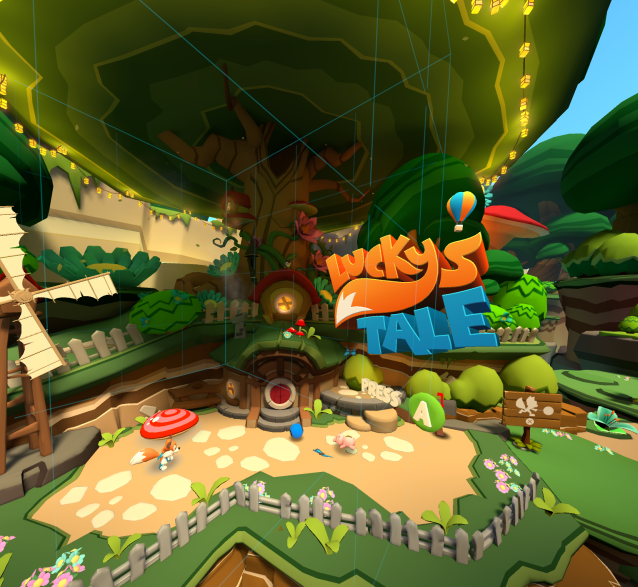
This is Lucky's Tale running on the HTC Vive. It's a scene Oculus never wants you to see.

As PC-based virtual reality gets off the ground, Oculus has come under fire from some corners of the community for saddling certain Oculus Rift games with exclusivity deals, barring them from working on competing headsets like the HTC Vive. Detractors argue this unfairly limits the market for competing VR hardware and goes against the ethos of interoperable accessories and controllers that's traditionally been key to the PC hardware market.

Speaking to Ars at E3 this week, though, Oculus executives defended their continuing efforts to secure exclusives for the Rift, and the technological measures meant to stop exclusivity-breaking workarounds like Revive.

The thrust of Oculus' argument for headset-exclusive software is that these exclusives are games that wouldn't exist (or wouldn't exist in quite as polished a form) if not for Oculus' often substantial funding investment. "The developer normally wouldn't be able to go and make these titles as big and immersive and deep as we enable them to do," Oculus CEO Brendan Iribe told Ars.

Read 17 remaining paragraphs | Comments

Evolution favors the bioluminescent

You glow, you win—the power to emit light has evolved a whopping 27 times.

Bioluminescent animals have the power of light. Sometimes they emit a bright glow from one specialized body part, trying to attract prey or mates. Sometimes they radiate dimly on the undersides of their bodies for camouflage counter-illumination, hiding their shadows on the seafloor by matching the light levels coming from the surface. As weird as it sounds, bioluminescence turns out to be an incredibly beneficial adaptation. A new study shows that it has evolved no less than 27 times in biological history, for countless reasons.

A group of zoologists described how bioluminescence evolved in the journal PLoS One, noting that 80 percent of glowing animals live in the oceans. Only a few land animals emit light, and they are all arthropods like fireflies and millipedes. There are only two ways that animals start radiating. Either they have intrinsic bioluminescence, mixing chemicals in their bodies to regulate the color and intensity of light, or they have symbiotic bioluminescence, cultivating colonies of glowing bacteria in specialized organs or pouches. The question that intrigued the researchers was why so many animals adapted to their environments by starting to glow.

University of Kansas evolutionary biologist Leo Smith, who contributed to the study, told Ars that fish use their built-in lights for many different reasons. In coastal areas, fish use patterns of flashing lights to "communicate during mating," which is important because they live in sandy areas where visibility is low. Like aquatic ravers on the prowl, these fish also use light patterns to recognize each other in areas where many species swim together. Fish that live in the deeper ocean also flash their mates, but they mainly use bioluminescence like flashlights to find prey.

Read 5 remaining paragraphs | Comments

Transparenzverordnung: Internet-Anbieter müssen echte Übertragungsrate nennen

Künftig müssen Internetanbieter die tatsächlich gebotene Datenrate offenlegen, hat die Regierung beschlossen. Messergebnisse sollen speicherbar sein. Die Grünen wollen bei Abweichungen der Geschwindigkeit sogar Bußgelder und Schadenersatzansprüche. (Provider, Bundesnetzagentur)

Künftig müssen Internetanbieter die tatsächlich gebotene Datenrate offenlegen, hat die Regierung beschlossen. Messergebnisse sollen speicherbar sein. Die Grünen wollen bei Abweichungen der Geschwindigkeit sogar Bußgelder und Schadenersatzansprüche. (Provider, Bundesnetzagentur)

Gerichtsurteil: Uni-Rektor darf Snowden den Ehrendoktor verweigern

Edward Snowden muss sich weiter keinen Dr. h.c. auf die Visitenkarte drucken. Die Philosophische Fakultät der Uni Rostock scheiterte auch vor Gericht mit der Auszeichnung für den Whistleblower. (NSA, Internet)

Edward Snowden muss sich weiter keinen Dr. h.c. auf die Visitenkarte drucken. Die Philosophische Fakultät der Uni Rostock scheiterte auch vor Gericht mit der Auszeichnung für den Whistleblower. (NSA, Internet)

AMC threatens spoiler site over what Walking Dead comics already say

EFF: “Copyright probably doesn’t cover revealing a single fictional detail.”

A Walking Dead spoiler website has acquiesced to a threatened copyright lawsuit from AMC, the television studio behind the hit series. The Spoiling Dead will not publish who the character "Negan" killed at the end of Season 6, which aired in early April 2016. During that episode it was not revealed who in fact was killed in that particular episode.

According to a demand letter that The Spoiling Dead received on June 7, 2016, the production company behind the hit television show threatened to sue if The Spoiling Dead did not halt its planned reveal, citing trade secrets and potential copyright infringement.

This demand doesn’t take into account the fact that the "victim" here [SPOILER ALERT] was already revealed in the comics upon which the TV show is based.

Read 8 remaining paragraphs | Comments