5,000-year-old pay stub shows that ancient workers were paid in beer

An ancient Mesopotamian pay stub reveals booze rations for workers.

In this cuneiform tablet from the city of Uruk in modern-day Iraq, we see records of people being paid in beer. (credit: Trustees of the British Museum)

In the ancient Mesopotamian city of Uruk, residents enjoyed many benefits of modern life. The city, located in modern-day Iraq, was home to massive ziggurats that would rival any of today's modern skyscrapers for sheer monumentality. People in Uruk exchanged goods for money, played board games, and sent each other letters on clay tablets using a writing system called cuneiform. They were also paid for their labor in beer. We know this because pay stubs were incredibly common documents at the time, and one such pay stub (pictured above) is now in the possession of the British Museum.

Writing in New Scientist, Alison George explains what's written on the 5,000-year-old tablet: "We can see a human head eating from a bowl, meaning “ration,” and a conical vessel, meaning “beer.” Scattered around are scratches recording the amount of beer for a particular worker." Beer wages were by no means limited to Mesopotamia. In ancient Egypt, there are records of people receiving beer for their work—roughly 4 to 5 liters per day for people building the pyramids. And in the Middle Ages, we have several records of the great fourteenth century poet Geoffrey Chaucer being paid in wine. Richard II generously gave Chaucer an annual salary that included a "tonel" of wine per year, which was roughly 252 gallons.

These salaries weren't just about keeping workers drunk so they would be more compliant. In the ancient world, beer was a hearty, starchy brew that could double as a meal. And during Chaucer's time, people believed that wine brought good health—which may not have been strictly accurate but was certainly a lure at a time when the Black Death was decimating the populations of Europe.

Read 1 remaining paragraphs | Comments

Inside: A beautiful puzzle-platformer marked by unforgettable terror and fear

Low challenge, occasional drags in pacing can’t keep this Limbo followup down.

The era of the "puzzle-platformer" video game—in which players run through a 2D world with a weird gimmick or two to spice up the old Mario formula—has long passed. The late-'00s saw games like the time-bending Braid and the high-speed, tough-as-nails Super Meat Boy offer a breath of fresh, side-scrolling air, but those inventive gems were followed by a mess of games with much less heart.

One of the last greats in that era was Limbo, one of the best indies of 2010. That haunting, wordless game smeared its black-and-white world with a smoky blur and a preoccupation with death, and the results were visually and emotional staggering—but they had less impact in terms of gameplay. Its side-scrolling puzzles were occasionally clever, but they were there not so much to bend the player's mind as to spread out the pacing of the game's somber tale of a brother and a sister.

The Danish team at Playdead took its time crafting a follow-up game, and they could have spent those six years inventing a more innovative gameplay hook. But that's clearly not where their hearts are. Instead, these Danes have returned with Inside, a side-scrolling journey that once again doubles down on atmosphere over puzzles—and is all the better for it.

Read 12 remaining paragraphs | Comments

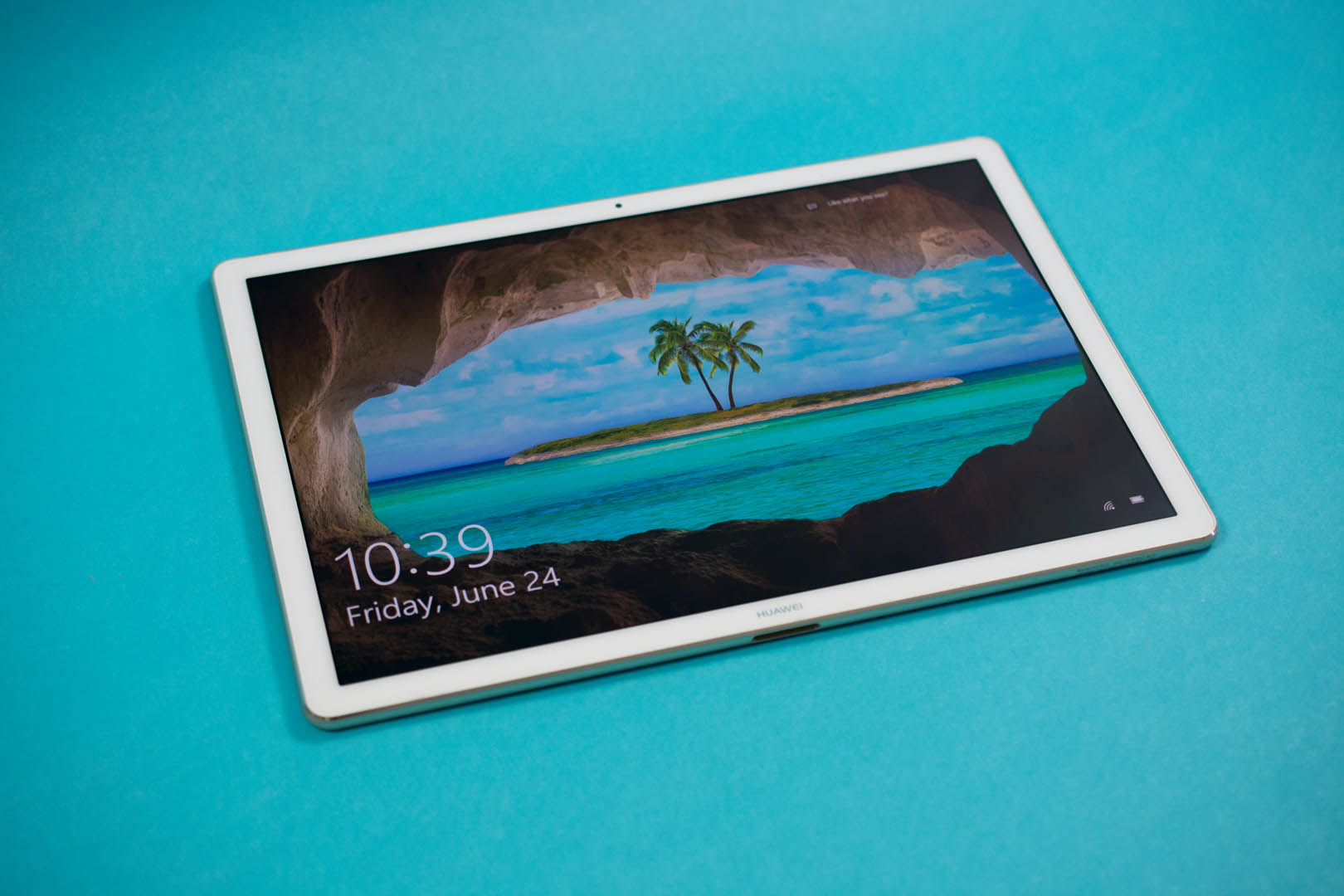
Huawei MateBook reviewed: A Surface clone that puts style first, work second

The MateBook enters a crowded space with few things that truly set it apart.

Another company is getting into the hybrid space. Chinese manufacturer Huawei, known primarily for its smartphones, released the MateBook for people who want tablet features in a device that can also stand in for your regular laptop. There's a bunch of competition in this space: Microsoft has its Surface line of two-in-ones and the Surface Book; Lenovo has its new ThinkPad X1 hybrid along with its Yoga series; HP and Dell each have their own entrants; and you can even lump Apple into this category with its iPad Pro devices, too.

With its first two-in-one, Huawei tried to make the MateBook stand out. The 12-inch tablet is powered by Core M processors, has a side fingerprint sensor, and has keyboard, pen, and docking accessories to suit every type of user. But really, what it comes down to is the twofold experience of using a hybrid: How well does it work as a tablet, and how well does it work as a laptop? If any hybrid is lacking in either respect, it'll be hard to make a case for spending hundreds of dollars on it. Thanks to steep competition, Huawei's $699 MateBook has an uphill battle to set itself apart from the competition.

Look and feel

Huawei's MateBook takes notes from the playbooks of Microsoft's Surface line and Samsung's TabPro S. The tablet itself is a 12-inch rectangle with a 2160 x 1440, IPS touchscreen display surrounded by a 10mm bezel. It has a metal unibody design so there's no hardware interrupting the satin-finished back of the device (there isn't even a rear camera, which is important to note if you have a habit of taking photos with your tablet). The tablet alone weighs just 1.5 pounds (or about 690 grams) and measures 6.9mm thick, so it is heavier than the iPad Air 2 (.95 pounds) and just a hair thicker than that device as well (6.6mm).

Read 20 remaining paragraphs | Comments

Ninefox Gambit is military science fiction for people who love mathematics

Yoon Ha Lee’s debut novel is an exploration of military tactics and futuristic math.

Detail from the cover of Ninefox Gambit, by Yoon Ha Lee. (credit: Chris Moore)

Plato believed mathematics was the highest form of beauty, being entirely concerned with universal truths and untarnished by base desire. Bertrand Russell described it as “a beauty cold and austere, sublimely pure, and capable of a stern perfection such as only the greatest art can show.” There have even been modern studies that posit that “beautiful” equations engage our brains the way paintings and music do. And Yoon Ha Lee’s stunning debut novel, Ninefox Gambit, makes all of this real.

The world of Ninefox Gambit is a perilous, conflict-riddled conglomeration of planets and factions, inhabited by the members of the ruling hexarcate and rebellious heretics. It is a place where war is “a game between competing sets of rules, fueled by the coherence of our beliefs” and “calendrical rot” can destabilize entire tracts of terrain. Though its setting may be complex, the novel's basic premise is relatively simple. A disgraced general, Cheris, seeks redemption by liberating a fortress that has been overtaken by enemy forces. To accomplish this, she does what all protagonists in her situation invariably do: allies herself with an unsavoury character. In this case, it's Jedao, an undead tactician who just so happens to be a mass murderer.

A fine piece of military fiction, Ninefox Gambit glitters with clever maneuvers and cunning ploys, heart-stopping action and hard decisions, all complicated by a repertoire of strange technologies. At the same time, Lee makes no excuses for violence and does not shy away from illuminating the grisly ramifications of war fought between people who often have more in common than they admit. “The Kel formation held as they butchered their way through the Eels," he writes. “Cheris made a point of noticing the Eels’ faces. They weren’t much different from the faces of her own soldiers: younger and older, dark skin and pale, eyes mostly brown or sometimes grey.”

Read 13 remaining paragraphs | Comments

Trials of the Blood Dragon im Test: Motorräder im B-Movie-Rausch

Nach Far Cry 3 Blood Dragon mischt Ubisoft erneut Genres zusammen: In Trials of the Blood Dragon geht es um Motorrad-Kunststücke und einen aussichtslosen Krieg. Der Stilmix hat großartige Momente zu bieten – treibt Action- und Fahrfans aber auch immer wieder zur Verzweiflung. (Games, Spieletest)

Nach Far Cry 3 Blood Dragon mischt Ubisoft erneut Genres zusammen: In Trials of the Blood Dragon geht es um Motorrad-Kunststücke und einen aussichtslosen Krieg. Der Stilmix hat großartige Momente zu bieten - treibt Action- und Fahrfans aber auch immer wieder zur Verzweiflung. (Games, Spieletest)

Raumfahrt: Kepler Communications baut Internet für Satelliten

Daten aus dem Orbit, dauerhaft verfügbar: Kepler Communications will eine Konstellation aus Satelliten aufbauen, über die jeder Satellit im Orbit ständig erreichbar ist. Wann das Projekt startet, ist noch unklar. (Satelliten, Technologie)

Daten aus dem Orbit, dauerhaft verfügbar: Kepler Communications will eine Konstellation aus Satelliten aufbauen, über die jeder Satellit im Orbit ständig erreichbar ist. Wann das Projekt startet, ist noch unklar. (Satelliten, Technologie)

Klage zum Leistungsschutzrecht: Verlage ziehen gegen Google in die nächste Runde

Die Verlage wollen ihre eindeutige Niederlage vor dem Landgericht Berlin gegen Google in zweiter Instanz korrigieren. Auf europäischer Ebene will die VG Media das Leistungsschutzrecht auch für solche Verlage durchsetzen, die es grundsätzlich ablehnen. (Leistungsschutzrecht, Google)

Die Verlage wollen ihre eindeutige Niederlage vor dem Landgericht Berlin gegen Google in zweiter Instanz korrigieren. Auf europäischer Ebene will die VG Media das Leistungsschutzrecht auch für solche Verlage durchsetzen, die es grundsätzlich ablehnen. (Leistungsschutzrecht, Google)

Sound BlasterX H7: Creative erweitert das H5-Headset um Surround-Sound

Gleiche Technik, gleicher guter Klang: Das neue Sound BlasterX H7 entspricht dem H5-Headset, wurde aber um einen USB-Anschluss und 7.1-Ton erweitert. Der Aufpreis hält sich daher in Grenzen. (Headset, Sound-Hardware)

Gleiche Technik, gleicher guter Klang: Das neue Sound BlasterX H7 entspricht dem H5-Headset, wurde aber um einen USB-Anschluss und 7.1-Ton erweitert. Der Aufpreis hält sich daher in Grenzen. (Headset, Sound-Hardware)