Evernote limits free tier to two devices, raises prices 40%

The popular note taking service puts the breaks on freeloaders.

Evernote has been one of the leading note-taking services for some time, with clients for the Web and every major OS. The company recently announced sweeping changes to its "freemium" pricing strategy, which puts a big limit on the "free" tier and raises prices across the board for new and existing users.

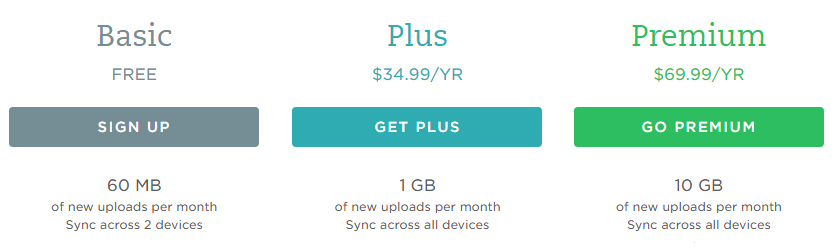
The free tier, "Evernote Basic," is now limited to two devices. If you want to access your notes on more than two devices, you'll need to fork over some cash. "Devices" means any device with an official client installed (Evernote apps are available on Windows, macOS, iOS, Android, Chrome OS, BlackBerry OS, and Windows Phone). Using Evernote on the Web does not count as an actual "device," nor do third-party apps that use the Evernote API. Managing device access now works a lot like some music services, where every installed client counts as "a device," and you can log in to a settings page and "revoke access" from each instance.

Both paid tiers are getting 40 percent price increases, too. "Evernote Plus," which is now needed by anyone with more than two devices, has seen the price jump from $24.99 per year to $34.99 per year (or $3.99 per month). Evernote Plus limits you to 1GB of uploads per month (the free tier is limited to 60MB). The "Premium" tier moved from $49.99 to $69.99. Premium raises uploaded data per month to 10GB and adds a ton of other features. New users will see the price increase right away, while existing users renewing a subscription will see the new pricing in August.

Read 1 remaining paragraphs | Comments

Event horizon ringing damped by unstable space-time

Probing the event horizon of a black hole is not so easy.

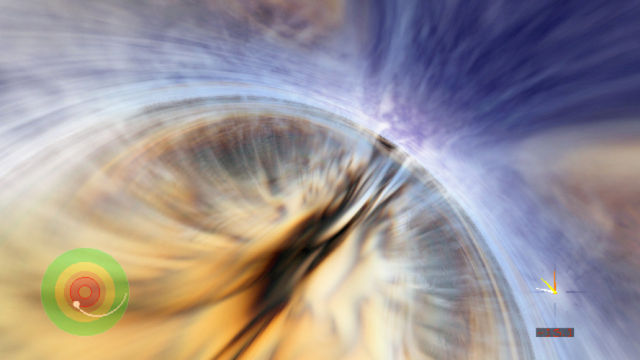
Space-time gets very messy near the event horizon of a black hole, as this simulated view indicates. (credit: Andrew Hamilton; NSF )

Now that gravitational waves have been detected, theoreticians have been furiously speculating about what we might learn from our gravitational wave observatories. Now that we have a couple of observed black hole collisions under our belt, it is time to consider what we might study. There's some speculation that, depending on the sort of physics at play, the event horizon of a black hole might be studied through gravitational waves.

For this to work, the gravitational wave signal has to change depending on what type of black holes are merging. A recent paper in Physical Review Letters indicates that, unfortunately, reality will probably not cooperate.

No bells on a black hole

When two black holes collide, gravitational waves are emitted as a result of a kind of relaxation process. So far, we have mostly been excited about the waves generated just before the merger, where the objects are spiralling into each other and emitting waves as they plunge through space at very high speed.

Read 16 remaining paragraphs | Comments

Windows 10 won’t include “Messaging everywhere” feature (but Skype will)

Windows 10 won’t include “Messaging everywhere” feature (but Skype will)

The next major version of Windows 10 is coming August 2nd, but one feature that’s been available to members of the Windows Insider preview program won’t be included: Messaging Everywhere.

This is a feature that lets users with a Windows 10 phone and a Windows 10 PC respond to text messages from a computer. It’s been available to testers for a few months, and Microsoft’s Dona Sarkar says it’s been “well received,” but that the company decided it “can deliver an even better experience through the Skype app.”

So Messaging Everywhere won’t be built into Windows 10.

Continue reading Windows 10 won’t include “Messaging everywhere” feature (but Skype will) at Liliputing.

Linux-Distribution: Ubuntu diskutiert Ende der 32-Bit-Unterstützung

Dass die Linux-Distribution die Unterstützung des 32-Bit-Befehlssatzes für x86-Chips einstellt, ist aus Sicht der Ubuntu-Entwickler nur noch eine Frage der Zeit. Um den richtigen Zeitpunkt zu wählen, werden nun auch die Nutzer befragt. (Ubuntu, Server)

Dass die Linux-Distribution die Unterstützung des 32-Bit-Befehlssatzes für x86-Chips einstellt, ist aus Sicht der Ubuntu-Entwickler nur noch eine Frage der Zeit. Um den richtigen Zeitpunkt zu wählen, werden nun auch die Nutzer befragt. (Ubuntu, Server)

To study possibly racist algorithms, professors have to sue the US

The CFAA, the law everyone loves to hate, pops up again.

(credit: UrbanOasis.org)

The American Civil Liberties Union filed a lawsuit Wednesday against the Attorney General of the United States, asking the court to declare a section of a 1980s-era anti-hacking law as "unconstitutionally overbroad."

In the case, known as Sandvig v. Lynch, the ACLU argues on behalf of First Look Media Works and four professors who want to deploy bots and fake profiles to study possible racial discrimination in online advertising for housing and employment. The researchers haven't been able to proceed because they're afraid of being sued or prosecuted under the Computer Fraud and Abuse Act (CFAA).

The ACLU's civil complaint points to examples in the media and in academia suggesting that such biases and unlawful practices may already be ongoing.

Read 4 remaining paragraphs | Comments

Amazon offers discounts on phones with lock screen ads (Moto G4 for $125 and up)

Amazon offers discounts on phones with lock screen ads (Moto G4 for $125 and up)

Amazon has been selling Kindle eReaders and Fire tablets with “special offers” for a few years, allowing you to save around $15 on the purchase price in exchange for viewing ads on the lock screen and in a few other places.

Now the company is bringing special offers to third-party devices.

Amazon is offering deep discounts on some Android smartphones that have been customized to include “personalized offers and ads” on the lock screen.

Continue reading Amazon offers discounts on phones with lock screen ads (Moto G4 for $125 and up) at Liliputing.

You can get an unlocked Galaxy S7 Edge for $589 on eBay right now

Over $200 off the sleek Samsung flagship.

(credit: Samsung)

If you've been lusting after Samsung's Galaxy S7 Edge but leery about paying $800 for it, now's your chance to get it for less. One eBay vendor is selling black, gold, and silver models of the S7 Edge for $589, the lowest price we've seen on the new flagship.The sale was first spotted by Android Police.

Each 32GB device is unlocked so you can use it on any GSM carrier. It's also a dual-SIM handset, meaning you can have two SIM cards in the phone at once, or a SIM card and a microSD card. It's also worth noting that these models are not used or refurbished—they appear to be brand-new S7 Edge handsets, making the price even more tempting.

The eBay seller is based in Florida and ships to most areas of the United States, except for Alaska and Hawaii. International shipping is also available.

Read on Ars Technica | Comments

Anrufweiterschaltung: Bundesnetzagentur schaltet falsche Ortsnetznummern ab

Die Bundesnetzagentur hat einer Firma 300 Rufnummern entzogen, mit der Ortsanschlüsse vorgetäuscht wurden. Dabei wurde eine Anrufweiterschaltung versteckt. (Bundesnetzagentur, Rechtsstreitigkeiten)

Die Bundesnetzagentur hat einer Firma 300 Rufnummern entzogen, mit der Ortsanschlüsse vorgetäuscht wurden. Dabei wurde eine Anrufweiterschaltung versteckt. (Bundesnetzagentur, Rechtsstreitigkeiten)

IMAX will build you a home theater—starting at $400,000

Includes dual 4K 2D/3D projectors, a proprietary IMAX sound, and media playback.

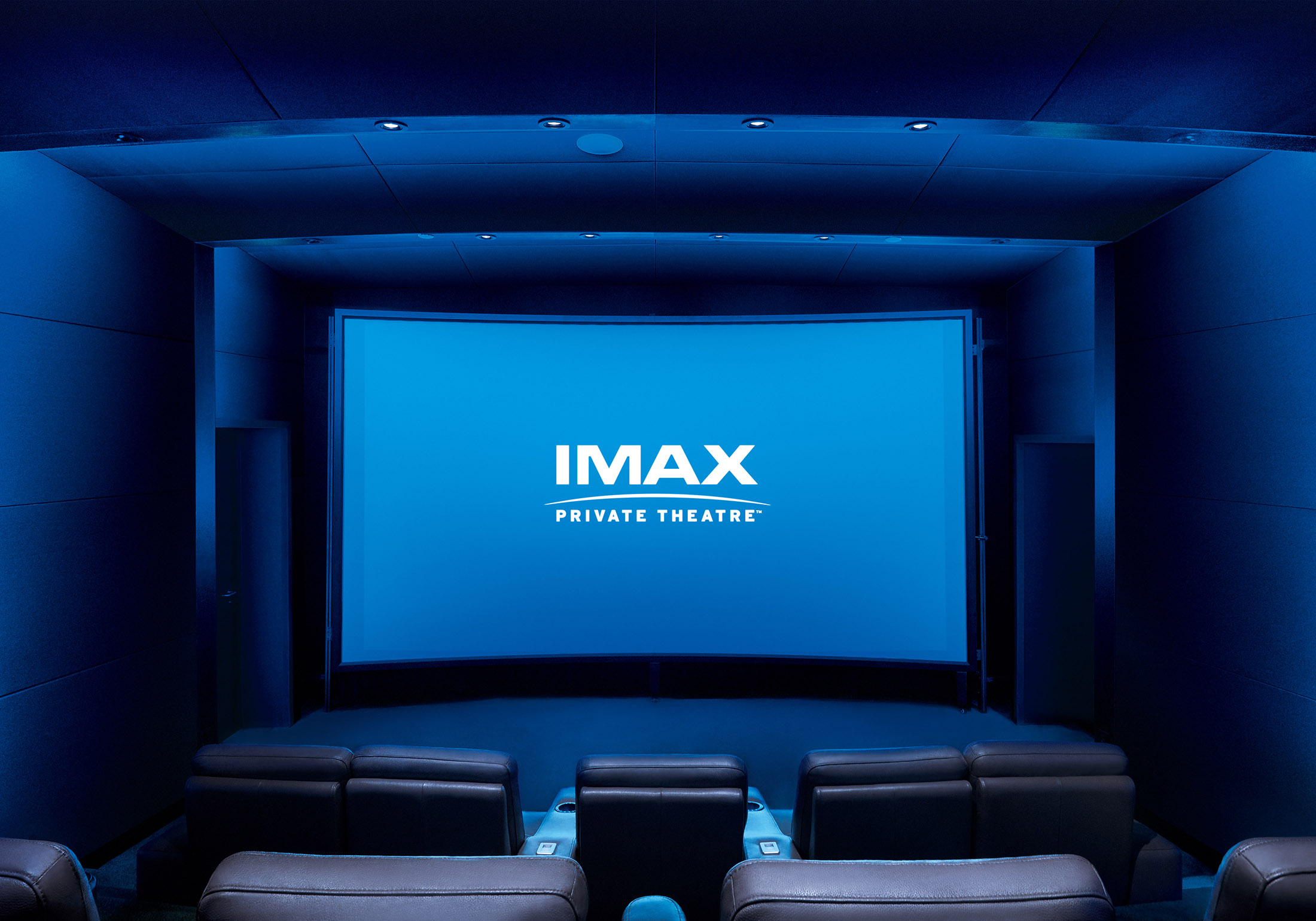
If you have about £300,000 ($400K) to spare, IMAX's Private Theatre division will now build an IMAX cinema setup in your own home.

The entry-level IMAX Private Theatre is the "Palais," which starts at about £300K for a screening room with up to 18 seats. For your money you get dual 4K 2D/3D projectors, a proprietary IMAX sound system, and a media playback system that supports everything you might want to throw at it (TV, games, Blu-ray, etc.) No word on the exact specifications of the projectors, but they're probably not IMAX-with-laser. Screen size will vary depending on the setup, but generally they will be 3 metres (10ft) tall or more.

Stepping up to the "Platinum" IMAX home theatre for about £750,000 ($1 million) gets you a much larger screening room with space for up to 40 people. The IMAX website doesn't break out the specs of the Platinum setup, but presumably it's similar to the Palais. Both the Palais and Platinum models come with automatic daily self-calibration to ensure optimal picture and audio setup, 24/7 remote monitoring (whatever that means in the context of home theatres), and, of course, the design and architecture of the room itself is so exquisite that your friends will think you have great taste (if that was ever in doubt).

Read 4 remaining paragraphs | Comments

Making energy out of waste heat with simple ingredients

Differences as small as 20°C can be turned into useful power.

The world is awash in our waste heat. Our computers, our motors, our electrical generating plants—all of them shed heat into the environment. That's in part because there's no easy way to capture its energy and put it to use. All the existing methods we have for harvesting waste heat are either inefficient or uneconomical.

Now, some researchers have come up with a new method of grabbing some of that waste heat and potentially putting it to work. Their system relies on nothing more complex than water and a polymer membrane and, even in its first test form, it's already capturing roughly half of the possible Carnot efficiency available to the system.

We already generate lots of electricity via heat differences. It's just that those differences are large—large enough to create the pressure differences needed to drive turbines. Waste heat often becomes waste simply because the temperature differences are small, on the order of dozens of degrees Celsius, rather than hundreds.

Read 11 remaining paragraphs | Comments