KickassTorrents Crew Ask For Donations to Rebuild The Site

While the original KickassTorrents site remains offline, a group of site admins and moderators have plans to restore the site to its former glory. They have gathered many users under a new roof and are now gathering donations to keep expanding.

Source: TF, for the latest info on copyright, file-sharing, torrent sites and ANONYMOUS VPN services.

kickasstorrents_500x500With an active community and millions of regular visitors, KickassTorrents (KAT) was much more than a site to leech the latest torrents from.

Many considered it to be their virtual home where they gathered with friends on a daily basis.

This ended abruptly last month. When the site’s alleged operator was arrested following a criminal investigation of the U.S. Government, the official site went down with him.

While it’s unlikely that the original site will return anytime soon, a group of KAT-crew members have been working hard to keep the community together.

Within a few days a new forum was launched at Katcr.to, supported by several high ranking moderators of the original site. In the weeks that followed thousands of members returned to the community, which now has plans to expand.

The site started a fundraising campaign asking for money to repair and rebuild the “authentic KAT site code.” The team is accepting donations through PayPal and a Gofundme campaign, hoping to collect several thousands dollars.

“This site we now inhabit is costing money: Money that a few individuals put up to ensure the survival of this Community. This is still not the Kat we all remember but on a daily basis it is getting closer,” Johnno23 says.

Katcr.to fundraiser

kat-donations

The big question is whether this means that the torrent download and upload functionality will be returned to its former glory. For the time being, this appears to be one of the long-term goals.

To find out more TorrentFreak spoke with Mr.Gooner aka the President, a long time KAT-crew member and one of the top admins at the original site.

Mr. Gooner explains that many of the original site staffers have returned to the community, but that funds are needed to develop and maintain it during the months to come.

While the initial focus will be on the community element, torrents are expected to return as well in the future.

“At this stage, it very much depends on pending legal action and rulings in regards to the legality of torrents in the US. However the community can be reassured that in one way or another, KAT will return to its former glory,” Mr. Gooner says.

That said, fully restoring the old site with the original database is not an option at this moment.

The site administrators and crew, all regular users at one point, were clearly separated from the people who technically and financially ran the site. This means that the people in charge of Katcr.to don’t have access to the original code and data.

“It is our understanding that the databases have been secured in such a way that the information inside would become useless if an unauthorised attempt was made to access them,” Mr. Gooner says.

So, if torrent sharing is added to the current community site, it has to be coded by new people. This will take time and money, obviously, and the current crew is not certain if that will happen anytime soon.

Fundraisers are always welcomed with a healthy dose of scepticism, which is no different this time around.

From the information we have gathered so far, it’s safe to say that people shouldn’t expect the original KAT functionality to be restored fully in the near future.

In that regard, Mr. Gooner and others still encourage people to continue uploading in the meantime, even when that’s on other torrent sites.

“Run those seedboxes and torrent clients 24/7 where possible. Just because uploading stopped at KAT we are all still pirates and we will always encourage uploading,” he says.

Source: TF, for the latest info on copyright, file-sharing, torrent sites and ANONYMOUS VPN services.

Republic Wireless now sells SIM cards, lets you bring your own phone (Only 9 models supported, though)

Republic Wireless now sells SIM cards, lets you bring your own phone (Only 9 models supported, though)

So you’ve been thinking about signing up for Republic Wireless due to the mobile carrier’s relatively low-cost phone plans… but you’ve been disappointed in the selection of phones available from the company.

Good news: now you can bring your own phone.

Bad news: That’s only true if you have one of the nine devices that are currently supported.

In a rather odd move, Republic Wireless is now selling SIM cards for $5.

Continue reading Republic Wireless now sells SIM cards, lets you bring your own phone (Only 9 models supported, though) at Liliputing.

Time to scrap the idea that humans arrived in the Americas by land bridge

Bering Land Bridge fossils show a lifeless area until long after humans hit the Americas.

The standard story of how humans arrived in the Americas is that they marched 1,500km across the Bering Land Bridge, a now-vanished landmass between Siberia and Northern Canada that emerged roughly 15,000 years ago in the wake of the last ice age. But for the past decade, evidence has been piling up that humans arrived in the Americas by traveling in boats along the Pacific coast. Some 14,000-year-old campsites like Oregon's Paisley Caves have been found near rivers that meet the Pacific, suggesting that early humans came inland from the coast along these waterways. Now, a new study published in Nature provides more solid evidence the first humans to reach the Americas could not have come via the Bering Land Bridge.

A group of geoscientists, anthropologists, and biologists led a massive effort to study the environment on the Bering Land Bridge when humans were supposedly crossing it 15,000 years ago. They used a common method for sampling ancient environments called coring. Using hollow tubes, they drilled deep into the sediment at the bottom of two frozen lakes in British Columbia, looking for fossils of plant and animal life from the era when humans could have crossed the Land Bridge. They picked these two specific lakes—Charlie Lake and Spring Lake, to be exact—because they were in a region where the last remaining ice sheets melted. The very first humans to pass into the Americas would have had to cross through this area.

Carefully analyzing the layers of sediment, the researchers were able to determine what kind of life inhabited the region. Radiocarbon dating allowed them to recreate a timeline for the ancient ecosystem there, too. In their paper, the researchers write:

Read 3 remaining paragraphs | Comments

Intel Atom isn’t dead: Next-gen chips aimed at embedded and IoT systems

Intel Atom isn’t dead: Next-gen chips aimed at embedded and IoT systems

Intel isn’t developing Atom chips for smartphones, tablets, or low-power laptops anymore. But it looks like the Atom brand will live on.

At the Intel Developer Forum in San Francisco next week, the company will unveil some details about next-gen Atom chips based on the new Apollo Lake platform.

There aren’t many details available at this point, but as PC World notes, the technical session schedule includes a few events related to the unannounced, next-gen Atom products.

Continue reading Intel Atom isn’t dead: Next-gen chips aimed at embedded and IoT systems at Liliputing.

Deals of the Day (8-11-2016)

Deals of the Day (8-11-2016)

The Dell XPS 12 is a 2-in-1 tablet with a 12.5 inch display, an Intel Core M Skylake processor, and a starting price of $1000… if you buy one from Dell.

But Adorama is selling a few models for much lower prices.

You can pick up a model with 8GB of RAM, 128GB of storage and a 1920 x 1080 pixel display for $620. Or pay $845 for a model with a 4K screen and 256GB of storage.

Continue reading Deals of the Day (8-11-2016) at Liliputing.

Phonest: Deutsches Startup präsentiert transparentes Smartphone

Phonest hat sein gleichnamiges Smartphone vorgestellt, das in allen Produktionsbereichen transparent produziert sein soll. Käufer sollen genau verfolgen können, wo welches Teil hergestellt wird. Die Preise des gut ausgestatteten Smartphones beginnen bei 500 Euro. (Smartphone, Android)

Phonest hat sein gleichnamiges Smartphone vorgestellt, das in allen Produktionsbereichen transparent produziert sein soll. Käufer sollen genau verfolgen können, wo welches Teil hergestellt wird. Die Preise des gut ausgestatteten Smartphones beginnen bei 500 Euro. (Smartphone, Android)

Almost every Volkswagen sold since 1995 can be unlocked with an Arduino

It’s not easy, but it is possible.

(credit: Frank Derks)

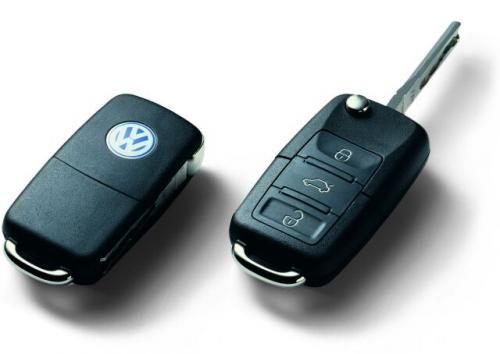
Over at Wired, Andy Greenberg reports that security researchers have discovered how to use software defined radio (SDR) to remotely unlock hundreds of millions of cars. The findings are to be presented at a security conference later this week, and detail two different vulnerabilities.

The first affects almost every car Volkswagen has sold since 1995, with only the latest Golf-based models in the clear. Led by Flavio Garcia at the University of Birmingham in the UK, the group of hackers reverse-engineered an undisclosed Volkswagen component to extract a cryptographic key value that is common to many of the company's vehicles.

Alone, the value won't do anything, but when combined with the unique value encoded on an individual vehicle's remote key fob—obtained with a little electronic eavesdropping, say—you have a functional clone that will lock or unlock that car.

Read 4 remaining paragraphs | Comments

Windows 10 Anniversary Update: Microsoft macht Secure Boot kaputt

Bei der Entwicklung des Anniversary-Updates für Windows 10 ist Microsoft ein peinlicher Fehler unterlaufen: Die ausgelieferte Version der Software enthielt Funktionen, die Secure Boot außer Kraft setzen. Das Unternehmen versucht, den Schaden zu begrenzen. (Windows 10, Microsoft)

Bei der Entwicklung des Anniversary-Updates für Windows 10 ist Microsoft ein peinlicher Fehler unterlaufen: Die ausgelieferte Version der Software enthielt Funktionen, die Secure Boot außer Kraft setzen. Das Unternehmen versucht, den Schaden zu begrenzen. (Windows 10, Microsoft)

Kyocera Duraforce Pro is a rugged smartphone/action camera

Kyocera Duraforce Pro is a rugged smartphone/action camera

With the possible exception of Samsung’s Galaxy Active line of smarpthones, most phones with super-rugged designs are meant for industrial, military, or other enterprise/government work. But Kyocera is positioning its new waterproof, dust-proof, shock-proof, and drop-proof phone as a device for businesses or consumers.

The Kyocera Duraforce Pro is a rugged smartphone with generally mid-range specs. But Kyocera also threw in an “action” camera which means you could carry your phone with you and leave your GoPro at home next time you go kayaking/hiking/offroading, or what have you.

Continue reading Kyocera Duraforce Pro is a rugged smartphone/action camera at Liliputing.

An ATM hack and a PIN-pad hack show chip cards aren’t impervious to fraud

The good news? Hacks are limited for now. The bad news? Hackers will get better.

Security researchers are eager to poke holes in the chip-embedded credit and debit cards that have arrived in Americans' mailboxes over the last year and a half. Although the cards have been in use for a decade around the world, more brains trying to break things are bound to come up with new and inventive hacks. And at last week's Black Hat security conference in Las Vegas, two presentations demonstrated potential threats to the security of chip cards. The first involved fooling point-of-sale (POS) systems into thinking that a chip card is a magnetic stripe card with no chip, and the second involved stealing the temporary, dynamic number generated by a chip card and using it in a very brief window of time to request money from a hacked ATM.

Double trouble

Chip card technology—often called EMV for EuroPay, MasterCard, and Visa for the three companies that developed the chip card standard—is supposed to offer significant security benefits over the old magnetic stripe card system. Magnetic stripe cards have a static card number written into their magnetic stripe, and if a POS system is infected with malware, as was the case in the infamous Target and Home Depot hacks, then a malicious actor can take those card numbers and make counterfeit purchases with them. An EMV card, by contrast, uses a chip to transmit a dynamic number that changes with each purchase. That makes it a lot harder to steal a card number and reuse it elsewhere.

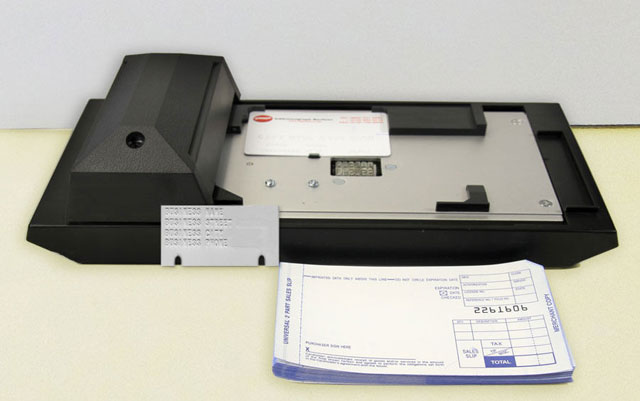
But that doesn’t mean it’s impossible. Late last year, security researcher Samy Kamkar demonstrated that he could calculate a replacement American Express card number based on the previous card number, replicate the credit card’s magnetic stripe information on a programmable chip, and use it to make purchases around town, much like the now-defunct Coin card. Kamkar was even able to do this with chip cards—the magnetic stripe on the back of every card has two tracks of data that tell card readers information like cardholder name, the card’s number, its expiration date, etc. Track 2 data will tell a card reader if the card has a chip and needs to be dipped—otherwise it can be swiped. Kamkar’s solution was to alter the Track 2 data and spoof the card reader to tell it that the card only has a magnetic stripe, no chip, thus bypassing the entry of a dynamic number.

Read 16 remaining paragraphs | Comments