Quantum computing tech keeps edging forward

IBM follows through on its June promises, plus more trapped ion news.

The end of the year is usually a busy time in the quantum computing arena, as companies often try to announce that they’ve reached major milestones before the year wraps up. This year has been no exception. And while not all of these announcements involve interesting new architectures like the one we looked at recently, they’re a good way to mark progress in the field, and they often involve the sort of smaller, incremental steps needed to push the field forward.

What follows is a quick look at a handful of announcements from the past few weeks that struck us as potentially interesting.

IBM follows through

IBM is one of the companies announcing a brand-new architecture this year. That’s not at all a surprise, given that the company promised to do so back in June; this week sees the company confirming that it has built the two processors it said it would earlier in the year. These include one called Loon, which is focused on the architecture that IBM will use to host error-corrected logical qubits. Loon represents two major changes for the company: a shift to nearest-neighbor connections and the addition of long-distance connections.

Read full article

Comments

Nintendo drops official trailer for Super Mario Galaxy Movie

It’s a sequel to 2023’s Super Mario Bros. Movie, which racked up $1.36 billion at the box office.

The Super Mario Bros. Movie dominated the box office in 2023, racking up $1.36 billion and snagging several Oscar nominations for good measure. So naturally there’s a sequel, and Nintendo just dropped the official trailer for The Super Mario Galaxy Movie, due out next spring.

(Spoilers for the 2023 film below.)

The first attempt at a Super Mario movie adaptation in 1993 was notoriously a dismal failure, although it still has its ’90s-nostalgic fans. But 2023’s Super Mario Bros. Movie won over gaming fans who were skeptical about another adaption—including Ars Senior Gaming Editor Kyle Orland. “This film version captures all the fun and vibrancy of the Mario games, with enough references to familiar characters, items, and locations to make even a die-hard Mario fan’s head spin,” he wrote in his 2023 review, adding that, despite a few flaws, the film was “everything that a 10-year-old version of me could ever have dreamed a Mario movie could be.”

Read full article

Comments

OpenAI slams court order that lets NYT read 20 million complete user chats

OpenAI: NYT wants evidence of ChatGPT users trying to get around news paywall.

OpenAI wants a court to reverse a ruling forcing the ChatGPT maker to give 20 million user chats to The New York Times and other news plaintiffs that sued it over alleged copyright infringement. Although OpenAI previously offered 20 million user chats as a counter to the NYT’s demand for 120 million, the AI company says a court order requiring production of the chats is too broad.

“The logs at issue here are complete conversations: each log in the 20 million sample represents a complete exchange of multiple prompt-output pairs between a user and ChatGPT,” OpenAI said today in a filing in US District Court for the Southern District of New York. “Disclosure of those logs is thus much more likely to expose private information [than individual prompt-output pairs], in the same way that eavesdropping on an entire conversation reveals more private information than a 5-second conversation fragment.”

OpenAI’s filing said that “more than 99.99%” of the chats “have nothing to do with this case.” It asked the district court to “vacate the order and order News Plaintiffs to respond to OpenAI’s proposal for identifying relevant logs.” OpenAI could also seek review in a federal court of appeals.

Read full article

Comments

Valve rejoins the VR hardware wars with standalone Steam Frame

SteamOS-powered headset sports semi-modular design, wireless “low-latency” PC streaming.

Six years ago, Valve made its second big virtual reality push, launching the Valve Index headset alongside VR blockbuster Half-Life Alyx. Since then, the company seems to have lost interest in virtual reality gaming, letting competitors like Meta release regular standalone hardware updates as the PC-tethered Index continued to age.

Now, after years of rumors, Valve is finally ready to officially rejoin the VR hardware race. The Steam Frame, set to launch in early 2026, will run both VR and traditional Steam games locally through SteamOS or stream them wirelessly from a local PC.

Powered by a Snapdragon 8 Gen 3 processor with 16 GB of RAM, the Steam Frame sports a 2160 x 2160 resolution display per eye at an “up to 110 degrees” field-of-view and up to 144 Hz. That’s all roughly in line with 2023’s Meta Quest 3, which runs on the slightly less performant Snapdragon XR2 Gen 2 processor. Valve’s new headset will be available in models sporting 256GB and 1TB or internal storage, both with the option for expansion via a microSD card slot. Pricing details have not yet been revealed publicly.

Read full article

Comments

Steam Deck minus the screen: Valve announces new Steam Machine, Controller hardware

SteamOS-powered cube for your TV targets early 2026 launch, no pricing details.

Nearly four years after the Steam Deck changed the world of portable gaming, Valve is getting ready to release SteamOS-powered hardware designed for the living room TV, or even as a desktop PC gaming replacement. The simply named Steam Machine and Steam Controller, both planned to ship in early 2026, are “optimized for gaming on Steam and designed for players to get even more out of their Steam Library,” Valve said in a press release.

A Steam Machine spec sheet shared by Valve lists a “semi-custom” six-core AMD Zen 4 CPU clocked at up to 4.8 Ghz alongside an AMD RDNA3 GPU with 28 compute units. The motherboard will include 16GB of DDR5 RAM and an additional 8GB of dedicated DDR6 VRAM for the GPU. The new hardware will come in two configurations with 512GB or 2TB of unspecified “SSD storage,” though Valve isn’t sharing pricing for either just yet.

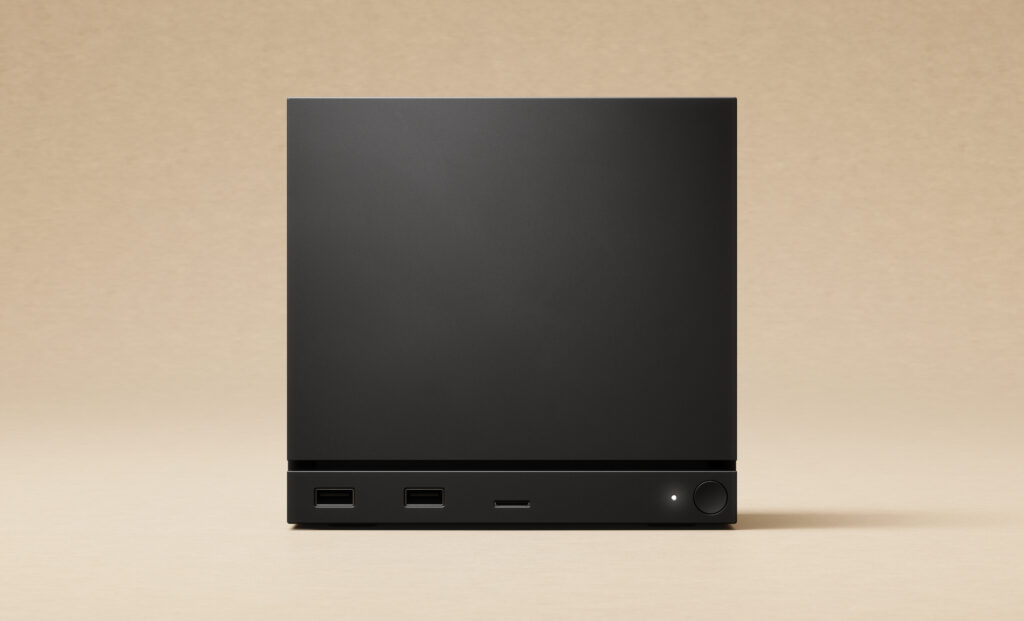
If you squint, you can make out a few ports on this unmarked black square. Credit: Valve
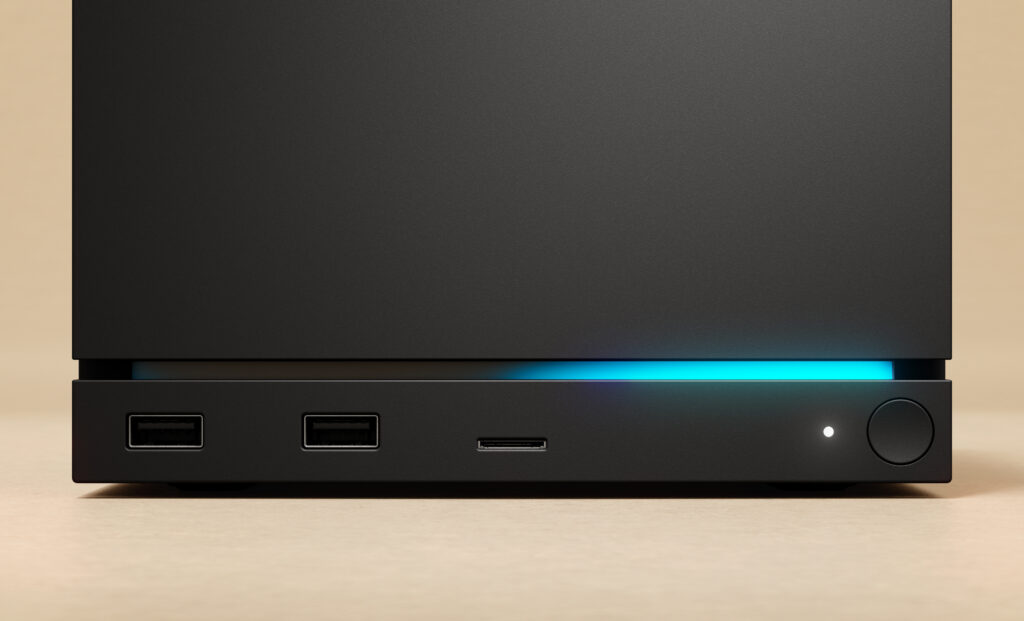
A strip of LEDs adds a touch of color to the front face of the Steam Machine.
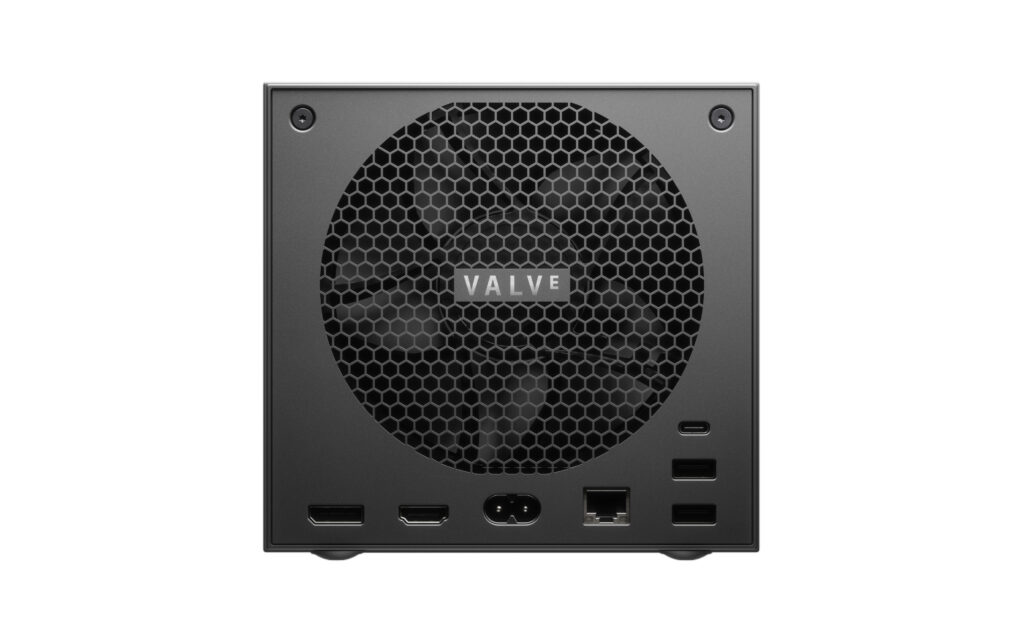
I'm a fan of the big fan. Credit: Valve

Those chips and numbers suggest the Steam Machine will have roughly the same horsepower as a mid-range desktop gaming PC from a few years back. But Valve says its “Machine”—which it ranks as “over 6x more powerful than the Steam Deck”—is powerful enough to support ray-tracing and/or 4K, 60 fps gaming using FSR upscaling.

Read full article

Comments

Corals survived past climate changes by retreating to the deeps

A recent die-off in Florida puts the spotlight on corals’ survival strategies.

Scientists have found that the 2023 marine heat wave caused “functional extinction” of two Acropora reef-building coral species living in the Florida Reef, which stretches from the Dry Tortugas National Park to Miami.

“At this point, we do not think there’s much of a chance for natural recovery—their numbers are so low that successful reproduction is incredibly unlikely,” said Ross Cunning, a coral biologist at the John G. Shedd Aquarium.

This isn’t the first time corals have faced the borderline of extinction over the last 460 million years, and they have always managed to bounce back and recolonize habitats lost during severe climate changes. The problem is that we won’t live long enough to see them doing that again.

Read full article

Comments

Meta’s star AI scientist Yann LeCun plans to leave for own startup

AI pioneer reportedly frustrated with Meta’s shift from research to rapid product releases.

Meta’s chief AI scientist and Turing Award winner Yann LeCun plans to leave the company to launch his own startup focused on a different type of AI called “world models,” the Financial Times reported. The French-US scientist has reportedly told associates he will depart in the coming months and is already in early talks to raise funds for the new venture. The departure comes as CEO Mark Zuckerberg radically overhauled Meta’s AI operations after deciding the company had fallen behind rivals such as OpenAI and Google.

World models are hypothetical AI systems that some AI engineers expect to develop an internal “understanding” of the physical world by learning from video and spatial data rather than text alone. Unlike current large language models (such as the kind that power ChatGPT) that predict the next segment of data in a sequence, world models would ideally simulate cause-and-effect scenarios, understand physics, and enable machines to reason and plan more like animals do. LeCun has said this architecture could take a decade to fully develop.

While some AI experts believe that Transformer-based AI models—such as large language models, video synthesis models, and interactive world synthesis models—have emergently modeled physics or absorbed the structural rules of the physical world from training data examples, the evidence so far generally points to sophisticated pattern-matching rather than a base understanding of how the physical world actually works.

Read full article

Comments

Solder Party’s KeebDeck is a cheap, open source 69-key thumb keyboard

A few years ago Solder Party started selling tiny USB keyboards made by combining an actual BlackBerry keyboard (ripped from an old device) with a custom PCB and USB-C connector. But since BlackBerry is out of business, eventually it’s going to g…

A few years ago Solder Party started selling tiny USB keyboards made by combining an actual BlackBerry keyboard (ripped from an old device) with a custom PCB and USB-C connector. But since BlackBerry is out of business, eventually it’s going to get harder to find devices to cannibalize for their keyboards. So Solder Party has […]

The post Solder Party’s KeebDeck is a cheap, open source 69-key thumb keyboard appeared first on Liliputing.