Tens of Thousands Protest Netflix’s Expanding VPN-Blockade

Netflix is continuing to expand its VPN and proxy crackdown, affecting VPN ‘pirates’ but also those who use such services for privacy reasons. The VPN crackdown is meeting fierce resistance from privacy activists and concerned users, with tens of thousands calling upon the streaming service to reverse its broad VPN ban.

Source: TF, for the latest info on copyright, file-sharing, torrent sites and ANONYMOUS VPN services.

netflix-logoLast month Netflix announced that it would increase its efforts to block customers who circumvent geo-blockades.

As a result it has become harder to use VPN services and proxies to access Netflix content from other countries, something various movie studios have repeatedly called for.

With the application of commercial blacklist data, Netflix already blocks IP-addresses that are linked to such services, something which also affects well-intentioned customers who merely use a VPN to protect their privacy.

Instead of providing access to the latest video entertainment, Netflix then serves the following error message to these blocked users.

netflix-block

In recent weeks TorrentFreak has kept a close eye on the expanding blockade and its aftermath. We’ve learned that servers belonging to many popular commercial VPN services have been added to the blocklist, including ExpressVPN, Mullvad, Private Internet Access and StrongVPN.

While the blocks are being rolled out in phases, it’s already clear that some VPN users can’t access Netflix, even if the VPN server is located in the same country as they are. This means that Americans can no longer use a U.S. VPN server to protect their privacy.

Ironically, Netflix is even restricting access to its own original series, despite being the primary rightsholder.

This approach is meeting fierce resistance from many sides. To coordinate the protest Digital rights organization OpenMedia has started an OpenMedia petition urging Netflix to rethink its approach, which has already been signed by more than 33,000 people.

“Privacy is a huge priority for us as a digital rights organization, and that VPNs are probably the simplest, most user-friendly way for everyday Internet users to safeguard their online activities,” OpenMedia spokesperson David Christopher informs TorrentFreak.

“Given that a huge percentage of the population uses Netflix, if they were all forced to stop using VPNs, that would represent a major setback for privacy,” he adds.

OpenMedia itself has been affected by the new measures as well, as some of their staff members can no longer watch Netflix without having to turn off their VPN.

The group is concerned that Internet users are being forced to give up their privacy when they are not even trying to circumvent any geo-blockades. A better way would be to restrict content based on people’s credit card addresses, which doesn’t require any VPN blocking.

“We’re cooking up plans to take this message directly to Netflix and hope that if enough people speak up, Netflix will listen to their customers and find a better way,” Christopher says.

Meanwhile, the complaints keep pouring in on social media. There are even reports from users who are blocked without even using a VPN. In addition, several people claim to have ended their Netflix subscriptions due to the restrictive policies, and some hint at going back to their old pirate ways.

Despite the public outrage, Netflix said that it’s not worried about a subscriber exodus. “I don’t think we will see any impact,” CEO Reed Hastings said in a shareholders’ interview last month.

In the long-term the company hopes to make the entire geo-blocking discussion obsolete by offering movies and TV-shows worldwide. But given Hollywood’s reluctance to adapt, it may take a few years before this will be realized.


Source: TF, for the latest info on copyright, file-sharing, torrent sites and ANONYMOUS VPN services.

Obama administration closing in on rules to let NSA share more freely with FBI, CIA

New rules have been in the works since 2008 and may be approved in “months.”

(credit: Joe Brusky)

The New York Times is reporting that Obama administration officials are close to agreeing on new rules that would allow the National Security Agency (NSA) to share surveillance information more freely with other federal agencies, including the FBI and the CIA, without scrubbing Americans’ identifying information first.

In 2008, President George W. Bush put forth an executive order that said such a change to the rules governing sharing between agencies could occur when procedures had been put in place. When the Obama administration took over, it started "quietly developing a framework” to carry out the proposed change in 2009, according to the Times.

For the past decade, the NSA has collected massive amounts of phone metadata, e-mail, and other information from a variety of sources—sometimes directly from the companies that make such communication possible, sometimes through overseas taps on lines that connect to data centers outside of the US. Currently when an agency wants information on a foreign citizen, it requests that data from the NSA, and the NSA theoretically scrubs it of any incidental references to American citizens who are not being targeted. This process is known as “minimization.”

Read 6 remaining paragraphs | Comments

Police chief: there’s a “reasonably good chance” not much is on seized iPhone

Top San Bernardino cop tells NPR there’s “low probability” unlocking it will reveal more.

(credit: Chris Yarzab)

In a short interview on NPR's Morning Edition on Friday, San Bernardino Police Chief Jarrod Burguan said there is a "reasonably good chance that there is nothing of any value on the phone."

Last week, Apple CEO Tim Cook reiterated the company’s firm commitment to privacy and its resolve to fight a new court order issued earlier this month. If the order stands up to legal challenges, Apple would be forced to create a new customized iOS firmware that would remove the passcode lockout on a seized iPhone as part of the ongoing San Bernardino terrorism investigation. On Thursday, Apple filed its formal legal response and set the stage for an important court hearing in nearby Riverside next month.

However, this morning Burguan articulated the general law enforcement perspective that it is "not fair to the victims and their families," and the government should "leave no stone unturned in the investigation."

Read 3 remaining paragraphs | Comments

Drone flies within 30 feet of passenger jet landing at Heathrow

Multiple close-misses near London revealed in UK air safety report, plenty more in the US.

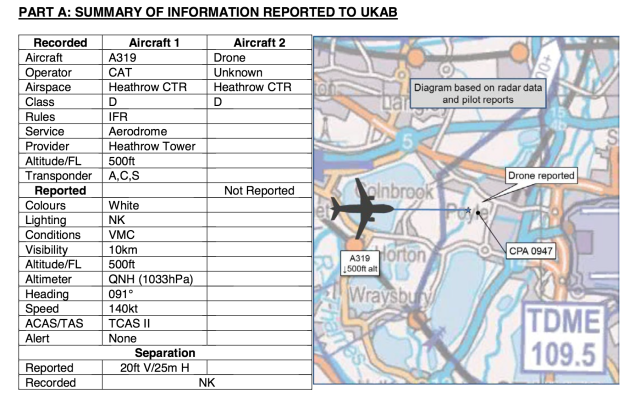
Part of a report of a September near-miss between an Airbus passenger jet and a "helicopter drone" very close to Heathrow. (credit: UK Airprox Board)

File this under the category of "drone pilots trying to ruin it for everybody." According to a safety incident report published by the United Kingdom's Airprox air safety board, an Airbus A319 landing at Heathrow International Airport last September narrowly avoided a collision with a drone flying at an altitude of 500 feet as the jet was on its final approach. The pilots reported the small hovering helicopter-style drone passed about 25 yards to the left of the cockpit and just 20 feet above the aircraft.

The A319's wingspan is 112 feet, so that would mean the drone missed the airliner by as little as 30 feet. The pilot reported that there was no time once the drone was sighted to take evasive action. The pilot reported the drone to air traffic controllers, and the police were dispatched. However, the drone pilot was not found. The incident was classified as meeting risk category A—the highest level incident covered by the reporting system short of an actual collision.

The drone was not detected by air traffic control radar, so the only details of the event and how close the aircraft came to striking the drone are the pilot's estimate of distance. In the UK, drones are limited to flight below 400 feet and are banned from flying in controlled airspace (like that around Heathrow) without permission from air traffic controllers. As the report noted, UK Civil Aviation Authority rules require a drone to stay within visual line of sight of the pilot—a maximum of 500 meters (1,640 feet) horizontally and 400 feet vertically from the operator.

Read 2 remaining paragraphs | Comments

More GOP presidential hopefuls now side with the FBI in iPhone crypto fight

Rubio: Apple doesn’t want to “hurt their brand.” Carson: terrorism is “bad for America.”

What do they have in common? They want to be president and (seem to) think Apple should comply with the FBI. (credit: Getty Images)

The now five candidates vying for the GOP presidential nomination discussed everything from immigration, health care, and the Middle East during their latest debate, sponsored by CNN/Telemundo and held in Houston on Thursday evening. But what caught our attention was the candidates' discourse about the Apple-FBI encryption legal fight.

CNN moderators Wolf Blitzer and Dana Bash actually initiated the topic. Blitzer first mentioned how Apple responded to the FBI's court order earlier in the day with a formal motion to vacate. Bash then addressed the topic to Florida Senator Marco Rubio, referencing his defense of Apple last week during a GOP candidate town hall in South Carolina.

BASH: Senator Rubio, you say it's complicated, and that, quote, "Apple isn't necessarily wrong to refuse the court order." Why shouldn't investigators have everything at their disposal?

RUBIO: No, in fact what I have said is the only thing—the FBI made this very clear 48 hours ago—the only thing they are asking of Apple is that Apple allow them to use their own systems in the FBI to try to guess the password of the San Bernardino killer. Apple initially came out saying, "We're being ordered to create a back door to an encryption device." That is not accurate.

The only thing they're being asked to do, and the FBI made this very clear about 48 hours ago, is allow us to disable the self-destruct mode that's in the Apple phone so that we can try to guess using our own systems what the password of this killer was.

And I think they should comply with that. If that's all they're asking for, they are not asking for Apple to create a back door to encryption.

BASH: So just to be clear, you did say on CNN a couple of weeks ago this is a complicated issue; Apple is not necessarily wrong here.

RUBIO: Because at the time, Apple was portraying that the court order was to create a back door to an encryption device.

BASH: But just to be clear—just to be clear, if you are president, would you instruct your Justice Department to force Apple to comply or not?

RUBIO: To comply with an order that says that they have to allow the FBI the opportunity to try to guess the password?

BASH: Correct.

RUBIO: Absolutely. That Apple phone didn't even belong to the killer. It belonged to the killer's employee (sic) who have agreed to allow him to try to do this. That is all they're asking them to do is to disable the self-destruct mode or the auto-erase mode on one phone in the entire world. But Apple doesn't want to do it because they think it hurts their brand.

Bash and Blitzer soon directed the question of national security or personal privacy to a trio of other candidates in attendance—Texas Senator Ted Cruz, Ohio Governor John Kasich, and Neurosurgeon Dr. Ben Carson. Cruz pointed out Rubio's potential hypocrisy, said Apple doesn't need to place back doors in every phone, but concluded with "Apple doesn't have a right to defy a valid court order in a terrorism investigation." Carson simply took an anti-terror approach ("I think allowing terrorists to get away with things is bad for America"), while Kasich criticized President Obama for not bringing the two sides together for a meeting outside the court system.

Read 5 remaining paragraphs | Comments

Raspberry Pi 3 to feature on-board WiFi, Bluetooth

Raspberry Pi 3 to feature on-board WiFi, Bluetooth

A few weeks ago Swedish site SweClockers reported that a Raspberry Pi 3 was on the way. Now it looks like we have confirmation… courtesy of the FCC. A listing for the Raspberry Pi 3 just showed up, and while there isn’t a description of new features, there are a few things we know for certain: […]

Raspberry Pi 3 to feature on-board WiFi, Bluetooth is a post from: Liliputing

Raspberry Pi 3 to feature on-board WiFi, Bluetooth

A few weeks ago Swedish site SweClockers reported that a Raspberry Pi 3 was on the way. Now it looks like we have confirmation… courtesy of the FCC. A listing for the Raspberry Pi 3 just showed up, and while there isn’t a description of new features, there are a few things we know for certain: […]

Raspberry Pi 3 to feature on-board WiFi, Bluetooth is a post from: Liliputing

Hackers did indeed cause Ukrainian power outage, US report concludes

DHS officials say well-coordinated hack cut power to 225,000 people.

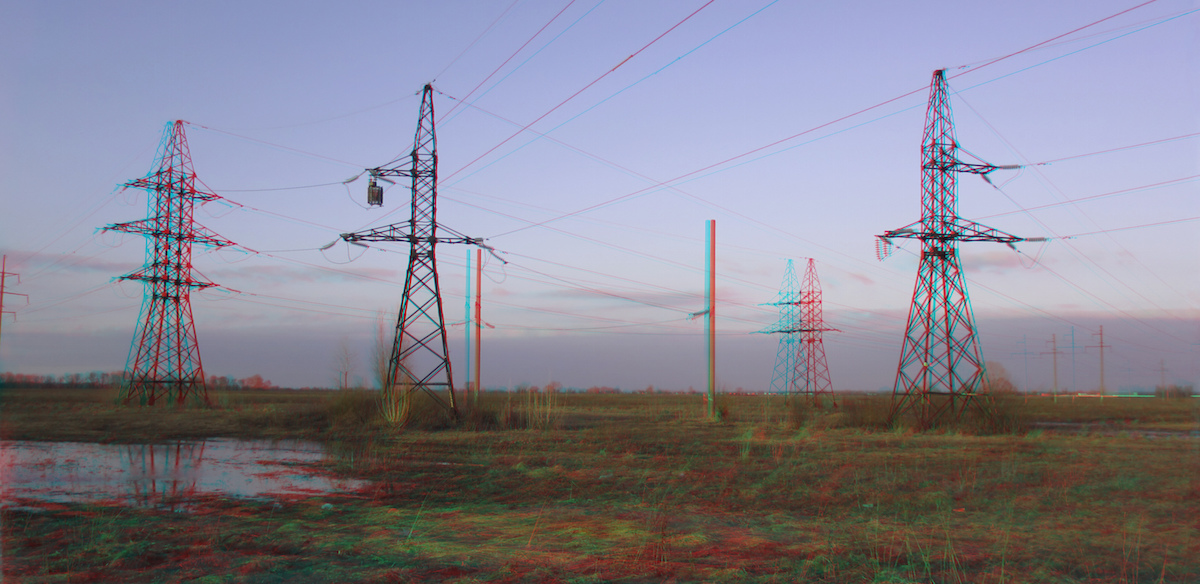
A December outage in Ukraine that caused 225,000 customers to lose electricity was the work of hackers, a report prepared by US Department of Homeland Security officials has determined.

The report published Thursday by the DHS Industrial Control Systems Cyber Emergency Response Team largely agrees with analysis provided last month by a member of the SANS industrial control systems team—that the December 23 outage was caused by external hackers. As Ars reported earlier, the unscheduled interruptions are the first confirmed instance of someone using hacking to generate a power outage.

None of the analysis so far has determined the precise role played by "BlackEnergy," a malware package discovered in 2007 that infected at least three of the substations involved in the outage. While initial research speculated that BlackEnergy and an added data-wiping component called KillDisk may have given attackers access or allowed them to carry out destructive events causing the power to go out, the DHS report holds out the possibility that the two pieces of malware were used only after the outage in an attempt either to destroy evidence or make recovery more difficult.

Read 2 remaining paragraphs | Comments

AT&T gave $62K to lawmakers months before vote to limit muni broadband

Missouri bill would make it difficult for cities to offer Internet service.

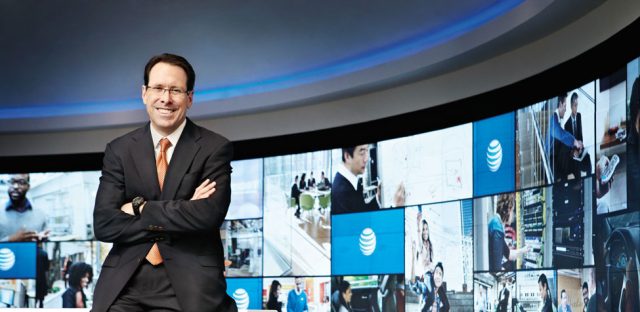
AT&T CEO Randall Stephenson. (credit: AT&T)

A Missouri legislative committee last week approved a bill that would limit the spread of municipal broadband networks, helping private Internet service providers such as AT&T avoid competition.

A few months before that vote, AT&T donated a total of $62,500 to political committees in Missouri. This included $20,000 to the House Republican Campaign Committee, $20,000 to the Missouri Democratic State Committee, $7,500 to the Missouri Republican Party, and $15,000 to the Missouri Senate Campaign Committee (apparently a Republican group). One of the donations is listed by the Missouri Ethics Commission as occurring just two weeks ago, but we’ve been told it was made in September 2015 and not deposited until this month because the original check was lost.

The donations were made before the legislature went into session; AT&T's policy is to not make contributions during legislative sessions. AT&T gave similar amounts in previous years.

Read 23 remaining paragraphs | Comments

“Dangerous paleo diet” study is ragged with holes

Study reporting that high fat diet made mice fat somehow makes headlines.

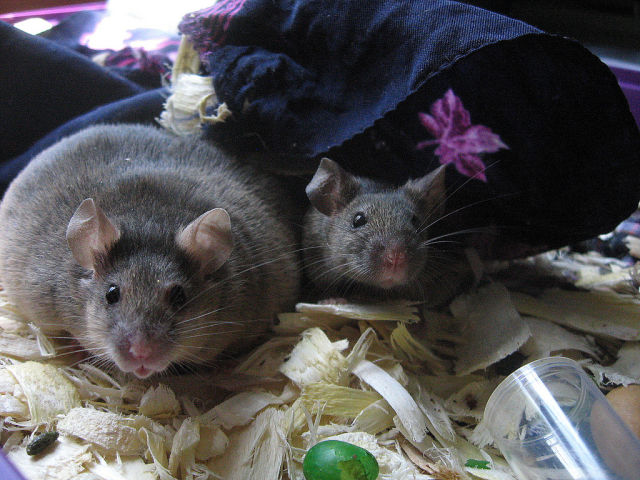
Mice eating their pre-Neolithic wood shavings (credit: flickr user: crwr)

There’s a deep sense of irony in adding to a never-ending series of headlines on a study that shouldn’t have had any attention paid to it at all. But the publication on the dangers of the “paleo” diet that’s spawned countless headlines is so flawed that it’s worth exploring why it got so much attention.

“Diabetes expert warns paleo diet is dangerous and increases weight gain,” claims the press release issued to promote a paper in last week’s Nature Nutrition and Diabetes. What's particularly flabbergasting about this situation is that the study didn’t actually have anything to do with a paleo diet—it used a low-carb, high-fat (LCHF) diet. The two diets can be similar—paleo diets tend to be lower in carbs and higher in fats—but they’re not the same thing, and it’s possible to eat a paleo diet that’s not high in fat.

The headline also doesn’t mention that the study looked at mice. But not many mice—only seventeen male New Zealand Obese (NZO) mice, which are inbred to be severely predisposed to obesity and diabetes. Given that the study wanted to find out whether the diet is suitable for obese, pre-diabetic people, it makes sense to study mice with a predisposition toward these conditions. But it does mean that the results don't apply more broadly. “It’s not even applicable to all mice, let alone all humans,” says Yoni Freedhoff, an assistant professor at the University of Ottawa with a specialty in debunking diet nonsense.

Read 8 remaining paragraphs | Comments

Meet America’s next top bomber—the B-21

With design that echoes B-2, the new bomber looks the same as the old bomber.

(credit: US Air Force)

The aircraft to be built by Northrop Grumman for the US Air Force's Long Range Strike Bomber (LRS-B) has now been officially designated by the Air Force as the B-21. The first conceptual drawings of the bomber to be revealed look very familiar—almost like a carbon copy of the last bomber the Air Force bought in the 1980s and 1990s.

In a presentation at the Air Force Association's Air Warfare Symposium in Orlando on February 26, Air Force Secretary Deborah Lee James unveiled an initial conceptual drawing of the aircraft as well as its designation. James announced that the Air Force will be taking suggestions from service members for the official name of the bomber. The B-21 designation, she said, was in recognition of the LRS-B as the first bomber of the 21st century.

“This aircraft represents the future for our Airmen," James said. “The Airman who submits the selected name will help me announce it at the conference this fall (the Air & Space Conference in September)."

Read 4 remaining paragraphs | Comments