OS X blacklist accidentally disables Ethernet in OS X 10.11

Luckily, if you are affected it’s relatively trivial to fix.

Enlarge / An errant update may have disabled your Mac's Ethernet port recently. (credit: Andrew Cunningham)

If you're having problems with your Mac's Ethernet port this morning, the culprit may be an errant automatic update that Apple published over the weekend. Luckily, the damage isn't permanent: an Apple support article posted yesterday will walk you through diagnosing and fixing the problem, which involves connecting to your network via Wi-Fi and running a software update command in the Terminal. If you're reading this and your Ethernet port is working fine, the odds are good that you've already installed the follow-up update released to fix the problem.

The culprit is an update for the System Integrity Protection feature for OS X, the El Capitan feature that protects some system folders and keeps unsigned or incorrectly signed kernel extensions (or "kexts," roughly analogous to drivers in a Windows or Linux machine) from loading. In this case, the kext used to enable the Ethernet port on Macs was blacklisted—if you restarted your Mac after applying this update but before your computer had a chance to download the quickly-issued fix, you'll find yourself without an Ethernet connection.

This blacklist isn't updated through the Mac App Store like purchased apps or OS X itself. Rather, it uses a seamless auto-update mechanism that executes in the background even if you haven't enabled normal automatic updates. Apple uses a similar mechanism to update OS X's anti-malware blacklist, a rudimentary security feature introduced in 2011 following the high-profile Mac Defender malware infection, and occasionally to push other critical software updates.

Read 1 remaining paragraphs | Comments

Meet NASA’s new X-planes: “Quiet” sonic booms and engines at the back

Agency ready to press ahead with demonstrator flights if Congress grants funding.

NASA wants to build a new series of X-planes to increase fuel efficiency and reduce noise and pollution from commercial aircraft. (credit: NASA)

NASA wants to build a new series of X-planes to increase fuel efficiency and reduce noise and pollution from commercial aircraft. After years of flat or declining budgets in aeronautics research, NASA will seek a substantial increase for the coming fiscal year and beyond. The agency’s administrator, Charles Bolden, will speak more about this request later today at Reagan National Airport in Washington DC, but Ars has learned details of the plan.

The proposed budget increase of $3.7 billion over the next decade would allow NASA to work on dramatically improving both subsonic and supersonic flight. In an interview, Jaiwon Shin, the associate administrator for NASA’s Aeronautics Research Mission Directorate, told Ars that the agency has been working with industry and academic partners to research several “revolutionary” technologies. To take the next step and begin actually flying these concepts, however, NASA needs to build a new generation of X-planes. And that costs money.

Shin said the design-and-build phase will take about four to five years, after which time the planes would be tested at Armstrong Flight Research Center in California and Langley Research Center in Virginia. If successful, these concepts might be incorporated into commercial fleets within about a decade, and through fuel savings, noise, and emission reductions, they could save the aviation industry as much as $255 billion over 25 years, NASA estimates.

Read 13 remaining paragraphs | Comments

Microsoft’s $3000 HoloLens Development Edition ships March 30th

Microsoft’s $3000 HoloLens Development Edition ships March 30th

Microsoft is now taking pre-orders for its HoloLens Development Edition device and plans to ship the kit to developers starting March 30th. There are a few barriers to entry though. First, you need to be willing to spend $3,000. Second, you need to apply for a development kit before you’re even allowed to spend money on one. Microsoft […]

Microsoft’s $3000 HoloLens Development Edition ships March 30th is a post from: Liliputing

Playing the world’s first VR board game

Lost Cities VR is surprisingly good and a tantalizing hint at future of VR gaming.

BARCELONA—After trying out VR porn for the first time, the obvious next port of call was the other barb of the early-adopter pincer attack: VR games. At MWC in Barcelona there were myriad virtual reality gaming demos, from on-rails shooting games, to full VR-and-HOTAS Elite: Dangerous setups, to whacky HTC Vive stuff. But there was one game that really intrigued me, way out in the hinterlands of Hall 7: Lost Cities VR, the world's first VR board game.

Lost Cities, developed by Campfire Union, is a game for Gear VR that's based on a board game of the same name. The board game itself is fun, simple, and very popular. Both versions of the game are played in exactly the same way, except the board game allows for up to four players and the VR game only supports two (for now).

I won't go into the exact rules of the game, but it's pretty straight forward. Each player starts with a hand of cards (see image above). You take it in turns to pick one card from your hand, strategically place the card in one of five areas in front of you, and then pick up another card from a shared stack of cards. When all the cards have been drawn, the game ends, the scores are tabulated, and one of you wins. It's one of those games that's incredibly simple to pick up, but a huge strategic game-space opens up once you play it a bit.

Read 8 remaining paragraphs | Comments

Bildrechte: Kleingedrucktes kostet Facebook 100.000 Euro

Das Landgericht Berlin verhängt 100.000 Euro Ordnungsgeld gegen Facebook: Das Unternehmen habe seine AGB über die von Nutzern online gestellten Fotos nicht entsprechend einem früheren Urteil richtig geändert, sondern nur den Text leicht umgeschrieben. (Facebook, Urheberrecht)

Das Landgericht Berlin verhängt 100.000 Euro Ordnungsgeld gegen Facebook: Das Unternehmen habe seine AGB über die von Nutzern online gestellten Fotos nicht entsprechend einem früheren Urteil richtig geändert, sondern nur den Text leicht umgeschrieben. (Facebook, Urheberrecht)

Microsoft needs to stop forcing console-like restrictions on Windows Store PC games

With the upcoming Quantum Break a Windows Store exclusive, users are up in arms.

With the news that Remedy Entertainment's upcoming Xbox One and PC exclusive Quantum Break would only be be available for Windows 10, and only run under DirectX 12, there's been something of an uproar in the PC gaming community. Along with lamenting the cessation of support for the likes of Windows 7, of course—a sadly inevitable decision given Microsoft's aggressive push of its latest OS—there's also some incredibly steep recommended system requirements, which call for a Core i7, Nvidia GTX 980 Ti or AMD Fury X, and 16GB of system memory.

But the biggest problem stems from Microsoft's distribution method of choice: the Windows Store. The Windows Store is Microsoft's own platform for selling apps and games directly to consumers, which some may remember Valve's Gabe Newell calling "a catastrophe for everyone in the PC space" when it debuted with Windows 8 back in 2012. Steam OS arrived just a year later. Games and apps sold through the Windows Store differ from those sold on the likes of Steam and GOG in that they're built as a Universal Windows Platform (UWP) app, rather than as a standard desktop app.

That's fine for downloading the likes of Candy Crush, Minecraft: Pocket Edition, and Dropbox—even if the latter has some issues—but UWP apps have some limitations that dramatically affect top-tier PC games. Square Enix's Rise of the Tomb Raider recently debuted on PC both on Steam and on the Windows Store. Those that forked over for the Windows Store version were disappointed to find a host of limitations, including not being able to turn v-sync off, no SLI or Crossfire support, and no .exe file that can be loaded into Steam for use with its overlays or Big Picture mode.

Read 7 remaining paragraphs | Comments

“Privacy Shield” proposed to replace US-EU Safe Harbor, faces skepticism

Unlikely to satisfy Europe’s data protection watchdogs—or the EU’s top court.

(credit: Greenpeace)

The European Commission has published details of its transatlantic "Privacy Shield" agreement, which is designed to ensure that personal information of citizens is protected to EU standards when it is sent to the US—even though it would appear that the NSA will continue to carry out bulk collection of data under the new pact.

The new deal replaces the earlier Safe Harbour framework, which was struck down by the Court of Justice of the European Union (CJEU) following a complaint by privacy activist Max Schrems.

An accompanying Privacy Shield FAQ released by Brussels' officials explained that there are four main elements. According to the commission, the new agreement will "contain effective supervision mechanisms to ensure that companies respect their obligations, including sanctions or exclusion if they do not comply."

Read 15 remaining paragraphs | Comments

$3,000 HoloLens dev kit available for pre-order now, shipping March 30

Futuristic hardware finally gets into developers’ hands.

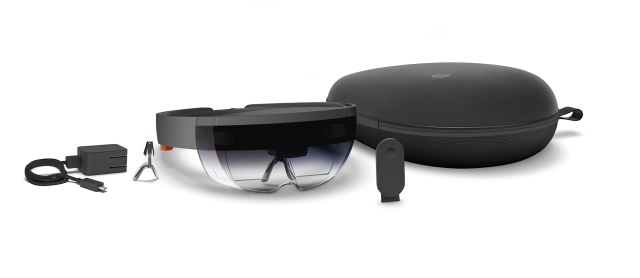
HoloLens Development Edition. (credit: Microsoft)

If you want to get your hands on Microsoft's holographic headset, the company is now taking pre-orders for the HoloLens Development Edition. Hardware will be shipping to the US and Canada on March 30, just scraping in to Microsoft's first-quarter deadline. As previously announced, the hardware will cost $3,000.

As pictured, the development kit appears to be relatively barebones, containing the HoloLens, a charger, the Bluetooth 4.1 Clicker that leaked earlier this week, a carrying case, a microfiber cloth, and replacement nose pieces. While the HoloLens itself is fully self-contained, running wirelessly and independently, developing HoloLens software will require a PC that can run Windows 10 and Visual Studio 2015.

Microsoft is being a little more forthcoming with some of the HoloLens hardware specs, though there are some oddities in there. We learned last year that the system was x86 powered with 2GB RAM, 802.11ac, and a 60Hz refresh rate. That hasn't changed, but now we have some more detail, particularly around its sensors. The headset is chock full of cameras—four to "understand" the environment, one to build depth maps of the world, and a 2MP camera for photography and video capture. It also incorporates four microphones, an ambient light sensor, and an inertial measurement unit that combines accelerometers and gyroscopes to detect movement.

Read 6 remaining paragraphs | Comments

Far Cry Primal im Technik-Test: In der Steinzeit gibt’s kein Gameworks

Die Optik von Far Cry Primal ist alles andere als prähistorisch, benötigt aber auch keine Hardware der Zukunft, um flüssig zu laufen. Besonders gut gefallen uns die Vegetation und die temporale Kantenglättung. (Far Cry Primal, Prozessor)

Die Optik von Far Cry Primal ist alles andere als prähistorisch, benötigt aber auch keine Hardware der Zukunft, um flüssig zu laufen. Besonders gut gefallen uns die Vegetation und die temporale Kantenglättung. (Far Cry Primal, Prozessor)

We think prettier people are smarter

Attractiveness gives us rose-tinted glasses when we’re judging intelligence.

A composite face averaged from nine men. (credit: flickr user: Jun'ichiro Seyama)

People often make assumptions about each other’s character traits based on facial features. While, to a limited extent, it seems like we can actually glean some reliable info about personality traits from someone’s face, we can also add a heaping pile of bias on top of that too. A paper in PLOS One explores one of these biases: the more attractive we think a person is, the more we’re inclined to think they’re intelligent. This “attractiveness halo” means that we’re likely to overestimate the intelligence of people we find attractive.

One of the complications in assessing something like this is that people vary in what they believe “intelligence” is. This is an entirely separate question from what any scientific consensus actually says about the concept of intelligence and how we measure it. Regardless of what science says, people will still have their own understanding of what the idea means, believing that intelligence is the result of things like a “growth mindset,” of conscientiousness, or of genetics.

This makes it a bit difficult to do an experiment. These different definitions of intelligence, the authors write, suggest that people will consider different things in a face to signal intelligence, leading to “less accurate perceptions of intelligence.” So just asking for people to rate the intelligence of a series of faces would be unlikely to identify our perceptions with a huge amount of accuracy. To account for this, the researchers decided to also ask about other ratings that could capture various beliefs about intelligence: conscientiousness, and academic performance.

Read 8 remaining paragraphs | Comments