Project Fi drops invite program, offers $150 off a Nexus 5X with service

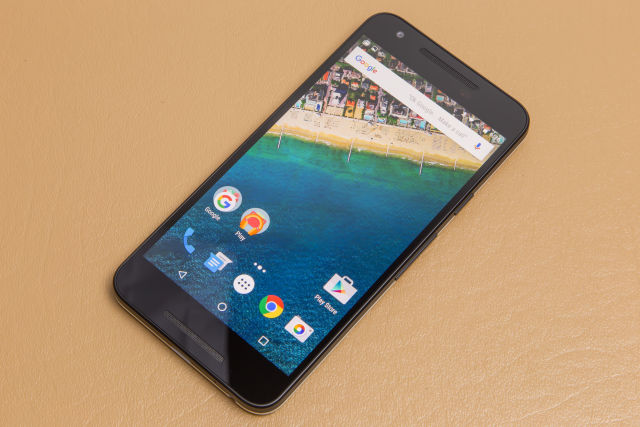
Score a Nexus 5X for just $199—if you get it with a month of Project Fi.

Enlarge / The Nexus 5X. (credit: Ron Amadeo)

Google's Project Fi cellular service is dropping its invite requirement. And to celebrate, the company just announced the deepest discount ever on the Nexus 5X. If you buy the phone through Project Fi and activate it, you can get the normally $349 Nexus 5X for just $199. The offer is valid from today until April 7, 2016.

The deal conjures up images of the two-year contract pricing carriers used to offer on phones, but Project Fi is a pre-pay service with no contracts, so it seems you can cancel at any time. The fine print only says "You must then activate Fi service on the same account within 30 days of device shipment." We guess that you'd then be on the hook for a month of service, which at the minimum pricing will cost about $30. So even if you have no desire to join Project Fi, around $230 for a 5X while cancelling Project Fi is still a deal.

Project Fi is Google's MVNO service that continually switches between Sprint and T-Mobile, while only charging you for the exact amount of the data you use, down to the megabyte. The service also combines all the best features Google Voice, like visual voicemail, number forwarding, and the ability to send and receive SMS messages from any computer and via the Google Hangouts app. The only real downside is the extremely limited device compatibility—the Network switching feature means Fi only works on the Nexus 5X, 6, and 6P. Project Fi charges a $20 base fee for unlimited texting and calls, plus $10 per GB of data you use. We've got a full breakdown of the pricing here.

Read 1 remaining paragraphs | Comments

Google’s Project Fi cellular network now available without an invite

Google’s Project Fi cellular network now available without an invite

Google’s Project Fi is a cellular network that lets you connect to T-Mobile, Sprint, or WiFi to make calls and connect to the internet. The blending of different connections is only one of the things that makes the service special though. Since it launched 10 months ago, Project Fi has only been available for folks […]

Google’s Project Fi cellular network now available without an invite is a post from: Liliputing

Google’s Project Fi cellular network now available without an invite

Google’s Project Fi is a cellular network that lets you connect to T-Mobile, Sprint, or WiFi to make calls and connect to the internet. The blending of different connections is only one of the things that makes the service special though. Since it launched 10 months ago, Project Fi has only been available for folks […]

Google’s Project Fi cellular network now available without an invite is a post from: Liliputing

Five years after, Fukushima’s contamination is slow to fade

Fish still show contamination, but the levels have dropped.

A model of the spread of radioactive cesium from the Fukushima site. (credit: E. Behrens, F.U. Schwarzkopf, J.F. Lübbecke and C.W. Böning, GEOMAR.)

The Fukushima nuclear disaster occurred almost five years ago in March 2011. It is the largest event of its sort since Chernobyl, which occurred 25 years earlier. The accident was triggered by a tsunami and earthquake that led to a meltdown at the plant. During this event, large amounts of radioactive materials were released into the atmosphere. Since then, Fukushima Daiichi has continued to leak radioactive materials into the ground and nearby ocean.

Following the accident, concerns surfaced regarding both agricultural products from the region and the fish caught in nearby waters. In response, the Japanese government began intensively monitored γ-emitting radioisotopes to prevent highly contaminated foods from reaching the market. The two main radioisotopes released during the accident, 134Cs and 137Cs, exhibit half-lives of approximately 2 and 30 years, respectively. So a large amount of the radiocesium released during the accident is still around.

Recently, a team of researchers has re-examined aquatic food contamination data in order to get a better picture of food safety.

Read 10 remaining paragraphs | Comments

LeMaker Cello dev board features AMD’s 64-bit ARM chip

LeMaker Cello dev board features AMD’s 64-bit ARM chip

Chip maker AMD has long been competing with Intel and NVIDIA in the desktop CPU and graphics spaces, but recently the company tried going after the low-power service chip space with the introduction of its first ARM-based processors. While those chips are designed for servers rather than consumer applications, they could pave the way for other future […]

LeMaker Cello dev board features AMD’s 64-bit ARM chip is a post from: Liliputing

LeMaker Cello dev board features AMD’s 64-bit ARM chip

Chip maker AMD has long been competing with Intel and NVIDIA in the desktop CPU and graphics spaces, but recently the company tried going after the low-power service chip space with the introduction of its first ARM-based processors. While those chips are designed for servers rather than consumer applications, they could pave the way for other future […]

LeMaker Cello dev board features AMD’s 64-bit ARM chip is a post from: Liliputing

Verizon’s “supercookies” violated net neutrality transparency rule

Verizon agrees to $1.35M fine and will make it easier to avoid tracking cookies.

Zombie hand cookies. (credit: Rakka)

Verizon Wireless has agreed to pay a $1.35 million fine and give users more control over "supercookies" that identify customers in order to deliver targeted ads from Verizon and other companies. Verizon's use of the supercookies without properly notifying users violated a net neutrality rule that requires Internet providers to disclose accurate information about network management practices to consumers, the FCC said.

Verizon's settlement with the Federal Communications Commission, announced today, stems from an investigation into the carrier's "practice of inserting unique identifier headers [UIDH] or so-called 'supercookies' into its customers’ mobile Internet traffic without their knowledge or consent," the FCC said. Verizon began inserting the identifier—which could not be deleted by consumers—into its subscribers' HTTP Internet traffic in December 2012 and made some limited disclosures in its privacy policy. But the company "did not specifically disclose the presence of UIDH and its uses until October 2014," the FCC said.

ProPublica reported in January 2015 that an online advertising clearinghouse called Turn was taking advantage of the unique identifiers, also known as "zombie cookies," and using them "to respawn tracking cookies that users have deleted." Shortly after that, Verizon said it would offer customers a way to opt out.

Read 4 remaining paragraphs | Comments

Telefónica: Telefonie und SMS zwischen E-Plus und O2 wird netzintern

Die Telefónica führt in wenigen Tagen On-Net-Konditionen für E-Plus und O2 ein. Bei der Abrechnung von Telefonie und Messaging wird nicht länger zwischen den beiden Netzen unterschieden. (Telefónica, E-Plus)

Die Telefónica führt in wenigen Tagen On-Net-Konditionen für E-Plus und O2 ein. Bei der Abrechnung von Telefonie und Messaging wird nicht länger zwischen den beiden Netzen unterschieden. (Telefónica, E-Plus)

Shashlik lets you run Android apps in Linux desktop environments

Shashlik lets you run Android apps in Linux desktop environments

There are nearly two million apps available for Google’s Android operating system, and most are designed to run on smartphones or tablets. But operating systems like Remix OS and Phoenix OS make the case that you could run those apps in a desktop-like environment. Shashlik is an open source project that takes a slightly different approach. […]

Shashlik lets you run Android apps in Linux desktop environments is a post from: Liliputing

Shashlik lets you run Android apps in Linux desktop environments

There are nearly two million apps available for Google’s Android operating system, and most are designed to run on smartphones or tablets. But operating systems like Remix OS and Phoenix OS make the case that you could run those apps in a desktop-like environment. Shashlik is an open source project that takes a slightly different approach. […]

Shashlik lets you run Android apps in Linux desktop environments is a post from: Liliputing

Apple must pay $450 million as Supreme Court rejects e-book antitrust appeal

Appeals court ruled that Apple knowingly conspired with publishers to keep prices high.

On Monday, the US Supreme Court declined to hear Apple’s request for an appeal on a ruling that said the company was liable for violating antitrust laws and engaging in price-fixing by letting publishers set prices for e-books sold on Apple's iBooks platform. Now out of options, Apple will have to pay $400 million to e-book consumers and $50 million to plaintiff’s lawyers, as per a settlement that the company reached in 2014.

In 2012, Apple and five publishers (Penguin, HarperCollins, Hachette, Simon & Schuster, and Macmillan) were sued by the Department of Justice and 33 states’ attorney general offices for conspiring to offer e-books at a higher price than Amazon’s loss-leading $9.99. The publishers all eventually settled for a total of $166 million to states and consumers, but Apple held out and eventually lost a judgement in Manhattan district court.

The company then appealed to the US Second Circuit Court of Appeals, arguing that it had actually boosted competition by offering new-release books for $12.99 to $14.99. "Antitrust laws are intended to foster competition, not keep prices down at any cost,” Apple wrote in a rebuttal to the district judge’s ruling in 2014.

Read 3 remaining paragraphs | Comments

Spotify Threatens ‘Clone’ Music Service With Legal Action

A site that uses a mashup of Spotify and YouTube to offer free music to the public has received a legal threat from Spotify. ‘Syotify’ makes use of a script widely available online but Spotify is now demanding that the service hands over its domain name and stops offering services “impermissibly derived” from Spotify’s own services.

Source: TF, for the latest info on copyright, file-sharing, torrent sites and ANONYMOUS VPN services.

spotifyLast month TorrentFreak reported on a script which mashes-up Spotify and YouTube and enables anyone to set up a decent free music service with a minimum of fuss.

“Youtubify allows you to create your own music streaming website in minutes with no coding knowledge,” the script’s sales pitch reads. “It has an impressive feature set that rivals and even surpasses other biggest streaming services on the market.”

At a cost of just $38 YouTubify has already been deployed on dozens of sites but it seems that the road ahead might not be as smooth as first anticipated.

TorrentFreak has learned that the operator of “Syotify“, a site using the YouTubify script, has just been contacted by Spotify’s legal team.

syotify

“Spotify has recently discovered that some of the things that you do violate Spotify’s intellectual property and other rights,” Spotify told the site.

“Spotify is all for you making a living and running a business, but when that business interferes with Spotify’s rights, we hope you understand that Spotify can’t just sit back and take no action.”

Spotify begins by making it clear that the domain name ‘Syotify’ is too close to its own trademark and as a result is likely to mislead Spotify’s customers.

“Your registration and use of the Infringing Domain Name and your unauthorized use of the Spotify Marks is likely to confuse people into thinking that your website (including its domain name) is somehow associated with or approved by Spotify,” the letter continues.

“Unfortunately, no reasonable explanation exists for your registration of the Infringing Domain Name and use of the Spotify Marks other than the bad-faith intent to profit from the goodwill associated with the Spotify Marks.”

While it initially appears that Spotify is mostly concerned about its trademarks, a closer examination of the cease-and-desist sent to Syotify reveals a fundamental problem with how third-party services leverage Spotify’s API.

“[Y]our website offers the service of converting Spotify’s streaming music service to create playlists on YouTube in violation of Spotify’s user agreement. Essentially you use the Spotify Marks to promote a competitive website that, at the least, appears to generate revenue from third-party advertising,” Spotify writes.

Noting that Syotify’s website breaches trademark, cybersquatting and copyright infringement laws, Spotify gives the site just ten days to comply with a list of demands including:

– Stop using the ‘Infringing Domain Name’
– Provide a list of any other “Spotify-related” domains also registered
– Transfer all “infringing domains” to Spotify
– Permanently stop using any marks “confusingly similar” to Spotify marks

But while most of the above relates to alleged trademark-style infringements, the final demand from Spotify indicates that the company will not allow the use of its API to power what amounts to a rival service.

“[Syotify is required to] permanently stop offering and providing services impermissibly derived from Spotify’s own services,” Spotify’s legal team writes.

Also of interest is that the cease and desist letter referenced above was actually sent to Cloudflare, who passed it on to Syotify as required. However, Spotify also calls on Cloudflare to take action against the music service.

“We assume that you respect the intellectual property rights of others and therefore request that CloudFare remove the infringing content,” Spotify writes.

There’s no indication that Cloudflare intends to do so but TF understands that the company has forwarded the details of Syotify’s hosting provider to Spotify and also forwarded the complaint, so dealing with the site at source is now an option.

Speaking with TorrentFreak, the owner of Syotify says that he was written to Spotify to acknowledge receipt of the company’s complaint but has not yet decided how to respond.

It’s possible that he may move to a new domain to stop infringing on Spotify’s trademarks but he’s not prepared to hand any domains over to Spotify. There is also the chance of him transitioning from a Spotify-powered site to one using Last FM, but nothing has been decided yet.

At the time of publication Spotify had not responded to our request for comment.

Source: TF, for the latest info on copyright, file-sharing, torrent sites and ANONYMOUS VPN services.

Hacker who exposed Bush family e-mails, photos will be extradited to US

“Guccifer” leaked George W. Bush’s amateur paintings, among other things.

George W. Bush stands next to a Frenchified cardboard version of himself. (credit: The Smoking Gun)

A year and a half after he was indicted, a Romanian man who broke into the e-mail of a family member of two former presidents is set to be extradited to the United States.

Romania's top court approved the temporary extradition of Marcel Lehel Lazăr, also known as "Guccifer" and "Micul Fum," according to a report by IDG News. Lazăr allegedly broke into the e-mail account of an unnamed family member of both former president George H. W. Bush as well as George W. Bush, intercepting images including family photos and self-portraits painted by George W. Bush. The hack exposed other deeply personal information about the family, including family e-mails planning a possible funeral for the older former president, written when he was hospitalized in late 2013.

The Romanian suspect, a former cab driver, will face charges of wire fraud, unauthorized access to a protected computer, aggravated identity theft, cyberstalking, and obstruction of justice. He has been charged in the Eastern District of Virginia. The Romanian court decision allows him to be extradited for up to 18 months to face the charges.

Read 2 remaining paragraphs | Comments