Künstliche Intelligenz: Alpha Go gewinnt auch drittes Spiel gegen Lee Sedol

Wie die ersten beiden Partien hat der Weltklassespieler Lee Sedol auch das dritte Spiel gegen Googles Go-Programm Alpha Go verloren. Damit hat der Computer überraschenderweise das Gesamtmatch bereits frühzeitig für sich entschieden. (Alpha Go, Google)

Wie die ersten beiden Partien hat der Weltklassespieler Lee Sedol auch das dritte Spiel gegen Googles Go-Programm Alpha Go verloren. Damit hat der Computer überraschenderweise das Gesamtmatch bereits frühzeitig für sich entschieden. (Alpha Go, Google)

VPN Provider’s No-Logging Claims Tested in FBI Case

While many VPN providers say they do not log their users’ activities in order to protect anonymity, it’s not often their claims get tested in the wild. However, a criminal complaint filed by the FBI this week notes that a subpoena sent to Private Internet Access resulted in no useful data being revealed about a suspected hoaxer.

Source: TF, for the latest info on copyright, file-sharing, torrent sites and ANONYMOUS VPN services.

spyWith monitoring and spying now a fact of life on the Internet, millions of privacy conscious individuals have taken to protecting their online identities. Many choose to do so by using companies that offer a Virtual Private Network (VPN) service.

In layman’s terms a VPN replaces the user’s IP address with one under the control of the company, meaning that their own IP is kept private when accessing services online. However, some VPN companies carry extensive logs which mean that when put under pressure they are able to link a user’s account to specific online activity.

This kind of setup is clearly self-defeating from a privacy perspective so in recent years it has become common for VPN providers to disclose their logging practices, as detailed in our annual report, for example.

But still, the big question remains: how can a prospective customer be sure that their VPN provider really keeps no logs? In reality the answer to that question is largely a matter of trust, weighed up against the goodwill the company has built up over its time in business.

That being said, an interesting case that appeared in a Florida district court this week has seen one provider’s no-logging policy being officially tested.

The criminal complaint (here) details the FBI’s suspicions that 25-year-old Preston McWaters had conveyed “false or misleading information regarding an explosive device”. In other words, he made a false bomb threat.

The investigating FBI agent goes into some detail on the case, which begins with claims that McWaters stalked former co-worker Devon Kenney by calling her, texting her, sending her messages on Facebook and showing up at her house. In all, it’s estimated that McWaters contacted his former co-worker more than 100 times.

In December a number of hoax bomb threats were sent to a variety of locations including schools and airports, generally in the name of Eric Mead or a variation thereof, via Twitter and email. Eric Mead is the name of Kenney’s current boyfriend and he denies making any of the threats.

So the FBI started digging and in February 2016 two search warrants against Twitter and Facebook required them to turn over information on several accounts. Both did and the criminal complaint makes it clear that the FBI believes that McWaters was behind the accounts and the threats.

With McWaters apparently leaving incriminating evidence all over the place (including CCTV at Walmart where he allegedly purchased a pre-paid Tracfone after arriving in his own car), the FBI turned to IP address evidence available elsewhere.

“During the course of the investigation, subpoenas and search warrants have been
directed to various companies in an attempt to identify the internet protocol (IP) address from where the email messages are being sent,” the complaint reads.

“All of the responses from [email provider] 1&1, Facebook, Twitter, and Tracfone have been traced by IP address back to a company named London Trust Media [doing business as] PrivateInternetAccess.com.”

By this point in the complaint it’s clear that even without the IP address information the FBI already had enough evidence to pin the threats on McWaters. Nevertheless, they ordered PIA to hand over its logs.

“A subpoena was sent to London Trust Media and the only information they could provide is that the cluster of IP addresses being used was from the east coast of the United States,” the FBI’s complaint reads.

“However, London Trust did provide that they accept payment for their services through credit card with a vendor company of Stripe and/or Amazon. They also accept forms of payment online through PayPal, Bitpay, Bit Coin, Cash You, Ripple, Ok Pay, and Pay Garden.”

In the event the FBI was unable to link McWaters to any payment to the company. However, they did find a payment to another provider.

“Although the investigation has not revealed any payment by McWaters to London Trust, he did make a purchase from AnchorFree Inc [HotspotShield VPN] on October 23, 2015,” the complaint notes.

While McWaters is yet to be found guilty, it’s a sad fact that some people will use anonymizing services such as VPNs, pre-paid phones and anonymous email providers to harass others. And thankfully, as this case shows, they’ll need to hide a lot more than their IP address to get away with that level of crime.

Nevertheless, there are plenty of decent people using services like PIA’s and those users will be comforted that their privacy remains intact.

“Our company was subpoenaed by the FBI for user activity logs relating to this matter,” London Trust Media Executive Chairman Andrew Lee informs TorrentFreak.

“After scrutinizing the validity of the subpoena and confirming it, we restated as we always do the content of our privacy policy and then we notified the agent that we do not log any user activity. The agent confirmed his understanding of our company’s policy and position and then pursued alternative leads.

“This report makes it clear that PIA does not log user activity and we continue to stand by our commitment to our users.”

—

Disclosure: PIA is a TorrentFreak sponsor

Source: TF, for the latest info on copyright, file-sharing, torrent sites and ANONYMOUS VPN services.

Back to Dinosaur Island 2: Kostenlose VR-Demo für Flugsaurier-Liebhaber

Eine Steilwand, Dutzende Pteranodons und der Spieler mittendrin: Crytek hat die schicke VR-Demo Back to Dinosaur Island 2 kostenfrei verfügbar gemacht. Ein Oculus Rift DK2 und ein Xbox-Controller sind dafür notwendig. (Cry Engine, Steam)

Eine Steilwand, Dutzende Pteranodons und der Spieler mittendrin: Crytek hat die schicke VR-Demo Back to Dinosaur Island 2 kostenfrei verfügbar gemacht. Ein Oculus Rift DK2 und ein Xbox-Controller sind dafür notwendig. (Cry Engine, Steam)

Die Woche im Video: Go-Go-Gadget-o Galaxy

Die KI Alpha Go hat den weltbesten Spieler in dem komplizierten Spiel Go besiegt. Im Test haben Samsungs Galaxy S7 und S7 Edge überzeugt. Und Googles Android N sieht vielversprechend aus. Sieben Tage und viele Meldungen im Überblick. (Golem-Wochenrückblick, Internet)

Die KI Alpha Go hat den weltbesten Spieler in dem komplizierten Spiel Go besiegt. Im Test haben Samsungs Galaxy S7 und S7 Edge überzeugt. Und Googles Android N sieht vielversprechend aus. Sieben Tage und viele Meldungen im Überblick. (Golem-Wochenrückblick, Internet)

Erste Android-N-Version im Test: Google schafft eine gute Basis

Die erste Developer Preview von Android N zeigt: Gerätehersteller werden es in Zukunft leichter haben. Google baut in sein Basis-Android endlich viele Funktionen ein, die es bisher nur durch Anpassungen auf Smartphones und Tablets gab. (Android_N, Google)

Die erste Developer Preview von Android N zeigt: Gerätehersteller werden es in Zukunft leichter haben. Google baut in sein Basis-Android endlich viele Funktionen ein, die es bisher nur durch Anpassungen auf Smartphones und Tablets gab. (Android_N, Google)

Innovative ‘DVD Swapping’ Service Might Get Unwanted Copyright Attention

A new Kickstarter wants to bring the lending of DVDs into the 21st century, but they might be sued into submission before things have barely started.The new project, called MovieSwap, wants you and others to send in their unwanted DVDs. Then, the …


A new Kickstarter wants to bring the lending of DVDs into the 21st century, but they might be sued into submission before things have barely started.

The new project, called MovieSwap, wants you and others to send in their unwanted DVDs. Then, the service will facilitate the lending and swapping of said discs with millions of other users around the world by ripping and storing the DVDs online for digital streaming and download.

Each disc can only be "lent" to one other user at a time (but MovieSwap will have multiple copies of the same film, sent to them by users), and is stored securely at MovieSwap's HQ. So in principle, it will be no different to lending to a real person, except you can lend to strangers and never have to worry about not getting the disc back (or getting it back scratched!). For those on the receiving end, it also means being able to access the movie in digital form, across multiple devices, including the service's own Kindle Fire like media player stick.

To access the service, users will have to pay a monthly subscription fee (which places one DVD into their library), or send in their old DVDs. Each DVD entitles the user to swap for another DVD.

The project has already received tremendous support from Kickstarter users, having exceeded the €35,000 Kickstarter goal by more than €6,000 already at the time of writing. The project claims that it already backed by investors and suggests that Jean-Baptiste Kempf, synonymous with the VLC media player project (and current president of the VideoLAN non-profit org), is a backer.

But while users and investors may see a bright future for MovieSwap, Hollywood is likely to take a dimmer view. With them cut out of the loop revenue wise, and with DVD ripping and DRM circumvention on the cards, it's unlikely the litigation happy movie studios will sit idly by and allow MovieSwap to prosper.

So it might very well be boxes and boxes of legal documents, not DVDs, that the MPAA lawyers will be sending MovieSwap's way in the near future.

His one year mission complete, Scott Kelly will retire from NASA

Astronaut plans to continue in medical studies of his post-flight health.

Scott Kelly is all smiles after landing in Kazakhstan earlier this month. (credit: Bill Ingalls/NASA)

Just 10 days after landing safely back on Earth, astronaut Scott Kelly has announced he will retire from NASA at the beginning of April. Kelly has been with the space agency since 1996, and he has flown two shuttle missions in addition to serving two stints aboard the International Space Station.

Kelly holds duration records for both the longest US spaceflight, 340 days, as well as most cumulative time in space by a NASA astronaut, 520 days. He hopes those records are fleeting, however. “Records are meant to be broken,” Kelly said Friday. “I am looking forward to when these records in space are surpassed.”

Although he is retiring from NASA, Kelly will continue to participate in the follow-up research that will monitor his health after he returned from space, including regular medical check-ups at Johnson Space Center, MRIs, blood draws, and other procedures. The goal is to understand how his body changed during the long duration flight so that NASA can better mitigate against the health hazards posed by long spaceflights.

Read 2 remaining paragraphs | Comments

GM mosquitoes clear an FDA hurdle for Florida release, locals angry

Engineered bugs could block spread of Zika, dengue, yellow fever, and chikungunya.

(credit: US DHHS)

Genetically engineered mosquitoes that have been under regulatory review for the past five years have passed one of the last remaining hurdles to gain approval for release in a field trial, the Food and Drug Administration announced Friday.

Oxitec’s OX513A Aedes aegypti mosquito would pose no significant threat to the environment or to people in Key Haven, a community in the Florida Keys where the company proposed the trial, the agency announced in a preliminary finding. The initial judgment of “no impact” from the environmental assessment will be followed up by a 30-day window for public comments. Then, the FDA will make a final decision. If the agency confirms the preliminary green light, the mosquitoes could be released shortly after.

“We look forward to this proposed trial and the potential to protect people from Aedes aegypti and the diseases it spreads,” Oxitec’s Chief Executive Officer Hadyn Parry said in a statement.

Read 5 remaining paragraphs | Comments

Obama weighs in on Apple v. FBI: “You can’t take an absolutist view”

“I’m not a software engineer… we need the tech community to help us solve [this issue].”

Our view from press row. (credit: Sam Machkovech)

AUSTIN, Texas—In his keynote address to the 2016 South By Southwest conference, President Barack Obama responded directly to a question about cybersecurity in light of the ongoing Apple v. FBI case with answers that appeared to favor the American government's current position. President Obama even called out Edward Snowden's disclosure of classified documents in 2013.

When asked by moderator and Texas Tribune founder Evan Smith where he came down on the question of digital-device privacy versus national security, President Obama began his response by saying, "I can't comment on that specific case." Yet the President's lengthy response revolved around that case's core issues of encryption to a point that it appeared unmistakably related.

President Obama began his response by reminding the audience that law enforcement agencies can obtain a warrant, show up on a citizen's doorstep, and "rifle through your underwear to see if there's evidence of wrongdoing"—and they've been able to do so well before smartphones were invented.

Read 5 remaining paragraphs | Comments

Dell’s Skylake XPS 13, Precision workstations now come with Ubuntu preinstalled

Some of the best laptops we’ve tested—now with Linux.

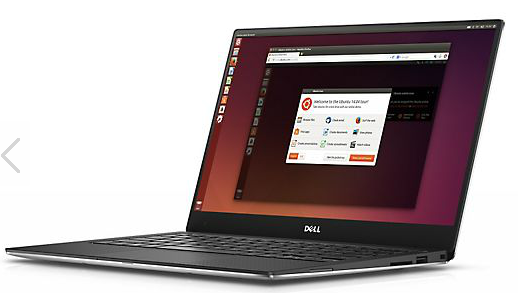
A Dell laptop running Ubuntu. (credit: Dell)

We really liked the updated Skylake-powered Dell XPS 13, and its bigger brother, the XPS 15, was also pretty great.

But if you're looking at those machines and thinking "well the hardware is nice, I just wish they came with Linux," Dell has some good news. The company's "Developer Edition" program has just been updated to include the newest Skylake systems.

The Developer Edition XPS 13s are slightly different from the Windows versions, as they use Intel Wi-Fi adaptors (instead of Dell-branded parts). Otherwise little has changed, save for coming with Ubuntu 14.04 LTS instead of Windows 10. The range of configurations available is also rather narrower. Currently, only the i7 processor is available with the beautiful 3200×1800 touch display. This can be had with 8GB RAM and 256GB SSD, or 16GB RAM and 512GB or 1TB of SSD. Dell says that later on an i5 model with 8GB RAM, 256GB SSD, and the 1920×1080 non-touch display will be available.

Read 4 remaining paragraphs | Comments