Why Microsoft is finally pushing for cross-platform online gaming

The Xbox One can’t afford to lock out competing consoles, and gamers stand to benefit.

Xbox Live gamers may soon have a new reason to rejoice.

With this year's Game Developer's Conference barely started, Microsoft has already rolled out a major announcement that has the potential to significantly change the console gaming landscape. By allowing for cross-network play on Xbox Live, Microsoft has signaled it's willing to open the doors to one of gaming's most frustrating walled gardens and help restore the platform-agnostic promise of the early Internet.

The question is, why now? Microsoft has been running Xbox Live since 2002, and it's been nearly a decade since the similar PlayStation Network launched on Sony's PlayStation 3 (not to mention PC-based networks like Steam). Why hasn't Microsoft made public overtures to connect these disparate networks before now?

Part of it might be technical, on all sides. After all, it's easier to develop a new, private gaming network with tens of millions of users if you are in total control of all the hardware that will be connecting together. The Xbox 360 and PS3's vastly different system architectures may have made true online agnosticism difficult on console developers in the last generation as well.

Read 8 remaining paragraphs | Comments

Grafikchip: AMDs neue Vega-Architektur nutzt HBM2

Polaris-basierte Grafikkarten sind noch nicht verfügbar, da gibt AMD einen Ausblick auf die Vega-Technik: Die neue Architektur unterstützt High Bandwith Memory und soll die Effizienz steigern. (Grafikhardware, AMD)

Polaris-basierte Grafikkarten sind noch nicht verfügbar, da gibt AMD einen Ausblick auf die Vega-Technik: Die neue Architektur unterstützt High Bandwith Memory und soll die Effizienz steigern. (Grafikhardware, AMD)

Android N to support “freeform” multi-window mode as well as split-screen

Android N to support “freeform” multi-window mode as well as split-screen

The Android N Developer preview includes support for split-screen mode, allowing you to run two apps in side-by-side windows. But eventually you may be able to run multiple apps in resizeable windows… much the way you can on a Windows, OS X, or Ubuntu computer. Google calls this mode “freeform,” and makes a slight mention […]

Android N to support “freeform” multi-window mode as well as split-screen is a post from: Liliputing

Metal prospectors discover astonishing treasure hoards from Anglo-Saxon England

Artifacts found buried beneath village farms are rewriting British history.

These are two coins from the ninth century, part of a Viking hoard found by a prospector in Watlington. Note the coin on the left bears Ceolwulf's name (CEOLVVLF), and the one on the right bears Alfred's (AELFRED). (credit: Portable Antiquities Scheme)

Over the past month, our understanding of England's distant past has been upended—not by trained archaeologists, but by two hobbyists with simple metal detectors. While prospecting in village farmlands, the two detectorists found clues that could change the way we understand Anglo-Saxon culture, as well as their battles against Viking invaders.

A seventh century island, hidden beneath farmland

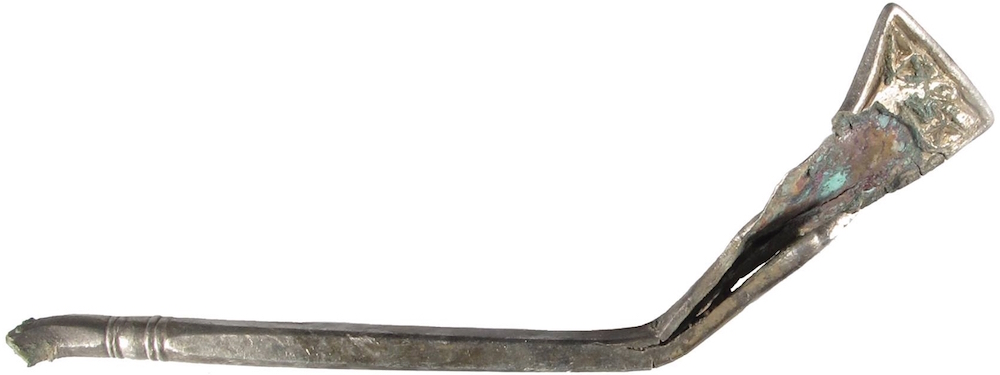
Graham Vickers was prospecting in the farmlands of Little Carlton, a small village in Lincolnshire, when he discovered a silver stylus in a recently-ploughed area. Styluses are ancient writing tools, designed to be used on wax tablets. Vickers quickly reported the finding to England's Portable Antiquities Scheme, which brought in archaeologists from the University of Sheffield to explore the area. What they found changed their understanding of the region's history—both in terms of human settlers, and the natural landscape.

Eventually, archaeologists found a huge range of artifacts from the seventh and eighth centuries, including ornamental buttons and pins, 20 styluses, knives, coins, keys, imported German pottery, and even a gaming piece. One lead tablet was engraved with an Anglo-Saxon woman's name, "Cudberg."

Read 11 remaining paragraphs | Comments

Grafikkarte: Dual-Fiji heißt Radeon Pro Duo und liefert 16 Teraflops

Mehr Leistung und neuer Name: Die bisher als Fury X2 gehandelte AMD-Grafikkarte mit zwei Fiji-GPUs heißt Radeon Pro Duo, erreicht 16 statt 12 Teraflops und wird von Crytek für VR First verwendet. (Grafikhardware, AMD)

Mehr Leistung und neuer Name: Die bisher als Fury X2 gehandelte AMD-Grafikkarte mit zwei Fiji-GPUs heißt Radeon Pro Duo, erreicht 16 statt 12 Teraflops und wird von Crytek für VR First verwendet. (Grafikhardware, AMD)

Uber driver says Uber app made him carry out Michigan killing spree

“I asked Dalton what made him get his gun tonight and he said the Uber app made him.”

Jason Dalton's video arraignment on murder charges following a Kalamazoo shooting spree February 20. (credit: WXYZ-TV Detroit)

An Uber driver accused of killing six and wounding two others during a February 20 carnage spree is said to have told Michigan investigators that the Uber app on his phone made him do it. The app, he said, controlled his "mind and body" and told him where to go and when to kill the day he is accused of carrying out the Kalamazoo County murders.

The Detroit Free Press, citing police records it obtained, said the 45-year-old suspect, Jason Dalton, told the authorities that a symbol resembling the devil's head popped up on the ride-sharing app when he opened it last month on the night of the murders.

"Dalton described the devil figure as a horned cow head or something like that and then it would give you an assignment and it would literally take over your whole body," according to police reports released Monday to the Free Press by the Kalamazoo City Attorney’s Office.

Read 4 remaining paragraphs | Comments

Former VW employee says he was fired after questioning deletion of documents

And the legal woes don’t end there: Investors launch a $3.61 billion lawsuit in Germany.

A former Volkswagen Group employee has sued the auto company, saying he was fired after he told VW’s in-house lawyers and its information technology manager that data was being illegally automatically deleted off the company’s system in the aftermath of a Notice of Violation from the Environmental Protection Agency (EPA).

The plaintiff, Daniel Donovan, had been a technical project manager at Volkswagen since 2008, working out of the company’s Michigan office. After the EPA announced that it had discovered illegal defeat devices meant to spoof emissions control systems on VW Group’s diesel vehicles, Donovan received notice from his immediate supervisor that Volkswagen had to stop deleting data “effective immediately pursuant to a Department of Justice hold,” according to Bloomberg.

However, Donovan says deletion of data did not stop until three days after that hold was put in place. He also alleges that additional backup disks of the information were not preserved as Volkswagen was required to do, according to the Wall Street Journal. As Courthouse News Service reports, Donovan was fired after he "refused to take part” in activities that could lead to “significant legal sanctions" and took his concerns to a supervisor.

Read 7 remaining paragraphs | Comments

Vortex: MSIs Mini-PC für Spiele ist schön und teuer

MSI hat seine die Desktop-Serie ‘Vortex’ vorgestellt: In nur 6,5 Litern Gehäusevolumen stecken eine Skylake-CPU, zwei Nvidia-GPUs, ein SSD-Raid und auch das Netzteil. Ein Lüfter kühlt das Ganze – was einen schicken, aber sehr teuren Gaming-PC ergibt. (MSI, Mac Pro)

MSI hat seine die Desktop-Serie 'Vortex' vorgestellt: In nur 6,5 Litern Gehäusevolumen stecken eine Skylake-CPU, zwei Nvidia-GPUs, ein SSD-Raid und auch das Netzteil. Ein Lüfter kühlt das Ganze - was einen schicken, aber sehr teuren Gaming-PC ergibt. (MSI, Mac Pro)

DOD to start test of F-35 helmet that won’t kill lighter pilots on ejection

Risk of neck damage on ejection has kept pilots under 136 lbs grounded.

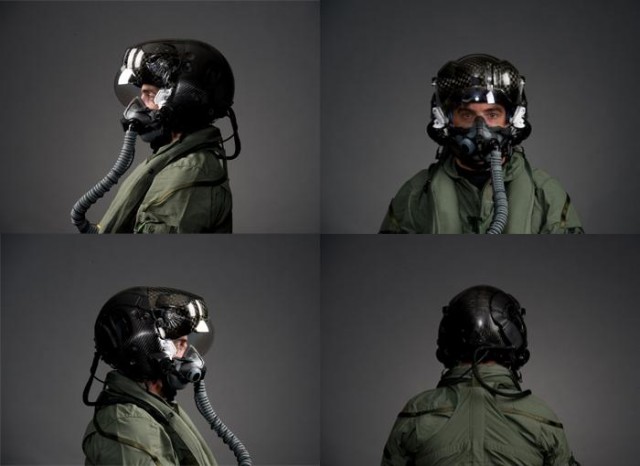
Rockwell Collins and Elbit Systems' joint—a helmet that can see through planes without making the pilot throw up—can also break their necks if they eject. (credit: Lockheed Martin)

The F-35 Joint Program Office is about to begin testing a prototype for a new helmet for pilots of the Joint Strike Fighter—a critical upgrade to the aircraft's control systems. The current Generation III helmet, which acts as a heads-up instrumentation and night vision display for the pilot, was discovered last year to be so heavy that it snapped the neck of smaller test dummies during ejection testing.

The Gen III helmet, which is essential to the operation of the F-35 in all its variations, has pushed forward the art of augmented reality. Combined with optic and infrared sensors on the aircraft, it essentially allows the pilot to look through the plane—a feature much desired by the Marine Corps for precision vertical landing of the F-35B. It also allows pilots to track, designate, and fire weapons at targets by looking in their direction—without having to turn the aircraft toward them. But the helmet has encountered multiple growing pains, including problems with image "jitter" early on in testing that could cause pilots with the strongest of stomachs to get motion sickness.

The mass of the approximately 5-pound, $400,000 Gen III helmet could push the pilot's head down during the acceleration of ejection and cause both neck and back injuries to pilots. When combined with the sudden forces exerted by the opening of the ejection seat's parachute, particularly when the seat pitches to the point where it is nearly upside-down when the parachute opens, it could be enough to break the neck of lighter pilots.

Read 2 remaining paragraphs | Comments

Xbox indie gaming opens the door to playing against PlayStation owners

MonoGame is also welcomed to the Xbox One, finally filling the XNA hole.

Rocket League, which gains Xbox One to PC multiplayer.

Microsoft's efforts to court indie developers continued today at the 2016 Game Developers Conference with a pair of announcements designed to make the Xbox One a more attractive platform for indie gaming.

Microsoft is opening up the Xbox One to enable cross-platform multiplayer. This feature will most obviously support play between the console and Windows 10 PCs, but Microsoft isn't stopping there. Developers can also support multiplayer against non-Microsoft multiplayer networks. While Microsoft never actually names names, the announcement opens the door to Xbox games that support play against PlayStation gamers or those who bought PC titles on Steam.

One of the first games to gain the feature will be Rocket League. The game already supports play between PlayStation 4 and PC owners; it will now also support games between Xbox One and PC owners, with Microsoft saying that there's an "open invitation" for other networks to get involved. Reading between the lines, this statement suggests that Sony has some prohibition against PlayStation 4 to Xbox One connectivity and that it's now up to the Japanese company to lift the restrictions.

Read 2 remaining paragraphs | Comments