Android rooting bug opens Nexus phones to “permanent device compromise”

Millions of other phones affected because Android never received 2014 Linux patch.

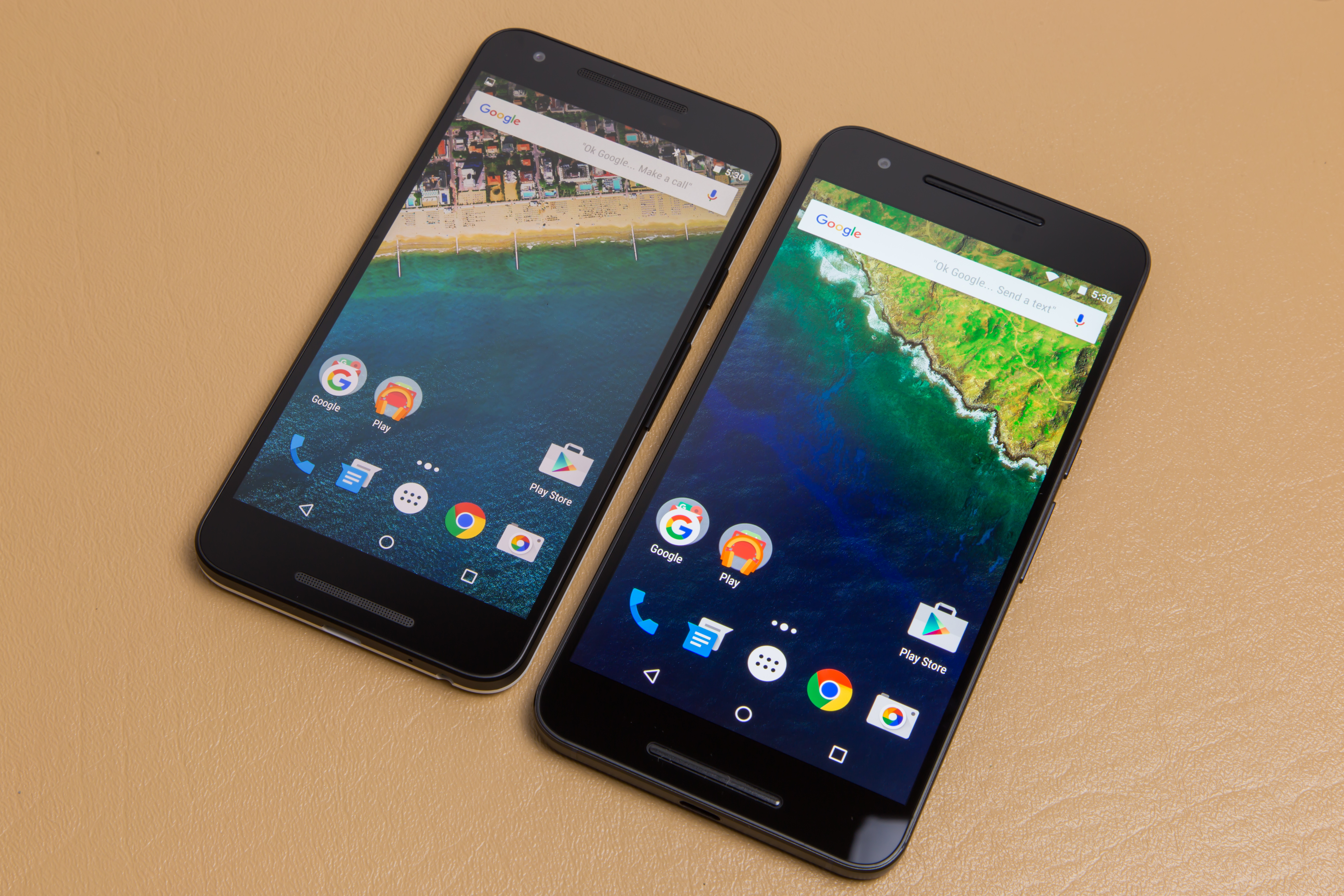
Millions of Android phones, including the entire line of Nexus models, are vulnerable to attacks that can execute malicious code and take control of core functions almost permanently, Google officials have warned.

The officials have already uncovered one unidentified Google Play app that attempted to exploit the vulnerability, although they said they didn't consider the app to be doing so for malicious purposes. They are in the process of releasing a fix, but at the moment any phone that hasn't received a security patch level of March 18 or later is vulnerable. The flaw, which allows apps to gain nearly unfettered "root" access that bypasses the entire Android security model, has its origins in an elevation of privileges vulnerability in the Linux kernel. Linux developers fixed it in April 2014 but never identified it as a security threat. For reasons that aren't clear, Android developers failed to patch it even after the flaw received the vulnerability identifier CVE-2015-1805 in February 2015.

"An elevation of privilege vulnerability in the kernel could enable a local malicious application to execute arbitrary code in the kernel," an Android security advisory published Friday stated. "This issue is rated as a critical severity due to the possibility of a local permanent device compromise and the device would possibly need to be repaired by re-flashing the operating system."

Read 4 remaining paragraphs | Comments

9.7-inch iPad Pro and iPhone SE both have 2GB of RAM

Good news for the phone, not-as-good news for the tablet.

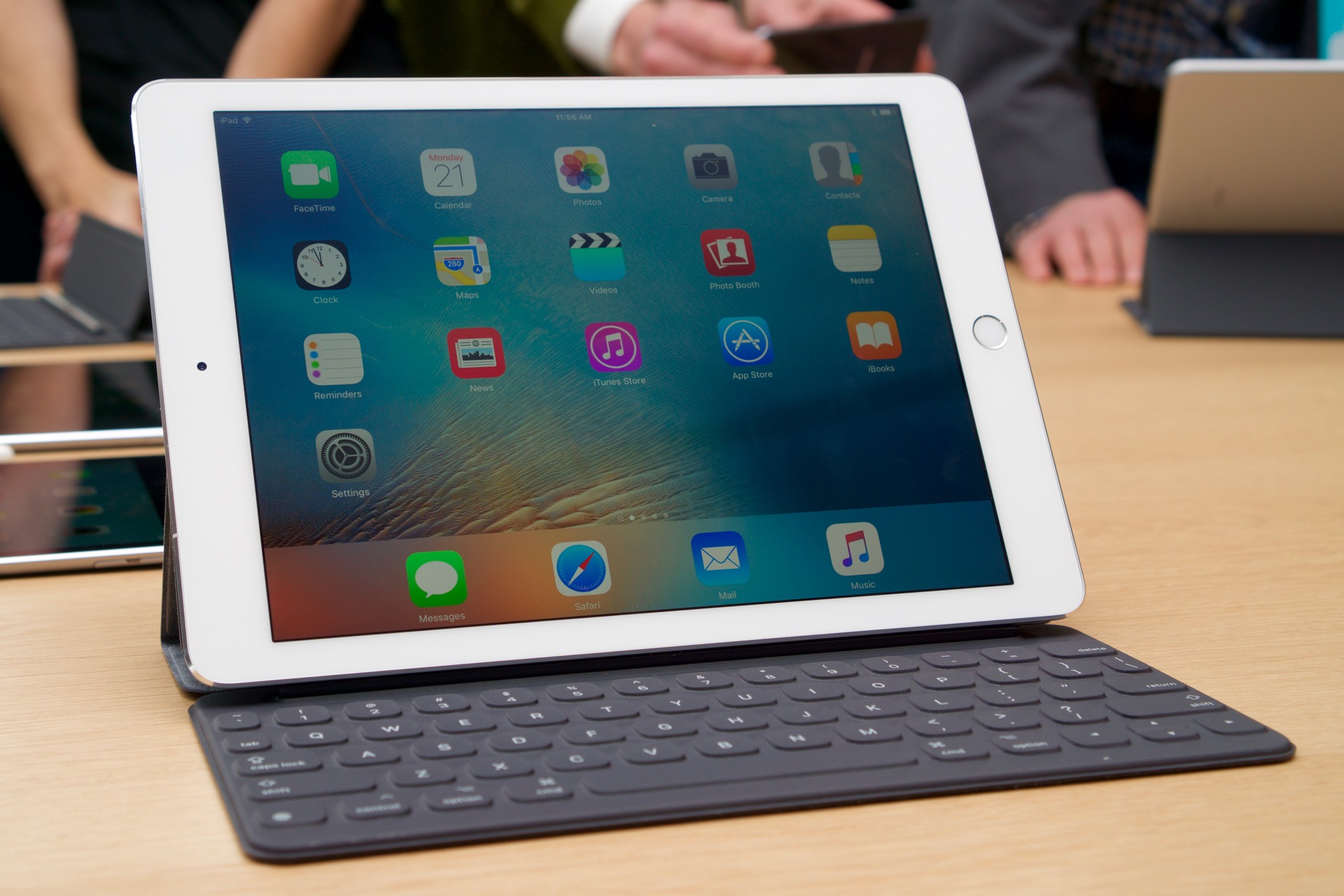
Enlarge / The 9.7-inch iPad Pro isn't quite the equal of the 12.9-inch version. (credit: Andrew Cunningham)

Apple has started distributing both the iPhone SE and the 9.7-inch iPad Pro to journalists, and one of the first things to come to light has been the amount of RAM in each device. Memory in iDevices has a big impact on performance and general usability, but Apple almost never actually talks about it so we need to have hardware in hand before we can get the full story.

The good news is that the iPhone SE has the same 2GB of RAM as the iPhone 6S and 6S Plus despite its smaller size and lower price. The not as good news is that the 9.7-inch iPad Pro has the same 2GB of RAM as the iPad Air 2, not the 4GB of RAM on offer in the 12.7-inch version.

RAM doesn't have quite the same effect in an iOS device as it does in laptops and desktops—iOS was originally designed for low RAM devices and even though current iPhones and iPads have much more RAM than the 128MB in the first iPhone, the OS is still aggressive about ejecting apps from memory. Giving an iPhone or iPad more RAM doesn't necessarily speed up general performance, but it does mean that apps and browser tabs need to be ejected from memory less often. Today this is particularly beneficial in Safari, which needs to reload tabs when they're ejected from RAM—at best this process adds a couple of extra seconds to what ought to be a simple tab switch, and at worst you don't have connectivity and so can't see the tab you're trying to open.

Read 1 remaining paragraphs | Comments

Kepler watched two supernovae burst out of the surface of stars

In red supergiants, the core’s explosion takes time to reach the surface.

In general, astronomy is reactive—we spot something unusual by chance and point as many telescopes as we can manage to try to figure out what's going on. It's rare that we have something pointing in the right direction to catch an event right as it starts.

But the Kepler observatory was designed to point at the same spot and stare for years, capturing a constant stream of images. It's how the telescope was able to catch planets as they moved in front of their host stars. But interesting things went on behind the stars, and Kepler captured that data, too. Yesterday, astronomers announced that an analysis of the Kepler data captured the moments when a supernova burst through the surface of its host star—not once, but twice.

Most people think of supernovae as explosions that destroy a star. But type II supernovae are really the collapse and explosion of the core of the star. In cases where the star is a giant, this collapse and explosion happens so quickly that the outer layers of the star are unaffected by it and continue to look normal for nearly an hour even as catastrophic events are occurring behind the star. That seeming normalcy ends when the shockwave of the explosion reaches the surface and breaks out in a brilliant flash of light. This type of explosion is called a type II-P supernova.

Read 8 remaining paragraphs | Comments

Ask Ars: I can’t choose between Oculus Rift, HTC Vive, and PlayStation VR!

It’s still too early to judge what’s “best,” but we can still help you pick.

If you are ready to jump feet-first into triple-A virtual reality gaming as soon as humanly possible, you have three main choices: the Oculus Rift, the HTC Vive, and Sony's PS VR. None of these devices is actually in the hands of the general public yet—we’ll have to wait until next week for the Oculus Rift to start its first round of shipping—but all three are available for preorder right now. The Vive is the most expensive option at $799, but it comes with 3D controllers. The Rift costs less at $599, but it doesn’t come with 3D controllers. And the PS VR is the cheapest at $399, but then you’re locked to a console and don’t get to play any computer-based VR games.

There is no way to prove yet which of the three front-runners is best. Indeed, "best" is a hard word to define in context—best based on what? Best resolution? The Rift and Vive seem to be the winners there—but they use a Pentile subpixel arrangement, and the Sony kit doesn’t, so the resolution numbers don’t tell the entire story. Best VR experience? Well, that depends on what "experience" means to you—are you primarily going to be playing cockpit-based flight or racing sims where seated play is the main point, or do you want to run around your room playing virtual golf or tennis or shooting virtual guns?

Because how and what you play is a massively subjective experience—and because there’s still so much we don’t know about the final retail versions of all of these VR solutions—it’s hard to make blanket recommendations at this point. The absolute best answer right now to the question of "Which one of these things should I buy?!" is "You should probably wait until this summer when they’ve been in everybody’s hands for a few months and then decide."

Read 9 remaining paragraphs | Comments

Viral profiling: Scientists working to predict the next Zika

Study sorts ingredients for terrifying pandemics, immediately notes exceptions.

(credit: Eneas De Troya )

When a virus jumps from wildlife to humans, it could either cause a few infections and fizzle out—or it could spark an explosive outbreak. For instance, health experts feared that H5N1 bird flu would lead to a massive and deadly pandemic in humans in the early 2000s, but with its current limited ability to jump from human to human, it has yet to kick off such a large-scale plague. Zika, Ebola, and HIV/AIDS, on the other hand, have.

Figuring out beforehand the type of viral scenario that will unfold with a new, emerging germ would be vital to protecting public health, allowing health officials to anticipate and thwart the spread of infections before they get out of hand. But researchers have largely struggled with how to make those predictions.

To try to break down the molecular recipe for a pandemic, researchers analyzed a range of biological features from 203 human-infecting viruses—a mix of those that have and have not caused big outbreaks. The researchers aimed to find predictors of infectious potential among each virus’ characteristics, including its family tree; genome’s make-up (DNA or RNA), length, and segmentation; outer structure of its viral particle; tendency to recombine with relative viruses and create variation in its genetics; time spent in a victim; deadliness; and whether or not it spreads via a vector, such as mosquitoes and ticks. The results appear in the Proceedings of the National Academy of Sciences.

Read 7 remaining paragraphs | Comments

Chevrolet Bolts are about to start rolling off the production line

The electric car has 200-mile range and will cost under $30,000 after tax credits.

One of our highlights at CES this year was an opportunity to get behind the wheel of Chevrolet's Bolt electric vehicle. Priced at under $30,000 after a $7,500 IRS tax credit, it's set to be the first mass-market EV on sale in the US with a battery big enough to take you 200 miles (321km) between charges.

Chevrolet promised that the Bolt would go on sale later this year, and the company looks set to meet that goal—pre-production vehicles are already working their way through the production line in Orion Township, Michigan.

"We’re at another critical and important point in the development of the Bolt EV,” said Josh Tavel, Bolt EV chief engineer. "We’ve moved from working in math and building cars by hand to building Bolt EVs on the line. We’re now testing the tooling used in the plant so that we deliver high-quality, 200-plus-mile EVs that our customers are eagerly anticipating."

Read 1 remaining paragraphs | Comments

Google Now Card Offers Deadpool Piracy Advice

Millions of users of Android and iOS devices are using Google Now, the personal digital assistant that can respond to questions and offer intelligent recommendations. Surprisingly, however, Google Now recently noted a user’s interest in Deadpool and served up a Card linking to a torrent site offering it for download.

Source: TF, for the latest info on copyright, file-sharing, torrent sites and ANONYMOUS VPN services.

deadpoolBritish science fiction writer Arthur C. Clarke is credited with the penning of three laws, one of which declares that any sufficiently advanced technology is indistinguishable from magic.

While not quite magic for those who understand how it works, Google Now can be both impressive and spooky.

On mobile devices (Android and iOS) Google Now and its ‘Card’ notifications often pop up at the most opportune times, offering advice about things that haven’t yet happened in a users life – but are about to.

It’s not unusual for Google Cards to let you know how long it will take you to get home – from a restaurant you haven’t quite arrived at yet. And it can also advise what the weather will be like tomorrow, in a place that more often that not you’ve planned to visit only in your head.

Google can’t read people’s minds but it does harvest data from Google accounts in order to provide its Now services. That includes your search and location history, sites you’ve visited and the content of Gmail messages. It can also access your phone contacts, calendar entries and even certain apps.

“To know when to display cards and reminders, Google Now uses information from your device and from other Google products,” the company explains.

But while Google Now does some predictable things, like offering news about a favorite sporting event or offering appropriate stock listings, it can also serve up the odd surprise. One of those landed on the phone of TorrentFreak reader Ryan Raab this past weekend.

While using his Nexus 6 (loaded with the latest Android N beta), Ryan received a serving of Google Cards. After Google noticed he’d “shown an interest” in Olivia Munn, he was advised of her upcoming role in the X-Men Apocalypse movie as documented by Engadget. Nice.

But it was his interest in the movie Deadpool that delivered the surprise. Sandwiched between a Guardian article about Barack Obama and a New York Post piece about Donald Trump, Google Now advised Ryan where he could watch the hit movie. (Hint: Not in a theater)

Screenshot_20160320-XXX-GoogleNow

As can be seen from the screenshot, Ryan’s interest in Deadpool resulted in a Google Card being presented to him referencing one of the world’s largest torrent sites, 1337x. Indeed, clicking on the Card landed Ryan on the site in question, as shown below.

Screenshot_20160320-144824-GoogleNow

Obviously there isn’t a team at Google hand-crafting Google Cards designed to promote unauthorized torrents. However, this does appear to show that Google’s algorithms are smart enough to put together interesting advice based on multiple and diverse information sources.

TorrentFreak sent Ryan’s findings to Google for comment but at the time of publication we were yet to hear back. However, it does appear that in this instance simply having an interest in both torrents and a particular movie was enough to trigger a custom Card linking to a pirate site.

While a feature like this won’t annoy too many torrent fans, they may change their tune when more sensitive information is picked up by Google in future editions.

“You showed an interest in ‘having an affair’ – here’s a link to AdulteryX4u.com.”

Source: TF, for the latest info on copyright, file-sharing, torrent sites and ANONYMOUS VPN services.

Für HD und Internet: Unitymedia beschleunigt Analogabschaltung

Der Kabelnetzbetreiber Unitymedia schaltet einige analoge Sender ab und nimmt neue HD-Sender in sein Angebot auf. Bereits im Jahr 2017 dürfte ganz Schluss sein mit der Verbreitung analoger TV-Programme. (Unitymedia, Internet)

Der Kabelnetzbetreiber Unitymedia schaltet einige analoge Sender ab und nimmt neue HD-Sender in sein Angebot auf. Bereits im Jahr 2017 dürfte ganz Schluss sein mit der Verbreitung analoger TV-Programme. (Unitymedia, Internet)

Dealmaster: Get a 55-inch Samsung 4K Smart 3D HDTV for $1,250

Plus, here’s where you can preorder Playstation VR bundles now.

Greetings, Arsians! Courtesy of our partners at TechBargains, we have a bunch of new deals this week. The featured deal includes the best price we've seen for a high-end TV since last year's Black Friday. Now you can get a 55-inch Samsung SUHD 4K Smart 3D HDTV for just $1,250. This model features Samsung's Nano Crystal technology which offers beautifully vibrant colors, optimized contrast for extreme crispness, and a quad-core processor. There's also a 65-inch version on our list for just $1,799.

Check out the rest of the deals below, including where you can preorder Playstation VR bundles.

Featured

Read 6 remaining paragraphs | Comments

Netflix: Aktualisiertes Smart-TV-Logo bringt Verwirrung

Netflix legt sein Empfehlungsprogramm für geeignete Smart-TVs neu auf – mit verschärften Anforderungen für die TV-Hersteller. Käufer haben es damit aber schwerer, den Überblick zu behalten. Und eine Kaufempfehlung ist es vielfach nicht. (Netflix, Streaming)

Netflix legt sein Empfehlungsprogramm für geeignete Smart-TVs neu auf - mit verschärften Anforderungen für die TV-Hersteller. Käufer haben es damit aber schwerer, den Überblick zu behalten. Und eine Kaufempfehlung ist es vielfach nicht. (Netflix, Streaming)