Cartoons from XKCD creator will appear in high school science textbooks

Teens will get chemistry, biology, and physics explainers from Munroe’s latest book.

(credit: Randall Munroe)

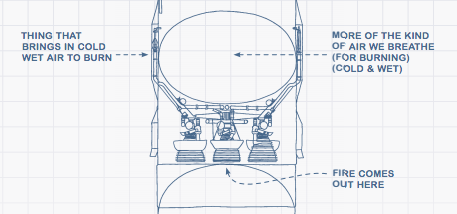
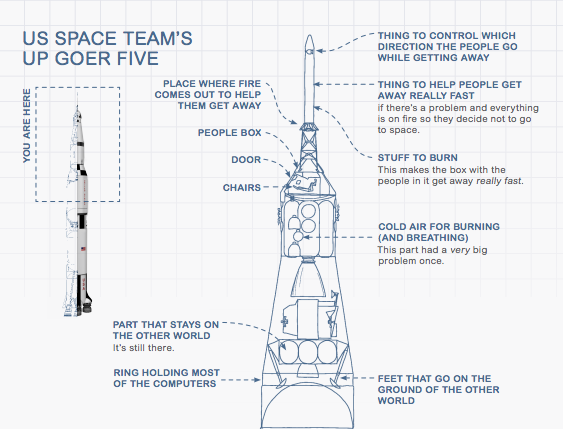
Randall Munroe, creator of popular webcomic XKCD, recently published a new book called Thing Explainer: Complicated Stuff in Simple Words, in which he uses only the thousand most common words in the English language to explain how a variety of things work, from locks to nuclear bombs. Monroe’s publisher, Houghton Mifflin Harcourt, also publishes textbooks, and when editors in the textbook division saw proofs of Monroe’s Thing Explainer, they realized that his simple explanations could be used to augment high school textbooks.

You know, the old strategy employed ineffectively by dad joke-tellers everywhere: get the #teens on your side with humor.

(credit: Randall Munroe)

Luckily, Munroe's Thing Explainer comics are absurd enough in their hyper-simplicity that they have a shot at breaking down the walls of sarcasm and ennui encircling the most eye-rolling of high school students.

Read 3 remaining paragraphs | Comments

iOS forensics expert’s theory: FBI will hack shooter’s phone by mirroring storage

Zdziarski believes NAND mirroring will give FBI the retries to crack PIN it needs.

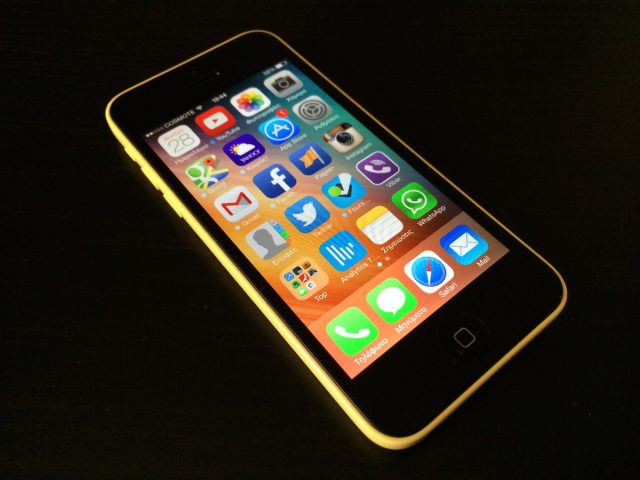
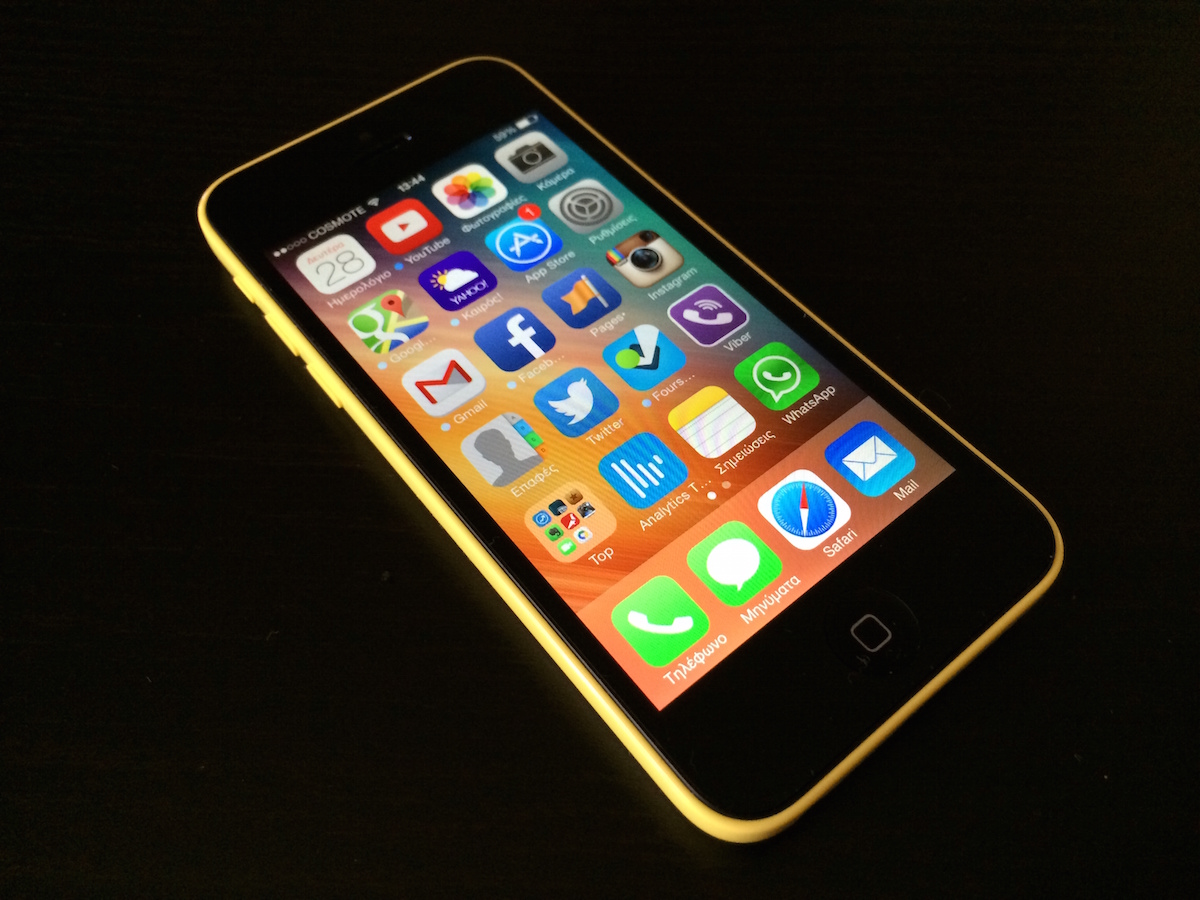
Jonathan Zdziarski, a leading independent Apple iOS security researcher and forensics expert, has a theory about the FBI's newly discovered potential route into the iPhone 5C used by San Bernardino shooter Syed Farook. In a blog post, Zdziarski wrote that the technique the FBI is planning to use to get around having to compel Apple to help bypass the phone's security is likely a method called NAND mirroring—a hardware-based approach that, while effective, is far from the "golden key" software the FBI had sought.

The FBI reported in its filing to delay a hearing on its dispute with Apple, originally scheduled for March 22, that an outside company had approached the FBI with a solution to the "self-destruct" issue preventing the FBI from repeatedly guessing the device's four-digit PIN. In that filing, FBI officials said that they needed just two weeks to certify that they could use the alternative approach to gain access to the phone.

Based on a number of factors, Zdziarski said that the company in question was likely one of the FBI's external forensics contractors and that it was unlikely that it had found a "zero day" software technique to bypass the password. "Whatever technique is being used likely isn't highly experimental (or it'd take more time)," Zdziarski noted. "Chances are the technique has been developed over the past several weeks that this case has been going on."

Read 4 remaining paragraphs | Comments

Internet Archive Seeks to Defend Against Wrongful Copyright Takedowns

As a non-profit library of millions of free books, movies, software and music, the Internet Archive has a keen interest in copyright law. In a submission to the U.S. Copyright Office the Archive says since the major studios often send invalid notices, they’re suggesting a change in the law to allow content to remain up while disputes are settled.

Source: TF, for the latest info on copyright, file-sharing, torrent sites and ANONYMOUS VPN services.
Every single day millions of takedown notices are sent by copyright holders to online services ranging from YouTube and Google to KickassTorrents. The aim is to have copyright-infringing content removed, quickly.

As Internet usage has grown, the volume of notices being sent has exploded and as a result the debate over DMCA takedown procedures has become a hot topic, to the point that U.S. authorities are involved once again.

Under pressure from rightsholders, on the final day of 2015 the U.S. Copyright Office launched a public consultation with the aim of assessing the costs and burdens of the notice-and-takedown process on copyright owners, online service providers, and the general public.

As a free and public repository of a wide range of media (26 petabytes overall), the Internet Archive has a keen interest in how U.S. copyright law is shaped. In its just-published submission to the Copyright Office the Archive is quite clear – without the Safe Harbor provisions of the DMCA its valuable work would become impossible.

The certainty of Safe Harbor

“As we move increasingly towards a world where human knowledge is stored digitally, we are likely to see more libraries playing the role of host and curator of content posted by users. As such, it is important to understand how library interests intersect with the DMCA safe harbors and to ensure that libraries continue to enjoy the protection of these safe harbors in the future,” the Archive writes.

With some reservations the Archive believes that the DMCA and its system of shared responsibility is “working well” and should not be significantly overhauled. It notes that as a curator of everything from feature length films, old radio programs and cylinder recordings, to pre-1964 architectural trade catalogs, house plan books, and technical building guides, the Archive deals with an almost unprecedented range of material. That is only possible due to the “important certainty” offered by the DMCA.

“Without the protection of the DMCA safe harbors, we might not be able to host collections like these — despite the fact that no one has complained about the vast majority of the materials,” the Archive warns.

‘Notice and Staydown’ will chill free speech and fair use

While acknowledging that burdens are felt on both sides, with copyright holders keen to have content taken down and third-party organizations expected to respond swiftly in doing so, the Archive expresses concern over proposals for a “notice and staydown” system in which content that has been taken down once must never reappear again.

“The DMCA’s express provision that service providers have no affirmative duty to monitor for infringing activity remains an extremely important safeguard both for free speech and for the continuation of traditional library activities in the digital age,” the Archive says.

In its submission the Archive goes to some lengths to highlight differences between those engaging in commercial piracy and those who seek to preserve and share cultural heritage. As a result the context in which a user posts content online should be considered before attempting to determine whether an infringement has taken place. This, the organization says, poses problems for the ‘staydown’ demands gaining momentum with copyright holders.

“This is why proposals for ‘notice and staydown,’ which would appear to require platforms to use automated processes to make sure certain materials are never again able to be posted to the internet — regardless of context — threaten to chill legitimate speech and fair uses of materials,” the organization warns.

Interestingly the Internet Archive cites the Library Bill of Rights, which encourages libraries to “challenge censorship in the fulfillment of their responsibility to provide information and enlightenment.” A ‘notice and staydown’ regime would violate these fundamental principles, the Archive says.

Reducing erroneous, sloppy and cynical takedowns

While warning against changes to the law that could increase non-profit service providers’ liability for infringing content, the Archive has some suggestions as to how the DMCA could protect against improper takedown notices.

Noting that incomplete and/or erroneous notices are received by the organization every week, the Archive concludes that the major culprits are agents of major studios and publishers. Over the years their notices have demanded the takedown of public domain works such as Jane Eyre, Sense and Sensibility, Bram Stoker’s Dracula and Moby Dick, while ‘dumb’ keyword matching continues to claim innocent victims.

“For example, we received a takedown notice regarding an old Salem cigarette commercial based on the term ‘Salem’ which is also the title of a major television series. Similar keyword misidentifications frequently show up as “matches” for music, concerts, home movies, and public domain books,” the Archive explains.

“We are deeply concerned that automated filtering could lead to taking down many materials that are being used in reasonable, legitimate and legally protected ways — especially when the underlying purpose of the complaint is not copyright related but rather an attempt to silence critical speech.”

To this end the Archive is calling for a tweak to the DMCA which would allow providers to leave content up as long as they have a genuine belief that the takedown notice they have received is erroneous.

“It might make sense to create a provision in the law that would grant the service provider the ability to refuse to take material down when they have a reasonable, good faith belief that the material identified in a DMCA notice is non-infringing,” the Archive writes.

“For example, if a work appears to be in the public domain, or if the use of the material appears to be a fair use, then the service provider could refuse to take the material down without risking the imposition of statutory damages.”

The Internet Archive’s submission (full text here) is an excellent example of what is at stake in respect of possible amendments to the DMCA. While the fight between copyright holders and hardcore pirates might be the key issue, the battle has the potential to wreak havoc elsewhere and the Internet Archive and similar groups are desperate to avoid the crossfire.

Source: TF, for the latest info on copyright, file-sharing, torrent sites and ANONYMOUS VPN services.

EU-Kommission: Nutzerbefragung zu Leistungsschutzrecht und Panoramafreiheit

Die EU-Kommission will die Meinung von Betroffenen und Nutzern zur Reform des Urheberrechts hören. Die Entscheidung zur Einführung eines europäischen Leistungsschutzrechts verzögert sich damit. (Leistungsschutzrecht, Urheberrecht)

Die EU-Kommission will die Meinung von Betroffenen und Nutzern zur Reform des Urheberrechts hören. Die Entscheidung zur Einführung eines europäischen Leistungsschutzrechts verzögert sich damit. (Leistungsschutzrecht, Urheberrecht)

Teacher who got fired after student stole her nude pics sues school district

“There was not a single policy that Leigh Anne violated.”

(credit: ABC)

A South Carolina high school teacher has sued (PDF) the school district that employed her after she was pushed to resign when a student grabbed racy pictures off her smartphone.

Leigh Anne Arthur resigned from her job earlier last month when she was told she would face disciplinary proceedings because a student grabbed photos off her phone while she was on a routine hall patrol.

At the time, Arthur complained that she, rather than the student, was the one being punished. The student shared the racy pictures of Arthur with his friends as well. Arthur said the pictures were a Valentine's Day gift for her husband, and she forgot to erase them from her phone.

Read 8 remaining paragraphs | Comments

Deals of the Day (3-23-2016)

Deals of the Day (3-23-2016)

The Lenovo S21e is a notebook with an 11.6 inch display, an Intel Atom Bay Trail processor, and 64GB of storage. Officially, it has a list price of $280 and up, but you can often find it for much less. Right now Lenovo is showing sale prices starting at $180 for a model with 2GB […]

Deals of the Day (3-23-2016) is a post from: Liliputing

Defold: King.com veröffentlicht kostenlose Engine

Die unter anderem für 2D-Mobilegames geeignete Defold-Engine steht ab sofort allen interessierten Entwicklern kostenlos als Download zur Verfügung. Hersteller King.com hat damit sein Casualgame Blossom Blast Saga produziert. (Games, Spiele-Entwicklung)

Die unter anderem für 2D-Mobilegames geeignete Defold-Engine steht ab sofort allen interessierten Entwicklern kostenlos als Download zur Verfügung. Hersteller King.com hat damit sein Casualgame Blossom Blast Saga produziert. (Games, Spiele-Entwicklung)

Kentucky hospital hit by ransomware attack

“Locky” malware holds medical data hostage for a four-bitcoin ransom.

Methodist Hospital in Henderson, Kentucky, initiated an "internal state of emergency" after discovering a Locky crypto-ransomware infection of its network. (credit: Methodist Hospital)

A month after a Los Angeles hospital was crippled by crypto-ransomware, another hospital is in an "internal state of emergency" for the same reason. Brian Krebs reports that Methodist Hospital in Henderson, Kentucky, shut down its desktop computers and Web-based systems in an effort to fight the spread of the Locky crypto-ransomware on the hospital's network.

Yesterday, the hospital's IT staff posted a scrolling message at the top of Methodist's website, announcing that "Methodist Hospital is currently working in an Internal State of Emergency due to a Computer Virus that has limited our use of electronic web-based services. We are currently working to resolve this issue, until then we will have limited access to web-based services and electronic communications." As of this morning, the message has been taken down from the site.

Methodist Hospital's information systems director told Krebs that the Locky malware, which came in as an attachment to a spam e-mail, attempted to spread across the network after it had infected the computer it was triggered on. Locky has been known to use malicious scripts in Microsoft Office documents as a means of infecting victims' computers. The malware succeeded in infecting several other systems, prompting the hospital staff to shut down all the hospital's computers. Each PC is brought back online individually after being scanned for telltale signs of Locky while off the network.

Read 2 remaining paragraphs | Comments

Dedrone Dronetracker 2.0: Warnsystem erkennt Multicopter anhand der MAC-Adresse

Multicopter können in bestimmten Gebieten durchaus eine Gefahr darstellen. Ein Warnsystem wie der Dronetracker von Dedrone soll vor unberechtigtem Eindringen warnen. Die neue Version soll Drohnen jetzt auch mit Hilfe eines WLAN-Sensors erkennen. (Drohne, Industrieanlage)

Multicopter können in bestimmten Gebieten durchaus eine Gefahr darstellen. Ein Warnsystem wie der Dronetracker von Dedrone soll vor unberechtigtem Eindringen warnen. Die neue Version soll Drohnen jetzt auch mit Hilfe eines WLAN-Sensors erkennen. (Drohne, Industrieanlage)

Verizon’s fiber network will expand—after three-state sale to Frontier

Frontier “more likely to accelerate broadband than Verizon,” FCC said.

(credit: Verizon)

Verizon is set to complete a sale of its wireline phone, Internet, and TV networks in California, Florida, and Texas to Frontier Communications. The $10.54 billion transaction, announced in February 2015, has received all the necessary regulatory approvals and is scheduled to be finalized March 31.

“We’re buying those assets, we’re bringing them in and actually cutting them into our network so they’ll be ready to go day one, April 1," Frontier VP Chris Gellos said in an interview with Channel Partners last week. Frontier has about 2.4 million Internet customers today, and it will get another 2.2 million or so with the purchase from Verizon.

When it approved the sale last September, the Federal Communications Commission concluded that "Frontier is more likely to accelerate broadband service in the transaction market areas than Verizon would be absent the transaction." The FCC approval said that Frontier plans to "expand fiber-based infrastructure within its network, upgrade network hardware, expand transport capacity in its middle mile and data backbone network in order to expand broadband, increase speeds available to customers, and improve the network for voice services."

Read 6 remaining paragraphs | Comments