Film festival adds, then drops, antivaccine film

A failed attempt to revive the thoroughly debunked link between vaccines and autism.

The Tribeca Film Institute, founded by actor Robert De Niro, is generally supportive of science. It partners with the Sloan Foundation to provide grants for filmmakers who are looking to create "a fresh take on scientific, mathematic, and technological themes." Each year, some of the results are shown as part of the Tribeca Film Festival.

But this year, it appeared that the film festival had decided to balance its support of science with some false claims by putting the film Vaxxed: From Coverup to Catastrophe on the schedule. The film is the latest attempt by former doctor Andrew Wakefield to support his bogus claim that vaccines can trigger autism. Wakefield's original publication in this area has been retracted, and he has since lost his medical license due to unethical behavior regarding his patients and rampant conflicts of interest. An investigative reporter found that at the time that the research was conducted, Wakefield was receiving payments from lawyers planning on suing vaccine makers, and he was also working on his own alternative vaccine.

Meanwhile, the movie's basic premise has been thoroughly debunked. Although the film purports to provide information from a whistleblower that suggests the US Centers for Disease Control fraudulently manipulated data on vaccine safety, the issue has been studied in a number of countries, and the conclusions are all consistent: there is no connection between vaccination and autism.

Read 3 remaining paragraphs | Comments

Oculus Rift begins shipping, early reviews are mixed (at best)

Oculus Rift begins shipping, early reviews are mixed (at best)

2016 is set to be the year of virtual reality. Sure, you’ve been able to strap a smartphone to your head to watch 360 degree videos and explore interactive content for a few years. But this year some of the most ambitious consumer-oriented VR devices are launching, starting with the Oculus Rift, which is shipping […]

Oculus Rift begins shipping, early reviews are mixed (at best) is a post from: Liliputing

Halbleiterfertigung: TSMC unterschreibt Verträge für Fabrik in China

Nachdem Taiwan TSMC erlaubt hat, eine weitere Halbleiterfabrik auf dem chinesischen Festland zu bauen, ist nun auch die VR China mit dem taiwanischen Auftragsfertiger für Halbleiter übereingekommen. Für die Fabrik in China wird eine Tochterfirma gegründet. (TSMC, Prozessor)

Nachdem Taiwan TSMC erlaubt hat, eine weitere Halbleiterfabrik auf dem chinesischen Festland zu bauen, ist nun auch die VR China mit dem taiwanischen Auftragsfertiger für Halbleiter übereingekommen. Für die Fabrik in China wird eine Tochterfirma gegründet. (TSMC, Prozessor)

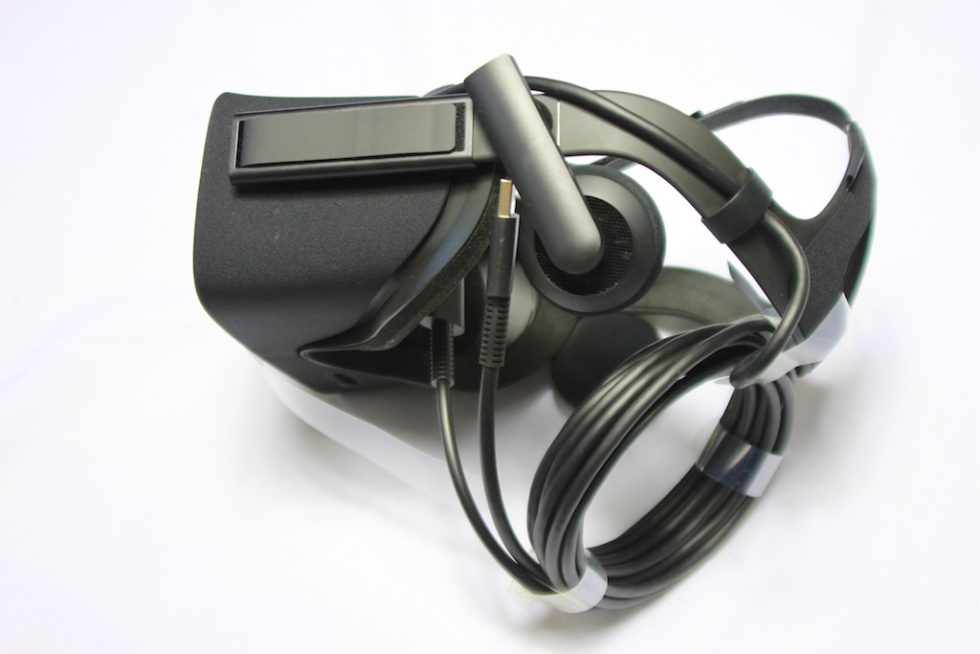
The Ars review: Oculus Rift expands PC gaming past the monitor’s edge

Despite first-gen roughness, PC virtual reality is finally—incredibly—real.

It's here, and it's real.

Headset specs
Display 2160x1200 (1080x1200 per eye) OLED panels
Refresh rate 90 Hz
Field of view 110 degrees
Lens spacing 58-72mm (adjustable)
Controllers Xbox One gamepad and Oculus Remote (both included)
Head Tracking 3-axis gyroscope, accelerometer, and external "Constellation" IR camera tracking system
Audio Integrated over-ear headphones with 3D directional audio support and built-in microphone
PC connection 4m custom cable (integrates HDMI and USB connections)
Included games Lucky's Tale (and Eve Valkyrie with pre-order)
Recommended PC specs
GPU NVIDIA GTX 970 / AMD 290 equivalent or greater
CPU Intel i5-4590 equivalent or greater
RAM 8GB
OS Windows 7 SP1 or newer
Outputs 3 USB 3.0 ports (for headset, tracking camera, wireless controller dongle), one HDMI 1.3 port

It took me a few days with an Oculus Rift before I really felt comfortable swiveling my head around while playing a video game. Sure, I’d gotten somewhat used to the idea in years of trade show VR demos or while playing around with my own Oculus Rift development kits and Samsung’s Oculus-powered Gear VR. But those experiences were fighting with decades of gaming experiences where my head generally stayed glued to one spot, pointed at the center of a TV or monitor, and tilted only occasionally to maybe get a better view of something in the corner.

It can be easy to fall back into the “look straight ahead” habit when you first start playing many Rift games. Even when the 3D display showed items flying past my shoulder or out of my peripheral vision, I’d often reach instinctively for the right analog stick or the shoulder buttons on my controller to try to turn the camera. It would take a split second before I realized, “Hey, wait, I can just turn and look for the thing I want to see.”

It might sound hyperbolic, but this is a change that requires looking at and thinking about gaming in an entirely new way. The final consumer version of the Rift now shipping to early adopters shows that Oculus has taken that rethinking seriously, putting years of development and billions of Facebook dollars of careful work toward the problem. But it also shows some early rough edges, especially on the platform software side, and these small blemishes highlight the fact that we’re still very much in the first generation of consumer-grade virtual reality.

Read 39 remaining paragraphs | Comments

Adr1ft review: It’s lonely out in space

Beautiful architecture and far-off voices are your only companions here.

Surprisingly beautiful scenes like this are practically worth the price of admission on their own.

The title should have been my first clue. The almost too cute spelling of "Adrift" looks like "Adroneft," and this isn't just an affectation. It hints at the all-encompassing isolation and loneliness that pervades everything about this game.

Adr1ft's introduction is by far the most action-packed part of the game, as your protagonist wakes up clawing her way back to the nearest piece of a massive space station that has just blown apart. Her EVA suit is holding together enough to keep her alive, but an air leak means her survival isn't guaranteed. Worse, the computerized systems that operate the escape pods are offline, and reactivating them requires the usual Metroidvania-style wild goose chase/scavenger hunt through the station's tattered remains.

If you're an avid gamer, this is the kind of setup where you now expect the unexpected—a journey filled with hidden dangers or some sort of sci-fi/fantasy twist. Maybe an alien virus has turned everyone else on the station into bloodthirsty zombies. Maybe the station's AI has gone crazy and wants to eliminate all human life. Maybe the station was the first casualty in an alien invasion, and you have to warn Earth.

Read 11 remaining paragraphs | Comments

Oculus Rift CV1 im Test: Das ist Virtual Reality

Die Endkundenversion des Oculus Rift ist ein tolles VR-Headset geworden: Display, Kopfhörer, Tracking und Software überzeugen. Allerdings nerven die Linsen, die Leistung eines schnellen PCs reicht teils nicht, und einige Spiele brauchen noch etwas Reifezeit. (Oculus Rift, OLED)

Die Endkundenversion des Oculus Rift ist ein tolles VR-Headset geworden: Display, Kopfhörer, Tracking und Software überzeugen. Allerdings nerven die Linsen, die Leistung eines schnellen PCs reicht teils nicht, und einige Spiele brauchen noch etwas Reifezeit. (Oculus Rift, OLED)

Microsoft: Surface Hub wird nach erneuter Verzögerung jetzt geliefert

Eigentlich sollte Microsofts Konferenzsystem Surface Hub nach einer ungeplanten Verzögerung im Januar 2016 ausgeliefert werden. Jetzt, Ende März, ist es soweit. (Surface Hub, Microsoft)

Eigentlich sollte Microsofts Konferenzsystem Surface Hub nach einer ungeplanten Verzögerung im Januar 2016 ausgeliefert werden. Jetzt, Ende März, ist es soweit. (Surface Hub, Microsoft)

Lost Japanese X-ray satellite was to probe “exotic” areas of the universe

Japanese space agency has lost contact with Hitomi and debris is reported.

An artist's impression of the Hitomi satellite in orbit. Note: That scary, all devouring X-ray source isn't actually that close to Earth. (credit: JAXA)

The Japanese space agency, JAXA, lost communication with its new Hitomi X-ray astronomy satellite on Saturday, spending Sunday trying unsuccessfully to reestablish control over the spacecraft. The prognosis appears to be fairly grim after the US Strategic Command’s Joint Space Operations Center revealed Sunday that it is tracking five pieces of debris associated with the satellite.

It is not clear whether Hitomi struck a piece of space debris in its orbit about 580km above Earth or what else might have precipitated the loss of communication. Either way, scientists lamented the apparent failure of an instrument that would have allowed them to probe much deeper into the relatively unstudied field of X-ray astronomy.

High-energy but very-short-wavelength X-rays are absorbed by the Earth's atmosphere. To observe them, scientists must therefore send instruments into the upper atmosphere or into space itself. Unlike other kinds of observational  astronomy, then, X-ray astronomy is a fairly new field.

Read 2 remaining paragraphs | Comments

Here’s why the next SpaceX launch isn’t just about the booster landing

Bigelow’s inflatable module may one day revolutionize in-space habitation.

The expandable habitat from Bigelow Aerospace is lifted into Dragon's trunk for a ride to the space station. (credit: SpaceX)

It's a big idea. It's a bold idea. And at first blush, it seems a bit of a daft idea. A company called Bigelow Aerospace wants to build space stations for the government and hotels for private customers that will inflate like balloons once they reach outer space. Bigelow’s inflatables have the potential to revolutionize spaceflight by providing lighter, and much larger, places to live in space. But the big question remains: Does anyone really want to live in a space balloon?

NASA intends to find out and has signed a $17.8 million contract with Bigelow to do so. As early as April 8 a deflated module will launch inside the trunk of a SpaceX Dragon spacecraft. The space agency has agreed to attach a test module to the International Space Station, inflate it, and over the course of two years determine if such a contraption can work in space. Crew won’t live in it—inflatables remain too experimental to risk life and limb. But if the module holds up, NASA will invest more money into the technology.

The space agency has said it wants to use the space station as a platform for technologies that will enable, and perhaps lower the cost, of deep space exploration. With the Bigelow module NASA appears to be doing exactly that. “It’s a big step for us, because inflatables can be a big multiplier for us as we move further out into space,” explained Mark Geyer, deputy director of Johnson Space Center, during a recent meeting of NASA’s advisory council.

Read 11 remaining paragraphs | Comments

First Ubuntu tablet to support convergence (desktop or tablet UI) now available for pre-order

First Ubuntu tablet to support convergence (desktop or tablet UI) now available for pre-order

The BQ Aquaris M10 Ubuntu Edition is a tablet with a 10.1 inch display, a 64-bit MediaTek quad-core processor, 2GB of RAM, and Ubuntu software. It’s also the first device to ship with support for Ubuntu’s “convergence” feature, allowing you to interact with a phone/tablet-style user interface when using the device as a tablet, and […]

First Ubuntu tablet to support convergence (desktop or tablet UI) now available for pre-order is a post from: Liliputing