Pirate Bay Founder: Streaming Model Could Ignite New Piracy War

As streaming services such as Netflix and Spotify gain even greater traction, so does the centralization of online content that consumers no longer own. According to Pirate Bay founder Peter Sunde this business model holds subscribers to ransom, with the threat of content being suddenly taken away now a constant threat.

Source: TF, for the latest info on copyright, file-sharing, torrent sites and ANONYMOUS VPN services.

peter-sundeAfter signing up to Spotify several years ago one of my first tasks was to begin hand-crafting playlists of the thousands of 1980s and 1990s dance tracks I had previously bought on vinyl.

Once lovingly stacked and indexed in a spare room, these much-loved relics of a bygone era are now gathering dust in the attic, probably never to be played again. Or at least that’s what I thought.

Slowly but surely, tracks have been disappearing from my Spotify playlists with no explanation, including a rare Prodigy remix of a Praga Khan track that finally triggered me to sign up to Spotify in the first place. If Spotify had that they must have everything, I assured myself at the time.

While the disappearance of some music from the service is to be expected, it doesn’t make it any less of a disappointment when it happens. It also undermines confidence in the product. After all, if one had bought the track instead of streaming it, it would still be here today. It’s a situation that’s familiar to The Pirate Bay co-founder Peter Sunde who in a new interview with Germany’s FutureZone recalls similar experiences.

“I stopped using Spotify when suddenly overnight several titles disappeared from my playlist because the licenses for them were revoked. Someone else had decided which music I could listen to and which I could not. I had no backup, so I lost the music. I do not want that,” Sunde says.

To hear that Peter Sunde (by all accounts one of the world’s most infamous pirates) had placed his trust and his money with a legitimate content provider indicates that at its core Spotify had something good to offer. After all, it’s hardly an argument that Sunde was unable to obtain the music from elsewhere.

But what is perhaps most remarkable is that Sunde actually patronized a service which at its very core is the complete opposite of what The Pirate Bay stood for. Forget for a moment the notion of paying or not paying for media, that’s a distraction.

What the Pirate Bay did was empower its users to participate in a somewhat decentralized communications infrastructure which allowed them to build archives of music, movies, TV shows and software in their own homes. Not only did they ‘own’ that content but much more importantly they exercised complete, physical control over it. Licenses getting revoked? Not a chance.

For all their great qualities (and they have them by the bucket load), Spotify and other streaming services such as Netflix offer something quite different – total centralization and a complete lack of user control over the content they’re buying renting.

“When we look at the development of Netflix it is exactly the same as a Spotify for movies,” Sunde says. “What streaming has done is centralize the ownership of culture.”

And of course Sunde is absolutely right. At any point Spotify, Netflix and any other streaming service has the power to remove content, modify it, restrict access to it geographically or – heaven forbid – go bankrupt, shut down, and deny access to it altogether.

However unlikely, it is possible that people invested in these services could be blasted back to a world without music and movies in an instant, should economic (or Internet disaster) circumstances dictate it. Unless people have physical access to that content they are done. Sunde wonders whether people will continue to put up with this scenario in the future.

“Maybe in five years time we’ll have a new file-sharing fight because anyone who uses these services will consider that while having access to the content is good, it is not so great having no control and actually owning none of it,” Sunde says.

So the big question remains: what can be done about it?

In keeping with Sunde’s previous assertion that he believes that torrent technology has stagnated, the Pirate Bay co-founder doesn’t really offer much hope for those inclined to obtain their content from unofficial sources.

“I have more interesting things to do. One can not eat indefinitely a cake. It may be the best cake in the world, but at some point you have to throw up,” he says.

“I do not know how to fight it. Perhaps with better streaming piracy.”

With that an unlikely prospect, at least in music, legitimate streaming consumption will continue to grow, and with it the pitfalls of borrowing rather than buying music.

Source: TF, for the latest info on copyright, file-sharing, torrent sites and ANONYMOUS VPN services.
Prescription meds get trapped in disturbing pee-to-food-to-pee loop

New irrigation methods mean veggies and fruits serve up used pharmaceuticals.

(credit: Carsten Schertzer)

If you love something, set it free… so the old adage goes. Well, if the things you love are pharmaceuticals, then you're in luck. Through vegetables and fruits, the drugs that we flush down the drain are returning to us—though we’ll ultimately pee them out again. (Love is complicated, after all)

In a randomized, single-blind pilot study, researchers found that anticonvulsive epilepsy drug carbamazepine, which is released in urine, can accumulate in crops irrigated with recycled water—treated sewage—and end up in the urine of produce-eaters not on the drugs. The study, published Tuesday in Environmental Science & Technology, is the first to validate the long-held suspicion that pharmaceuticals may get trapped in infinite pee-to-food-to-pee loops, exposing consumers to drug doses with unknown health effects.

While the amounts of the drug in produce-eater’s pee were four orders of magnitude lower than what is seen in the pee of patients purposefully taking the drugs, researchers speculate that the trace amounts could still have health effects in some people, such as those with a genetic sensitivity to the drugs, pregnant women, children, and those who eat a lot of produce, such as vegetarians. And with the growing practice of reclaiming wastewater for crop irrigation—particularly in places that face water shortages such as California, Israel, and Spain—the produce contamination could become more common and more potent, the authors argue.

Read 8 remaining paragraphs | Comments

Star Fox Zero review: What’s Star Fox 64 times zero?

Half-baked ideas and control issues mar the series’ strong legacy.

All other issues aside, weaving through the canyons and waterfalls of Corneria city is still pretty great.

During my waning years as a Nintendo-only fanboy (just before I bought my first Sony PlayStation in 1998), Star Fox 64 was the rare Nintendo 64 exclusive I could point to with pride. That game’s tight controls helped support simple-but-satisfying fly-forward-and-shoot-what-moves gameplay, with strong, truly cinematic-level design. But that simplicity concealed hidden depth in an elegant, branching mission structure and a skill-based scoring system that encouraged multiple playthroughs.

Star Fox Zero recaptures Star Fox 64’s satisfying simplicity at points, but it spends too much time getting in its own way with half-baked ideas and unneeded complexity. Nearly 20 years after the formula was laid down almost perfectly, Star Fox Zero just can’t seem to avoid mucking up the lessons of the past.

Tilt-based annoyance

The most readily apparent change to the Star Fox 64 formula in Star Fox Zero is the Wii U GamePad and its tilt-based motion controls. While the targeting reticle still moves as you move your ship with the analog stick, it now also moves independently as you tilt the GamePad. The idea is to let you fly your ship in one direction and fire in another without require you to fly directly toward your target.

Read 18 remaining paragraphs | Comments

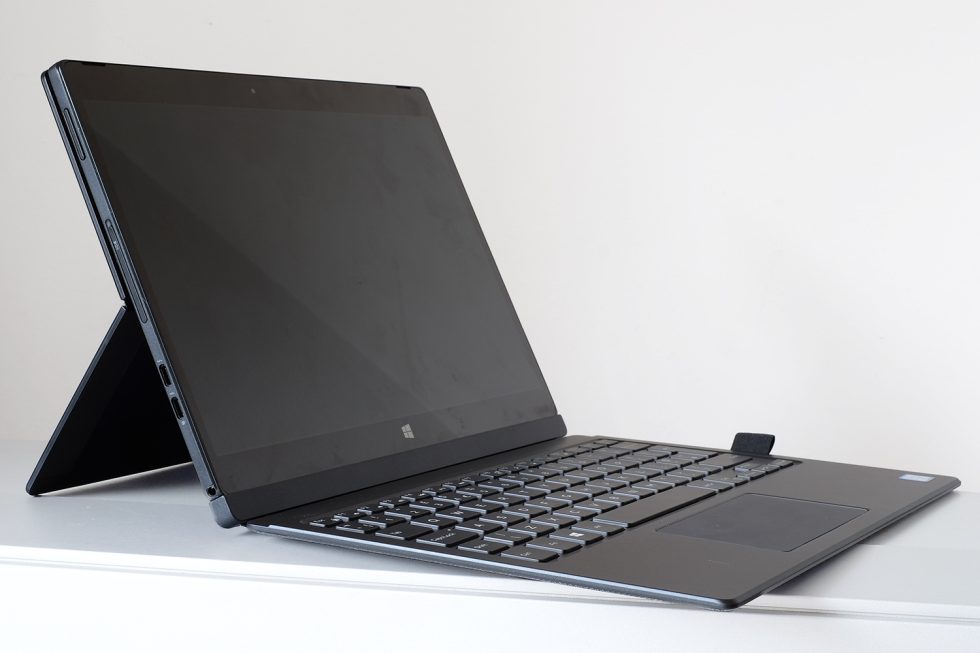
Dell Latitude 12 7000 2-in-1 review: Slick, overpriced, and underpowered

Style-conscious execs may dig it, but there are better options out there.

(credit: Andrew Williams)

Due to the vagaries of how OEMs configure and market PCs in different parts of the world, there is some variation between the specs of default 7000 Series laptops sold in the US and UK. That said, it is possible to use Dell's configuration tool to come up with with identical specs.

Specs at a glance: Dell Latitude 12 7275 2-in-1
Worst Best As reviewed
SCREEN 1920×1080 IPS at 12.5-inch, multitouch 3840×2160 IPS at 12.5-inch, multitouch 3840×2160 IPS at 12.5-inch, multitouch
OS Windows 10 Pro 64-bit
CPU 6th Generation Intel Core m5-6Y57 (Dual-core, 1.1GHz, 4MB cache) 6th Generation Intel Core m7-6Y75 (Dual-core, 1.2GHz, 4MB cache) 6th Generation Intel Core m7-6Y75 (Dual-core, 1.2GHz, 4MB cache)
RAM 4GB DDR3L 8GB DDR3L 8GB DDR3L
GPU Intel HD 515
HDD 128GB M.2 SATA SSD 256GB M.2 SATA SSD 256GB M.2 SATA SSD
NETWORKING Intel 8260 Dual band 2x2 802.11ac 2.4/5GHz + Bluetooth 4.1
PORTS 2 x USB 3.1 Type-C (Thunderbolt), microSD reader
SIZE Height: 8.22mm (0.32") x Width: 290.87mm (11.45") x Depth: 192.85mm (7.59")
WEIGHT 1.61 lbs (0.73kg)
BATTERY 2-Cell (30Whr) battery
WARRANTY 3 years
NOTE Dell's prices can vary wildly thanks to its "instant savings." The prices below include VAT; but the prices on the Dell website, as they're for businesses, are excluding VAT.
PRICE £1168 £1488 £1488

Once a gimmick, the hybrid 2-in-1 has rapidly become the default design for a high-end portable laptop—or rather, Microsoft's take on the the hybrid 2-in-1 has become the default design for a high-end portable laptop. For all its faults, the Surface Pro is a fine piece of hardware design, and everyone from the likes of HP to Lenovo has come up with its own iterative take on the concept. Dell has had a few bashes at it too, with varying degrees of success. (What was it thinking with the wacky, horizontally spinning screen of the old XPS 12?)

The Latitude 12 7000 (actual model number 7275) is decidedly less out there, and not just because it hails from Dell's stuffy business PC range. It's very much a take on the Surface design, albeit with a different—though not necessarily better—case and keyboard, as well as an austere, yet attractive soft-touch body. Dell's design chops have come on leaps and bounds over the past couple of years, and the Latitude 12 7000 is no exception; business types and clean-cut consumers will have no problem whipping one out in a meeting, or at a local Starbucks.

Read 23 remaining paragraphs | Comments

Onda’s oBook 11 Pro looks like a Surface Book (with cheaper hardware)

Onda’s oBook 11 Pro looks like a Surface Book (with cheaper hardware)

Chinese device makers have been producing lookalikes of Apple laptops, tablets, and smartphones for ages. But Onda’s latest familiar-looking laptop isn’t a MacBook Air clone… it looks like a Microsoft Surface Book.

But while Microsoft’s laptop with a detachable screen and an unusual hinge sells for $1499 and up, it’s likely that the Ondo oBook 11 Pro will have a much more affordable price tag.

Under the hood, the oBook 11 Pro laptop has an Intel Skylake Core M3-6Y30 processor, 4GB of RAM, and 64GB of solid state storage.

Continue reading Onda’s oBook 11 Pro looks like a Surface Book (with cheaper hardware) at Liliputing.

Bill Gates: “Wir brauchen Grenzen der heimlichen E-Mail-Überwachung”

Wie weit darf staatliche Überwachung gehen? Microsoft-Gründer Bill Gates schaltet sich in die Debatte ein und setzt sich gegen Automatismen ein. Blackberrys CEO ist dagegen für eine weitergehende Zusammenarbeit mit Behörden. (Microsoft, E-Mail)

Wie weit darf staatliche Überwachung gehen? Microsoft-Gründer Bill Gates schaltet sich in die Debatte ein und setzt sich gegen Automatismen ein. Blackberrys CEO ist dagegen für eine weitergehende Zusammenarbeit mit Behörden. (Microsoft, E-Mail)

Elektroautos: BMW verliert führende Entwickler an chinesisches Startup

Ein chinesisches Unternehmen hat BMW gleich mehrere Entwickler für Elektroautos abgeworben. Hinter dem Startup stehen bekannte Namen der IT- und Elektronikbranche in Asien. (Elektroauto, GreenIT)

Ein chinesisches Unternehmen hat BMW gleich mehrere Entwickler für Elektroautos abgeworben. Hinter dem Startup stehen bekannte Namen der IT- und Elektronikbranche in Asien. (Elektroauto, GreenIT)

Universal Pictures to release 4K Blu-ray movies, starting with Jason Bourne

More titles including Lucy and The Huntsman: Winter’s War to come this summer.

(credit: Casey Johnston)

To keep up with competitors like Paramount and Lionsgate, Universal Pictures Home Entertainment (UPHE) will start releasing movies in 4K Ultra HD Blu-ray this summer. According to Variety, Jason Bourne, Lucy, The Huntsman: Winter’s War, Warcraft, Everest, and Lone Survivor will be among the first titles to hit shelves.

UPHE will progressively roll out titles as the summer goes on, but the start date and pricing details have yet to be unveiled. The company plans to make titles available in 4K Ultra HD Blu-ray disks and digital formats, and it will include some IMAX films as well.

"4K Ultra HD represents a giant leap forward in movie-watching,” UPHE President Eddie Cunningham told Variety. "The format’s stunning resolution and peak luminance, combined with its deep bench of industry support, enables us to deliver to the consumer a truly differentiated viewing experience, one that has the capability to power the future of home entertainment."

Read 1 remaining paragraphs | Comments

European Commission files antitrust complaint against Google over Android licensing practices

European Commission files antitrust complaint against Google over Android licensing practices

Google Android is an open source operating system. That means anyone can install or modify the software, and some companies have even released their own custom forks of the operating system such as Amazon’s Fire OS (for tablets and TV boxes) or Cyanogen Inc’s Cyanogen OS (for phones… so far).

But some of the key features of many Android phones are not open source, such as the Google Play Store and official Gmail, YouTube, and Google Maps apps.

Continue reading European Commission files antitrust complaint against Google over Android licensing practices at Liliputing.