 Intels neues CPU-Topmodell für Spielerechner und kleine Workstations ist ein Decacore mit einem speziellen Turbo, der ihn noch schneller macht. Allerdings kostet er ein Vermögen und gerade Übertakter können den Broadwell-Chip links liegen lassen. (Broadwell, Prozessor)
Category: Uncategorised
Xeon E3-1500 v5: Intel bringt gesockelte Skylakes mit On-Package-Speicher
Xeon-CPUs mit einem kleinen, aber extrem schnellen Zusatzspeicher und der flottesten integrierten Grafik am Markt: Bisher waren Skylake-Chips mit EDRAM dem AiO- und Notebook-Segment vorbehalten. Die neuen Desktop-Varianten takten dank bis zu 65 Watt TDP höher – setzen aber spezielle Mainboards voraus. (Xeon, Prozessor)
 Xeon-CPUs mit einem kleinen, aber extrem schnellen Zusatzspeicher und der flottesten integrierten Grafik am Markt: Bisher waren Skylake-Chips mit EDRAM dem AiO- und Notebook-Segment vorbehalten. Die neuen Desktop-Varianten takten dank bis zu 65 Watt TDP höher - setzen aber spezielle Mainboards voraus. (Xeon, Prozessor)
Standby-Modus: iPad Pro 9,7 Zoll mit Akkuproblemen
 Im Standby-Betrieb hält der Akku des kleinen iPad Pro 9,7 Zoll bei einigen Anwendern nicht lange durch. Möglicherweise werden die Funkverbindungen der Geräte ungewöhnlich oft genutzt. Apple hat noch keine Lösung. (
Tri-Radio-Plattform: Qualcomm bringt das Dreifach-WLAN
 Auch Qualcomm will WLAN-Routerherstellern aberwitzige Geschwindigkeiten ermöglichen. Künftig werden noch mehr Geräte auf den Markt kommen, die auch das 5-GHz-Band verstopfen. (
Qualcomm introduces Snapdragon Wear 1100 chip for wearables

There are an awful lot of smartwatches using Qualcomm’s processors, but most of them are using the Snapdragon 400 family of chips that were originally designed for phones.
Earlier this year Qualcomm introduced a new chip designed specifically for wearables, called the Snapdragon Wear 2100. And now the company is adding a Snapdragon Wear 1100 system-on-a-chip to its wearable lineup.
As you probably guessed from the name, the new chip is less powerful than the Snapdragon Wear 2100, and it’s targeted at devices that are more affordable and/or which may offer longer battery life or smaller size.
Continue reading Qualcomm introduces Snapdragon Wear 1100 chip for wearables at Liliputing.
Brain infections may spark Alzheimer’s, new study suggests
While still speculative, new hypothesis offers some sensible explanations to the disease.
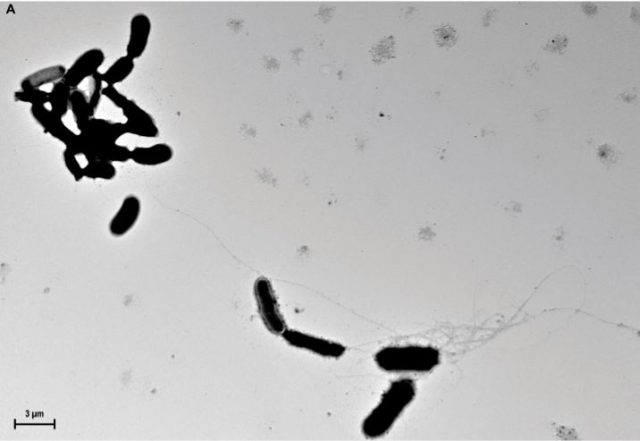
Strands of beta amyloid fibrils form around yeast in culture media. (credit: Credit: D.K.V. Kumar et al. / Science Translational Medicine (2016)])
The protein globs that jam brain circuits in people with Alzheimer’s disease may not result from a sloppy surplus, but rather a bacterial battle, a new study suggests.
Previously, researchers assumed that the protein—beta amyloid—was just a junk molecule that piled up. And efforts to cure Alzheimer’s focused on clearing out clogs and banishing beta amyloid from the brain. But a new study conducted using mice and worms suggests that the protein clumps are actually microbial booby traps, sturdy proteinaceous snares intended to confine invading microbes and protect the brain.
The findings, published in the journal Science Translational Medicine, suggest that Alzheimer’s may result from the brain’s effort to fight off infections. While that hypothesis is controversial and highly speculative at this point, it could dramatically alter the way researchers and doctors work to treat and prevent the degenerative disease.
Read 6 remaining paragraphs | Comments
Internetwirtschaft: Das ist so was von 2006
Die richtigen Fragen, nur zehn Jahre zu spät: Das “Grünbuch Digitale Plattformen” des Wirtschaftsministeriums zeigt den Abstand der deutschen Netzpolitik zur Realität. (Netzpolitik, Internet)
 Die richtigen Fragen, nur zehn Jahre zu spät: Das "Grünbuch Digitale Plattformen" des Wirtschaftsministeriums zeigt den Abstand der deutschen Netzpolitik zur Realität. (Netzpolitik, Internet)
NVM Express und U.2: Supermicro gibt SATA- und SAS-SSDs bald auf
Wenn es um Rechenzentrumshardware geht, sind traditionelle SSDs für Supermicro viel zu langsam. Das Unternehmen wechselt von SSD All Flash auf All NVMe Flash. Helfen soll die breite Verwendung von U.2 alias SFF-8639. (NVMe, Speichermedien)
 Wenn es um Rechenzentrumshardware geht, sind traditionelle SSDs für Supermicro viel zu langsam. Das Unternehmen wechselt von SSD All Flash auf All NVMe Flash. Helfen soll die breite Verwendung von U.2 alias SFF-8639. (NVMe, Speichermedien)
100 MBit/s: Telekom bringt 10.000 Haushalten in Großstadt Vectoring
 Einem Bezirk einer deutschen Großstadt Vectoring zu bringen bedeutet, 13 Kilometer Glasfaserleitungen neu zu verlegen und 30 Schaltverteiler auf- oder auszubauen. Die Telekom baut zurzeit in vielen Städten aus. (
If climate scientists are in it for the money, they’re doing it wrong
Ars takes a look at the accusations that climate scientists push the consensus.

It's Memorial Day, all Ars staff is off, and we're grateful for it (running a site remains tough work). But on a normal Monday, inevitably we'd continue to monitor news from the world of climate change. Our John Timmer examined the claims that scientists are in it solely for the money in February 2011, and we're resurfacing his piece for your holiday reading pleasure.
One of the more unfortunate memes that makes an appearance whenever climate science is discussed is the accusation that, by hyping their results, climate scientists are ensuring themselves steady paychecks, and may even be enriching themselves. A Google search for "global warming gravy train" pulls out over 50,000 results (six of them from our forums).
It's tempting to respond with indignation; after all, researchers generally are doing something they love without a focus on compensation. But, more significantly, the accusation simply makes no sense on any level.
Read 18 remaining paragraphs | Comments