Apple kills 16GB storage option for iPad Air 2 and Mini 4, drops Pro prices

The 16GB storage option is but a mere memory now.

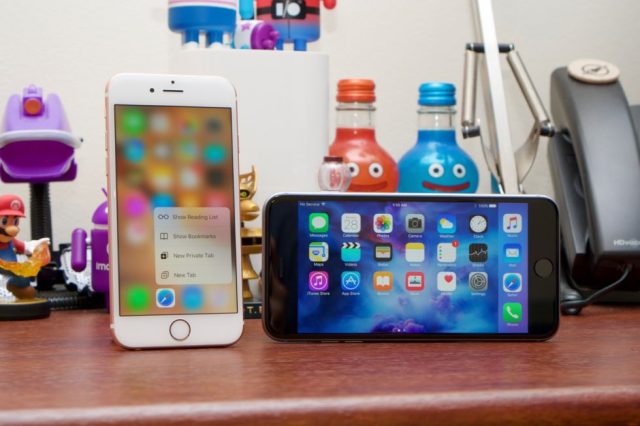
While today's Apple event was all about the iPhone 7 and second-generation Apple Watch, Apple quietly updated its iPad line in a subtle yet important way. Now a few of the older models, specifically the iPad Air 2 and the iPad Mini 4, start at 32GB of storage rather than the 16GB they used to have in their base models. But despite the upgrade in storage capacity, Apple hasn't raised the starting price for either model: both the Air 2 and the Mini 4 start at $399. Both models also have an option for 128GB of storage for those who want a lot of space.

This move is in line with Apple's decision to start the iPhone 7 models at 32GB of storage, foregoing the 16GB options completely. Not only does this simplify the lineup for each iPad model, but it should also make it easier for consumers to store all their photos, videos, and apps. 16GB of storage is simply not enough for most consumers, especially those who use their smartphone or tablet as their primary device. More storage at the base price will likely be an enticing point for anyone who has been thinking about upgrading.

The iPad Pro still has plenty of options, as it comes in two different display sizes and with or without LTE. iPad Pro models start at 32GB of storage and can be purchased with up to 256GB of storage. Apple also cut the prices for the top-tier iPad Pros; the 128GB models are now $50 cheaper (starting at $699, Wi-Fi only) and the 256GB models are $100 cheaper (starting at $899, Wi-Fi only). The final model on offer, the iPad Mini 2, is now only available as a 32GB model for $269.

Read on Ars Technica | Comments

Intel acquires Movidius to bring “computer vision” to more devices

Movidius’ SoCs and algorithms let computers “see” and process the real world.

Enlarge / Computer vision is a critical technology for smart, connected devices of the future. (Credit: Intel Corporation) (credit: Intel)

Last night, Intel announced that it will buy Movidius, an Irish company that makes computer vision processors used in devices such as drones and virtual reality systems. According to Intel's press release, the goal is to weave Movidius' technology in with Intel's RealSense cameras to enhance "computer vision and perceptual computing" in its devices.

Movidius has been around for nearly a decade, making low-power, high-performance SoCs that have been used by the likes of Lenovo, DJI, and others. It has also created algorithms for deep learning, depth processing, and navigation, so it's easy to see why Intel would want to use both of those pieces in its RealSense camera systems. While Intel has the "eyes" of the computer down with RealSense, Movidius' technology will likely become an integrated part of the computer's "brain" as the visual cortex.

Intel says it's particularly looking to integrate Movidius' work into augmented, virtual, and merged reality systems as well as robotics and security systems. Intel has been shopping around for companies that contribute to this bottom line; just last month, the company acquired the deep-learning company Nervana Systems to help it compete in the AI sphere. Recent acquisitions show how Intel has broadened its focus away from x86, turning its attention to new technology like virtual reality devices, drones, and smart home products.

Read 1 remaining paragraphs | Comments

Alienware focuses on mobility with sleek, revamped new laptops

Also performance boosts, better graphics cards, eye-tracking, and more.

Enlarge (credit: Alienware)

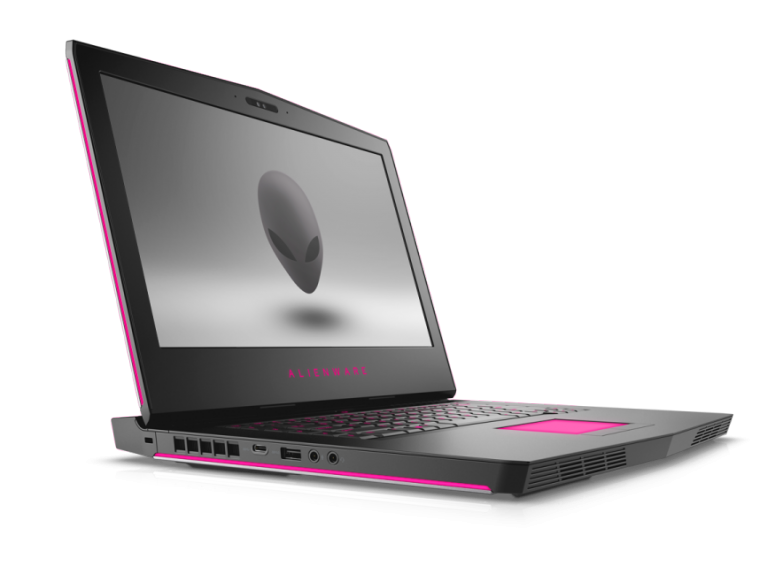
Alienware has been unsurprisingly busy since E3, where the company announced powerful VR-ready desktops, as well as its OLED 13-inch gaming notebook. But the news doesn't stop there: Alienware recently announced an update for its other gaming notebooks—the Alienware 15 and 17 models—which includes a slight redesign, VR capabilities, and eye-tracking technology.

The new laptops look nearly identical to the original models, but closer inspection reveals a refined design. Alienware has abandoned the slanted corners of its older laptops in favor of an overall design that's 20 percent thinner and allows for more efficiency. One of the biggest changes is the "disappearing" hinge design: the lid of Alienware's new notebooks is set about an inch inward onto the chassis, so when you open it, the lid seems to disappear into its base. Yes, that means that part of the laptop's chassis sticks out behind the hinge, but Alienware explains that it moved the heat exchanger to that spot, which in turn allowed the new notebooks to be slimmer than previous models.

Aside from the hinge change, the other design alterations are minimal, and Alienware was vague about the small changes to the notebooks' keyboards. The company mentioned the new keyboard's additional 2.2mm of travel, but the keyboard I had time with felt nearly identical to its much-loved predecessor. The strips of light have been moved from the top of the lid to its edges and the chassis' sides, and the trackpads light up as well. Each model has a Windows Hello camera embedded near the display for quick access to Hello's privacy features. Overall, the new laptops lose a bit of that futuristic feel, but they gain a dark elegance thanks to their anodized aluminum, magnesium alloy, and carbon fiber construction.

Read 3 remaining paragraphs | Comments

Sony’s Xperia XZ and X Compact smartphones bank on photo tricks

Meet the newest flagship and mini handset from Sony.

Enlarge / Sony Xperia XZ. (credit: Sony)

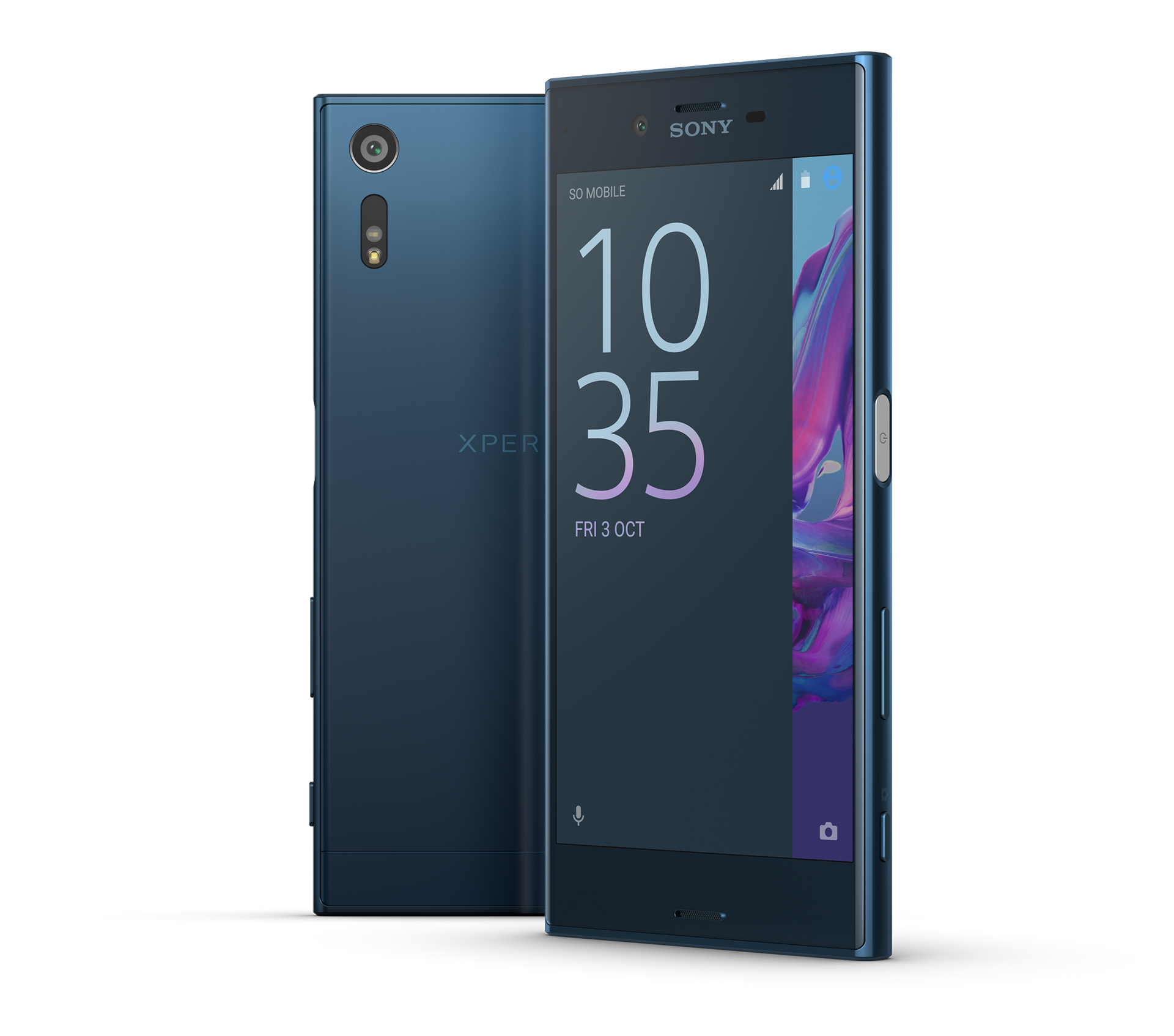
On the heels of releasing the Xperia X Performance smartphone a few months ago, Sony is back with another couple of handsets. At IFA 2016, Sony announced the Xperia XZ, which is being called the true flagship of its new X series of smartphones. The company also announced a new smaller handset, the Xperia X compact. Combining preferred aspects of both the X and the Z smartphone lines, the XZ flagship banks on power and an advanced camera to woo customers. The Compact, on the other hand, hopes to speak to those who still prefer a tinier (and likely less expensive) device.

Let's take a look at the Xperia XZ first: at a glance, it's nearly identical to the Xperia X Performance, but it has a few small differences. The edges have what Sony calls a "loop surface:" the top and bottom edges resemble long, flat ovals, while the rounded sides bulge out just slightly. The water-resistant handset is made of a specially treated metal with an aluminum base, giving it a satin-like finish. Sony likes color, so the XZ will be available in a new "forest blue" as well as black and platinum.

Sony's big focus with the XZ (and the X Compact as well) is a refined camera. The company spent a lot of time updating the main camera, adding more sensors and updating existing features. While Sony's smartphone shooters already have image stabilization, the XZ's 23-megapixel camera has X and Y shift shake to create a five-axis image stabilization. A new RGB sensor helps accurately white balance photos so colors come out more true to life, leaving behind any overly warm or cool hues. Sony even improved its hybrid autofocus by giving the XZ a laser autofocus, which uses laser technology to glean how far away a photo's subject is in order to properly focus and reduce blur.

Read 6 remaining paragraphs | Comments

Caught in the act: How and why you should invest in a dash cam

You may never use it, but when you have to, it could be a life-saver.

Video shot/edited by Jennifer Hahn. (video link)

No one gets into their car thinking they're going to get into an accident—that, is until they do. Luckily, we now have dash cams, in-car technology that can be helpful to drivers in the event something goes wrong while they're behind the wheel. If you don't have one in your car already, you've probably heard about dash cams on the news when footage from a tense police encounter or from a foreign country like Russia has been featured due to an unusual situation. However, you likely won't encounter meteorites and crashing airplanes as often as you will annoyingly aggressive drivers.

The Consumer Technology Association estimates dash cams will become more mainstream in US cars soon, and dash cam sales rose 9 percent this year (wholesale) and 7 percent in dollars. By 2017, dash cam sales could reach a total of $52 million, possibly even $90 million when combined with rear windshield or backup camera sales.

Read 38 remaining paragraphs | Comments

Fitbit’s Charge 2 and Flex 2 are next gen trackers that blend fitness and style

Plus a slew of new software features for each.

Enlarge (credit: Valentina Palladino)

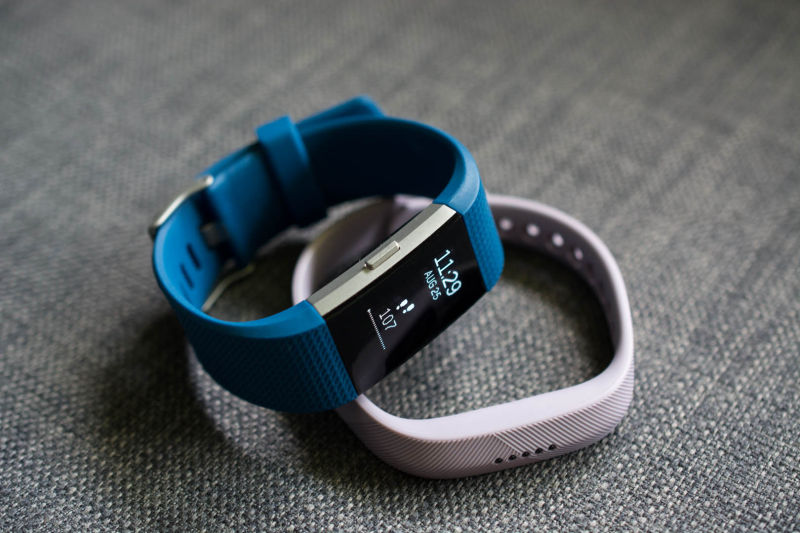
The rumors were true: Fitbit isn't done for the year. The company just announced two new fitness trackers that add second iterations of existing products to its lineup: the Charge 2 and the Flex 2. The Charge 2 is an improved Charge HR, now with new features, a larger display, and interchangeable bands, while the swim-capable Flex 2 is an upgraded Flex with a completely new design that focuses on versatility.

Let's start with the Charge 2: its biggest physical improvement is the 1.5-inch display that replaces the Charge HR's small, narrow screen. It's like a wider version of the Fitbit Alta's display, finally big enough to show the time at the top and tap-to-scroll stats beneath it. Those stats include steps, heart rate, active time, and more. The Charge 2's bands are interchangeable, so you can swap the silicone, active band for more fashionable leather and jewelry-like bands. However, since the Charge 2 is just a wider version of the Alta, its overall attractiveness is in the eye of the beholder.

The Charge 2 has new software and tracking features that the Charge HR doesn't have. Its connected GPS lets it pair with your smartphone's GPS to map running routes and get better distance calculations, while its interval workout mode lets you to customize routines that alternate bursts of intense exercise with periods of low-intensity activity. The Charge 2 also has reminders to move, while calling, texting, calendar alerts, and activity profiles are accessible from the band's display. These profiles let you quickly track your most-completed exercises, like running, walking, biking, Pilates, and more. You decide which appear on the band and which don't.

Read 9 remaining paragraphs | Comments

Philips’ Hue motion sensor lets you walk to turn on your lights

No more fumbling to the bathroom in the dark at midnight.

Enlarge (credit: Philips)

Philips knows that building a smart home lighting ecosystem doesn't mean just bombarding the market with different types of Wi-Fi connected light bulbs. On the heels of the introduction of Hue wall switches last year, Philips has just debuted the new Hue motion sensor for its lighting system. The tiny square sensor is meant to be placed anywhere in the home where you'd want lights to automatically come on whenever someone walks past.

The device is self-explanatory but it really comes to life when paired with the Hue app. The motion sensor can be placed anywhere to control up to two rooms of lights. It has a motion detection range of about 5 meters, or 16.5 feet, so whenever anyone walks near it, lights turn on. While you could set the motion sensor just to control, say, your bathroom lights so you don't have to fumble for a switch in the middle of the night, you can also set the switch to turn on both the bathroom and hallway lights so your entire nighttime trip to the can is illuminated. While the sensor has limited field-of-motion detection, it can control the lights in any part of your home, so walking through your front door could trigger your upstairs bedroom lights to turn on.

Since the motion sensor controls full rooms of lights, it can also be set to turn on a specific scene if you have the Hue multicolor smart bulbs. In the app, you can set these scenes using multiple different lights emitting different colors to get the best ambience for certain events, such as getting ready for bed or waking up in the morning. With the motion sensor, those scenes can be triggered whenever you walk near it, so you don't have to go into the app to bring them up.

Read 3 remaining paragraphs | Comments

Apple may be working on a Snapchat-like video app for 2017

Video recording, editing, and sharing in less than one minute.

(credit: Andrew Cunningham)

Social networks like Facebook, Instagram, and Snapchat have become the best means of communication for many people, and now it seems that Apple wants to cash in on that trend. According to a Bloomberg report, Apple is looking to "capitalize on the popularity of social networks" by developing a video-sharing app for iPhone and iPad. The new app, which is reportedly in development for 2017, would let users quickly take, edit, and share video by using one-handed controls on their mobile device.

The video app sounds a lot like Snapchat in terms of features: users can record a video and then apply filters to it, doodle, or place text over it, and then send it to friends via the contact list or existing social networks like Twitter. According to anonymous sources close to the project, the app will be designed to let users shoot and upload video in less than a minute, and possibly in a square shape like Instagram photos were confined to. Bloomberg reports that the app is being developed by the Final Cut Pro and iMovie teams. It's unclear if Apple plans to release the app as a standalone download in its App Store or if it will bundle the features into its existing Camera app. It's also unclear if we'll ever see this video app—it's currently in the preliminary development stages, and the project could be killed if it "doesn’t meet the company’s timetable and expectations."

This news comes as Apple's revamped iMessages application will be available to all users when iOS 10 comes out in the fall. The updated messaging app will let users send handwritten text and drawings, full-screen effects, larger emojis, and more. With that update, Apple is clearly trying to bring its native messaging app up to the standards of Facebook Messenger, WeChat, WhatsApp, and Line, which have had similar features for a while. But now with the news of a possible video sharing app, it's clear that Apple wants to play on the same social media level as those messaging apps, as well as others like Snapchat and Instagram.

Read on Ars Technica | Comments

Google to punish sites that use intrusive pop-over ads

If ads interfere with the mobile experience, it’ll spell bad news for the site.

(credit: Google)

Pop-up ads are annoying on desktop, but even more frustrating on mobile devices when they sometimes take over the browser. Google wants to fix that: in a blog post, the company announced that, starting next year, websites with intrusive advertisements will be punished and may be pushed down in search results.

Essentially, Google wants search results to favor sites that have the best information and the least annoying advertisements that cover up that information. "While the underlying content is present on the page and available to be indexed by Google," the blog post says, "content may be visually obscured by an interstitial. This can frustrate users because they are unable to easily access the content that they were expecting when they tapped on the search result."

Google claims these intrusive ads and interstitials create "a poorer experience" for users, particularly on mobile where space is limited by smaller screens. It's not wrong—sometimes pop-up or pop-over ads that show up on mobile websites can take up the entire display, forcing you to view them while furiously trying to find the "X" to close them. After January 10, 2017, sites that show these kinds of ads (which include content-obscuring "please subscribe to our newsletter!" pop-overs) "may not rank as highly" in search results.

Read 1 remaining paragraphs | Comments

Samsung apparently wants to sell you refurbished smartphones, too

The program could come to fruition in 2017, but details are scarce.

(credit: Ron Amadeo)

You may have a chance to spend less than $800 on one of Samsung's premium smartphones soon. A report from Reuters suggests that Samsung may start a refurbishment program as early as next year to sell returned Galaxy smartphones to consumers at lower prices.

While the news hasn't been confirmed yet, Reuters cites "a person with direct knowledge of the matter." Aside from news of the program in general, details about the program are unknown. It can be assumed that a program reselling gently used Galaxy smartphones would sell them for less than the handset's original price, but we don't how much of a discount customers might get, nor do we know which handsets will be included or where Samsung may implement the program.

According to Reuters, Samsung is trying to keep riding the train of recent high earnings after restructuring its mobile product line. It's reported that the company wants to "keep operating margins above 10 percent" while maximizing cost efficiency. Reuters also suggests that reselling high-end handsets at reduced prices could help the company's profits in India, where most people cannot afford to spend $800 on a smartphone.

Read 1 remaining paragraphs | Comments