Mozilla retires Firefox’s sponsored tiles, hunts for new revenue streams

Mozilla will now focus on “reimagining content experiences.”

Way back in 2014, Firefox rolled out an unpopular feature to its nightly builds: sponsored tiles on its "new tab" page. The feature, which was opt-in by default, showed ads that were based on your browsing history. Eventually, after a very long beta testing period, the sponsored tiles were loosed upon all 500 million-or-so Firefox users in May this year.

Now, just a few months later, the feature is being retired. Sponsored tiles will continue to appear for the next few months while Mozilla "fulfils its commitments" (i.e. clears out ad inventory), but then they'll be gone entirely. Writing on the official Mozilla blog, vice president Darren Herman explains that, "advertising in Firefox could be a great business, but it isn’t the right business for us at this time because we want to focus on core experiences for our users."

Later in the blog post, which was probably published on Friday afternoon in an attempt to dodge the news cycle, Herman repeats the refrain that we've heard many times over the last few years: "We believe that the advertising ecosystem needs to do better ... Mozilla will continue to explore ways to bring a better balance to the advertising ecosystem for everyone’s benefit, and to build successful products that respect user privacy and deliver experiences based upon transparency, choice and control."

Read 4 remaining paragraphs | Comments

France looking at banning Tor, blocking public Wi-Fi

Leaked docs from Ministry of Interior show worryingly illiberal trend for France.

According to leaked documents from the Ministry of Interior the French government is considering two new pieces of legislation: a ban on free and shared Wi-Fi connections during a state of emergency, and measures to block Tor being used inside France.

The documents were seen by the French newspaper Le Monde. According to the paper, the new bills could be presented to parliament as soon as January 2016. The new laws are presumably in response to the attacks in Paris last month where 130 people were murdered.

The first piece of proposed legislation, according to Le Monde, would forbid free and shared Wi-Fi during a state of emergency. The new measure is justified by way of a police opinion, saying that it's tough to track people who use public hotspots.

Read 8 remaining paragraphs | Comments

8 bits, 8 players, 8 projectors, and one Nintendo Entertainment System

Turning a NES into the ultimate 8-bit party games console.

What do you get if you combine the nerdy ingenuity of ETH Zurich, the creativity of Disney researchers, and a swanky Swiss night club with a 360-degree projection system? The world's only cooperative 8-player, 8-bit Nintendo Entertainment System capable of continuous, panoramic side-scrolling on that aforementioned 360-degree display, of course.

At this point I would recommend that you look at the photo gallery and at least one of the videos below so that you have a mental image of how this all slots together. I will attempt to describe the system, too, but words don't really do it justice.

So, as you probably know, Super Mario Bros is a single-player side-scrolling game for the NES/Famicom. You constantly move forwards, jumping over obstacles and on top of goombas, until you get to the end of the level. That's about it. There's no going back, you can't zoom out to see where you've been, and the max number of players is two: one for Mario, one for Luigi.

Read 15 remaining paragraphs | Comments

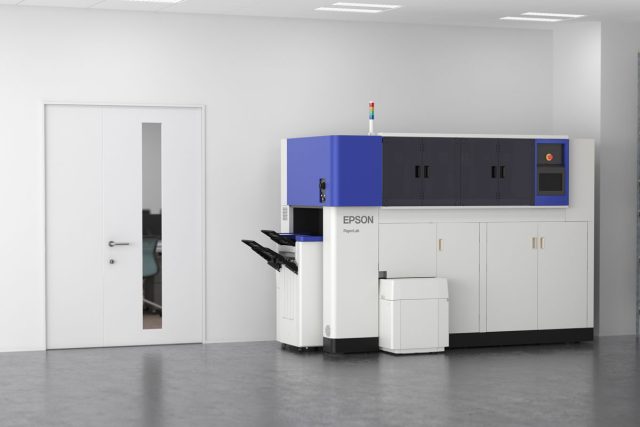
Epson unveils world’s first in-office paper recycling system

Waste paper goes in; 3 minutes later, sheets of new A4 paper come out—at 14 ppm!

Printer giant Epson has developed an in-office paper recycling machine. Called the PaperLab, you put waste paper in, and then new, bright white printer paper comes out. Epson says this process is more efficient than sending paper to an off-site recycling plant, and it's also much more secure: the PaperLab, which breaks paper down into its constituent fibres before building them back up into new sheets, is one of the most secure paper shredders that money can buy.

The specs of the machine are truly impressive. Within three minutes of adding waste paper to the PaperLab, it starts pumping out perfectly white sheets of new paper. The system can produce around 14 A4 sheets of paper per minute, or 6,720 sheets in an eight-hour workday. The PaperLab can also produce A3 paper, and you can tweak the thickness and density of the paper as well: if you want really thin white paper, that's cool; if you want thicker paper for business cards, it can do that too.

Epson says that the PaperLab is the world's first paper production system to use a "dry process." Paper-making processes usually require a lot of water, but the PaperLab requires only a tiny amount of water to "maintain a certain level of humidity inside the system," so it doesn't need to be plumbed into the mains. Presumably there's a small tank of water that needs to be filled up occasionally—hopefully with normal tap water, not £50-per-litre Epson Purified PrintXL Water.

Read 6 remaining paragraphs | Comments

HGST beats Seagate to market with helium-filled 10TB hard drive

WD subsidiary outs world’s largest normal PMR drive. Seagate eagerly awaits HAMR.

Western Digital's HGST division has released the world's first helium-filled 10TB hard drive for everyday use—assuming you have about £600 burning a hole in your pocket, anyway. Meanwhile, despite reiterating that it would have a 10TB drive on the market this year, Seagate hasn't yet moved past the 8TB mark.

The Ultrastar He10 is notable for two reasons: it's hermetically sealed and filled with helium, which is still a rather novel idea; and it has seven platters crammed into a standard-height 25.4mm (1-inch) hard drive.

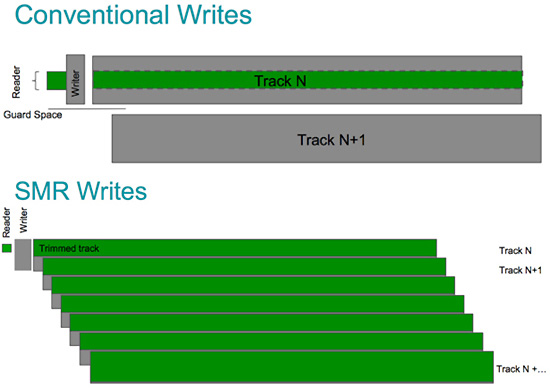
The platters themselves are impressive, too: instead of using shingled magnetic recording (SMR) to boost areal density, these platters use conventional perpendicular magnetic recording (PMR). PMR has been the standard hard drive recording tech since 2005, when it replaced longitudinal recording. The move to PMR has increased the maximum platter density by an order of magnitude—from about 100Gb per square inch to 1000Gb—but now, alas, we're beginning to hit the limits of PMR.

Read 6 remaining paragraphs | Comments

Report: VW execs knew about fuel economy, emissions cheating a year ago

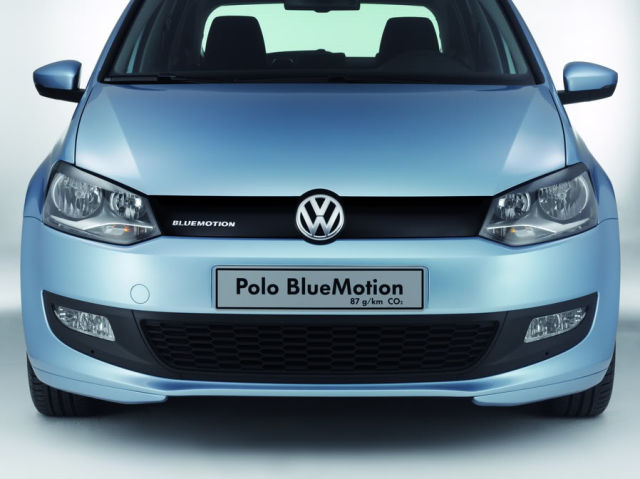
Fuel mileage issues, not “subdued demand” behind sales halt of VW Polo BlueMotion.

Volkswagen's outgoing CEO, Martin Winterkorn, knew about the company's emissions and fuel economy cheating a full year before they became public knowledge, the German newspaper Bild am Sonntag reports.

The newspaper reports that VW stopped selling the Polo TDI BlueMotion back in spring 2015 because it had discovered that its actual fuel economy was 18 percent below its official rating. At the time, VW claimed that it pulled the Polo because of "subdued demand."

Bild, citing "sources close to Winterkorn," says that Winterkorn knew about this fuel economy discrepancy back in spring 2015. Furthermore, Bild says that VW's top executives knew about fuel economy and emissions issues with its other cars a year ago. Bild did not cite its source for the "year ago" assertion, however. With this scandal likely to cost VW tens of billions of euros in fines and lost revenue, Bild hopefully vetted its sources enough, lest it get hit by a massive defamation suit.

Read 4 remaining paragraphs | Comments