Next London Ars meet: January 28

Join Ars UK for a pint and welcome its newest editor, Kelly Fiveash.

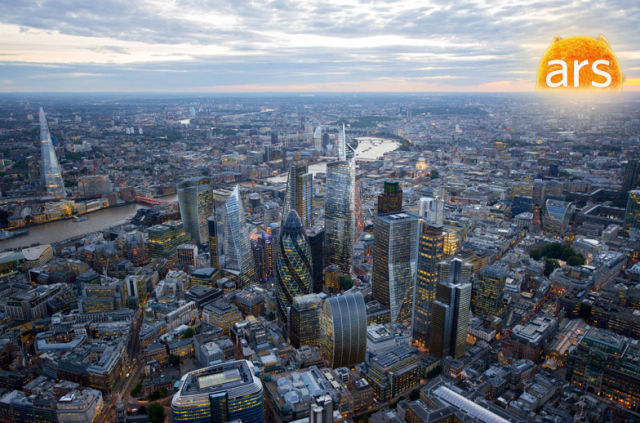
(credit: Hayes Davidson / Sebastian Anthony)

Happy new year, Arsians! I come bearing exciting news.

A new hire

Kelly Fiveash, Ars Technica UK's new taco editor.

To begin with, we have a new hire. After a very successful first year (we grew from around 400,000 readers to 1.5 million), the Powers That Be decided that we deserved another writer. You will be unsurprised to hear that it's rather hard to find someone who is up to the task of writing for Ars Technica—but still, after a couple of months and a final interview stage where I quizzed a half-dozen applicants on their knowledge of Latin, I finally settled on Kelly Fiveash.

Kelly comes to us after more than eight years at The Register, another large UK tech site. Prior to that she was a freelance music journalist and night-shift worker at The Guardian, and before that an IT helpdesk bod. She lives in north London with a blond chihuahua called Señor and spends most of her spare time listening to an album called What?! by the Atomic Bomb! Band (she's still a music nerd). Kelly has a lot of experience covering UK tech, IT, security, and policy—four areas that I'd like to expand on here at Ars Technica.

Read 5 remaining paragraphs | Comments

Amazon customer complains, finds 10-inch dildo in his shopping basket

Watch out: If you provide honest answers in a satisfaction survey, you might be next.

On a fateful day in October 2015, Pedro—an IT contractor living in Ireland—was surfing Amazon.de for a specialised textbook he needed for a new extracurricular art class. He found the book, ordered it, but was disappointed when it arrived. The listing had said that the book was the current edition, but Amazon sent Pedro the previous edition.

Pedro got in touch with customer service to see about getting the proper version. A few days later, Amazon told Pedro that it had ultimately failed to find the right version of the textbook and that he should instead return the book for a full refund.

Pedro, who by this point had spent a long time looking for the correct version of the book and then more time waiting while Amazon looked for the book in its warehouse, wasn't happy with the overall shopping experience. He made his displeasure known by providing negative feedback on a customer satisfaction survey, and he figured that was the end of it.

Read 20 remaining paragraphs | Comments

73 nations face off at the World Magic Cup

Three players and one coach from each nation vie for supremacy, $12,000 each.

BARCELONA—England hasn't had the best of luck when it comes to World Cups in the last few years. In the Football World Cup, England went out in the group stage, not winning a single game. In the 2015 Cricket World Cup, England won a couple of matches but failed to advance to the knockout stage. And of course, earlier this year, at the Rugby World Cup hosted in England, we didn't even manage to get past the group stage. It's all been a bit embarrassing, to be honest.

Which is why I was excited when Wizards of the Coast invited me to the World Magic Cup in Barcelona. All four of the home nations—England, Scotland, Wales, and Northern Ireland—had qualified for the last major Magic: The Gathering event of the year. Here was a World Cup that we actually had a chance of winning.

Or so I thought.

Read 21 remaining paragraphs | Comments

This is probably the world’s largest billboard created with MS Paint

The billboard is 36m2 and advertises game development software.

It ain't easy to stand out nowadays, especially if you're a small company: you either have to do something crazy enough that the media notices you, or market something so wonderfully novel that the media has to write about you. In this case, it seems that London-based software company Scirra decided to go with the former.

The billboard you see above is currently on display near South Bermondsey train station in south-east London, at the intersection of Rotherhithe and Ilderton roads. It was drawn entirely in MS Paint, and at 36 square metres this might just be the largest piece of MS Paint artwork in the world.

We spoke to Tom Gullen, co-founder of Scirra and the artist behind this MS Paint masterpiece, about the billboard. "The picture itself took me about 15-20 minutes to design and I was pretty happy with the result. I'm a Web developer by trade so this sort of advertising is all new to me."

Read 5 remaining paragraphs | Comments

Netflix DIY smart socks can stop your binge-watching when you fall asleep

A high-tech and expensive solution to one of the first world’s biggest problems.

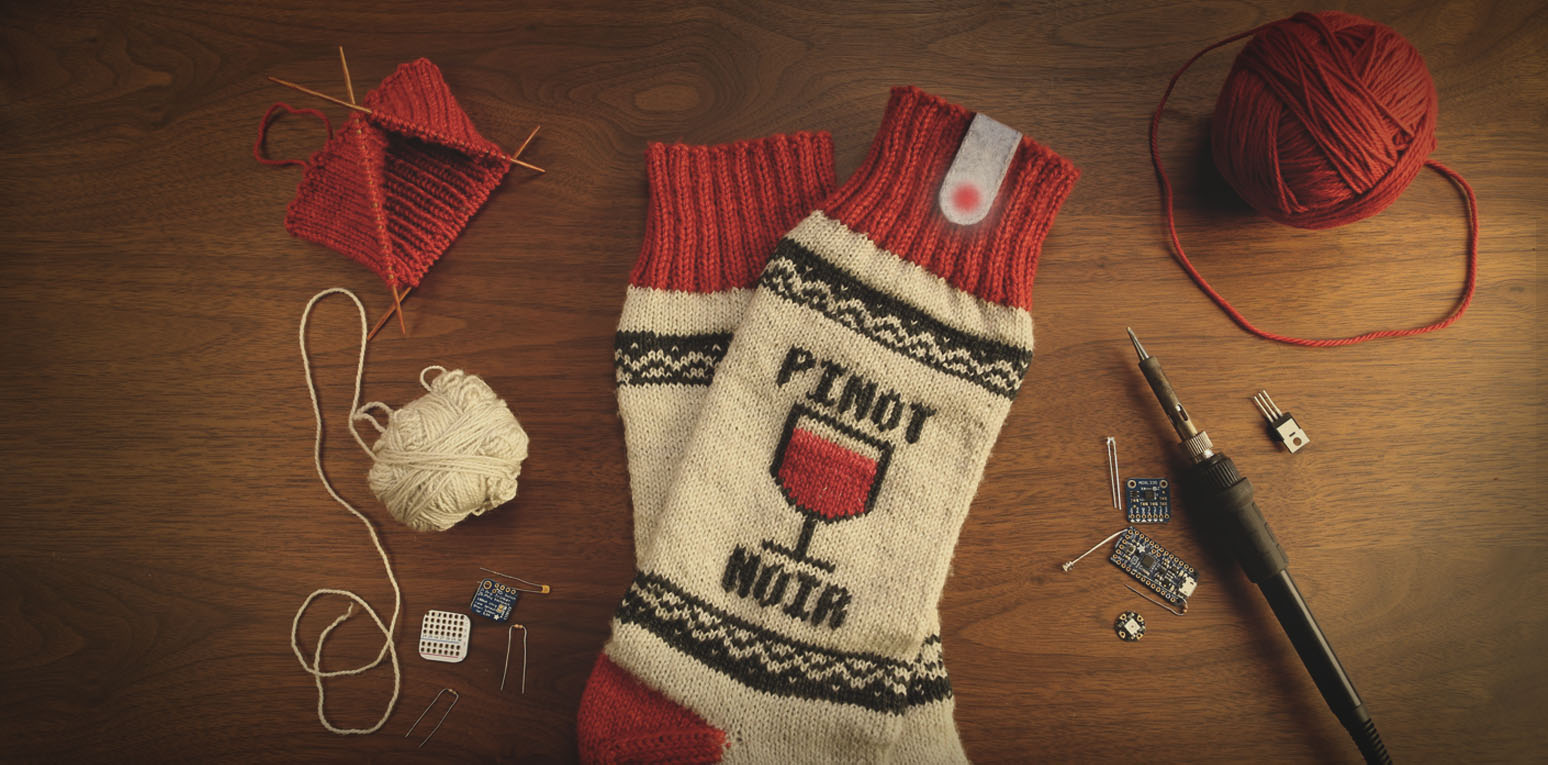
What do you get if you combine an Arduino, knitting, a fair amount of DIY chutzpah, and a genetic and/or epigenetic predisposition towards falling asleep while watching TV? Netflix socks, of course.

A few months ago, some enterprising types at Netflix created The Switch—essentially a single button to dim the lights, silence your mobile phone, order takeaway, and start streaming your favourite show or film. Netflix shared the schematics and parts list for The Switch so that you could make your own.

Now they've done it again with a pair of socks that automatically pauses your stream if you fall asleep.

Read 6 remaining paragraphs | Comments
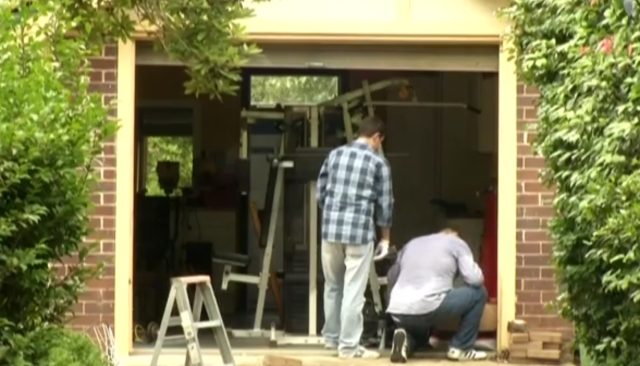
Pre-crime arrives in the UK with a crowdsourced watch list

You can now be ushered out of a shop even if you haven’t done anything wrong yet.

(credit: Minority Report / 20th Century Fox)

As you may know, we're big fans of CCTV in the UK. At the last count there was around 6 million CCTV cameras in the UK, or about one for every ten people living here. Most of these cameras are passive: they don't actually do anything, except for constantly recording to a tape or hard drive.

The big exceptions are real-time police and intelligence cameras, such as the the UK's automatic number plate recognition (ANPR) system. Here, in addition to storing the data on hard drives, number plates are actively interrogated and matched against a database of missing vehicles and wanted people.

The UK's police and intelligence agencies probably have similar real-time matching abilities with other private and public CCTV networks, though that information is obviously hard to come by. Most recently, though, the Metropolitan Police asked for access to Transport for London's ANPR network so that it can carry out real-time facial recognition on all motorists entering London.

Read 9 remaining paragraphs | Comments

Firefox for Windows finally has an official, stable 64-bit build

After almost a decade of aborted attempts, it’s here. But without plug-ins.

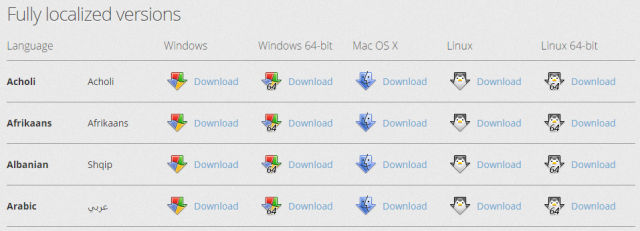
Today, with the release of Firefox 43, almost a decade after the idea was first mooted, there is finally an official 64-bit build of Firefox for Windows. To download it, you'll have to head over to the Firefox website and explicitly grab a 64-bit installer; if you just do an in-place upgrade you'll just get the normal 32-bit flavour.

64-bit Firefox for Windows is mostly identical to 32-bit Firefox for Windows, except that very few plug-ins will work with 64-bit Firefox. This is by design: Mozilla is in the process of dropping Firefox's support for NPAPI plug-ins. NPAPI support is being dropped due to (ostensible) stability and security concerns. Amusingly (or ironically), though, 64-bit Firefox does still support one plug-in: Flash. Sites that use other NPAPI plug-ins, such as Silverlight or Java, are being told by Mozilla to "accelerate their transition to Web technologies."

Over the years there have been a number of unofficial and alpha/beta builds of 64-bit Firefox for Windows, but they've always been aborted before they made it to the stable release channel. Back in 2012, an executive decision was made to halt 64-bit builds entirely due to "significant negative feedback" and a frustrating user and tester experience—but a few months later, that decision was reversed and the 64-bit builds continued, albeit very quietly.

Read 4 remaining paragraphs | Comments

Google, NASA: Our quantum computer is 100 million times faster than normal PC

But only for very specific optimization problems.

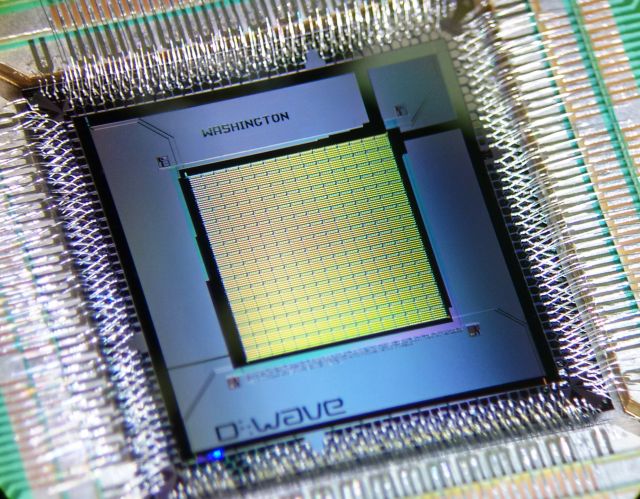
(credit: D-Wave)

Two years ago Google and NASA went halfsies on a D-Wave quantum computer, mostly to find out whether there are actually any performance gains to be had when using quantum annealing instead of a conventional computer. Recently, Google and NASA received the latest D-Wave 2X quantum computer, which the company says has "over 1000 qubits."

At an event yesterday at the NASA Ames Research Center, where the D-Wave computer is kept, Google and NASA announced their latest findings—and for highly specialised workloads, quantum annealing does appear to offer a truly sensational performance boost. For an optimisation problem involving 945 binary variables, the D-Wave X2 is up to 100 million times faster (108) than the same problem running on a single-core classical (conventional) computer.

Google and NASA also compared the D-Wave X2's quantum annealing against Quantum Monte Carlo, an algorithm that emulates quantum tunnelling on a conventional computer. Again, a speed-up of up to 10was seen in some cases.

Read 4 remaining paragraphs | Comments

Australian police raid the home and offices of reported Bitcoin creator

Craig Steven Wright was raided just hours after (probable) outing as Satoshi Nakamoto.

Australian federal police have raided the Sydney home of Craig Steven Wright, the man who—just a few hours ago—was named by Wired and Gizmodo as the probable creator of Bitcoin. Reuters reports that there are police at an office that's listed as the registered location of two of Wright's businesses, too.

Curiously, a statement from the Australian federal police said that the raids were not related to the recent Bitcoin revelation. "The AFP can confirm it has conducted search warrants to assist the Australian Taxation Office at a residence in Gordon and a business premises in Ryde, Sydney. This matter is unrelated to recent media reporting regarding the digital currency bitcoin."

Late yesterday, both Wired and Gizmodo published reports that fingered Craig Steven Wright as the likely real identity of Satoshi Nakamoto, the pseudonymous figure behind the creation of the original Bitcoin software in 2009. Both Wired and Gizmodo were working from the same trove of documents. The evidence is pretty convincing: as Wired says, "Either Wright invented bitcoin, or he’s a brilliant hoaxer who very badly wants us to believe he did."

Read 3 remaining paragraphs | Comments

Only kid on remote island to get hundreds of Christmas cards from Redditors

Aron Anderson’s only friends are his dog, some ducks, and some flocks of sheep.

10-year-old Aron Anderson might just be the UK's loneliest schoolboy. He lives on Out Skerries, an archipelago in the eastern Shetland Isles, two hundred miles north of mainland Scotland and in the middle of absolutely bloody nowhere. Skerries has a primary school, but Aron is the only student that attends. A few years ago there was a secondary school as well, and so Aron had some friends—but that has since been shut down due to lack of funding, and the kids have moved away to another secondary school that's two-and-a-half hours away by boat. Aron says his best friends on the island are his dog, some ducks, and a few flocks of sheep.

The Telegraph reports that Aron's education—a dedicated schoolhouse and teacher—costs the local council £75,357 per year, or more than twice the cost of boarding at Eton. Since the '70s, the tiny island community had been fighting to save the secondary school from closure, but in 2013 they finally lost the battle. It seems inevitable that Aron's primary school follows suit. Aron's mother, who is amusingly also the head of the island's parent-teacher council, told The Telegraph that "this is going to be his first winter as the only pupil so it’s hard to tell how it will be for him."

There is a happy twist to this tale, though. Last week, Reddit's Scotland forum was so moved by Aron's story that they decided to organise a Christmas card drive. "We have 20,000 subscribers on here and if even 1% of you send a card that's 200 cards to a lonely boy to cheer his Christmas right up," says BesottedScot, a forum moderator and the organiser of the event. For anyone outside the UK, BesottedScot suggests sending a postcard instead of a Christmas card, "so that he knows where you've messaged from."

Read 3 remaining paragraphs | Comments