This is probably the greatest custom PC build of all time

Artisanal PSU. Locally sourced GPU. Organic X-shape chassis. Made entirely of Lego.

My friends, I might have found the greatest custom PC ever conceived or constructed: the Lego Gaming Computer.

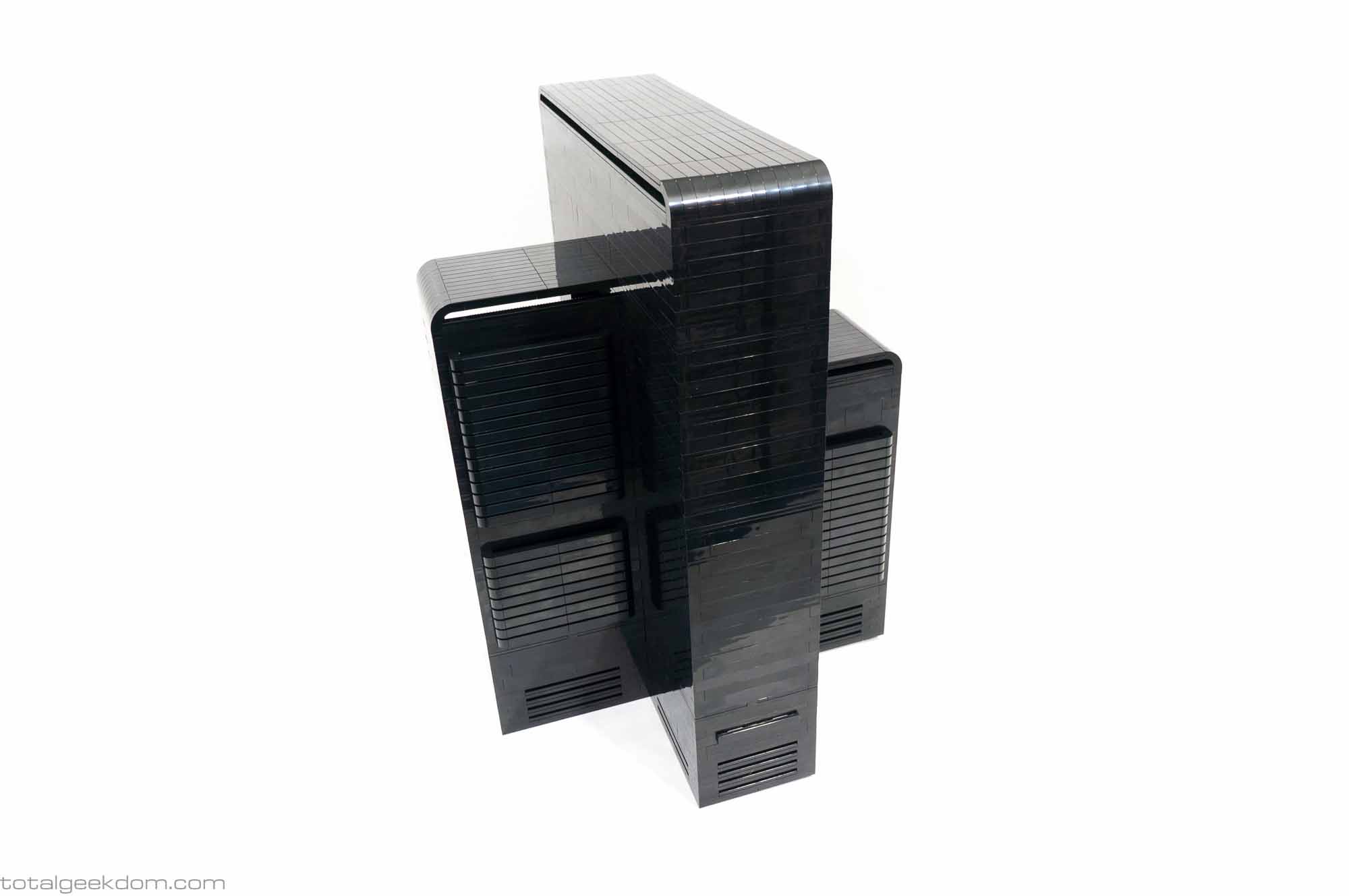
No, this isn't a computer designed specifically for the myriad Lego-themed games that have flooded the market over the last 10 years—though it certainly could do that with aplomb. The Lego Gaming Computer is a top-spec, completely-built-from-scratch X-shaped gaming rig that's made entirely out of Lego bricks.

Because ATX PCs aren't meant to be X-shaped, the mastermind behind the build—a guy called Mike Schropp—had to come up with some ingenious solutions, such as a custom-made GPU heatsink and a transverse-mounted motherboard that separated the GPU's airflow path from the other components.

Read 7 remaining paragraphs | Comments
Google now blocking websites that show fake download buttons

Now Sourceforge and other sites must find a less-annoying way of making revenue.

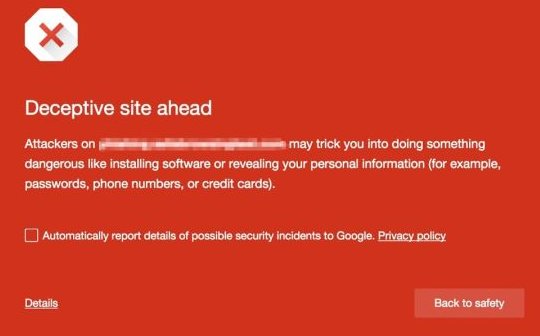
Google has now started blocking websites that use deceptive content or ads to make you do things that you wouldn't normally do, such as fake download buttons that appear right next to the real download button, or pop-ups demanding you phone tech support to remove a million malware infections that were apparently found on your computer. It sounds like this will be a gradual rollout; it'll take time for Google to work out which sites are consistent offenders.

The blocking will occur via Google's Safe Browsing tech, which you've probably seen before: it's that big red interstitial that appears when you click on a dodgy search result. Safe Browsing has been around for years, but it mostly just prevented you from visiting sites that were serving up malware, or sites that Google had otherwise deemed unsafe.

In November, however, Google started blocking sites that used "social engineering attacks" to get you to install unwanted software or reveal sensitive information—and today, Google is expanding that to websites that serve up deceptive embedded content (i.e. adverts). Google gives the following examples of ads that will get a website blocked:

Read 4 remaining paragraphs | Comments

USB Type-C cable so bad it fries Google engineer’s Chromebook Pixel

Benson Leung, the Type-C cable testing vigilante, has finally met his match.

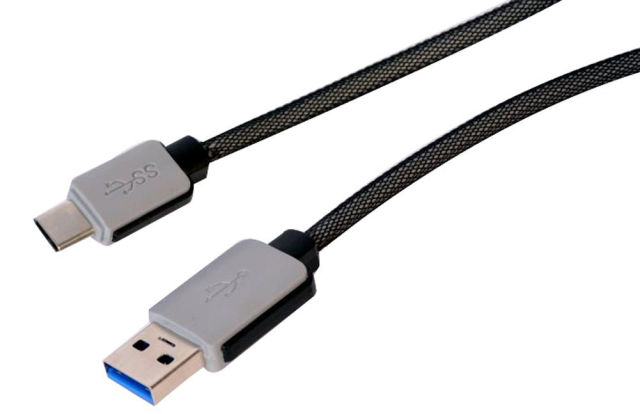
Benson Leung, the Google engineer who moonlights as a tester of dodgy USB Type-C cables, has sadly performed his last act of tech vigilantism—at least for now. When testing a Surjtech 3M USB A-to-C cable, the cable was so bad that it fried his Chromebook Pixel laptop and two USB PD (power delivery) analysers.

At the time of publishing, it looks like the Surjtech cable has already been removed from Amazon, but Leung's review lives on. Basically, as soon as the cable was plugged in and turned on, it completely fried the Vbus line on the Twinkie USB PD analyser. "This is permanent damage. I tried resetting the Twinkie analyzer and having the firmware reflashed, but it continues to exhibit this failure," Leung wrote.

Not only did the cable kill the analyser, though, but it also fried both USB Type-C ports on Leung's Chromebook Pixel: "Neither would charge or act as a host when I plugged in a USB device such as an ethernet adapter."

Read 8 remaining paragraphs | Comments
UK scientists receive world’s first licence to edit genes in human embryos

Will focus on finding genes that stop embryos from developing into healthy babies.

(credit: Wikipedia)

Scientists at the Francis Crick Institute in London have been given regulatory approval to genetically modify fertilised human embryos. This is the first time in the world that a proper regulatory system—in this case, the Human Fertilisation and Embryology Authority (HFEA)—has approved such procedures.

The experiments will be carried out on donated healthy human embryos, which will be destroyed after seven days. The researchers, at least for now, won't be allowed to implant the genetically modified embryos into a woman.

The embryos will be edited using a technique called CRISPR/Cas9, the latest and most efficient tool available to genome researchers. The CRISPR system offers researchers an easy way of "knocking out" specific sequences of DNA. They then let the cell develop as usual to see what effect the knock-out had.

Read 5 remaining paragraphs | Comments

First-person drone racing is much harder than I expected

Apparently, strapping goggles to your face is the best way of piloting a drone.

The floor extends in every direction as far as the eye can see, punctuated irregularly by oil barrels and pillars of rustic brick. The lighting is odd; bright white and purple, with hints of the London skyline through a distant window. For a brief moment, my vision is completely filled by a giant pair of shoes. But then the feet are gone! And the horizon is clear! I wish myself forwards and upwards... and I'm flying! FLYINGGG!!!

And then three seconds later I hit a barrel, a propeller flies off with a whiz-crunch, and I tumble gracelessly to the floor. The landing is hard, and somehow I'm flipped upside down. I lay there for a few minutes, neutered and useless, contemplating the poor life choices that led to this sad end.

Such is the brutality of first-person view (FPV) drone racing.

Read 10 remaining paragraphs | Comments
Netflix starts blocking VPNs, proxies, and other unblocking services

Australian VPN company reports that Netflix has started blocking its IP addresses.

Netflix, right on schedule, has started blocking some subscribers who are using VPNs.

Last week, on January 14, Netflix said that it would begin cracking down on customers who use VPNs, proxies, or other "unblocking" services to view content that shouldn't be available in their country. The move is almost certainly to appease copyright holders and broadcasters. Way back in 2014, Sony Pictures accused Netflix of "semi-sanctioning" piracy by allowing "illegal subscribers" to view geoblocked content.

The first report of Netflix blocking a VPN comes from uFlix, an Australian VPN service that charges AUD$2 (£1) per month for the ability to view Netflix content from around the globe:

Read 4 remaining paragraphs | Comments

Mozilla co-founder unveils Brave, a browser that blocks ads by default

Brave will replace blocked ads with its own ads, taking a 15% cut of revenues.

Brendan Eich, co-founder of Mozilla and creator of the JavaScript programming language, has unveiled his latest project: Brave, a Web browser that blocks ads by default... and then replaces those blocked ads with its own ads. Brave Software, the company behind the eponymous browser, will take a 15 percent cut of the ad revenue generated in this way.

Brave is an open-source Web browser. There's a Brave GitHub repository for Mac/Windows/Linux, iOS, and Android. It looks like the iOS version, ironically enough, is based on Firefox for iOS, and the PC version is based on Chromium (an open-source project that somewhat parallels the development of Chrome). At first glance, it looks like the Android version of Brave is based on Bubble.

If you want to try out Brave, you have to download and build the browser from a GitHub repo. You can sign up to be a beta tester, which presumably grants you some pre-built binaries, but there's currently a waiting list.

Read 11 remaining paragraphs | Comments

Seagate unveils its own 10TB helium-filled hard drive

A bit late, but Seagate is finally clawing its way back against WD/HGST.

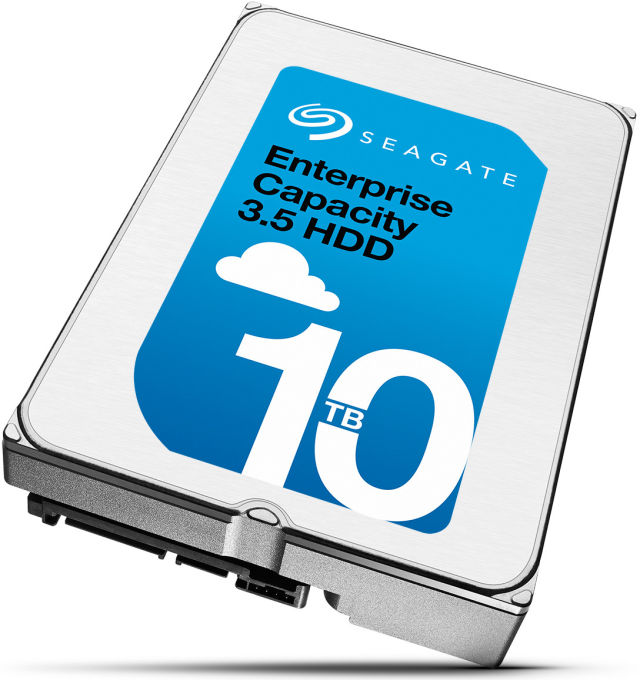
Seagate, after a slightly embarrassing pause, has launched a 10-terabyte helium-filled enterprise-class 3.5-inch hard drive. The drives aren't yet commercially available—they're being sampled to both Alibaba and Huawei at the moment—but they'll probably be around £600/$800 when they eventually arrive.

This 10TB drive marks Seagate's first foray into helium-filled storage devices. The company's primary competitor, Western Digital/HGST, has been selling helium-filled drives since 2013.

While HGST was more than happy to share lots of details about its hermetically sealed helium-filled hard drives, Seagate, rather annoyingly, has only sent us a vague press release. Seagate's 10TB drive has seven platters—the same number as the 10TB HGST drive—and 14 heads. There's no word on spindle speed, but it's probably 7200RPM. The press release says that the new Seagate drive uses the company's PowerChoice tech to reduce power consumption, but falls short of actually providing some numbers. There are two versions of the drive: one with a 6Gb/s SATA interface, another with 12Gb/s SAS.

Read 6 remaining paragraphs | Comments

Oculus cofounder building a -43° propane phase-change-cooled PC

Presumably because VR games on the Rift will need a monstrous sub-zero overclock.

Palmer Luckey, the co-founder of Oculus VR and creator of the Oculus Rift, somewhat unsurprisingly, is a fully paid-up member of the PC Master Race.

During a recent Reddit AMA, Luckey was asked about the hardware specs of his PC. The first part of his response was to be expected, and probably straight out of the company's PR playbook:

I have lived on the bleeding edge of PC hardware for as long as I could scrape the money together, but for VR, I am sticking to hardware that sticks to our recommended specs: https://www.oculus.com/en-us/oculus-ready-pcs/

That way, I get the same experience as most of my customers. I don’t want to become disconnected from the reality of how our hardware and software performs.

On the side, though, Luckey is working on something just a little bit more exciting:

Read 4 remaining paragraphs | Comments

TP-Link unveils world’s first 802.11ad WiGig router

60GHz spectrum allows for speeds of up to 4.6Gbps—but only over short distances.

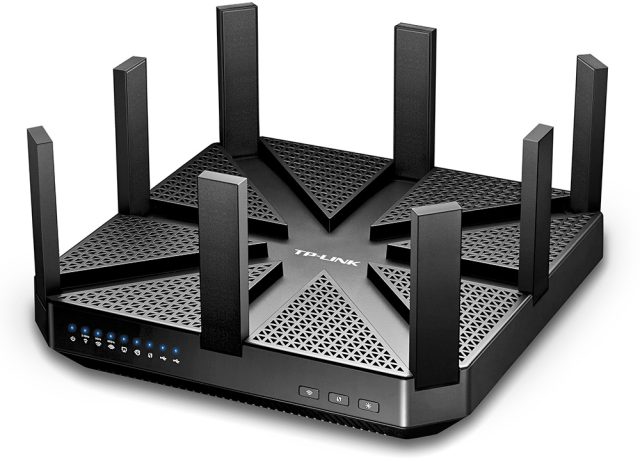
TP-Link has unveiled the world's first 802.11ad (aka WiGig) router: the rather unique looking Talon AD7200. The router is on the show floor at CES in Las Vegas and will be available to buy "in early 2016." No word on price, but I doubt it'll be less than £200/$250.

The Talon AD7200 isn't just a WiGig router: it also supports the usual 2.4GHz and 5GHz Wi-Fi protocols, from 4x4 802.11ac all the way down to a/b/g/n. The idea is that when you're in range for WiGig, it'll use WiGig—otherwise it'll fall back to the slower (but hardier) links. The Talon is capable of up to 800Mbps on 2.4GHz, 1733Mbps on 5GHz, and 4600Mbps on 60GHz (WiGig). Add those together and you get roughly 7200—the name of the router.

As you'd expect from a bleeding-edge router, it has plenty of other high-end features as well. There are eight fold-flat antennas for some sweet beamforming MU-MIMO action (i.e. even if multiple people are in the same room on the same router, you should get a decently fast connection); four Gigabit Ethernet ports on the back; two USB 3.0 ports; and the usual fancy management software that most modern routers have. I'm not entirely sure why the antennas can be folded flat; for storage, perhaps?

Read 5 remaining paragraphs | Comments