IBM creates world’s first artificial phase-change neurons

They behave like biological neurons, including low power usage and dense scaling.

(credit: IBM)

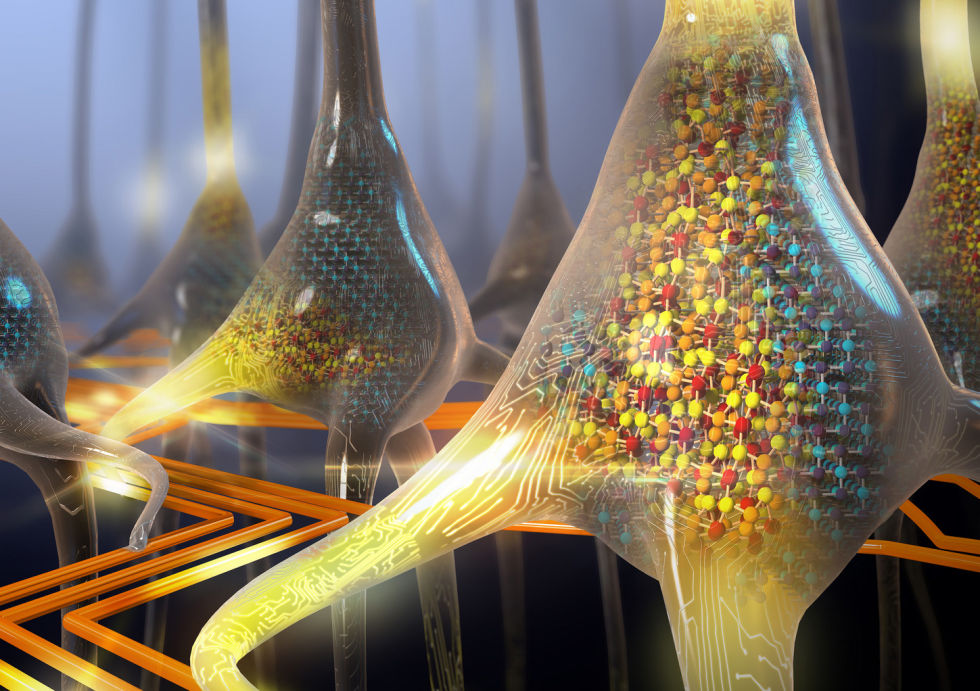
IBM Research in Zurich has created the world's first artificial nanoscale stochastic phase-change neurons. IBM has already created a population of 500 of these artificial neurons and used them to process a signal in a brain-like (neuromorphic) way.

This breakthrough is particularly notable because the phase-change neurons are fashioned out of well-understood materials that can scale down to a few nanometres, and because they are capable of firing at high speed but with low energy requirements. They are also stochastic—i.e. they always produce slightly different, random results, like biological neurons—which is very important as well.

Enough fluff—let's talk about how these phase-change neurons are actually constructed. At this point, it might help if you look at the first diagram in the gallery.

Read 11 remaining paragraphs | Comments

World’s first 8K TV broadcasts begin for Rio 2016 Olympics

Unless you have an 8K TV you’ll have to attend a special viewing theatre.

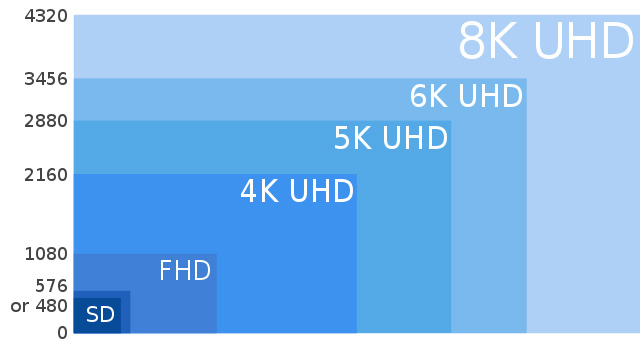
The world's first broadcast using 8K TV technology has begun on Japan's public channel NHK. With a resolution of 7680×4320, "Super Hi-Vision" as the company calls it—don't worry, the name won't catch on—has about four times the detail of a 4K broadcast, or 16 times what you're probably watching at home (normal HD, 1920×1080).

The 8K broadcast will be tested over the next five days, and from August 6 it will be used to broadcast parts of the Rio 2016 Olympic Games, which are being filmed in 8K by special NHK cameras.

Of course, viewing an 8K broadcast will be rather difficult even in Japan, as none of the equipment required to receive and display the 8K signal has yet been commercially released. Instead, NHK has set up two special 8K viewing theatres in Tokyo and Osaka for the duration of the trial. For really determined home users, Sharp apparently sells an 85-inch 8K TV for about £120,000, but I couldn't find it in stock anywhere.

Read 5 remaining paragraphs | Comments

Transistors will stop shrinking in 2021, but Moore’s law will live on

Final semiconductor industry roadmap says the future is 3D packaging and cooling.

Transistors will stop shrinking after 2021, but Moore's law will probably continue, according to the final International Technology Roadmap for Semiconductors (ITRS).

The ITRS—which has been produced almost annually by a collaboration of most of the world's major semiconductor companies since 1993—is about as authoritative as it gets when it comes to predicting the future of computing. The 2015 roadmap will however be its last.

The most interesting aspect of the ITRS is that it tries to predict what materials and processes we might be using in the next 15 years. The idea is that, by collaborating on such a roadmap, the companies involved can sink their R&D money into the "right" technologies.

Read 11 remaining paragraphs | Comments
Firefox to start blocking Flash content in August

SWF supercookies will be blocked first, full click-to-play coming in 2017.

Firefox will begin retiring Adobe Flash on August 2 with the release of Firefox 48. In 2017, probably with Firefox 53, Flash plug-ins will require the user to actively click-to-play.

In Firefox 48, Mozilla will enable a new Firefox plug-in blocklist by default. Initially the blocklist will be small, mostly containing URLs of Flash SWF files that have been identified by Mozilla as supercookies (i.e. cookies that are very hard to shake off) or fingerprinting files (i.e. they scan your system and create a unique fingerprint, again usually for tracking purposes).

The Github repo explains the criteria for adding new SWFs to the blocklist:

Read 5 remaining paragraphs | Comments

I may have invented the first GPS augmented reality game

My 2004 university thesis overlaid real-world coordinates on a text-based MUD.

(credit: PG/Bauer-Griffin/GC Images)

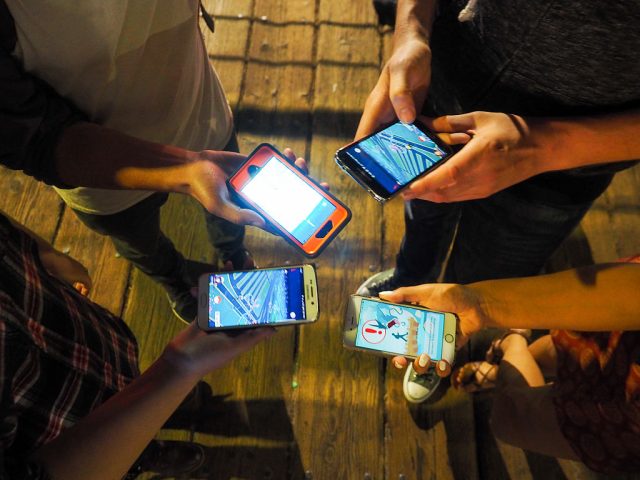
Way back in the autumn of 2004, I may have invented the world's first GPS-based augmented reality game. In light of the stratospheric success of Pokémon Go, I'm wondering whether I should have perhaps attempted to patent my invention.

My game was called Augmented Reality Multi-User Dungeon, or ARMUD for short, and it was the topic of my university thesis. The idea seemed quite simple to me: I started with a text-based MUD, and then layered a real-world positional element on top of it. As you walked around the university campus you would move through the MUD's zones. In the real world you might be standing in the student union bar; in the game, reading the zone's description on your mobile device, you were actually inside an uproarious tavern full of stereotypically angry dwarves, behooded humans, and trixy hobbits.

If you bumped into another player, you could trade or fight or talk, or send in-game whispers if you didn't want to talk to the person in real life.

Read 11 remaining paragraphs | Comments

Reaction Engines unlocks funds for single-stage-to-orbit SABRE engine

UK company secures funding from ESA, BAE for its hybrid rocket-jet; demo by 2020.

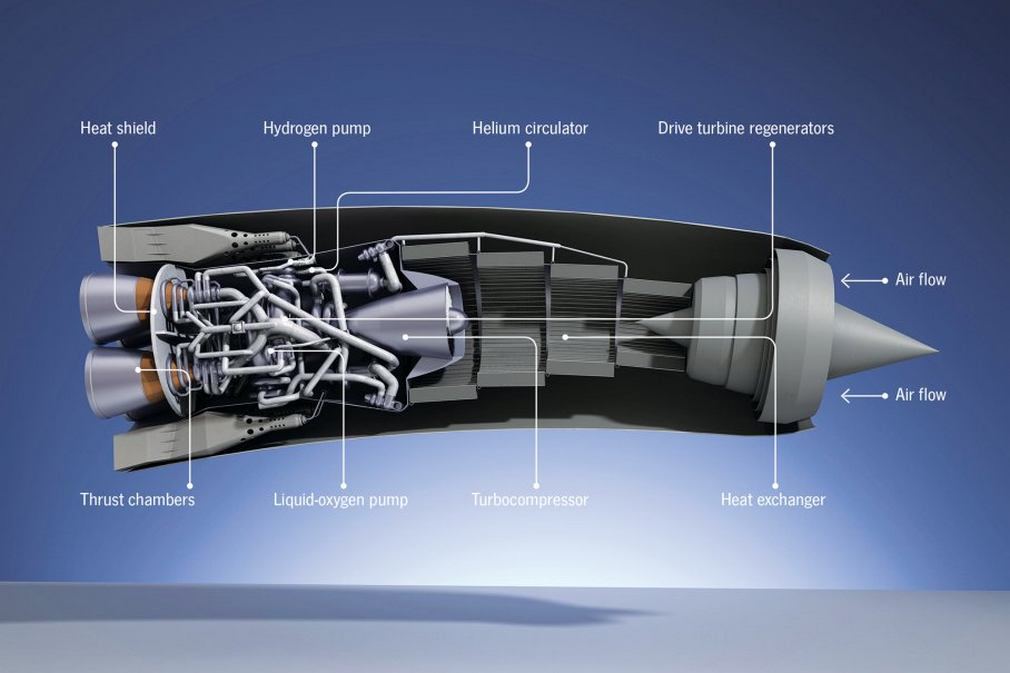
Reaction Engines, the UK company behind the reusable SABRE jet-cum-rocket engine that could dramatically alter air and space travel, has secured the final piece of funding that will allow for the creation of a SABRE demonstrator engine by 2020.

At the Farnborough Air Show on Tuesday, Reaction Engines signed a £10 million development contract with the European Space Agency. In turn, this commitment from the ESA unlocked a £50 million grant from the UK Space Agency (which is an executive agency of the government).

Back in November 2015, BAE Systems—the massive defence and aerospace multinational based in the UK—invested £20.6 million in Reaction Engines; in return, it picked up 20 percent of the company's share capital, while also agreeing to provide industrial and technological support during the development phase.

Read 7 remaining paragraphs | Comments

Serial’s Adnan Syed gets retrial due to unreliable cell tower location tracking

Plus, Syed finally has an alibi: Asia McClain says she was talking to him in the library.

(credit: Getty Images)

Adnan Syed, the focus of the first Serial podcast back in 2014, has been granted a retrial for the alleged murder of his ex-girlfriend.

Syed's defence lawyers argued in February that his original trial lawyer, Maria Cristina Gutierrez, had failed to cross-examine the state's "cell tower expert" about the reliability of tracking someone's location via cellular network masts. Syed's defence team also presented new evidence, including testimony from Asia McClain, an alibi who said she was chatting with Syed in a library at the time of the crime.

On Thursday, June 30, judge Martin Welch agreed with the defence lawyers and ordered a new trial. In a memo seen by the New York Times, Welch said that Gutierrez failing to question the cell tower expert witness “created a substantial possibility that the result of the trial was fundamentally unreliable.”

Read 5 remaining paragraphs | Comments

Facebook wins privacy case, can track any Belgian it wants

Doesn’t matter if Internet users are logged into Facebook or not.

In a somewhat unexpected twist, Facebook has won a legal battle against Belgium's data protection authority, which had sought to prevent Facebook from tracking non-Facebook (or not-logged-into-Facebook) users, both on the Facebook website itself but also via the company's Like and Share buttons that can be found in even the darkest depths of the known universe.

The Brussels appeals court dismissed the case on Wednesday, saying that the Belgian CPP (Commission for the Protection of Privacy) had no jurisdiction over Facebook, which has its European headquarters in Dublin, Ireland.

"We are pleased with the court's decision and look forward to bringing all our services back online for people in Belgium," a Facebook spokesperson said.

Read 5 remaining paragraphs | Comments

IMAX will build you a home theater—starting at $400,000

Includes dual 4K 2D/3D projectors, a proprietary IMAX sound, and media playback.

If you have about £300,000 ($400K) to spare, IMAX's Private Theatre division will now build an IMAX cinema setup in your own home.

The entry-level IMAX Private Theatre is the "Palais," which starts at about £300K for a screening room with up to 18 seats. For your money you get dual 4K 2D/3D projectors, a proprietary IMAX sound system, and a media playback system that supports everything you might want to throw at it (TV, games, Blu-ray, etc.) No word on the exact specifications of the projectors, but they're probably not IMAX-with-laser. Screen size will vary depending on the setup, but generally they will be 3 metres (10ft) tall or more.

Stepping up to the "Platinum" IMAX home theatre for about £750,000 ($1 million) gets you a much larger screening room with space for up to 40 people. The IMAX website doesn't break out the specs of the Platinum setup, but presumably it's similar to the Palais. Both the Palais and Platinum models come with automatic daily self-calibration to ensure optimal picture and audio setup, 24/7 remote monitoring (whatever that means in the context of home theatres), and, of course, the design and architecture of the room itself is so exquisite that your friends will think you have great taste (if that was ever in doubt).

Read 4 remaining paragraphs | Comments
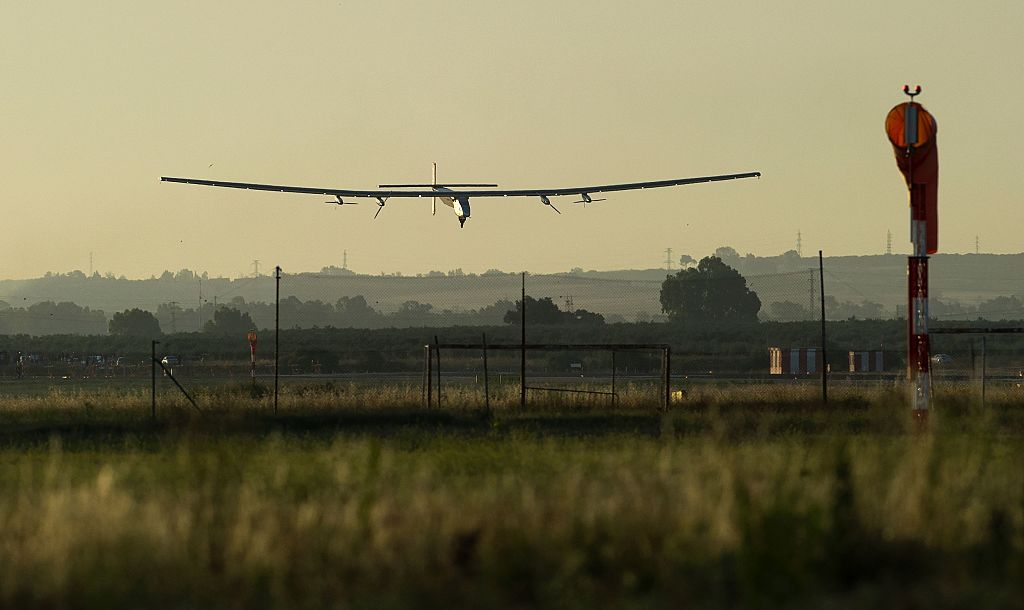
Solar Impulse 2 completes world’s first solar-powered Atlantic flight

Three days and 4,200 miles: Slow going, but a tantalizing glimpse of the future.

Solar Impulse 2 has landed in Seville, completing the world's first solar-powered crossing of the Atlantic. The 6765km (4,200mi) flight took just shy of three days (71 hours and 8 minutes), taking off from New York three days ago.

Solar Impulse 2, which is slowly making its way back around the world to Abu Dhabi, has two pilots that take turns. The Atlantic hop was Bertrand Piccard's longest flight in Solar Impulse 2. André Borschberg, who piloted the agonisingly drawn-out Nagoya-to-Hawaii leg, still retains the record for longest ever solo flight (8924km over 117 hours and 52 minutes) back in July 2015.

The flights take such a long time because Solar Impulse 2, as the name suggests, is completely powered by sunlight. The plane's massive 72-metre wings (broader than a 747!) are covered in some 269.5 square metres of photovoltaic cells. During the day, the cells power four 14kW (17.4hp) electric motors and top-up four 41kWh lithium-ion batteries. During the evening, the motors are driven by the batteries. Max cruise speed when the sun is up is 49 knots (90km/h), and a rather languid 33 knots (60km/h) at night.

Read 6 remaining paragraphs | Comments