The Acer Predator 21X is the world’s first curved-screen laptop

It has dual-GTX 1080 graphics and a numpad that flips over into a touchpad, too.

Acer has unveiled some new laptops at IFA in Germany, including the utterly monstrous curved-display 21-inch Predator 21X. Acer says it's the world's first laptop with a curved screen.

The new Predator 21X laptop sits at the very top of Acer's gaming laptop range. The curved screen, which has a resolution of 2560×1080, is powered by two of Nvidia's latest mobile GTX 1080 graphics cards. The screen is G-Sync enabled, too.

CPU-wise, the laptop has a new 7th-gen Kaby Lake Intel Core processor, but we don't know exactly which model. Given the laptop's desktop-replacement aspirations we are probably looking at some kind of quad-core 45W TDP chip, rather than one of the dual-core low-power parts unveiled by Intel this week. Intel isn't planning to release its quad-core Kaby Lake parts until the first quarter of 2017—which incidentally is when the Predator 21X is meant to go on sale.

Read 7 remaining paragraphs | Comments

How fair are your dice?

Here’s how to check if your critical failures are due to bad dice or just bad luck.

Enlarge (credit: Q Family)

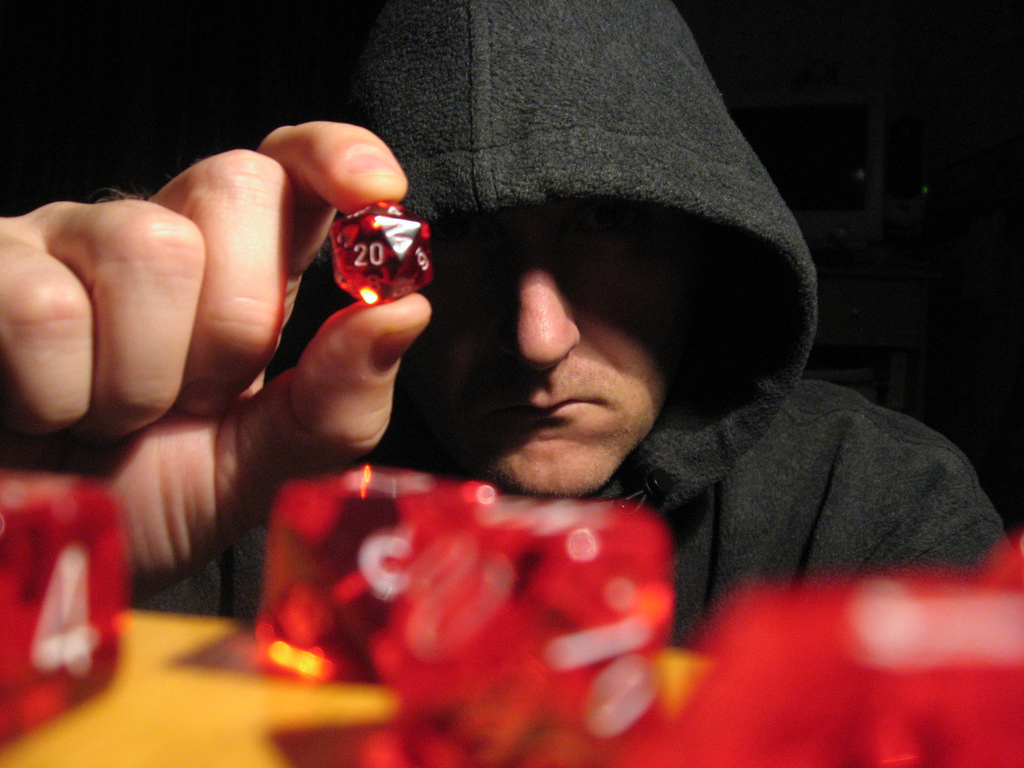
We've all been there: you're at a pick-up roleplaying group at your local game shop, and that noisy munchkin to your right—who is playing some kind of half-dragon triple-multiclassed character from an out-of-print rulebook that he found a PDF of online—seems to roll more than his fair share of natural 20s. Okay, maybe we haven't all been there, but let me tell you: it's annoying when someone appears to be awfully lucky with their rolls.

The issue is slightly less pronounced with board games, where everyone tends to use the same pool of dice, but having dice regularly come up high or low can obviously affect how the game plays out.

Putting aside cases of intentional cheating, did you know that dice—particularly polyhedral dice like d20 or d8—are almost universally unbalanced? Some are more balanced than others, but as you'd expect from mass-produced objects, small flaws in manufacturing and materials nearly always push each individual die either above or below the expected average roll.

Read 18 remaining paragraphs | Comments
World’s largest aircraft crash lands its second flight

Days after perfect maiden flight, Airlander 10 nosedives into the ground.

Airlander 10's second test flight, which took place this morning, ended with the giant airship nosediving into the ground. The cockpit was damaged, but Hybrid Air Vehicles says the crew members are "safe and well."

HAV told Ars that the flight lasted for 100 minutes and that it "completed all the planned tasks." HAV said the incident was not an unplanned dealtitudinal craft-terrafirma conflict, but rather "a heavy landing" as the craft returned to Cardington Airfield.

HAV said it will now run through a "robust set of procedures for flight test activities and investigation of issues" to work out what went wrong. We'll update this story when the company releases more info.

Read 2 remaining paragraphs | Comments
AMD’s Zen CPU is now called Ryzen, and it might actually challenge Intel

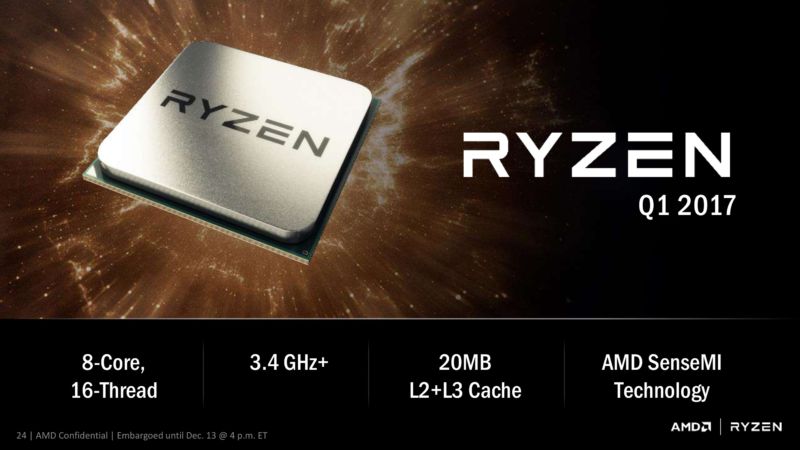
Proper SMT, faster caches, 40% higher IPC. Does AMD have a monster on its hands?

Enlarge

InF!

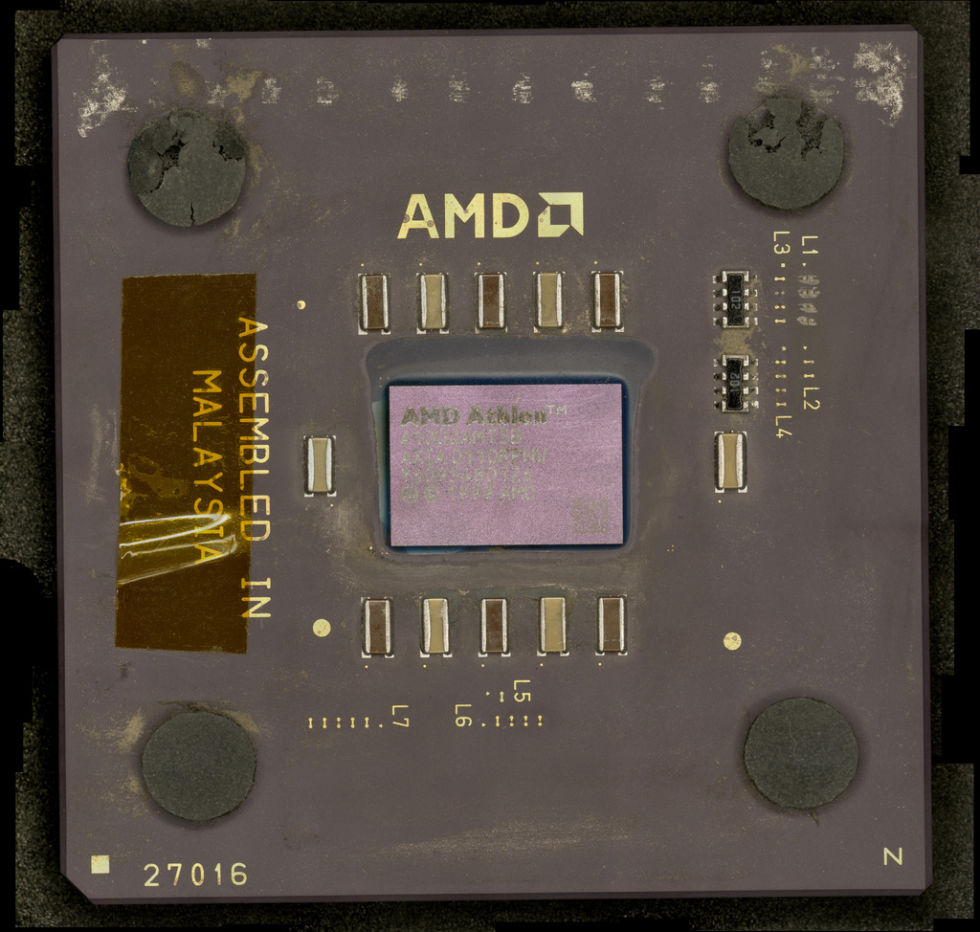
AMD's new Zen CPU architecture has been officially delayed until "early 2017." The first Zen chips, which will be produced on a 14nm FinFET process, had originally been expected sometime in Q3 or Q4 2016.

At an event in San Francisco, AMD also revealed a few more details of the Zen's low-level architecture, and in a multithreaded Blender rendering demo showed that an 8-core/16-thread "Summit Ridge" Zen CPU outperformed an 8C/16T Broadwell-E CPU (presumably the Core i7-6900K) at the same clockspeed.

Read 9 remaining paragraphs | Comments
Tesla Model S battery bursts into flames, car “totally destroyed” in 5 minutes

Tesla is working with French authorities to work out what happened.

Enlarge

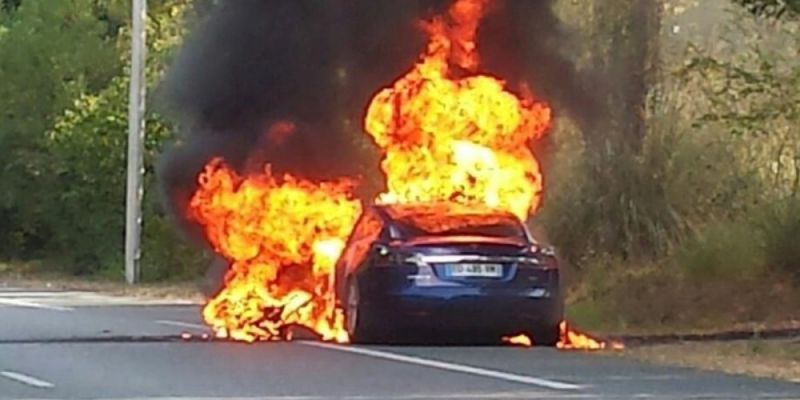
A Tesla Model S has burst into flames during a test drive in the south west of France. Four people were in the car, including a Tesla employee; they all escaped safely before the car was "totally destroyed" within five minutes of the fire starting.

Tesla confirmed the incident and said that it's working with French authorities to determine exactly what happened, "and will share our findings as soon as possible." A Tesla official said: "Nobody was harmed. The vehicle provided warning and passengers were able to safely exit the vehicle."

In the tweet below you can see a video of the burning Tesla. Presumably this was caught a few minutes after the blaze had begun, as there isn't much car left.

Read 5 remaining paragraphs | Comments

Nvidia calls out Intel for cheating in Xeon Phi vs. GPU benchmarks

Nvidia claims Intel used four-year-old data to make its new chips sound better.

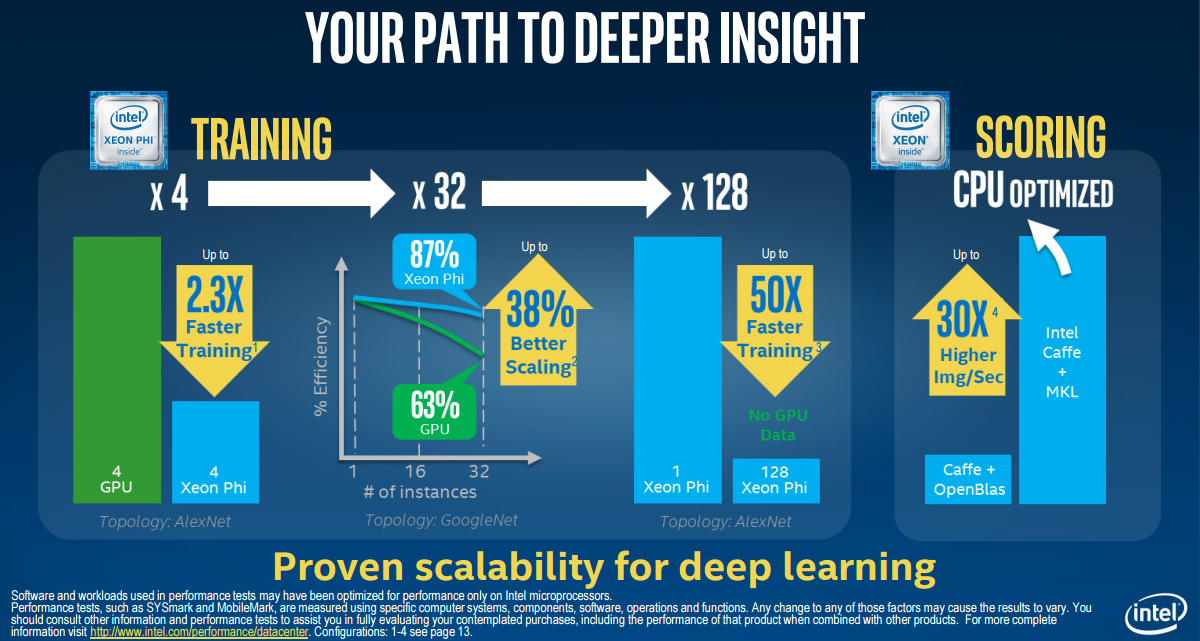
Nvidia has called out Intel for juicing its chip performance in specific benchmarks—accusing Intel of publishing some incorrect "facts" about the performance of its long-overdue Knights Landing Xeon Phi cards.

Nvidia's primary beef is with the following Intel slide, which was presented at a high performance computing conference (ISC 2016). Nvidia disputes Intel's claims that Xeon Phi provides "2.3x faster training" for neural networks and that it has "38 percent better scaling" across nodes.

At this juncture I should point out that juicing benchmarks is, rather sadly, par for the course. Whenever a chip maker provides its own performance figures, they are almost always tailored to the strength of a specific chip—or alternatively, structured in such a way as to exacerbate the weakness of a competitor's product.

Read 6 remaining paragraphs | Comments

New Audi cars can tell you when traffic lights will turn green

But only in some cities that have centralized traffic management systems.

A video showcasing the new Audi traffic light tech.

Starting this autumn, when you're stopped at some traffic lights, new Audi Q7 and A4 cars will show a real-time time-to-green-light countdown on the driver's information cluster. Now you'll know exactly when to start revving like a hooligan.

The tech, which Audi has imaginatively dubbed the Traffic Light Information System, receives traffic light timing data via the car's cellular modem. In this case, rather than getting the data directly from nearby traffic lights, the data is being broadcast by some kind of city-wide traffic management system.

As you have probably surmised, there are not yet many of these city-wide systems. Audi says that the green light timer will work in select cities in the US this autumn, but declined to say which cities those might be. UK, European, and Asian cities will surely follow, though no timeline has been given. If you have a 2017 Audi A4, A4 allroad, or Q7 built after June 1, with a cellular connectivity package, you will be able to use the feature (in cities where it's enabled)

Read 5 remaining paragraphs | Comments

Seagate’s new 60TB SSD is world’s largest

Seagate’s 60TB SSD comes a year after Samsung’s 15TB SSD.

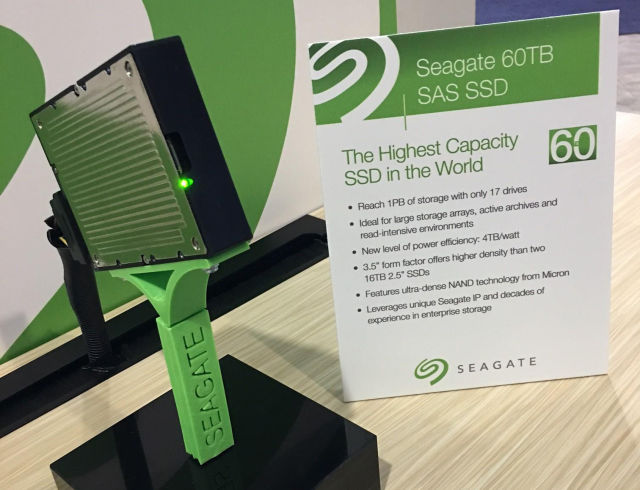
Seagate has unveiled the world's largest SSD: a 60-terabyte monster. Pricing isn't available, but the company says the drive will provide "the lowest cost per gigabyte for flash" memory today.

The 60TB SSD was unveiled at the Flash Memory Summit in California—the same location that Samsung chose to reveal its 15.36TB SSD last year, which at the time was the world's largest hard drive.

The two drives aren't directly comparable, though, as the Samsung unit is a standard-size 2.5-inch SSD and the new Seagate drive uses the 3.5-inch hard drive form factor. Despite that, Seagate still claims that its drive has "twice the density" of Samsung's. I don't think the maths quite work out, considering a 3.5-inch drive has a far greater volume than a 2.5-inch drive, but Seagate is probably referring to the density of the memory chips themselves. Moore's law is still alive and kicking for NAND, apparently.

Read 4 remaining paragraphs | Comments

Chrome starts retiring Flash in favor of HTML5

Non-visible Flash content blocked in September; Flash fully deprecated by December.

Last year, Chrome made Flash ads click-to-play; now, Google is trying to kill off Flash completely.

Starting with Chrome 53, due out early next month, the browser will automatically block tiny and non-visible Flash content, such as tracking and fingerprint cookies that are notoriously hard to shake off. Then, with Chrome 55 in December, Flash will be deprecated entirely, with exceptions for "sites which only support Flash." In both cases HTML5 is expected to take up the reins.

The changes in Chrome 53 are mostly targeted at behind-the-scenes Flash widgets that many sites use for tracking and analytics purposes. Best-case these non-visible elements can slow down your browsing experience, worst-case they might cause stability issues or reduce battery life on mobile devices. Google says that publishers are in the process of moving these widgets over to HTML5.

Read 6 remaining paragraphs | Comments

China has built a crazy elevated bus that straddles traffic

It’s cheaper than a subway, but corners and tall vehicles are a problem.

Way back in 2010, a Chinese company unveiled a render of the Transit Elevated Bus: a tram-like, catamaran-style vehicle that rises up above a lane of traffic, straddling the cars beneath it. In May this year the company showed off a scale model of the bus; everyone started to get very excited. And on Tuesday, a full-size TEB prototype took its first ride in the northeastern Chinese city of Qinhuangdao, near Beijing.

The premise of the TEB is simple. It's a guided bus (i.e. it sticks to a predefined route) that is 4.8 metres high, 22 metres long, and 7.8 metres wide, with ground clearance of about 2.2 metres (7.2ft). Any vehicle that is short enough to pass under the TEB is free to do so, in theory significantly reducing congestion.

The TEB itself carries about 300 people and is powered by electricity at speeds of up to 60km/h (37mph). Larger, articulated models that can carry up to 1,200 passengers have been mooted. In China, where congestion is a major issue in large cities, the TEB is being pitched as a cheaper alternative to building subways (the initial 2010 report said that a 25-mile TEB track would cost a tenth of the equivalent subway).

Read 6 remaining paragraphs | Comments