Report: HTC to build the next Nexus devices, codenamed Marlin and Sailfish

Multiple reports give us the first details on new Nexus devices.

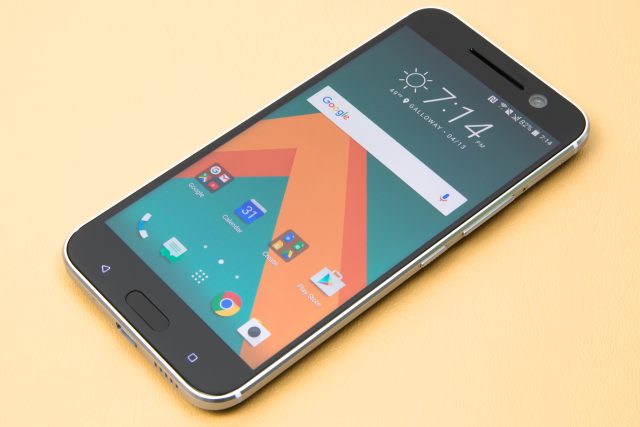
HTC's latest smartphone, the HTC 10. Nexus devices usually have a lot in common with the OEM's latest flagship. (credit: Ron Amadeo)

The Nexus line has a long history of fish-inspired device code names, and these code names have an equally long history of leaking via rumors and AOSP commit comments. Today both Android Police and Evleaks are chiming in with details on the next Nexus phones.

Android Police nailed early Nexus rumors in 2014 with the Nexus 6 (Codenamed "Shamu") and again in 2015 with the Nexus 6P and Nexus 5X (Codenamed "Angler" and "Bullhead," respectively) and today they're introducing us to "Marlin" and "Sailfish," two HTC-built Nexus devices. The names come from sources Android Police isn't sharing, but "Marlin" was actually mentioned in an AOSP commit by a Qualcomm engineer. This all but confirms the device exists as some kind of Nexus product. Qualcomm's involvement points to the device having a Snapdragon 820 SoC.

Scoring the Nexus contract would be a big deal for HTC. With the excellent HTC Vive VR headset and the revamped HTC 10 smartphone, the company has been on a bit of a resurgence.

Read 1 remaining paragraphs | Comments

Google introduces quick-swap watchbands for Android Wear

A trap door on the bottom of the watchband makes swapping bands simple.

Enlarge / Slide the button and remove the watchband. Simple! (credit: Google)

One of the things the Apple Watch has been able hold over its Android Wear competitors is the ability to easily swap watchbands. Today Google hopes to catch up with a new line of easily changeable watchbands called "Mode." The design is pretty simple. Lugs on the watch body hold a permanent bar, and the band has a trapdoor for the bar that opens and closes via a little switch.

The bands are made in partnership with watchband company "b&nd by Hadley Roma." They come in four different widths, so they should fit most of the existing Android Wear devices out there. The Android Wear website has a sizing chart for existing devices. For what Google calls the "first collection," there are ten leather bands and six silicone bands in a rainbow of colors, but no options for a metal version.

In the past, Android Wear OEMs have recommended going to a jeweler to have watchbands swapped out, so easily removable bands are a big improvement. Google says it's sharing the Mode mechanism design, instructions, and specs with other brands in the hope that a whole ecosystem springs up. The bands are available at the Google Store (US), Amazon, and Best Buy. Leather goes for $60, silicone for $50.

Read 1 remaining paragraphs | Comments
Five months later, BlackBerry Priv gets Marshmallow update [Updated]

So far it’s 5 months for this major update, with on-time monthly security updates.

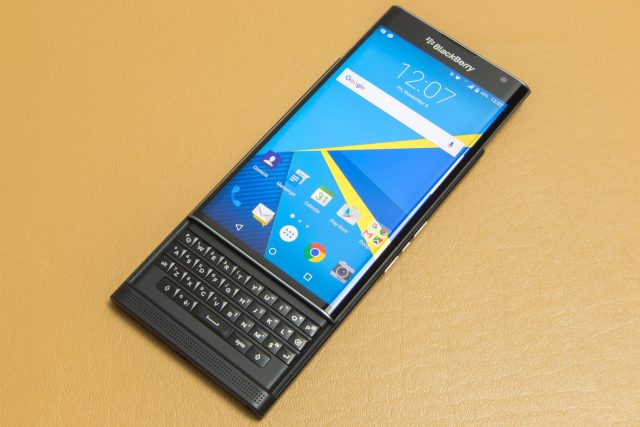
(credit: Ron Amadeo)

BlackBerry recently dumped its in-house operating system—Blackberry 10—and became one of the newest Android OEMs. It launched the BlackBerry Priv with Android 5.1 in November last year, and today we're getting an idea of what the company's major update process looks like. The Priv is being updated to Android 6.0.

The initial launch of the Blackberry Priv gave us good reason to worry about BlackBerry's software acumen. It launched with Android 5.1 a month after Android 6.0 came out. What, we asked, would happen when it came time to update the Priv? If BlackBerry can't even launch with an up-to-date version of Android, how long would a big update take? The answer seems to be "six months." Marshmallow for the unlocked BlackBerry Priv is rolling out six months after the OS' release and five months after the release of the Priv.

Android 6.0 Marshmallow brings support for user-controllable app permissions—an ironic omission from the Priv given that the name stands for "Privacy." Adoptable storage will be great for the Priv's MicroSD—if BlackBerry doesn't disable it. This feature turns removable storage and internal storage into a single unified pool, allowing you to install apps, media, or whatever else you want on the SD card. Standby battery life should improve with the new "Doze" feature, too.

Read 4 remaining paragraphs | Comments

It looks like the Play Store is headed to Chrome OS with “millions” of apps

Google Play integration clues pop up in the source code and on users’ devices.

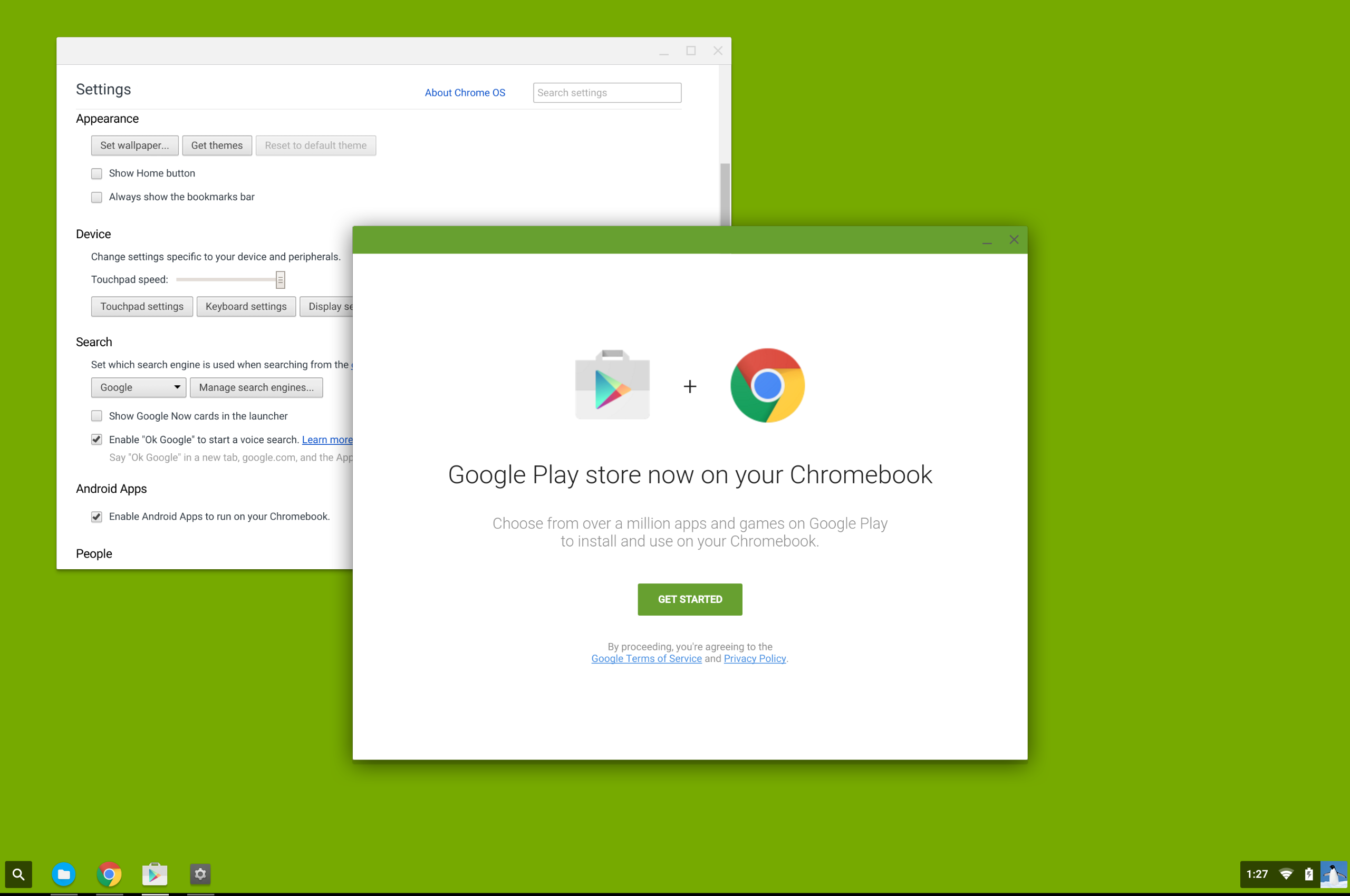
Google first brought the ability to run Android apps on Chrome OS with a project called the "App Runtime for Chrome (ARC)." Google build an Android runtime on Chrome OS and partnered with select developers to port a handful of Android apps. Now it sounds like Google is ready to unleash millions of Android apps onto the platform by bringing the entire Play Store to Chrome OS.

In the Chrome OS subreddit, users are reporting some interesting behavior in their Chromebooks. "TheWiseYoda" noticed that when the settings first load up, an option quickly flashes on screen that reads "Enable Android apps to run on your Chromebook." The option immediately disappears, so it's not possible to click on normally. We were able to replicate this on our 2nd-gen Chromebook Pixel running the developer build.

After some hunting in the Chrome OS source code, Mr. Yoda found a few strings in this file (starting at line 6522) that mention the arrival of Google Play on Chrome OS. The most important message seems to be this one:

Read 4 remaining paragraphs | Comments

The Google I/O 2016 schedule is packed with virtual reality talks

The Google I/O schedule promises tons of VR talks and Project Tango news.

Google I/O is only a month away. Today, Google posted a big chunk of the schedule for the event, which contains a few hints about what to expect. The main takeaway: lots and lots of virtual reality talks.

"VR" is an entire content track at Google I/O this year, with seven sessions dedicated to virtual or augmented reality. The most ominous session is titled "Google's Vision for VR." The session description is a single sentence, promising to cover "what we have built, what we have learned, and where we are headed." Google I/O session descriptions are usually a full paragraph, so the ones with really vague, short session descriptions suggest that Google is trying to avoid spoilers. Clay Bavor, the head of Google's new "Virtual Reality" division, will lead the talk.

Google is slowly building up a large presence in VR. The company already makes a VR painting app called "Tilt Brush," which our own Sam Machkovech called a "killer app" for the HTC Vive. It supports "VR Videos" on YouTube with 3D, 360-degree video formats. Google Cardboard is the company dipping its toes into the VR space with the cheapest possible platform—a smartphone in a cardboard box. It acquired Thrive Audio, a positional 3D audio company, and has integrated some VR features into the latest version of Android N. Inside the company, some of the most important employees have moved to the VR team, like the former lead designer of Google Search, Jon Wiley, and Alex Faaborg, the former lead designer for Firefox, Google Now, and Android Wear. And supposedly this is just the tip of the iceberg. Google is rumored to be building a VR interface for Android, a standalone VR headset, a Gear VR competitor, and custom SoCs aimed at VR and AR.

Read 6 remaining paragraphs | Comments

The Android N Developer Preview comes to… the Sony Xperia Z3?!

Sony’s 2014 flagship gets a taste of Android N.

(credit: Sony)

Today, Google and Sony announced the Android N Developer Preview is coming to a rather surprising device: the Sony Xperia Z3. Owners of the Z3 can install Sony's "Xperia Companion" app on a Windows or Mac computer and download the developer preview.

Android developer previews are usually relegated to Google's Nexus line, so seeing a finished image for a Sony phone is definitely a surprise. The Xperia Z3 is Sony's flagship from 2014. The company's 2015 flagship, the Xperia Z5, isn't included in the developer preview.

For the Android M Developer Preview, Sony made it possible to compile your own builds of Android M from the Android source code for 17 of its devices. Things seem to be a bit easier for the Z3 this year—this seems to be a finished image.

Read 1 remaining paragraphs | Comments
The rise of the $400 smartphone—you want how much for a flagship?

Newcomers to the smartphone market are arriving with distributive pricing.

For a long time, the cost of a fast, high-end smartphone with the latest technology seemed definite. You were paying $600 or $700 no matter whether you did it up front or spread out over the course of a two-year carrier contract. This doesn't have to be the case today, however. There's an exciting new category of phone on the block—the "cheap flagship," a phone that has flagship or very-close-to-flagship specs but only costs around $400.

We're talking about devices like the $305 Xiaomi Mi 5, the $380 LG Nexus 5X, the $400 Nextbit Robin, the $400 Moto X, and the $329 OnePlus 2. These phones all shipped with the best (or close to the best) SoC at the time, beautiful screens, and the usual set of features. If you didn't have a sheet of spec tables in front of you, you'd likely have a hard time pointing out the differences between these devices and a $700 flagship. Cheap flagships might not be at the absolute bleeding edge of capabilities, but they all aim for "good enough."

Typical specs (beyond price)

Consider the current state of the big $700 flagships from companies like Samsung and LG. These super flagships are bloated with tons of occasionally nice to have but mostly unnecessary extras. They are the very best they can be, because in the fight to entice customers to upgrade every year, these companies throw in every bell and whistle under the sun. Samsung is the king of this—the Galaxy S7 Edge has a curved AMOLED display, a heart rate sensor, waterproofing, a magnetic field generator (for Samsung Pay), and an outrageously high 500+ PPI display. It even doubles as the heart of a virtual reality gaming system. The LG G5 has a laundry list of extras, too. There are two rear-facing cameras, a color spectrum sensor, another overkill 1440P display, and a modular accessory system.

Read 32 remaining paragraphs | Comments

Chrome OS gets Material Design makeover in version 50

Chrome OS gets overhauled to match mobile. Windows and Mac redesigns coming soon.

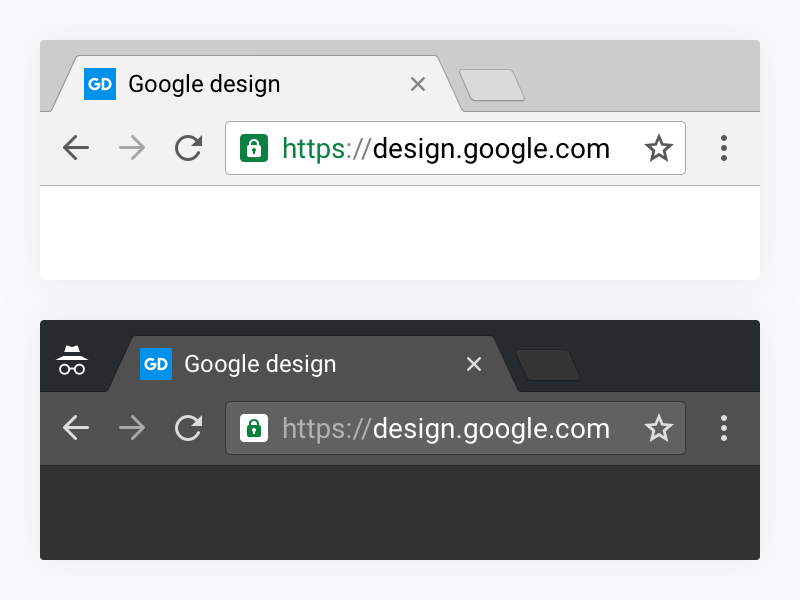
Chrome 50 is starting to roll out to all of Chrome's platforms, but it's Chrome OS that will see the biggest change. With version 50, Chrome OS gets a Material Design makeover. Sebastien Gabriel, a senior designer at Google, detailed the changes on his webpage.

"Material Design" is the name for Google's company-wide interface guidelines that started on Android with version 5.0 Lollipop. The Chrome revamp keeps the same basic Chrome layout but makes a lot of little design tweaks. The whole app is flatter—the gradient in the tab bar is removed, along with shadows around the active tab. The menu button now looks like something from Android—a vertical column of three dots. Bookmark folders and fonts are different, most of the buttons and pop-ups have been overhauled, and Incognito mode now has a sneaky, all-dark UI.

There are under-the-hood improvements, too. The Material Design interface is now "rendered fully programmatically," allowing Google to nix the 1,200 image files it was using for icons and other UI bits. The move to vectors allows Chrome to better support a wide range of screen resolutions. There's also a new "Hybrid" UI for touchscreen devices that spaces things out a bit.

Read 1 remaining paragraphs | Comments
YouTube launches live 360-degree video

Live VR videos come to the Web’s biggest video site.

A prerecorded 360-degree YouTube video. Imagine this, but live.

YouTube officially launched prerecorded 360 degree video back in March 2015. The videos would surround your field of view with scrollable video rather than the usual stationary 16:9 frame. Now, Google is adding the ability to livestream 360° video directly on YouTube.

There are already a few 360° videos on YouTube, but Google will demo the livestreaming feature at the Coachella Music Festival this weekend. For "select artist performances," fans will be able to see the band and then turn around to see the crowd. YouTube also has the ability to do spatial audio now, so when you turn away from the band, the sound will change in relation to the viewport.

Providing this video live will probably take a lot of bandwidth. The 360° videos are just really long videos that wrap around the viewer, so they end up hitting a 4K horizontal resolution pretty easily. There's also the ability to livestream in 3D, so that's two 4K videos—one for each eye. You'll also need a 360° camera, which are becoming more available with products like the Bublcam, Giroptic’s 360cam, IC Real Tech’s Allie, Kodak’s SP360, and Ricoh's Theta.

Read 1 remaining paragraphs | Comments

The 2016 Moto G gets photographed, complete with fingerprint reader

See what is probably the first Motorola phone made under Lenovo’s direction.

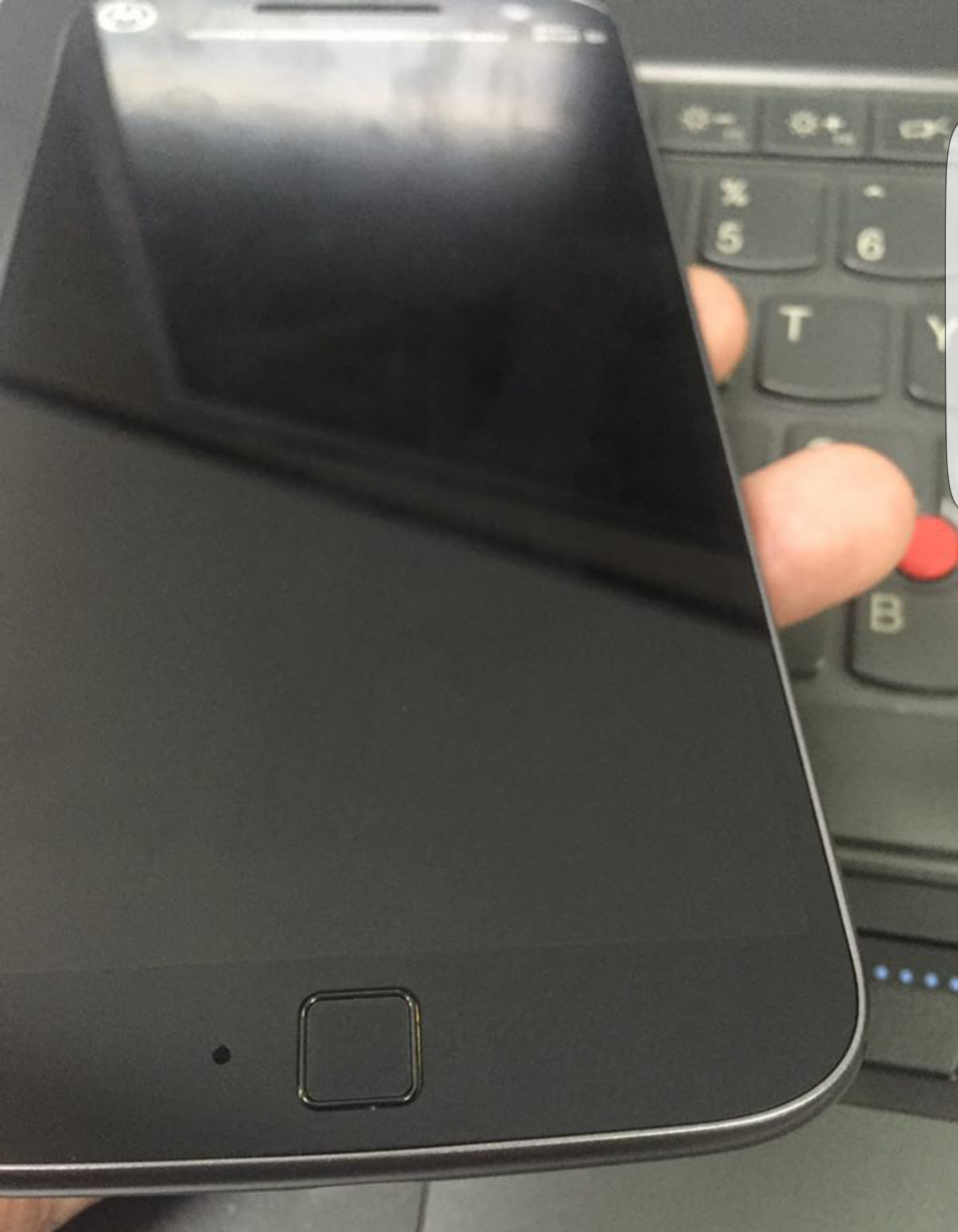
The various gears in the rumor mill all seem to be in agreement: the 2016 Moto G is coming soon, and it looks like what you see above. The pictures are representative of two phones making the rounds under the name of "Moto G4" and "Moto G4 Plus."

Going by the naming scheme, we'd imagine this means Motorola will follow the same phone-and-phablet pairings other companies have been launching. We're just a little iffy about that "G4" name making it to a consumer product, though—LG already has a product called the "G4."

The latest pictures come from a user on the Chinese social networking site Sina Weibo. The pictures show a device that skips the top and bottom speaker cutouts in favor of a square fingerprint reader on the bottom bezel. On the back is the usual camera array with a dual LED flash, but above the camera lens are holes that must be for an extra sensor of some kind. Existing camera technology would suggest a laser auto-focus system or an LG-style color spectrum sensor. The pictures line up perfectly with an earlier leak from HelloMotoHK, a site with a great reputation for Motorola product leaks.

Read 2 remaining paragraphs | Comments