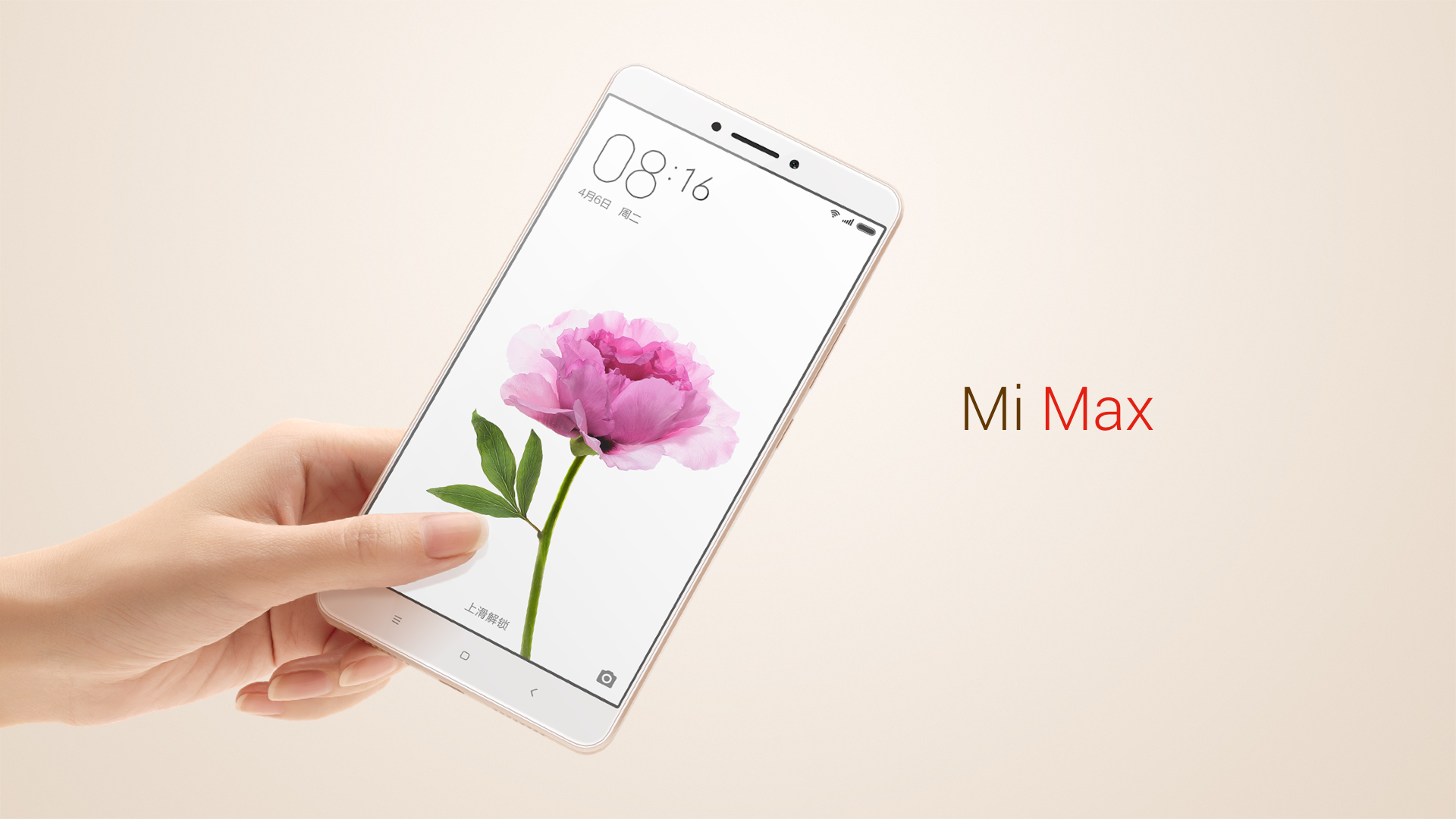
The Mi Max is Xiaomi’s new 6.44-inch smartphone

New version of its Android skin, MIUI 8, is also on tap.

Overnight, Xiaomi launched the Mi Max, a massive 6.44-inch smartphone, and a new version of its Android skin, MIUI 8.

We'll start with the phone. For RMB1499 ($230/£159) you get a crazy-big 6.44-inch, 1920×1080 (342ppi) display, a Snapdragon 650 SoC, 3GB of RAM, 32GB of storage (plus a MicroSD slot), a 16MP rear camera, a 5MP front camera, and a 4850 mAh battery. The Snapdragon 650 is a six-core SoC with the usual big.LITTLE architecture, which gives you a set of power-hungry "big" cores for the heavy lifting and a set of "little" cores for low power and idle operations. On the Snapdragon 650, you usually get two 1.8GHz Cortex-A72 cores for the heavy lifting and four 1.2GHz Cortex-A53 cores for the "little" cores, but Xiaomi doesn't have the CPU clock speeds listed.

Things get complicated with the more expensive models, which don't just offer more storage but also upgrade the SoC and RAM. For RMB1699 (~$260/£180) you can upgrade to the 64GB version, which changes the SoC to a Snapdragon 652. The 652 adds an extra two "big" cores over the Snapdragon 650 for an even, eight-core chip with four big cores and four little ones. For RMB1999 (~$307/£212) you can have the 128GB version, which keeps the Snapdragon 652 SoC and adds an extra GB of RAM for 4GB total.

Read 7 remaining paragraphs | Comments

Google I/O 2016 Preview: A Chrome/Android merger? Project Tango? VR?

Google’s biggest show of the year is almost upon us.

The Shoreline Amphitheatre, the new location of Google I/O 2016. It's right in Google's backyard. (credit: Shoreline Amphitheatre)

With Google I/O starting tomorrow, we're resurfacing our recent preview so you know what to expect.

Google I/O is Google's annual launch party where the company shows off its biggest products and teaches developers how to be a part of the Google ecosystem. The event takes place from May 18 to 20 at the Shoreline Amphitheatre in Mountain View, California.

Google I/O this year is definitely weird. It's in an all-new location, and the big news that we would expect to happen at I/O—a new version of Android—has already been released. As a result, there is really nothing that we would put at a 100 percent lock for I/O—we just aren't sure what Google is going to do. The schedule gives us some vague idea of what we can expect to see, but since Google likes to avoid spoiling its announcements, the schedule isn't always a comprehensive list until after the opening-day keynote. While we aren't making guaranteed predictions, we can at least offer a list of possibilities based on projects we know are in the works at Google HQ.

Read 33 remaining paragraphs | Comments

Moto X leaks point to an all-metal device

A rear speaker and huge camera mark a departure from past models.

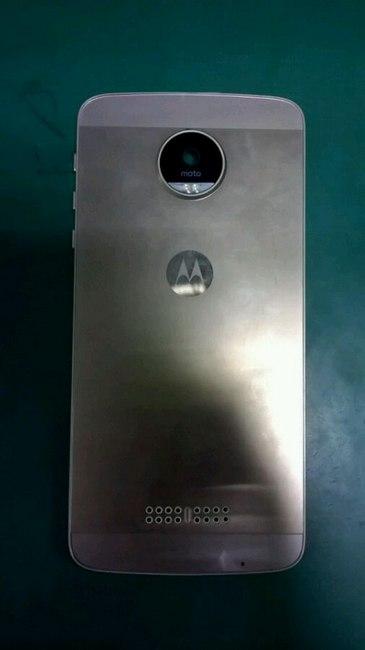
After getting a sneak peek of the 2016 Moto G, it looks like we're now getting reliable leaks of the 2016 Moto X. Both Evleaks and HelloMotoHK have posted pictures of a new Motorola phone identified as the company's new flagship.

Long smartphone product pipelines mean this will be the first round of Motorola phones that new owner Lenovo has had a significant hand in, and the new Moto X definitely seems like a departure from past models. The "all-metal" design would be a big improvement over the old Moto X, but it also makes us question if the low price will stick around. On the back there's a very large camera assembly and a rear-facing speaker. Motorola has been a big proponent of front-facing speakers in the past, but it looks like that's coming to an end with Lenovo.

The bottom of the phone has a huge bezel, which houses a new fingerprint reader, just like the Moto G. On the front, there are four sensors at each corner of the display, which most likely means active display—a feature that lets you wave a hand over the display to turn it on—will return. It looks like the Moto X will see a launch on Verizon, too. HelloMotoHK has a version festooned with Droid logos.

Read 1 remaining paragraphs | Comments
Self-driving minivan reportedly coming from Fiat Chrysler and Google [Update: It’s official]

Google’s new round of self-driving prototypes will be ready for soccer practice.

The 2017 Chrysler Pacifica in all its glory. (credit: Chrysler)

A report from Bloomberg claims that we'll soon see a self-driving car deal between Google and Fiat Chrysler. The two companies are reportedly teaming up for a new round of self-driving car prototypes using a minivan, the Chrysler Pacifica.

The report describes the Pacifica as "the first phase of a joint project" to create self-driving cars. Fiat Chrysler would equip the Pacifica with Google's autonomous tech "starting this year." Bloomberg says the deal would not be exclusive for either company, allowing both to pursue other partners.

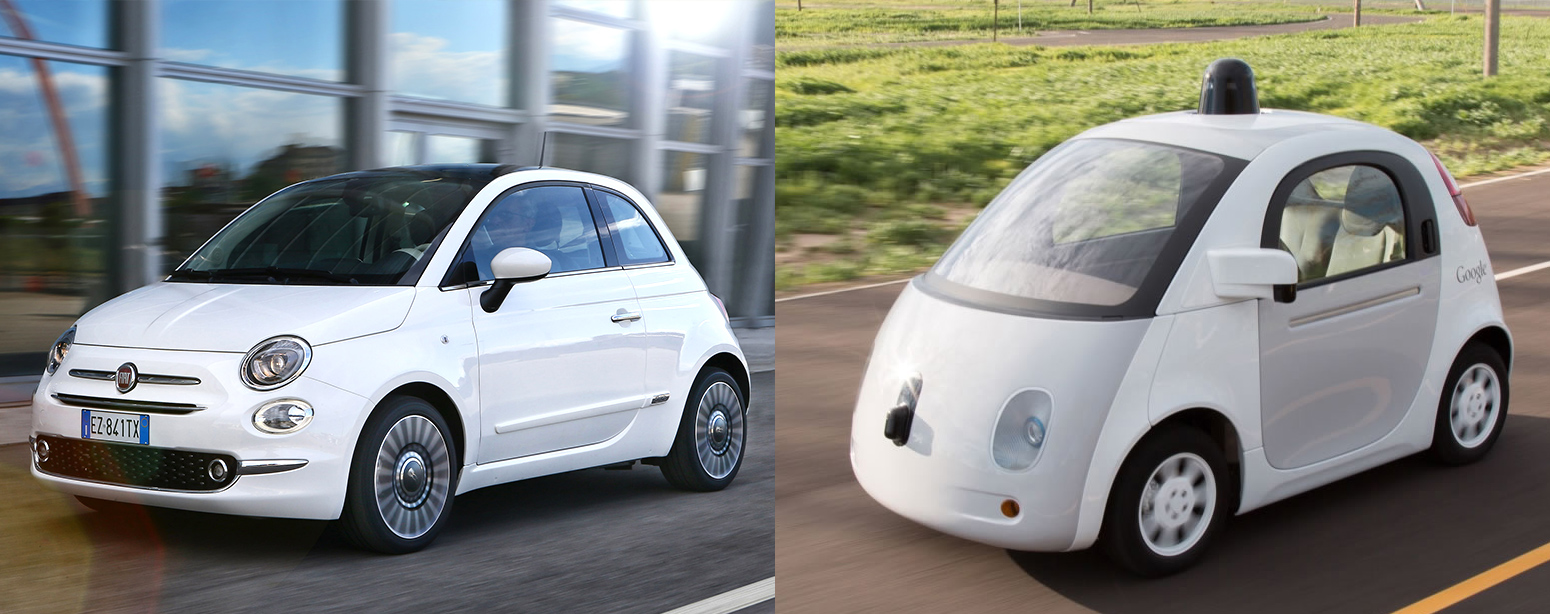
If the report turns out to be true, going with minivans would be an interesting choice. Google's newest self-driving prototype is a tiny two-seater the company designed itself. The 2017 Chrysler Pacifica is a comparatively giant vehicle that seats seven people. Google's self-driving fleet also contains several Lexus RX450Hs and Toyota Priuses, making the Pacifica the company's largest autonomous car. We were really hoping for a Fiat 500 mod, as it looks like a close cousin of Google's custom cars.

Read 4 remaining paragraphs | Comments
Google’s Android Keyboard updates with one-handed mode, new gestures, and more

Android’s default keyboard hits version 5.0 and brings tons of new features.


The Google Keyboard for Android got a major update today. Version 5.0 brings a ton of user-requested features and customization options.

My favorite new addition is the fine cursor control. Just drag your finger along the spacebar to move the cursor between letters. There's a similar "delete word" gesture that works by dragging a finger from the backspace key to the left. Each letter crossed over will highlight the previous word, and releasing your finger will delete the selection.

There's also a new "one-handed mode" that shrinks the keyboard to the left or right side of the screen—a welcome feature for users with large screened devices. A few buttons have been redesigned, and now there's an easy way to bring up a number keypad layout. Words can be deleted from the dictionary via a slick drag and drop interface—just long press on a suggestion and drag it to the new trashcan icon to toss the word (or erroneously-saved typo) down the memory hole.

Read 3 remaining paragraphs | Comments
LG Innotek moves fingerprint sensor from home button to bezel

LG’s new fingerprint sensor technology lives inside the phone, making it invisible.

LG's new fingerprint module integrated into smartphone display glass. (credit: LG Innnotek)

LG Innotek, LG's components subsidiary, has announced a new fingerprint reader component that can be integrated into the bezel area of a smartphone's display glass.

The latest round of phones have all shipped with fingerprint readers, but the design limitations imposed by the sensor component left most phones with similar design. Other than the 2015 Nexus phones, LG G5, and the Nextbit Robin, the latest phones all used a fingerprint sensor that is integrated into the front home button.

For this new design, LG cuts a small groove into the underside of the display glass and installs the fingerprint reader there. The result is a fingerprint reader that LG Innotek says "is not exposed to [the] outside of the device," making it invisible. In fact, LG Innotek recommends indicating the location of reader on the bezel of the phone so users can tell where it is.

Read 1 remaining paragraphs | Comments

Google rolls out “If This Then That” support for its $200 OnHub router

Some smart home features finally come to OnHub, but using a non-Google ecosystem.

Google's OnHub router just got a major new feature: IFTTT support. The demoed features let you do things like lock your doors when your device disconnects from the router or send an e-mail when someone connects to your wireless network. There are a few example recipes on this IFTTT page, or you can make your own using any of the channels supported on IFTTT.

IFTTT (If This Then That) is a service that lets you connect apps to other apps or connect apps to smart home devices. Developers for apps and services can build "If" triggers and "Do" actions that plug into the site. Users can make a "recipe" by combining these triggers and actions into a useful program, using the format "If [something happens], do [this action]."

Say you want to automatically tweet out a link every time an article on a website is posted. You can grab the RSS trigger function, so now you have "if a new item on this RSS feed appears, then [do this action]." Then you can combine it with the Twitter action and make "if a new item on this RSS feed appears, then tweet it out." Each trigger and action has its own configuration options, so you can do necessary plumbing like giving the "RSS action" the exact RSS feed it needs and giving the Twitter bot your login credentials so it can post from your account.

Read 4 remaining paragraphs | Comments

Report: Google is building a hardware division led by former Motorola president

New division sucks up Nexus, Chromebooks, Chromecast, OnHub, ATAP, and Glass.

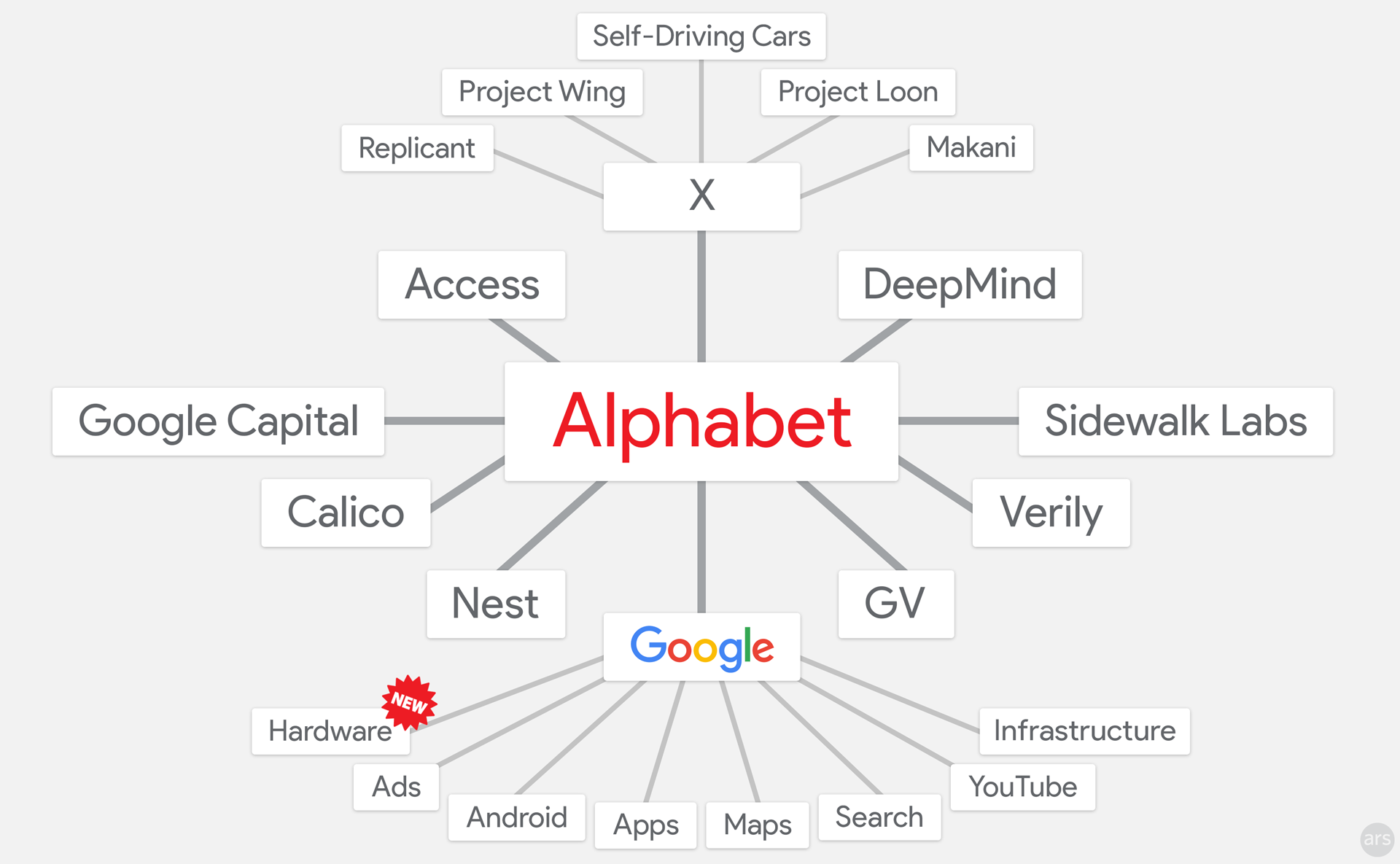
Enlarge / Our Alphabet org chart. Welcome the new hardware division. (credit: Ron Amadeo)

Google is building a hardware division. That's according to a report from Re/code, which says that Google is forming a new division with former Motorola President Rick Osterloh at the helm.

Motorola was the old "Google hardware division" that Google decided it didn't want. Osterloh originally joined Google via the company's Motorola purchase in 2011 and was named CEO of Motorola after Dennis Woodside left. Google sold Motorola to Lenovo in 2014, and Osterloh left Motorola last month after some Lenovo "reorganization" at Motorola. Google has now snapped him up. Osterloh becomes a senior vice president at Google, which puts the hardware group on equal footing with Android, Ads, Search, and YouTube.

According to the report, the Google Hardware Division will absorb most of the hardware projects inside Google. There's the good stuff from the Chrome/Android division like Nexus devices, Chromecasts, and Chromebooks, along with Google and Alphabet's struggling hardware projects that haven't had much of a home—OnHub, ATAP (the Advanced Technology and Projects group), and Google Glass. OnHub was born in Alphabet's "Access" division that also houses Google Fiber. OnHub is a router that promises to someday become a smart home device, but so far it hasn't materialized. ATAP has yet to ship an actual piece of hardware and recently had its leader—former DARPA head Regina Dugan—leave for Facebook. Google Glass failed rather spectacularly in the public and later become a forgotten-about group under Tony Fadell's leadership, but not part of Nest. Re/code notes that there's also apparently a new "living room" group in the hardware division.

Read 1 remaining paragraphs | Comments

Goodbye, Nexus 9—you will not be missed

The worst Nexus device is no longer for sale on the Google Store.

The Nexus 9.

Yesterday we got news of two new Nexus devices, and today we're losing a Nexus device. It looks like the Nexus 9 is dead. The tablet has been unceremoniously removed from the Google Store—the product page now just redirects to the generic Nexus listing page, and the "tablets" link in the navigation bar now points to the Pixel C only. RIP, Nexus 9.

The HTC-built Nexus 9 had a rough life. The Nvidia Tegra-powered tablet launched in November 2014 to a very poor reception. The supposedly "premium" tablet had a squishy back, the backlight leaked, sometimes the buttons didn't work, and the device was generally not worth its $400 price tag. It hit the bargain bin almost immediately, with HTC selling it for half price a day after launch. As an Android tablet, its apps were neglected by developers and Google, and it was resigned to a life of running stretched-out phone apps forever. It even failed as a Nexus device, taking a whopping two months to be updated to Android 5.1.

The Nexus 9 was replaced by the better-but-still-not-good Pixel C, which improved on the N9 with a metal body and removable keyboard, but it was still a tough sell at $499 with unfinished software. Now Google's troubled tablet can be laid to rest.

Read on Ars Technica | Comments

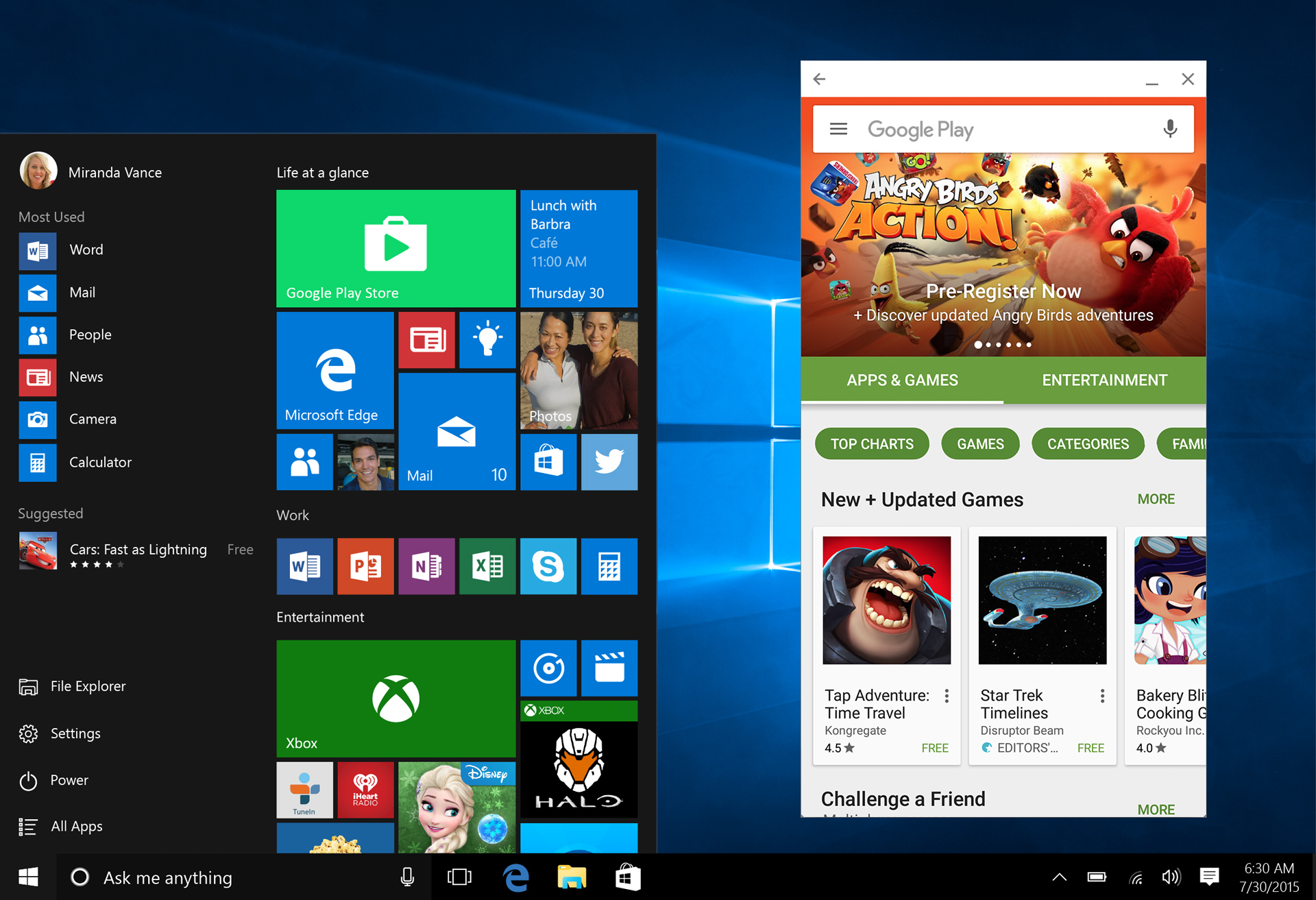
How long until we see Google Play on Windows, Mac OS, and Linux?

The feature could lead to Google’s ecosystem on every desktop OS.

Enlarge / Google Play on Windows! It could happen some day. (credit: Ron Amadeo / Microsoft / Google)

Earlier this week, some Chrome OS code surfaced that suggested the Google Play Store would bring "millions" of Android apps to Chrome OS. Google has experimented with Android apps on Chrome OS, but now it seems poised to unleash the full collection of Android apps onto the "browser only" operating system. There's no official word from Google on how this will play out, but the very architecture of Google's Android-apps-on-Chrome OS implementation opens some interesting possibilities.

The feature is possible because of the "App Runtime for Chrome (ARC)," a project that implements the Android runtime on top of Chrome's "Native Client" extension architecture. Native Client is a Chrome sandboxing technology that was designed with performance and portability in mind, allowing plugins to run at "near native" speeds by taking full advantage of the system's CPU and GPU. ARC took a big step last year when it added support for the Google Play Services APIs, which many Play Store apps depend on to work.

The Play Store on Chrome OS would open Google Play apps to a new form factor (horrible Android laptops notwithstanding), but it could also be the tip of the iceberg. Remember, ARC is just a Chrome extension, so it works everywhere desktop Chrome works. If the full Google Play Store comes to ARC, it would be possible for it to work on not just Chrome OS, but also Chrome's other host desktop operating systems: Windows, OS X, and Linux.

Read 6 remaining paragraphs | Comments