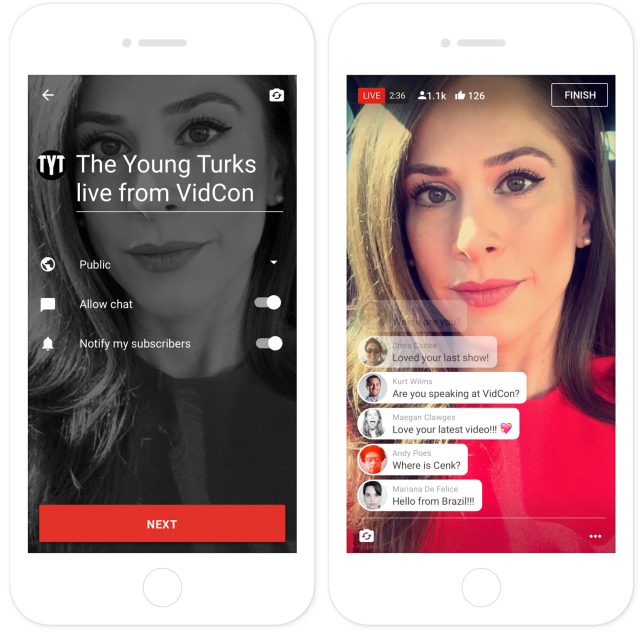
You can now livestream right from the YouTube app

Press capture, pick a thumbnail, and you’ll be live streaming to the world.

YouTube's live mode.

YouTube is finally ready to take on Periscope, Facebook Live, and other livestreaming mobile services, as the company is building live mobile video broadcasting right into the core YouTube app. Firing up a livestream seems pretty simple, according to the introductory blog post. "You won’t need to open anything else, just hit the big red capture button right there in the corner, take or select a photo to use as a thumbnail, and you can broadcast live to your fans and chat in near real time," YouTube says.

Like most existing YouTube livestreaming functions, the blog post says these live videos will "have all the features your regular videos have" including search, recommendations, and controls for who can view them. Live video alerts will be sent to your subscribers when they view your profile, and creators can enable a chat function if they want to hear from viewers. YouTube promises that because this is on YouTube, "it’ll be faster and more reliable than anything else out there."

The feature launched at "VidCon," a conference for online video producers. For now, live mobile broadcasting from the core app is only available to a few VIPs, but YouTube promises it will be "rolling out more widely soon."

Read on Ars Technica | Comments

Huawei hedges bet on Google’s Android, plans in-house OS

Like Samsung before it, Huawei hopes to have a “Plan B” should Android terms go bad.

The default theme on the Huawei Honor 5X. Of course a gold phone needs a gold interface.

A report from The Information (subscription required) claims that Huawei is building its own in-house OS as a possible "Plan B" to Android. To spearhead the development of an in-house operating system—and improve its Android skin—Huawei has hired former Apple designer Abigail Brody. The report says that the non-Android OS "isn’t far along" and is a "contingency measure" in case Google's current Android terms become undesirable to Huawei.

Huawei is the number three smartphone OEM, behind Samsung and Apple. The Chinese company isn't a huge deal in the West, though—a big portion of those sales come from Huawei's home turf. Huawei is often seen as being in a position similar to Samsung's, just at an earlier stage of development. Like Samsung, Huawei is a massive company. It's the world's largest telecom equipment manufacturer, and it designs its own SoCs. Now Huawei is taking another page from the Samsung playbook, and the company is trying to develop an Android alternative.

Samsung's homegrown operating system is Tizen, a Linux-based OS that works a lot like Android (especially Samsung's Android phones) but lacks the app ecosystem and developer support of Android. That's the challenge with creating an Android alternative—can you make something that's so much better than Android that the lack of apps becomes acceptable for consumers?

Read 3 remaining paragraphs | Comments

Watch Boston Dynamics’ newest robodog fetch a soda and slip on a banana peel

Boston Dynamics’ future with Alphabet could be up in the air, but they keep making bots.

Boston Dynamics, the high-profile robotics company that Alphabet reportedly doesn't want, has released a video of its latest robot: SpotMini. SpotMini is a 4-legged robot that weighs just 55lbs and has an all-electric locomotion system.

SpotMini is one of the quietest robot Boston Dynamics has ever built thanks to the all-electric system. In the past, the company has used gas engines and hydraulics in its robots, making for loud, outdoor-only bots that sound like dirtbikes or chainsaws. Boston Dynamics' Alphadog was a much larger 4-legged robot, but it deemed too loud by the US Marines when they tested it as a pack mule last year.

The goal with the SpotMini seems to have been to build a robot quiet enough, small enough, and clean enough that it can be used as a house robot. It's shown indoors walking up steps and ducking under tables. There's even an attachable arm that lets it do useful things like fetching a soda or cleaning the dishes (well, moving a dish from the sink to the washing machine, but that's a start!).

Read 4 remaining paragraphs | Comments

Google’s new two-factor authentication system: Tap “yes” to log in

Codes are for chumps. With Google’s new 2FA system, just tap on the pop up.


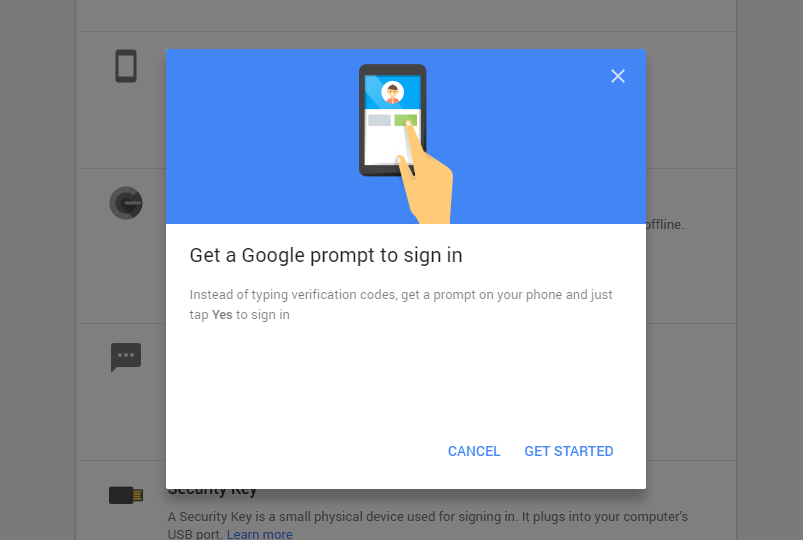
Google's two-factor authentication system (2FA) is a great way to secure your account, but in the past it has relied on codes from the Google Authenticator app or the presence of a USB security dongle. There's now a new method called "Google Prompt," which, like many other 2FA systems, just uses a simple push notification. When it's time to sign in, just enter your password, and you'll get a pop-up message on your phone asking you if you want to sign in. Press "yes," and you're in.

If you want to set this up yourself, just go to the "Security" section of your Google Account settings. Click on the "2-Step Verification" section, and there should be a new option called "Google Prompt." The option works on Android and iOS (provided you have an iPhone 5S or later). Of course Google recommends you have some kind of secure lock screen if you're going to use this feature, as is standard with other forms of phone-based 2FA. Enabling Google Prompt will automatically disable "Sign in with your phone," which used a similar prompt as a password replacement.

If you aren't using 2FA on your Google account, you have no excuse now, since the push notification makes 2FA faster and easier than ever.

Read on Ars Technica | Comments
VLC 3.0 nightlies arrive with (sort of working) Chromecast support

It’s still under construction, but soon VLC will stream local media to a Chromecast.

Streaming online content to a Chromecast is fast and easy, but what if you have local files on your desktop that you want to get on the big screen? There are a few niche apps out there that will serve, but one of the biggest media players, VLC, is working on built-in support for Google's Chromecast. Recently the nightly build servers started pumping out early, unstable builds of VLC with Chromecast support, so I gave it a try.

You won't find the familiar "cast" button that you see in many apps in this VLC build. Instead, the "Tools" menu has a new option called "Render Output"—this screen is for playing media on something other than the computer screen in front of you. It will detect and display Chromecasts on your local network, and the detection process seems to work great. You just pick the device you want to use and hit "OK."

If you're playing media you'll need to stop it, and then once you hit play the casting process should start. I got an "unknown certificate" error at first, but, after accepting it, the usual Chromecast stuff started to happen. My TV turned on and switched to the right input. A Chromecast logo appeared, the loading bar popped up—and then it failed.

Read 1 remaining paragraphs | Comments

Android N Developer Preview 4 finalizes APIs, teases “7.0” version number

“Namey McNameface” is apparently the codename for this version of the preview.

The latest version of the Android N Developer Preview is out, and the Developer Preview Program is really starting to wrap things up. Version 4 brings finalized APIs and the final SDK for developers, so the time for serious bug fixing is right now. After this preview, there's just one more version to go until the final release in "Q3 2016."

With the final SDK, the Play Store is also ready to accept apps that are targeting API 24 (the API level of Android N). Devs are encouraged to test backward compatibility on their Alpha or Beta channels and then push full N-ready apps to the Play Store. (Developers, you're totally going to do this, right?)

On the consumer side of things, Google has added a silly joke to the hidden Android N version screen. If you go to the "About Phone" screen and mash on the Android version number section, you'll get the usual "N" logo to pop up. Long press on the "N" logo and instead of an Android version of Flappy Bird, you'll now get an "N" logo with "Namey McNameface" written across it. We're guessing that's not going to be the final "N" name.

Read 2 remaining paragraphs | Comments

The OnePlus 3 brings a Snapdragon 820, 6GB of RAM, and aluminum body for $399

The best part is you can actually buy this one: There’s no invite system.

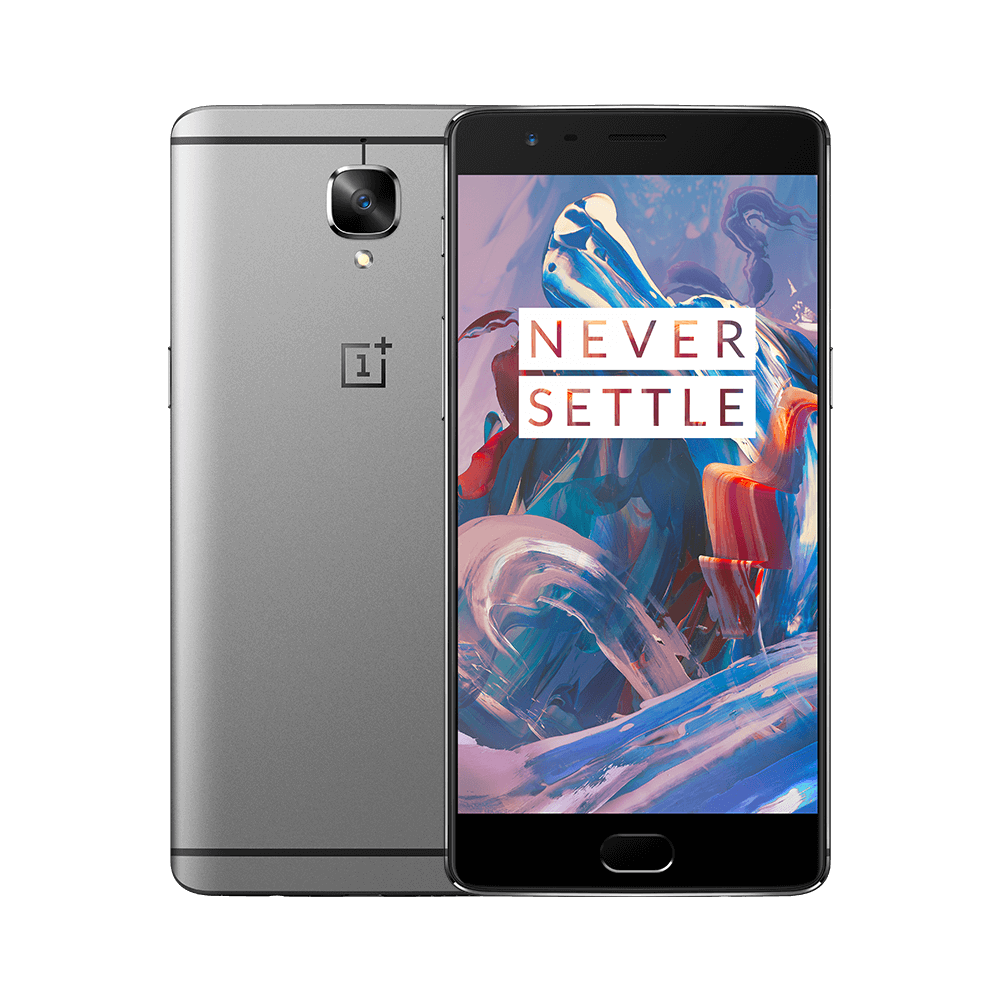
After the OnePlus One, 2, and X, OnePlus is back with a new flagship, the OnePlus 3. OnePlus is going for the "bang for your buck" market here with a Snapdragon 820, a whopping 6GB of RAM, and a 5.5-inch 1080p AMOLED display for just $399/€399/£309.

The device ships with 64GB of storage, but unlike the OnePlus X, there is no expandable storage option. The battery is also a tad smaller than previous models: 3000mAh. All the other extras are here: you get NFC, a dual SIM slot, fingerprint reader, and a USB Type-C plug. The camera is 16MP with optical image stabilization, RAW support, and manual controls. Oh, there's also a 3.5mm headphone jack, which is something we have to check for now on phones of the future. The body is aluminum and comes in "Graphite" and "Soft Gold." Like in past OnePlus designs, there are three hardware buttons at the bottom, with the middle "home" button doubling as a fingerprint reader.

OnePlus is making a big deal of its "Dash" phone charger, which it says will charge the phone to 63 percent in a half hour. During Dash charging, the power management system inside the phone shuts off, and the system inside the charger takes over. OnePlus says this keeps the phone cooler during charging, allowing the battery to charge faster. This requires a proprietary "Dash Charge" cable and adapter.

Read 1 remaining paragraphs | Comments

The Warcraft fan’s dilemma: A movie, but it’s based on the 1994 DOS game?!

Orcs made it to the big screen—iconic characters, diverse combat, and epic stories didn’t.

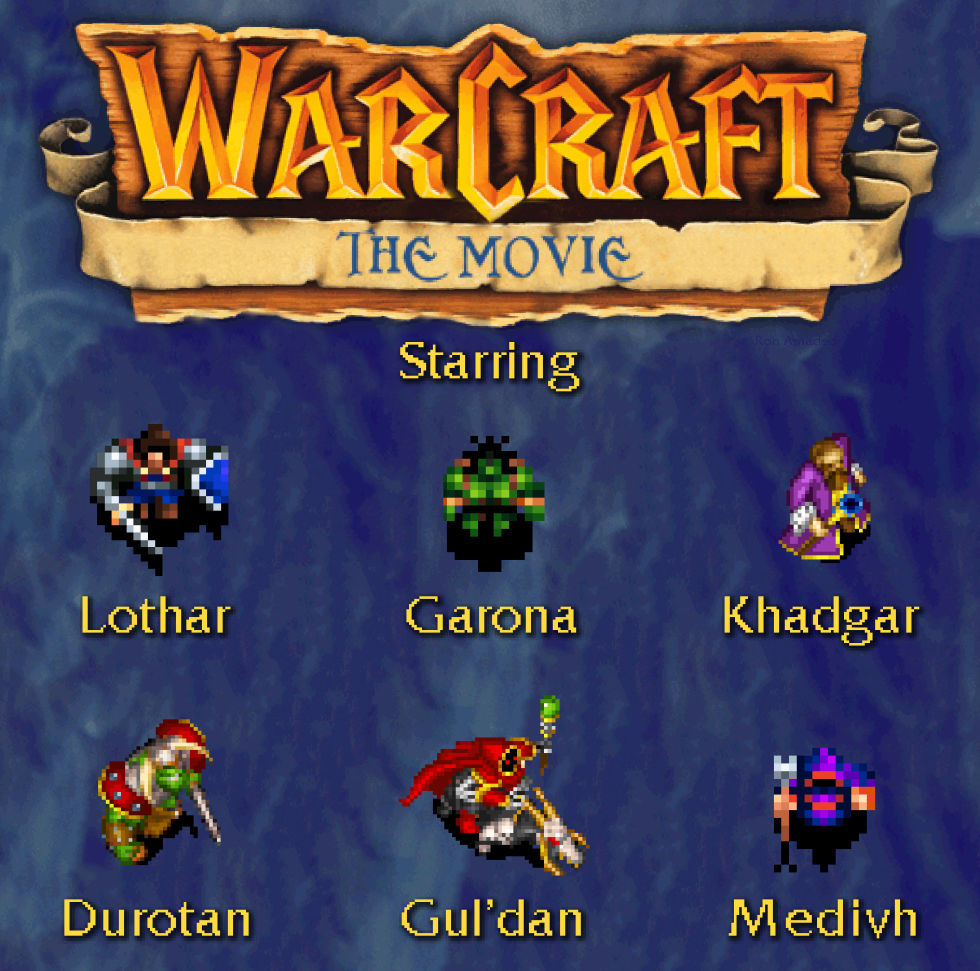
The stars of the Warcraft movie as they appeared in Warcraft I and II. (We cheated a bit for Durotan, who doesn't appear in the games.) (credit: Ron Amadeo)

Editor's note: This article contains minor spoilers throughout. (Unless you're an avid WoW player, that is.)

"Blizzard should make a movie" has been a wish for just about every fan that has seen one of the company's gorgeous CG cinematics. And this weekend, these gamers sort of got their wish when the Warcraft movie finally arrived stateside.

Sadly, I can't imagine many fans wanted to see this Warcraft story get made into a movie. While the film was obviously created due to the success of World of Warcraft, it is not "World of Warcraft: The Movie." The story simply doesn't take place in the "Modern" Warcraft era depicted in WoW and Warcraft 3. Insteadthis is the "First War" film—depicting the battle between the Orcs and Humans. If you're going by the games, the story more or less follows "Warcraft: Orcs & Humans" (aka "Warcraft 1"), the original DOS real-time strategy game from 1994.

Read 9 remaining paragraphs | Comments

Meet Motorola’s new flagship, the modular Moto Z

The Moto Z lets you snap on backpacks with extra functionality.

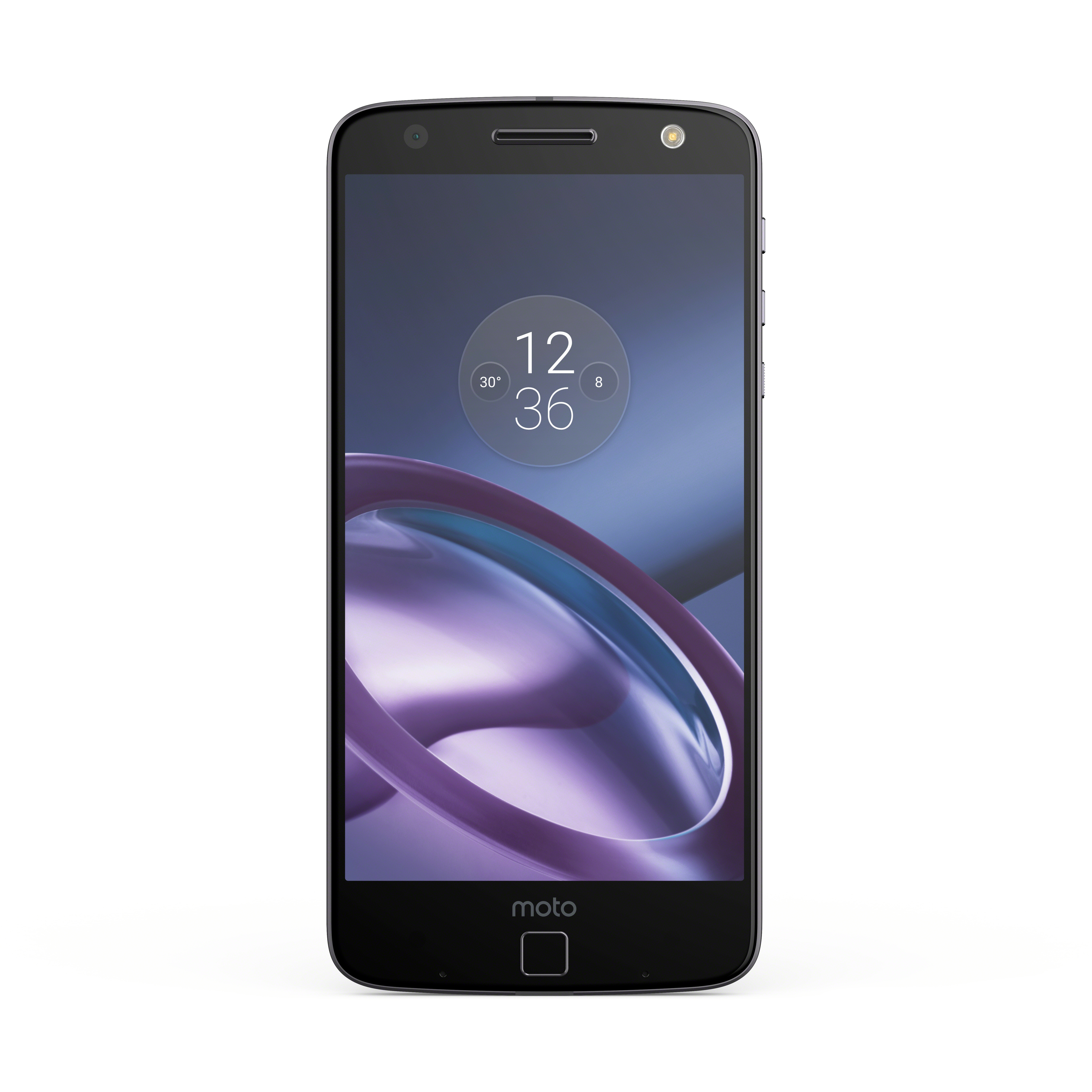
Today, Motorola took the wraps off its 2016 flagship, the Moto Z. These phones (there are two of them) are markedly different from past Moto flagships, which is appropriate since the Moto Z represents Motorola's transition from "A Google Company" to Lenovo subsidiary. The actual deal closed over a year ago, but product pipelines mean only now are we seeing Lenovo's full influence.

The Moto Z is a metal phone the company is calling "the world's thinnest premium smartphone." It has a 5.5-inch, 1440p AMOLED display, a Snapdragon 820, 4GB of RAM, and 32 or 64GB of storage with a MicroSD slot. For cameras, there's a 13MP rear sensor with OIS and laser autofocus and a 5MP front camera with a wide angle lens. Other extras include a fingerprint sensor, "water-repellant coating," and a front flash.

Lenovorola hasn't said how big the battery on the Moto Z is, only that it will get "30 hours" of battery life.

Read 4 remaining paragraphs | Comments

Google’s 3D sensing Project Tango tech finally lands in a consumer phone

The device launches September 2016 for $499.

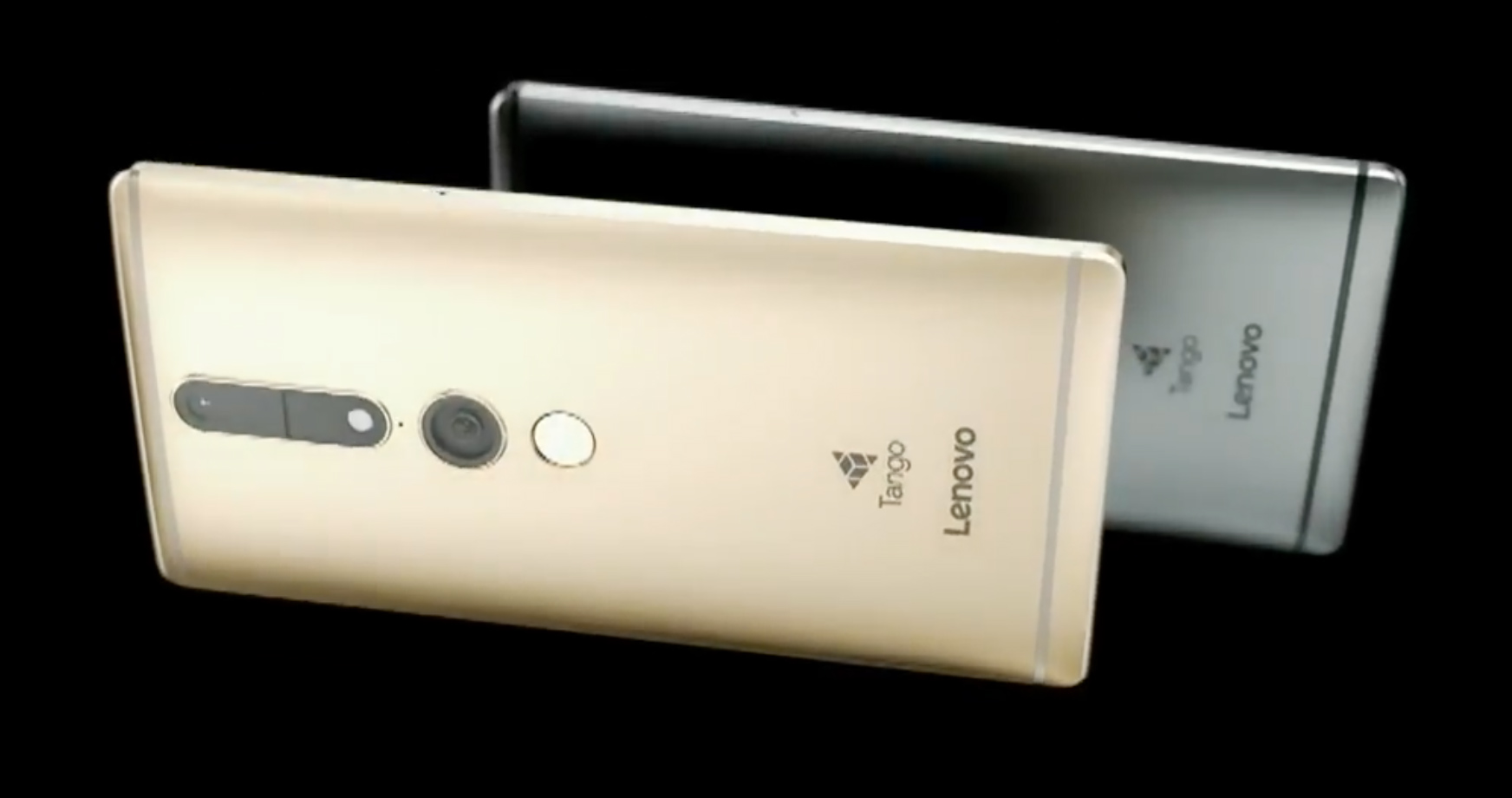
NEW YORK—Lenovo today announced the first consumer Project Tango phone, the "Phab 2 Pro." Lenovo describes the phone as a "team effort" with Google, which created the Project Tango technology. Project Tango is also undergoing a bit of a rebranding. It's just "Tango" now—no "Project"—and it has a new logo.

Project Tango started around three years ago as a project inside of ATAP, Google's Advanced Technology and Projects group. The skunkworks team created prototype mobile devices with computer vision sensors—imagine an Xbox Kinect crammed into the back of a smartphone. Sensors allow the device to create a 3D point cloud of its surroundings and know where it is in 3D space. This system can be combined with a live camera feed for various augmented reality uses, or it can be used to track your precise indoor location for mapping purposes.

Take away all the fancy 3D sensors, and Project Tango is an Android phone. The developer kit was an Android tablet, and cramming everything down to a "phone" size device meant going with a very large body. The Phab 2 Pro has a massive 6.4-inch 1440p display built into a metal unibody. The device is also backing a pretty large battery: 4050 mAh.

Read 7 remaining paragraphs | Comments