Google Maps cleans up map design, adds “areas of interest” highlight

Google Maps’ new look color codes popular places in orange.

Google Maps has announced a new update that tweaks the look of the map and adds a feature that highlights "hotspots" in your area.

Google says the new map design is cleaner and easier to read. The company has "removed elements that aren’t absolutely required (like road outlines)" and "improved the typography of street names, points of interest, transit stations, and more" to make the map more readable. Google's more "subtle" visual scheme lets you know what kind of location you're looking at just by the color and even provides a color key.

With the map cleaned up, Google is adding a new feature to the base layer of the map. When zoomed out to a sufficient level, clusters of popular points of interest become highlighted in orange. Zoom in and the individual places appear, also highlighted in orange, letting you know how popular they are.

Read 1 remaining paragraphs | Comments

Motorola confirms that it will not commit to monthly security patches

Motorola says it is “more efficient” to bundle security updates into fewer releases.

The Moto Z with its 3.5mm headphone dongle.

Motorola has clarified the update situation of the Moto Z and Moto G4, calling Android's monthly security updates "difficult" and deciding not to commit to them.

When we recently reviewed the Moto Z, we said that the device would not be getting Android's monthly security updates. Motorola doesn't make this information officially available anywhere, but when we asked Motorola reps at the Moto Z launch event if the company would commit to the monthly updates, we were flatly told "no."

We passed this along in our review, where we called the policy "unacceptable" and "insecure." Motorola later muddied the waters a bit by releasing a statement saying "Moto Z and Moto Z Force will be supported with patches from Android Security Bulletins. They will receive an update shortly after launch with additional patches." Sure, the Android security patches will reach the devices eventually, but this statement didn't assure that they would arrive on time as monthly security updates. We pressed Motorola for more information, and today the company clarified things with this statement:

Read 2 remaining paragraphs | Comments

BlackBerry rebrands Chinese smartphone, creates the $299 BlackBerry DTEK50

Rebranded Alcatel Idol 4 has no keyboard, hopes Android tweaks will be enough.

As the first-ever Android phone from BlackBerry, the BlackBerry Priv was an interesting experiment. BlackBerry tried to go super-premium with a $700 phone, but the design, build quality, and specs couldn't back up the price tag. Now, BlackBerry is back with its second Android smartphone, the BlackBerry DTEK50. Rather than worry about the design and build quality itself, BlackBerry has taken the TCL Alcatel Idol 4 and given it a new back plate. The result is a $299 "BlackBerry" that features Alcatel's hardware and Blackberry's software.

The specs are nearly identical to an Alcatel Idol 4. The DTEK50 has a 5.2-inch, 1080p display (424 PPI), an eight-core 1.5GHz Snapdragon 617 (four 1.5 GHz Cortex-A53s and four 1.2 GHz Cortex-A53), 3GB of RAM, 16GB of storage with an SD card, and a 2,610 mAh battery. The rear camera has a 13MP sensor with a dual-LED flash, while the front sports an 8MP sensor. The USB port makes the device seem a tad dated: it still has a MicroUSB port instead of the newer, reversible USB Type C port. The one spec difference we see between the Alcatel Idol 4 and the DTEK50 is that the Idol 4 is clocked a little higher: 1.7GHz versus 1.5GHz.

The device has no keyboard—it's just your regular cheap slab phone with dual front-facing speakers. The rear has a new back piece with the all-important BlackBerry logo and almost looks like it's made out of rubber. The Idol 4 did ship with an extra side hardware button, which BlackBerry has turned into its trademark programmable "convenience" key. Other than that, the "Blackberryness" is going to come in the software and security side. Blackberry is promising a secure boot process with a hardware root of trust and "rapid" security patching.

Read 2 remaining paragraphs | Comments

Cyanogen Inc. reportedly fires OS development arm, switches to apps

What happens to an Android OS company when it stops developing an Android OS?

Cyanogen Inc. seems to be in trouble. A report from Android Police cites "several sources" that say the three-year-old Android software house will be laying off 20 percent of its workforce. One source said the company would "pivot" to "apps" and away from OS development.

"Cyanogen" branding can be confusing, so here's a quick glossary before we get started:

  • Cyanogen—A person. Steve Kondik. The guy that originally started CyanogenMod.
  • CyanogenMod—A free, open source, OS heavily based on Android and compatible with hundreds of devices. Anyone can download and flash the OS to a compatible device.
  • Cyanogen OS—A for-profit OS that OEMs can purchase and ship on devices. It's the CyanogenMod codebase with some proprietary features on top and update support from Cyanogen Inc.
  • Cyanogen Inc.—A for-profit company that aims to sell Cyanogen OS to OEMs. Formed with key members from the open-source project.
  • Cyanogen Mods—Cyanogen Inc.'s proprietary app platform for Cyanogen OS.

The Android Police report says "roughly 30 out of the 136 people Cyanogen Inc. employs" are being cut, and that the layoffs "most heavily impact the open source arm" of the company.  Android Police goes on to say that CyanogenMod development by Cyanogen Inc "may be eliminated entirely." The community could continue to develop CyanogenMod, but it seems many of the core CyanogenMod developers at the company will no longer be paid to work on CyanogenMod.

Read 6 remaining paragraphs | Comments

Google makes smartphone comic book reading easier with machine learning

Google uses computer vision to detect and zoom in on speech bubbles with just a tap.

Bubble Zoom in action. (credit: Google)

Reading comic books on a smartphone is a bit of a bummer. Comic books are designed to be read on a 7×10.5" page, which doesn't translate very well to a ~5-inch screen. It's usually pretty hard to see the entire page and read the text, which leads to lots of zooming and panning.

Google is tackling this problem the way it seems to be tackling every problem lately: with machine learning. Google has taught its army of computers to detect the speech bubbles in comic books, allowing you to zoom in on them with just a tap. The bubbles lift off the page and get bigger without affecting the underlying image. This lets you see the entire page while still reading the text. Google calls the feature "Bubble Zoom."

Bubble Zoom is available today in Google Play Books for Android. We'd guess an iOS version is coming later. For now, Bubble Zoom is just a "technical preview" but all Marvel and DC collected volumes are supported. Google says it hopes to eventually bring the feature to "all the comics and manga ever made."

Read 1 remaining paragraphs | Comments
Moto Z review: Lenovo brings a huge price increase, lame modular system

The first Moto flagship under Lenovo’s rule isn’t a compelling one.

Under Google, Motorola was one of our favorite OEMs. The company delivered bang-for-your-buck hardware, stock Android with some actually good additions, and speedy updates. Motorola couldn't hold Google's interest for very long, though, and in 2014, Google sold Motorola to Lenovo.

When Google took over Motorola, the company mentioned it would have to clear "12 to 18 months of product pipeline" before Google's changes would take effect. Assuming the Lenovo had the same 12 to 18 months of pipeline after the October 2014 takeover, the Moto Z and Moto Z Force mark the first "Lenovorola" flagship.

And boy, are things different. Along with the new name (RIP, Moto X) comes a huge jump in price: Motorola's flagship has gone from $400 in 2015 to $720 (for the Z Force) in 2016. That's an 80-percent increase. Moto Maker—Motorola's design service that let you customize the outside of the device—is dead, at least for the flagship. Motorola's love of software updates seems to have gone out the window, too. Major updates now take several months instead of several weeks, and a Motorola rep told us the company won't be providing security updates for the Moto Z.

Read 50 remaining paragraphs | Comments

Corning’s new Gorilla Glass 5 survives drops “up to 80%” of the time

The glass cover used in most smartphones and tablets is getting an upgrade.


Corning's Gorilla Glass is the display cover of choice for many smartphones, tablets, and convertibles. Gorilla Glass 4 has been with us for nearly two years now, but it's time for it to move aside for the latest version: Gorilla Glass 5.

Gorilla Glass is great at resisting scratches, but it's prone to shattering when dropped. With Gorilla Glass 5, Corning claims the glass is now able to survive more drops than ever. The official claim is that the new stuff survives "1.6-meter, shoulder-height drops onto hard, rough surfaces up to 80% of the time."

Corning claims this is "up to 4X better in drop failure height than competitive glasses" but we're struggling to name a single competitive glass. (Samsung might have made one once on the Galaxy Nexus? Maybe Apple?) As usual Apple suppliers aren't allowed to mention their involvement, but other than iOS devices, Gorilla Glass has a near monopoly in smartphones.

Read 2 remaining paragraphs | Comments

The final Android N Developer Preview is out

The consumer release of Android 7.0 Nougat is coming some time in Q3.

Today, Google released a new version of the Android N Developer Preview to the world. This is the fifth and final developer preview before the consumer release of Android 7.0 Nougat, which is scheduled for some time in Q3.

There doesn't seem to be a ton of changes, but this release offers a "near-final" look at Android 7. Google is encouraging developers to test their apps against this version and stomp out any bugs before the final release. Android N brings a split screen mode, a notification panel redesign, additions to Doze power saving, and a ton of other changes developers need to account for. The Play Store is already able to accept apps targeting Android N, so once the testing is done, developers are encouraged to publish their Android N apps.

As usual, the Developer Preview is available via OTA update for devices in the Android Beta Program or you can flash a system image.

Read on Ars Technica | Comments

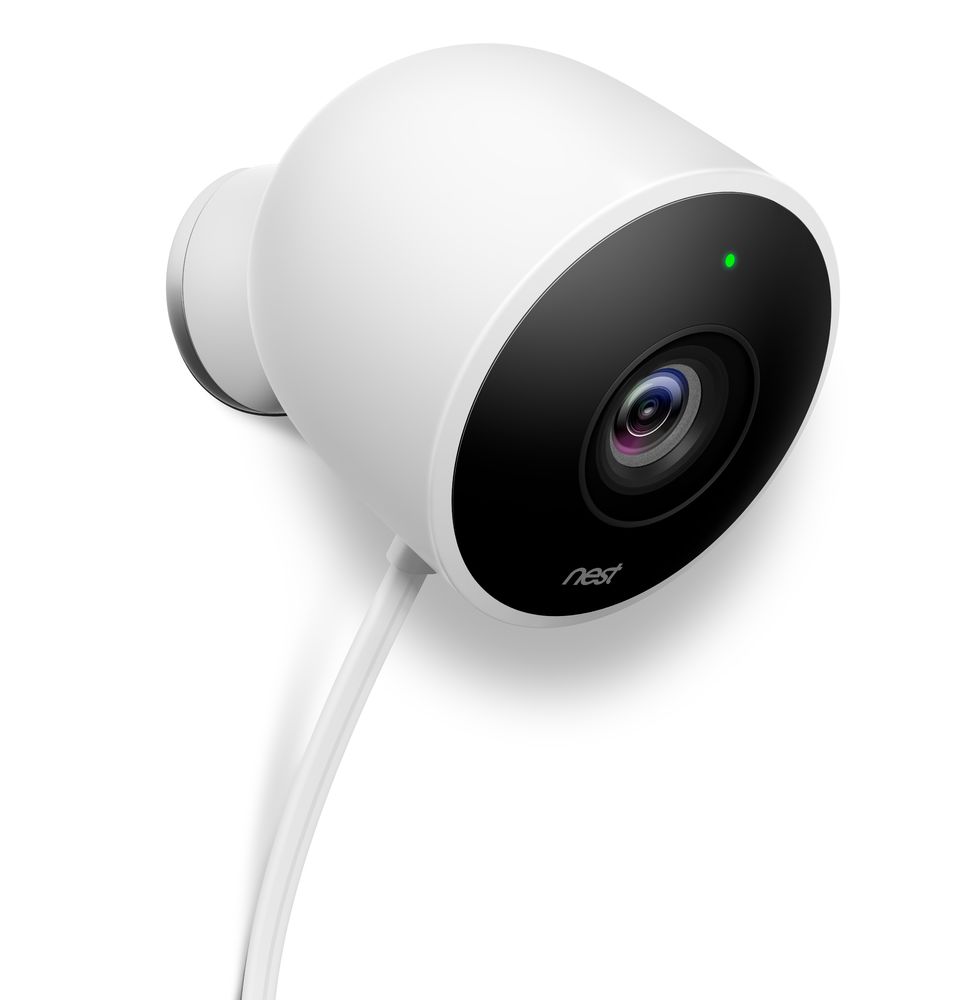
The Nest Cam Outdoor is a $199 camera with an easy-to-install magnetic base

Plus Nest adds a “person detection” feature, provided you pay the monthly fee.

Just a few weeks after getting a new CEO, Nest is launching a new product. Last year the indoor Nest Cam launched for $199, and today Nest is launching its take on an outdoor security camera—the $199 Nest Cam Outdoor.

The Nest Cam Outdoor lines up pretty evenly with the existing Nest Cam: it records 30fps 1080p video, a 130-degree field of view, eight infrared LEDs for night vision, and a speaker and microphone for audio communication. The big difference is that the Nest Cam is now in a "weatherproof" IP65 rated box, which, while not submersible, should survive a rainstorm intact.

The mounting system is all new, too—it's magnetic. Rather than the usual ball and cup attachment, the Nest Cam attaches to the base via a magnet. The base can also be attached to the house magnetically—just slap it onto a metal surface and you're done. If you're not mounting to metal, there's also a screw-in version, but the Nest Cam Outdoor always attaches to the base with magnets.

Read 4 remaining paragraphs | Comments

Google Hangouts for Android removes merged SMS conversations, adds video

Google rips a core SMS feature out of Android’s default messaging app.

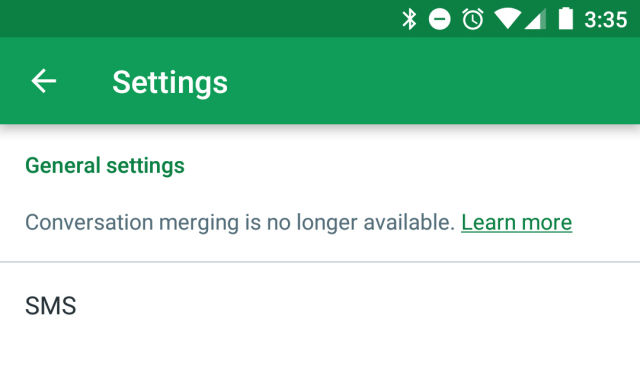
Google's incoherent messaging strategy adds yet another bizarre chapter with the latest update to Google Hangouts for Android. Version 11 of Android's default messaging app adds the ability to send video messages, but it removes the ability to display SMS and IM messages in a single conversation.

Hangouts video messages debuted on iOS four months ago, and now the feature is finally coming to Android. Users can record a short video clip and fire it off to a friend, just like a picture or text. To get the feature, they'll have to give up a core messaging feature—merged SMS and IM conversations. Users can still send and receive SMSes with Hangouts, but each contact now can have two (or more) separate conversation entries—one for SMS messages and one for Hangouts messages. Hangouts used to merge all conversations under a single contact without worrying what protocol the message used.

It's unclear why Google is ripping a core feature out of its most popular messaging product. At the beginning of this year, Hangouts began suggesting users stop using the app for SMS with a pop-up message, so we were kind of warned this was happening. It doesn't make any more sense now than it did then, though—Hangouts now has a big downside compared to iMessage on iOS. On the support page, Google recommends using Android's "Messenger" app, which only supports SMS.

Read 2 remaining paragraphs | Comments