Android 7.0 Nougat review—Do more on your gigantic smartphone

Big smartphones are everywhere, and Nougat’s new features make them more useful.

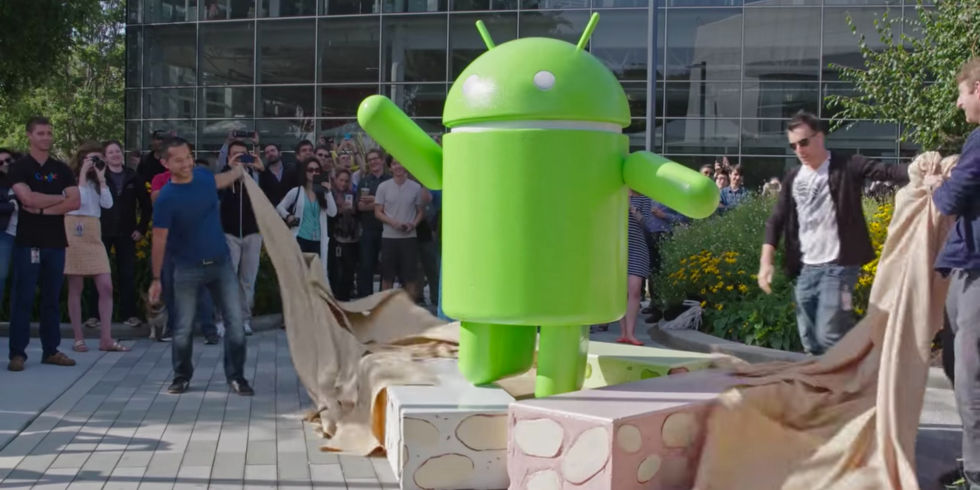
The unveiling of the Nougat statue.

After a lengthy Developer Preview program starting in March, the final version of Android 7.0 (codenamed "Nougat") is finally launching today. The OS update will slowly begin to rollout to devices over the next few weeks. This year, Google is adding even more form factors to the world's most popular operating system. After tackling watches, phones, tablets, TVs, and cars, Nougat brings platform improvements aimed at virtual reality headsets and—with some help from Chrome OS—also targets laptops and desktops.

For Android's primary platform (still phones and tablets), there's a myriad of improvements. Nougat brings a new multitasking split screen mode, a redesigned notification panel, an adjustable UI scale, and fresh emoji. Nougat also sports numerous under-the-hood improvements, like changes to the Android Runtime, updates to the battery saving "Doze" mode, and developer goodies like Vulkan and Java 8 support.

As usual, we'll be covering Google's Android package as a whole without worrying about what technically counts as part of the "OS" versus an app in the Play Store. Android is a platform not just for third-parties, but for Google as well, so we're diving into everything that typically ships on a new Android smartphone.

Read 154 remaining paragraphs | Comments
Hands-on with Huawei’s Honor 8—$400 for flagship-class specs

Huawei’s second US-bound “Honor” phone brings another budget flagship option to the table.

Huawei might not be well known in the US, but after Samsung and Apple, it's the third most popular smartphone OEM worldwide. The company's sub brand, "Honor," launched in the US in the beginning of the year, and today the company took the wraps off its second US-bound phone, the Honor 8. The device is more-or-less a cheaper version of the Huawei P9.

For $399, you get a 5.2-inch 1920×1080 LCD, an eight-core HiSilicon Kirin 950 SoC, 4GB of RAM, 32GB of storage (with an SD card slot), and a 3000mAh battery. There's also the option of upgrading to a 64GB model for $449.99.

Don't worry if you've never heard of a "HiSilicon Kirin 950 SoC." Huawei is one of the few companies that makes its own SoCs, and this division is called "HiSilicon." The Kirin 950 uses four 2.3GHz Cortex A72s and four 1.8GHz A53s, making it a high-end chip that should be within the ballpark of a Snapdragon 820 or Exynos 8890. Other goodies on the Honor 8 include a totally-not-optional 3.5mm headphone jack, NFC, a USB Type C plug, fingerprint sensor, and an IR LED.

Read 6 remaining paragraphs | Comments

Google launches Duo, a barebones video calling app

Is a fancy incoming call screen enough to make people switch?

At Google I/O 2016, Google announced two new and separate communication apps: Allo, a new instant messenger app, and Duo a video calling app. Today Google announced Duo is finally rolling out to the masses on Android and iOS.

Google Duo is a video calling app and just a video calling app—it does one-to-one video calls and nothing else. It's also only available for mobile phones—there are no Web, Chrome, or desktop clients. It doesn't even require a Google Account—Google says that "all you need is your phone number and you’ll be able to reach people in your phone’s contacts list."

Duo has two features. The first is that the video calling is claimed to be "fast and reliable" even with limited bandwidth. It can switch between Wi-Fi and cellular data without dropping the call and can "gracefully degrade" the video when bandwidth gets low. The other feature is called "Knock Knock," which shows live video from your contact on the incoming call screen before you even answer the call. Knock Knock doesn't work on iOS right now. On the security side of things, Google notes that "all Duo calls are end-to-end encrypted."

Read 5 remaining paragraphs | Comments

Real-life Nexus pictures leak, look pretty much like what we expected

Both new Nexuses are purportedly made of metal and glass.

(credit: Android Police)

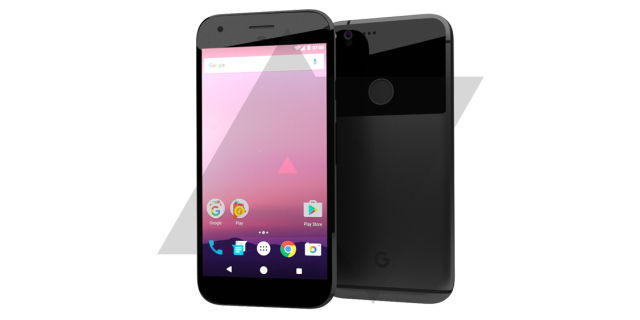
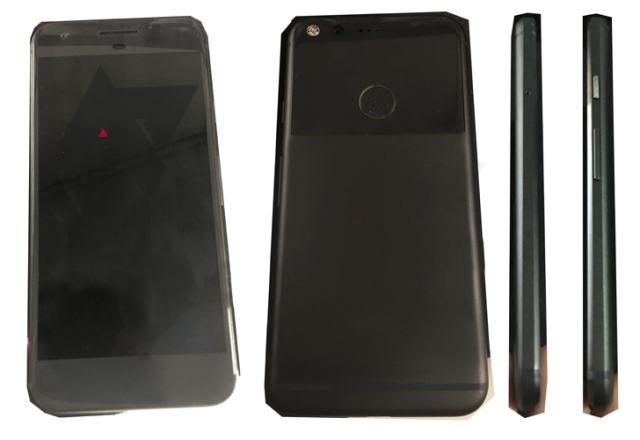
Over the weekend a new set of real-life Nexus pictures hit the Internet, and the device looks... pretty much like what we were expecting. The slow drip of Nexus leaks continues at Android Police, which had its source send over a set of heavily cropped pictures. The device looks almost exactly like the renders the site created back in July.

There's no branding in the pictures at all, but Android Police is still maintaining that a "G" logo will be on the final device to the exclusion of a "Nexus" logo. We're calling this a "Nexus device," but maybe it would be more accurate to start calling it a "Google Phone."

The devices are being built by HTC, so of course they come with HTC's trademark humongous top and bottom bezels. The device is supposed to be a custom design by Google, but we're starting to think the outside is heavily based on the HTC A9. This would explain the bottom bezel—it's that big because it used to house a fingerprint scanner.

Read 4 remaining paragraphs | Comments

T-Mobile dumps the HTC 10 after just two months

HTC can’t catch a break as carrier opts to stop selling its flagship phone.

(credit: Ron Amadeo)

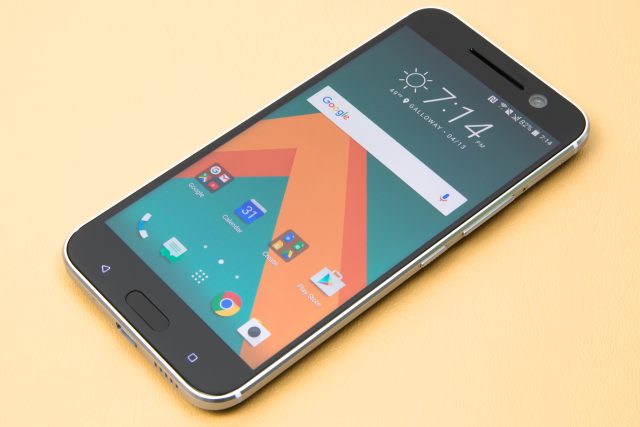
Poor HTC. The company's flagship handset, the HTC 10, is apparently not selling well. T-Mobile has decided to dump the device after just two months on the market.

T-Mobile hasn't come out and ended sales officially, but the HTC 10 is no longer available from T-Mobile online. The phone used to live on T-Mobile's website at http://www.t-mobile.com/cell-phones/htc-10.html, but that link now redirects to a generic HTC page that only shows the HTC Desire 530. A Reddit thread notes that the HTC 10 vanished from T-Mobile's site in July, which gives it a shelf life of just two months. TmoNews says it was originally told that the 10's disappearance was "a glitch" and that the phones would be back. But as Android Police points out, the 10 is still gone, and local stores don't have any plans to receive more units.

Too bad. We called the HTC 10 the "the best Android flagship of 2016." HTC finally cleaned up the huge front bezels, and we were won over by its metal body and a software package that was close to stock Android. None of that seems to be translating into sales, though. After a 35 percent year-over-year decline in revenue for 2015, HTC is on pace for a 50 percent year-over-year decline in 2016.

Read on Ars Technica | Comments

The Google Play Store scraps Google+ integration

Google cuts social from the Play Store, now accepts app reviews without a G+ account.

(credit: Callip Hall)

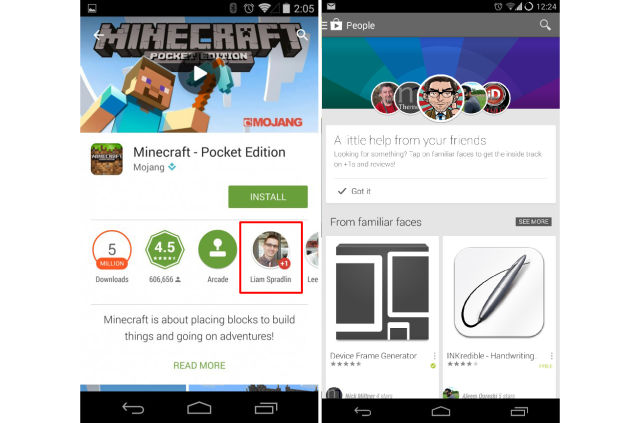
The great deplusification of Google continues as a Google+ has been removed from yet another Google product. This time it's the Play Store, which has dropped Google+ votes from apps and nixed the G+ account requirement from app reviews.

There was an entire Google+ focused "People" section on the Play Store that showed apps and ratings from people you follow on Google+. The Play Store also allowed users to "+1" apps on the Play Store, which served as a vote of approval from people you follow. Both features are being stripped out of Google Play, starting earlier this week.

The other feature being removed is the requirement to have a Google+ account to leave a Play Store review on apps, games, and media. Several users have reported to Android Police that they can now leave reviews using their regular Google account, where before they were nagged to created a Google+ account.

Read 1 remaining paragraphs | Comments

Nexus rumor roundup: The “Nexus Launcher” and other exclusive features

And get ready for something newer than “Android 7.0″—Some Google apps target “API 25.”

Android Police's mockup of the new Nexus devices, based on inside information. (credit: Android Police)

With Android 7.0 Nougat and the new Nexus devices fast approaching, Google is no doubt hard at work developing and testing the latest wave of features coming to the Android ecosystem. The Android N Developer Preview has given us a look at the Android Open Source Project (AOSP) side of things, and it looks like the coming Nexus devices will be the launch point for the proprietary "Google" side of Android.

These could trickle down to other devices someday, but for now it seems like Google is developing a suite of Nexus-exclusive features to further differentiate the Nexus line from regular phones. There has been a never-ending string of rumors and reports about the new Nexus devices and their accompanying software, so here's a roundup of the latest rumors we're monitoring from reliable sources.

The Nexus Launcher and Google Wallpapers

Google's current home screen is the "Google Now Launcher," which started as an exclusive Nexus feature and eventually made its way to the Play Store. For 2016, there is apparently a new Google home screen called the "Nexus Launcher," which re-imagines what an Android home screen should look like. We've actually heard about this app from two different sources: the app's existence was first revealed by Android Police and then a full APK was later leaked by Nate Benis.

Read 24 remaining paragraphs | Comments

Galaxy Note 7 hands-on: Samsung goes full sci-fi with an iris scanner

We take a look at Samsung’s newest flagship and the new Gear VR.

NEW YORK CITY—Samsung is back with its second flagship for 2016, the Galaxy Note 7. It's basically a bigger Galaxy S7 with a stylus, but this year Samsung is adding an Iris scanner and finally upgrading to USB Type C.

Like Microsoft before it, Samsung's marketing department has had a bit of trouble counting this year. After the Galaxy Note 5 in 2015, the company has totally skipped the Galaxy Note 6 and advanced to the Galaxy Note 7. The idea is that the Galaxy Note line will now line up with the Galaxy S line—this year we're getting the Galaxy S7 and Galaxy Note 7. (A word of warning for next year: don't confuse the Galaxy Note 8 with the Galaxy Note 8.0, a Samsung tablet from 2013.)

This doubles as likely the best way to think of the Galaxy Note 7: it's a Galaxy S7, but a bit bigger. The design and materials are very close to the S7—the Note 7 is a glass-backed device with a metal frame, sporting the typical Samsung look. The specs are about the same, too, with a Snapdragon 820 (not the new 821), 4GB of RAM, and a 5.7-inch 2560x1440 AMOLED display. The Snapdragon is for the US market. Internationally, Samsung is again using an Exynos chip.

Read 13 remaining paragraphs | Comments

Android notifications on Windows 10: Microsoft does the bare minimum

Windows 10 Anniversary Update takes a swing at Android notification mirroring.

Enlarge (credit: Ron Amadeo)

The Windows 10 Anniversary Update is out this week, and it offers an interesting mobile feature aimed not at Windows Phone, but at Android: mirrored Android notifications. The idea is that when a notification pops up on your Android phone, it should also pop up on your Windows PC, allowing you to then deal with your notifications remotely on the PC. For now most of the features come with a well-deserved "beta" tag, but it's worth a look to see where this feature is and how much more work needs to be done.

Beaming Android notifications to your PC isn't a new idea—third-party apps like Pushbullet and AirDroid can already do it, but it's still interesting that Microsoft has introduced its own first-party implementation (it's also a tacit admission that Microsoft's own mobile platform is quickly fading). The way all these services work is to basically "become a really big smartwatch." The services plug in to all of the remote notification capabilities Google originally introduced for Android Wear, but they're available to any app that is granted the proper permissions. We'd expect our ideal notification service to be able to do everything Android Wear can do with a notification, just inside of a PC app instead of a watch.

In Android 4.3, Google added a Notification API, which can mirror the entire notification panel to another device. Apps can sign up to be a Notification Listener Service, which allows the remote app to dismiss notifications on the phone and to remotely press the notification action buttons. These are things like "Archive" or "Delete" for e-mails and "Reply" for e-mails, IMs, and SMSes. The transportation of these notifications all happens at the OS level and requires no developer support.

Read 22 remaining paragraphs | Comments

Xiaomi takes on the Macbook with the $750 “Mi Notebook Air”

The bang-for-your-buck smartphone maker serves up a pair of aluminum laptops.

Overnight, the Chinese smartphone maker Xiaomi announced that it's jumping into the laptop market with the launch of the definitely-not-Macbook-inspired Mi Notebook Air. For now, the Windows 10 devices only have a release date in China.

The 13.3-inch version is about $750 (RMB 4999) and has a 2.3GHz Intel Core i5-6200U (Turbo up to 2.7GHz), 8GB of DDR4 RAM, an Nvidia Geforce 940MX, a 256GB PCIe SSD with a factory expandable SATA SSD slot, and 802.11AC Wi-Fi. The 13-inch version measures 309.6mm x 210.9mm x 14.8mm (12.18" × 8.3" × 0.58") and weighs 2.82 pounds (1.28kg). Xiaomi is claiming a "9.5 hour" battery life.

If you're looking for something a little smaller, there's the $525 (RMB 3499) 12.5-inch model. That version has an Intel Core M3 with integrated graphics, 4GB of RAM, a 128GB SSD, and 802.11AC Wi-Fi. The device weighs (1.07kg), measures 292 x 202 x 12.9mm (11.5" × 7.95" × 0.51"), and has a claimed "11.5 hours" battery life.

Read 4 remaining paragraphs | Comments