Android N switches to OpenJDK, Google tells Oracle it is protected by the GPL

Google hopes to dodge issues in the Oracle lawsuit, and it gets a superior codebase.

The Oracle v. Google legal battle over the use of Java in Android keeps on going, but this week Google made a change to Android that it hopes will let the company better navigate its current legal trouble.

Google told VentureBeat that it in "Android N," the next major version of Android, it is swapping Android's Java libraries from its own Apache Harmony-based implementation to one based on Oracle's OpenJDK—yes that Oracle, the same company suing Google. OpenJDK is the "official" open source version of the Java Platform, and Oracle makes it available under the GPL with a linking exception.

Google next told the court that it had "released new versions of the Android platform that are expressly licensed by Oracle for use by Google under the free, open source license provided by Oracle as part of its OpenJDK project. Specifically, these newly released versions of Android utilize the method headers (and the associated sequence, structure, and organization of those method headers) at issue in this litigation under the open source OpenJDK license from Oracle."

Read 7 remaining paragraphs | Comments

New Google Glass model hits the FCC website, images included

The new model has a larger Glass prism and can fold up!


Google Glass is not dead. A brand new model of Google's face computer has popped up on the FCC website (first spotted by 9to5Google), complete with rather high-res images of the device.

The pictures show a Google Glass unit with the FCCID "A4R­-GG1" that looks a lot like the existing Glass design. The biggest change seems to be that the device can now fold up, just like a regular pair of glasses, which will make it much easier to store when you aren't wearing it. The Glass prism looks longer than the first version of the device, which presumably offers a larger picture.

In general, the case looks smoother and rounder than the previous version of Google Glass. The "Glass" part also seems to be completely independent of the glasses that hold it on your face—the FCC never shows a wearable version with a second side.

Read 5 remaining paragraphs | Comments
Samsung will reportedly release the Galaxy S7 in two different sizes

Samsung’s Galaxy S7 and S7 Edge are apparently going to grow in size a bit.

The Galaxy S1 through Galaxy S6. Use your imagination and picture the Galaxy S7.

A report from the Economic Times of Korea claims to have the skinny on Samsung's launch strategy for the Galaxy S7. According to the report, Samsung's usual strategy of releasing a smaller flagship early in the year (the Galaxy S) and a larger flagship later in the year (the Galaxy Note) will change. This year, the company will apparently align with Apple's release pattern and offer up two different-sized phones at the same time.

For 2015, Samsung had four different "flagship" devices. It released the 5.1-inch Galaxy S6 and 5.1-inch Galaxy S6 Edge at the beginning of the year and the 5.7-inch Galaxy Note 5 and 5.7-inch Galaxy S6 Edge+ toward the end of the year. The ET news report lists two different models for early 2016. One goes by the codename "HERO1" and has a flat, 5.2-inch display—we'd guess this is the regular Galaxy S7. The other is listed as "HERO2" and has a 5.5-inch curved display.

If Samsung follows last year's naming conventions, the 5.5-inch curved device would be called the "Galaxy S7 Edge+," but the report calls it the "Galaxy S7 Edge." Is the regular Edge just growing in size?

Read 2 remaining paragraphs | Comments
Google and Ford reportedly team up to build self-driving cars

A joint venture focused on ride sharing will apparently be announced at CES.

Apart from the sensor bar on the roof, this Ford Fusion Hybrid looks just like a normal car. (credit: Jonathan Gitlin)

Google just found a major partner for its self-driving car program. A report from Yahoo Autos claims that, during CES, Ford will announce a joint venture between it and Google to build self-driving cars. The report describes the partnership as a step toward "a new business of automated ride sharing."

Auto makers have long been wary of the liability problems with self-driving cars, but Ford and Google apparently plan to solve this by creating a joint venture that is "legally separate" from both parent companies. This way if something horrible happens and lawsuits are filed, the parent companies hope to be free of any legal issues. The report notes that the deal for Google's technology is "understood to be non-exclusive," allowing Google to make similar partnerships with other car manufacturers.

Google has been a pioneer in the self-driving car space, with over 1.3 million autonomous miles under its belt. The question for Google was always what its go-to-market plan looked like, and it looks like it has found an answer in Ford. Building cars is an expensive proposition, and was something Google always said it wasn't interested in doing. Despite that, the company has been building its own self-driving prototypes, which can be configured without a steering wheel and pedals.

Read 3 remaining paragraphs | Comments
Android on the desktop: Not really “good,” but better than you’d think

Surprisingly good mouse and keyboard support, but the interface can’t scale.

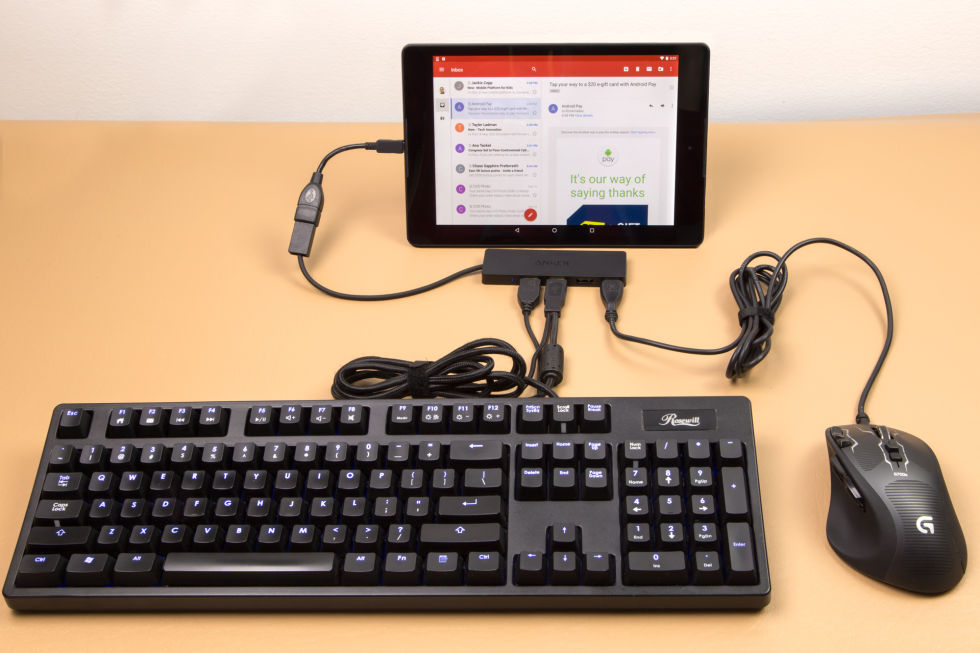
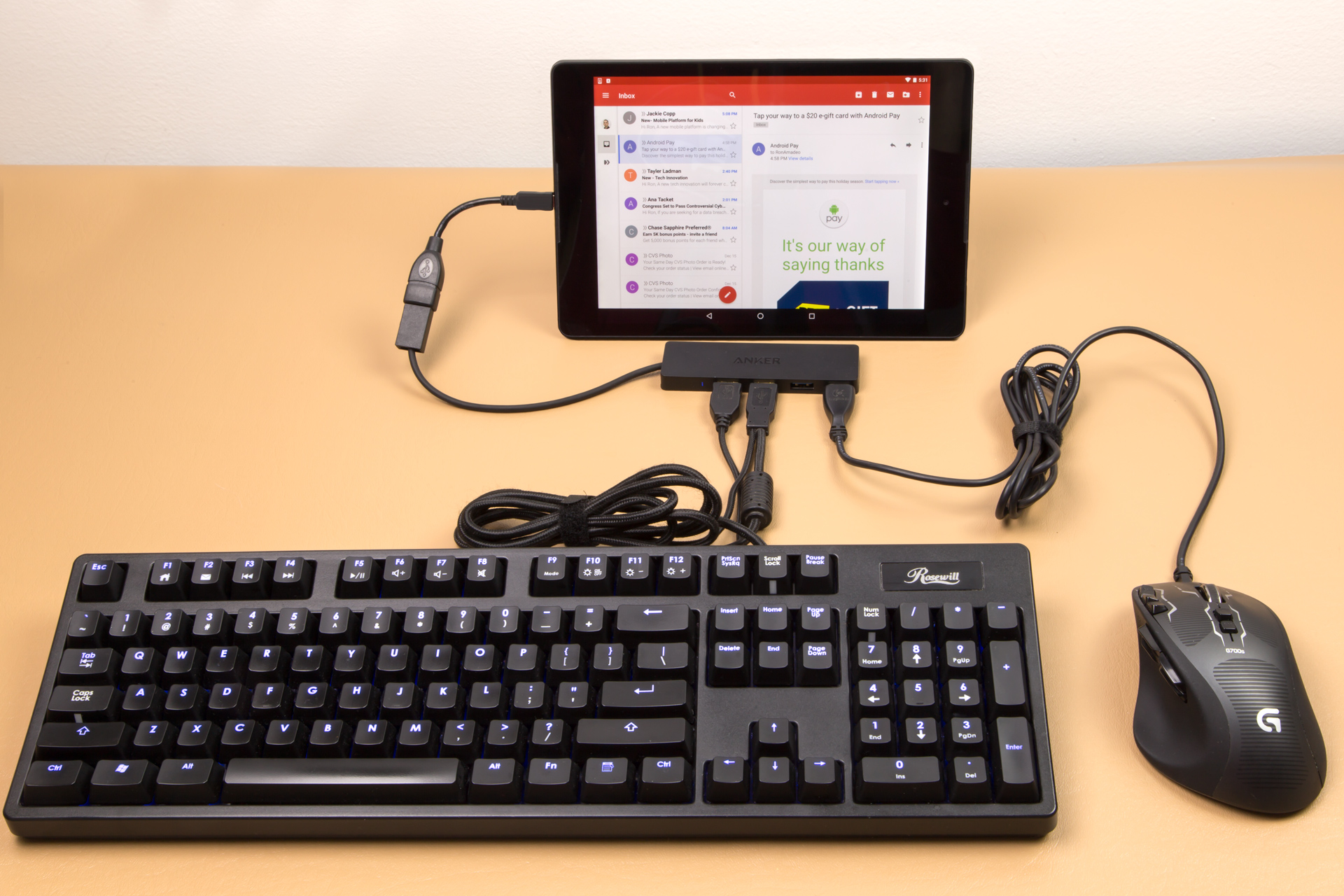
Enlarge / This would all work with Bluetooth, but wires are more fun.

Android is the most popular mobile OS on the planet, and Google has brought the OS to cars, watches, and televisions. And, according to a report from The Wall Street JournalGoogle will soon be bringing Android to yet another form factor: desktop and laptop computers. Re-architecting Android for a mouse and keyboard is going to require major changes to the smartphone operating system, but Android is actually much farther along that path today than most people realize.

We've Frankensteined together a little Android desktop setup using a Nexus 9 and a USB keyboard and mouse to see just how easy—or complicated—it was to use what is still formally a "mobile" operating system in a desktop context today, right now, without complicated changes or reconfigurations. It worked, but Android still has a ways to go before it can be called a real desktop operating system—quite a ways, in some cases.

The biggest affordance Android makes for a desktop OS is that it supports a keyboard and mouse. Any Android device can pair with a Bluetooth mouse and keyboard, and if you want to go the wired route, just about any phone can plug in a mouse and keyboard via a USB OTG cable and a USB hub. Some OEMs even build Android devices with a keyboard and mouse, like the Asus Transformer series, which is a convertible laptop that runs Android.

Read 25 remaining paragraphs | Comments

WSJ: Samsung Galaxy S7 to have pressure-sensitive display, microSD slot

MicroSD card will reportedly return to the Galaxy S7 but not the Galaxy S7 Edge.

Samsung's Galaxy S6. (credit: Ron Amadeo)

The Wall Street Journal has posted some tantalizing new details about Samsung's upcoming flagship smartphone, the Galaxy S7. The report paints a picture of the S7 as being a minor upgrade to the major revamp that was the Galaxy S6 but with a few new features to entice upgraders.

The biggest news, according to the Journal, is that the S7 and S7 Edge will feature a "pressure-sensitive display" which the report notes "will be similar to that offered by rival Apple Inc. on the iPhone 6s earlier this year." Apple's 3D Touch hardware launched with the iPhone 6s, Apple rolled out support to the core OS interface and packed-in apps, and tons of third-party apps (even Google) added support for it. Samsung lacks the sway over an app ecosystem that Apple has, so while it can update the core OS interface, we doubt many other apps will support the pressure-sensitive display, as was the case with Samsung's early foray into fingerprint readers.

In the "not surprising" category, the Journal said that Samsung will again be releasing two versions of the phone—the flat-screened Galaxy S7 and the curved-screened Galaxy S7 Edge—and that both devices will look "will look largely similar" to their predecessors. The report said the phone is slated to launch in March with an unveiling at Mobile World Congress, which is similar to the Galaxy S6 timeframe, and it will come with a USB Type C-port, which is quickly becoming a standard for new devices.

Read 3 remaining paragraphs | Comments

The Pixel C was probably never supposed to run Android

The Pixel C is ill-suited to Android, but it wasn’t supposed to be this way…

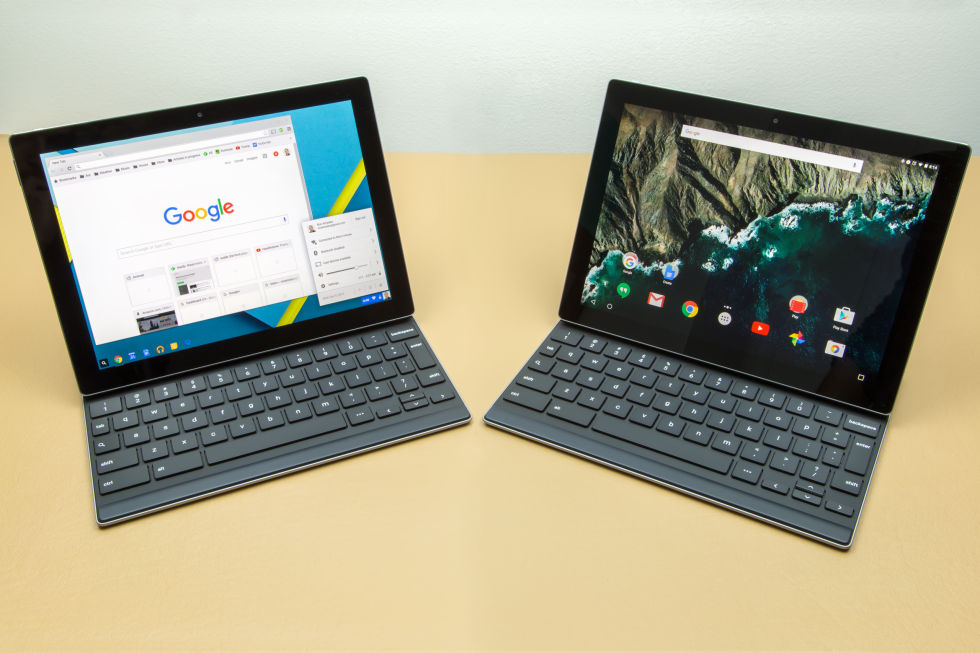
Left: A Photoshop fantasy. Right: The disappointing reality. (credit: Ron Amadeo)

Was Android actually Google's third operating system choice for its new Pixel C tablet?

The Pixel C finally went on sale this week—but our full review notes that the convertible tablet feels like hardware in search of the software to make it a compelling product. Perhaps that's because, internally, Google engineers seem to have been searching for a compelling Pixel C software package for the last year and a half.

The contradiction between hardware and software is visible all over the tablet, so two examples will suffice. The hardware's keyboard and big screen would point to it being a productivity device, but the software's lack of a split-screen mode and apps optimized for the screen's size hamstring the Pixel C. The hardware seems geared for voice command functionality, given its array of four top-mounted microphones, but the software doesn't support Google's always-on voice commands.

Read 22 remaining paragraphs | Comments

Firefox OS smartphones are dead

Mozilla announces it will stop development and sales of Firefox OS smartphones.

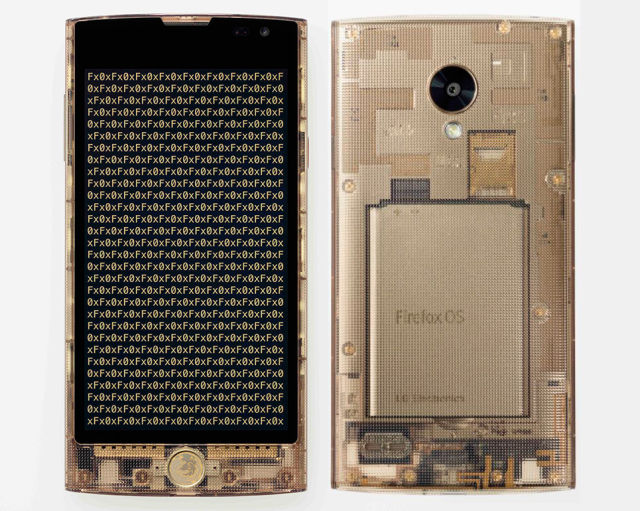
The Japan-exclusive Firefox Fx0, the closest thing the platform had to a flagship. (credit: Mozilla)

Mozilla is ending its plan to build an OS for smartphones. Today at Mozilla's "Mozlando" developer event, the company announced that it would stop developing and selling Firefox OS smartphones. TechCrunch has a statement from Ari Jaaksi, Mozilla’s SVP of Connected Devices:

We are proud of the benefits Firefox OS added to the Web platform and will continue to experiment with the user experience across connected devices. We will build everything we do as a genuine open source project, focused on user experience first and build tools to enable the ecosystem to grow.

Firefox OS proved the flexibility of the Web, scaling from low-end smartphones all the way up to HD TVs. However, we weren’t able to offer the best user experience possible and so we will stop offering Firefox OS smartphones through carrier channels.

We’ll share more on our work and new experiments across connected devices soon.

As an open source project, Firefox OS will never really "die," but it sounds like we shouldn't expect to see any more commercial smartphones.

We actually got to do a full review of a Firefox OS device with the $35 Intex Cloud FX. The hardware definitely wasn't high end, but the software didn't help matters, either. The HTML-only approach to app development meant there was basically nothing designed for the platform other than the apps that came with it, leaving us with no benchmarks, no alternative browsers, and not much to do. Firefox OS was mostly relegated to cheap phones like the Cloud FX, with the most expensive, the Fx0, clocking in at $420 and only available in Japan.

Read 1 remaining paragraphs | Comments

Pixel C review—New hardware ignores an Android tablet’s core problem: software

A “productivity” device that can only display a single app at a time?

SPECS AT A GLANCE: Google Pixel C
SCREEN 2560×1800 10.2" (308ppi) LCD
OS Android 6.0.1 Marshmallow
CPU Eight-core Nvidia Tegra X1 (four 1.9 GHz Cortex-A57 cores and four Cortex-A53 cores)
RAM 3GB
GPU Maxwell
STORAGE 32GB or 64GB
NETWORKING Dual Band 802.11b/g/n/ac, Bluetooth 4.1, GPS
PORTS USB 3.1 Type-C, 3.5mm headphone jack
CAMERA 8MP rear camera, 2MP front camera
SIZE 242 x 179 x 7 mm
WEIGHT 517 g
BATTERY 9000 mAh
STARTING PRICE $499 for 32GB

$149 for keyboard

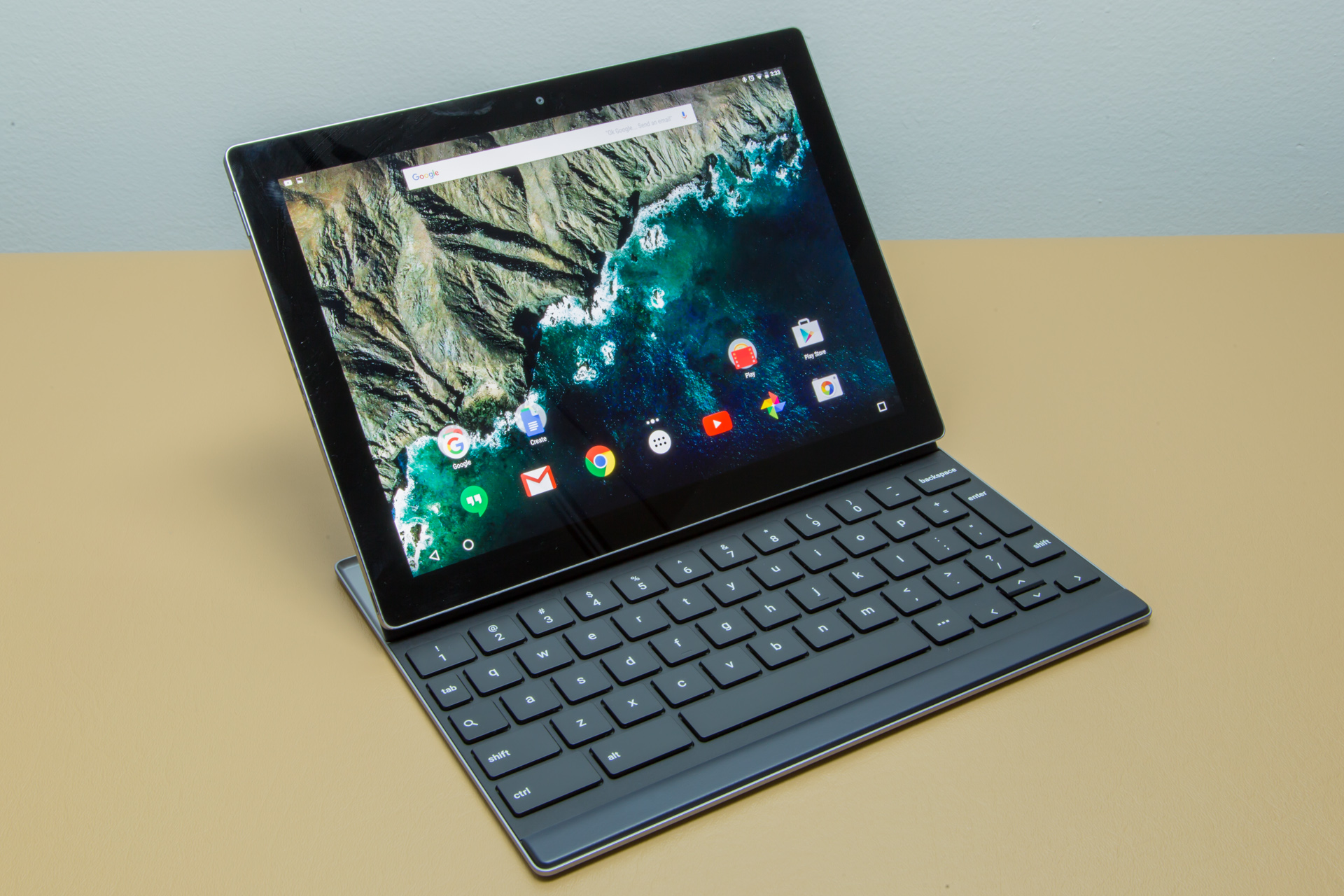
Google is back with yet another Android tablet. The latest hardware effort, the Pixel C, comes from an odd place inside Google: the Pixel team. Usually a "Pixel" is the latest, fancy high-end Chromebook, but with the Pixel C, the traditionally Chrome OS-centric team decided to make an Android tablet. It's not just a tablet, though, there's also a clip-on keyboard base making it a Surface-style convertible.

While the Pixel team brings a great all-aluminum body and minimal design, our unit had a ton of quality control issues. The touchscreen frequently failed to register taps and scrolling was unreliable. We also often had the keyboard disconnect from the tablet, which caused typing to go crazy. Many have wondered what was taking the Pixel C so long to come out, and we wonder if issues like this contributed to the late launch. While our review unit didn't come in a retail box, as far as we can tell, we tested a retail unit.

Even on paper, the Pixel C doesn't seem like a great idea. The company keeps iterating on hardware for an iPad competitor, but hardware was never really an Android tablet's big problem. The problem has always been software—mainly, the lack of tablet apps and the lack of an OS that really takes advantage of a big screen aren't fixed by new hardware. While we've seen hints of a split screen mode that would greatly help things, it's not present here. That makes the Pixel C tough to recommend when iOS and Windows are both much more capable on large screens.

Read 36 remaining paragraphs | Comments

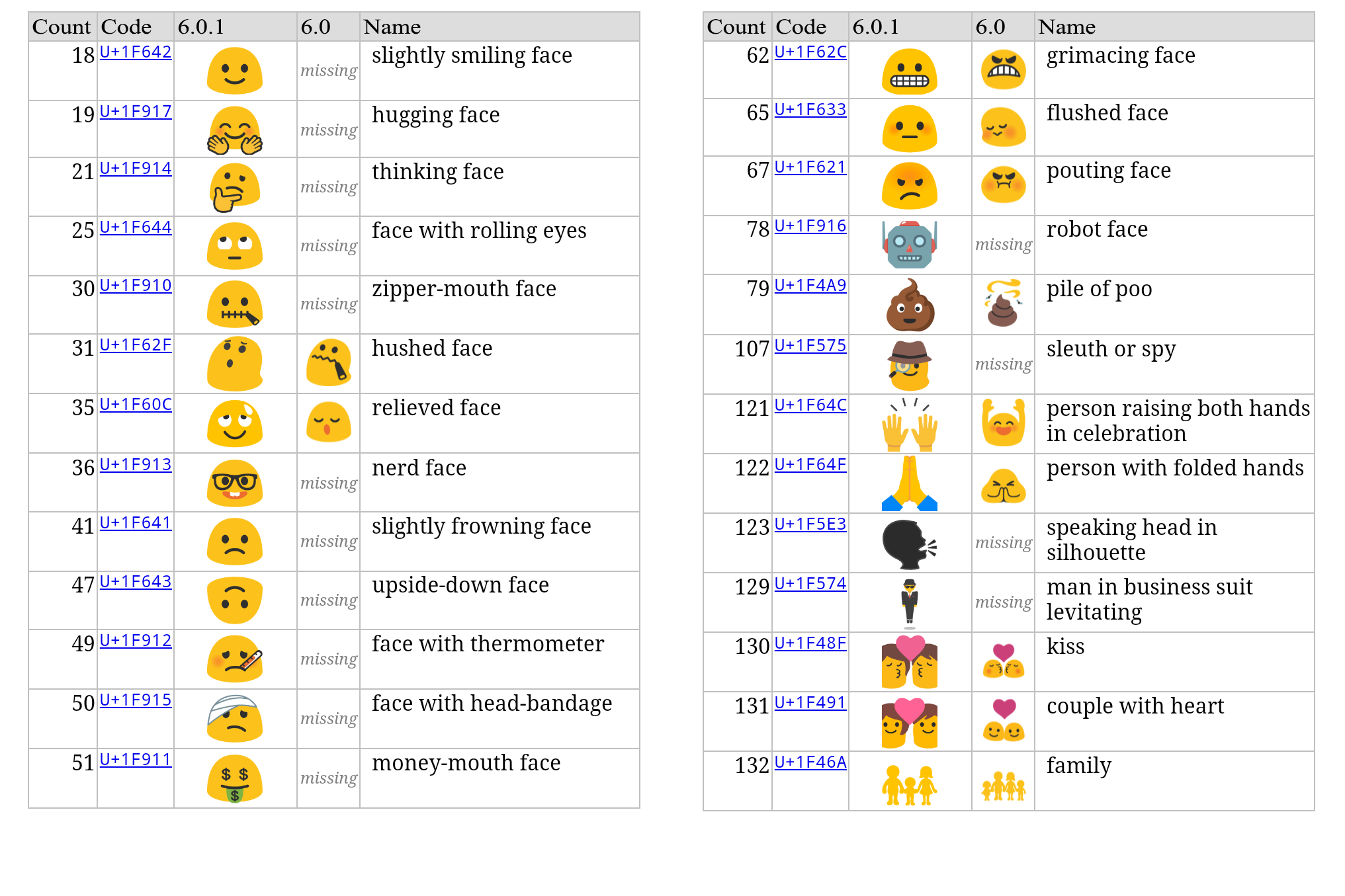
Android 6.0.1 adds a ton of new emoji, and we’ve got the full list

There’s also a small tweak to tablet navigation and the return of a DND mode.

A small update to Android 6.0—Android 6.0.1—is officially out and (should be) available on the Nexus system image page. 6.0.1's main purpose for existing seems to be a bunch of new Unicode 8 emoji—which we have dutifully covered in the above gallery—along with small tweaks to the tablet layout and the Do Not Disturb mode.

Unicode.org has a full list of all the current emoji complete with what the emoji look like on other platforms, so we used that to create the above list. The site wasn't entirely accurate, but we fixed whatever mistakes we could spot (we think they had an old Android emoji list).

There are a few notable things here. We're really not feeling the redesigned poop emoji (#79 in the list), and Google neglected to implement the middle finger emoji. There also still aren't any fancy emoji "modifiers" for things like skin color—everything gets a yellow skin tone and that's it.

Read 5 remaining paragraphs | Comments