iRobot sells off military unit, will stick to friendlier consumer robots

iRobot will focus on its Roomba empire, leaving bomb disposal to a separate company.

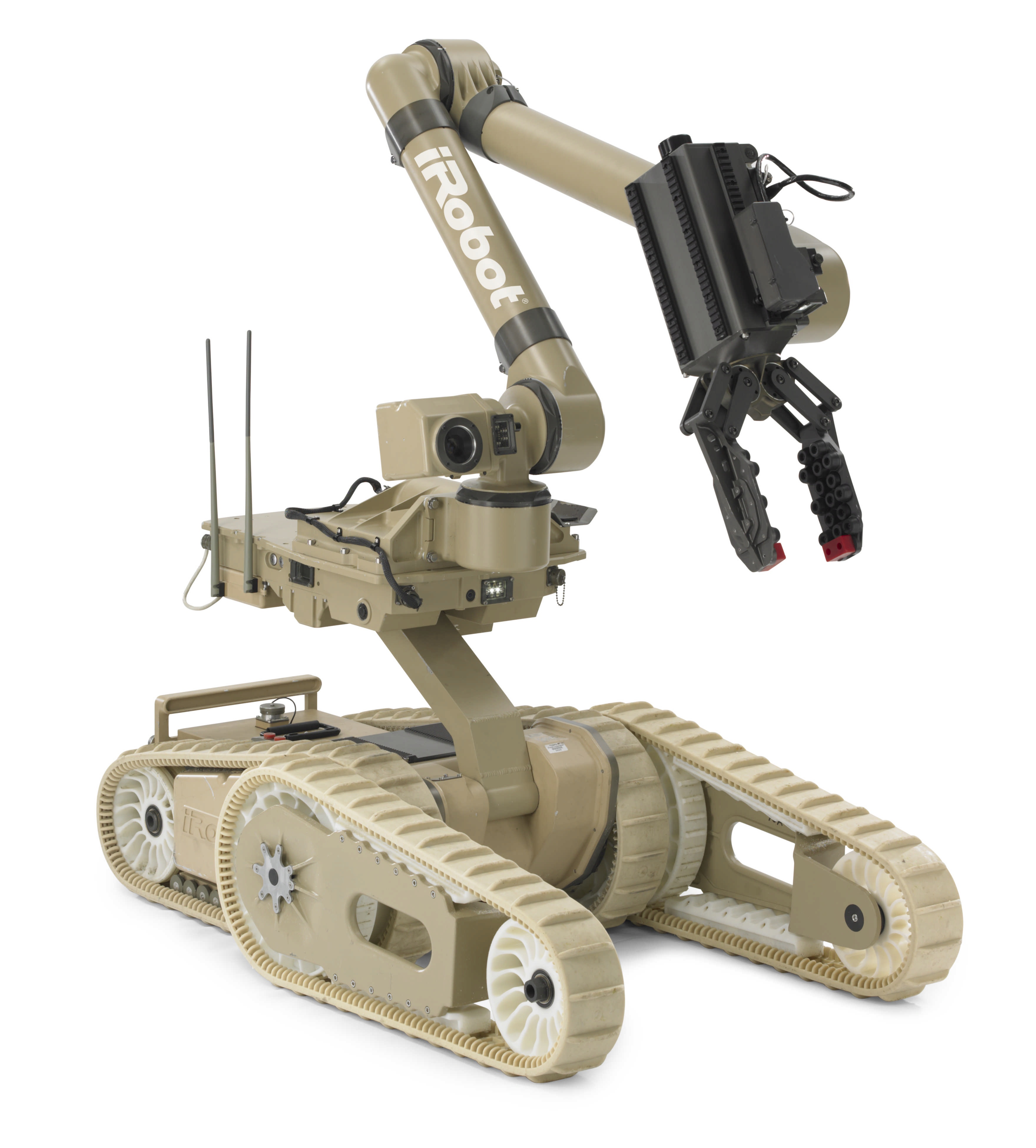
iRobot is most famous for its Roomba robotic vacuum line, but the company also has a sizable "Defense and Security" division, which makes robots for the US Armed Forces and various police forces. Or at least it used to—iRobot has announced that the military division will be sold off and formed into a separate company.

The press release says that Arlington Capital Partners will buy the division for "up to $45 million in total consideration." The new company will be fully dedicated to military and police robots, and it will be led by the existing Defense and Security management team. There's no name for the new company yet—that will be saved for when the transaction closes in the next 90 days.

iRobot's military robots all followed the same basic formula. They're driven by a pair of continuous tracks with a second set of tracks attached to the front. The front tracks could be actuated, lifting up off the ground and allowing the robot to climb obstacles like stairs and rocks. The body of the robots were platforms that iRobot outfitted with various capabilities, usually robotic arms with cameras or gripper arms. That basic design came in a few different sizes, ranging from something you could throw through a window to a robot that would fit in a backpack or a heavy-duty bot weighing as much as 500 pounds.

Read 3 remaining paragraphs | Comments
Android Wear gets wide Marshmallow rollout, adds speaker and LTE support

After debuting on a disastrous LG watch, other devices will finally get the update.

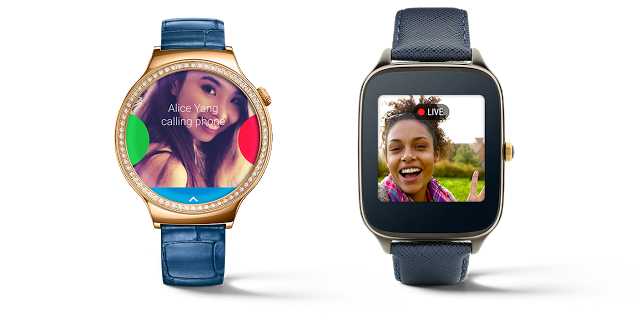
The speaker-equipped Android Wear devices: The Huawei Watch (left) and ASUS ZenWatch 2 (49mm) (right). (credit: Google)

The Android 6.0 Marshmallow update for Android Wear is back. The update debuted on the disastrous LG Watch Urbane 2nd Edition LTE in November, but due to "image quality issues" LG pulled the watch from the market after only six days. The Marshmallow Android Wear update seemed to go down with the Watch Urbane, and the update went missing in action for the last two months. According to a post on the Official Android Blog, it's now back and will now roll out to "all Android Wear watches over the next few weeks."

Other than the update to a new base of Android, the new version of Android Wear adds the ability to send an instant message with your voice while specifying the service you want to use. For instance, it's now possible to command "OK Google, Send a WhatsApp message to Nathan: I’ll be right there." Google notes you can currently call out Google Hangouts, Nextplus, Telegram, Viber, WeChat, and WhatsApp by name.

The other big update feature will require extra hardware: Android Wear now supports speakers. If you have a watch with a speaker, you can listen to audio messages and make calls directly from the watch. (There's no word on audio notifications, though.) Some watches currently on the market actually planned ahead for this and included speakers. Both the Huawei Watch and ASUS ZenWatch 2 (49mm) have included dormant speakers for instance, and with the update these should wake up and function.

Read 2 remaining paragraphs | Comments

Head of Google Search retires, artificial intelligence chief to take over

With Amit Singhal leaving, Google is reportedly merging the AI and search divisions.

(credit: Amit Singhal)

Amit Singhal, Google’s SVP for search, is leaving the company after fifteen years. Singhal has long been in charge of Google's flagship product, and he famously rewrote Google's page ranking algorithm in 2001. He was also a big driver of Google's Star Trek ambitions.

With Singhal leaving, John Giannandrea, Google's head of artificial intelligence, is taking over the search division. Re/code is reporting that with the change, Google will merge the search and artificial intelligence divisions. Giannandrea previously led the effort to introduce the Knowledge Graph—a machine learning that gives you a direct answer rather than a list of links—to search. Today the Knowledge Graph powers answers to the "OK Google" voice queries that appear on just about every consumer-facing Google OS.

Moving the artificial intelligence unit in with search is certainly an eyebrow-raising move. Machine Learning seems to be taking over all of Google lately. Google Deepmind is building a general artificial intelligence that is smart enough to learn and beat various games. It recently open sourced TensorFlow, a software library for machine intelligence, and machine learning technology in Google Inbox can even write short replies to e-mails for you.

Read 1 remaining paragraphs | Comments

Google Play Music Podcasts are live for some users

Some Android users already have access to Google’s new podcast client.

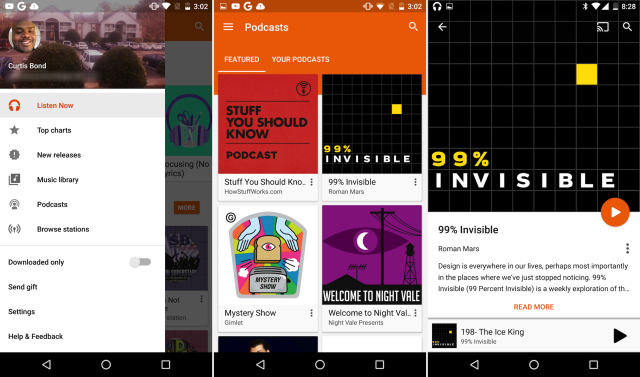
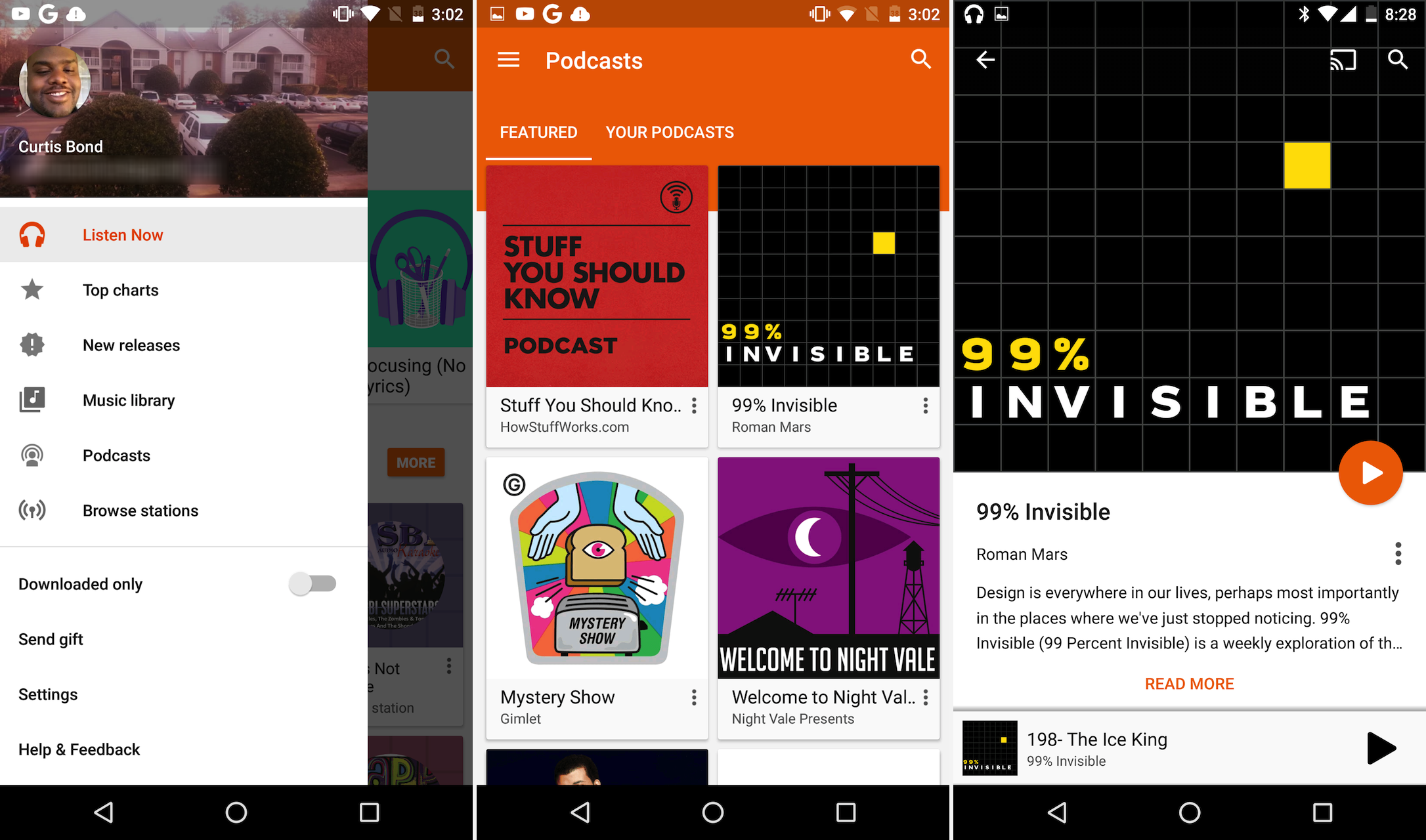
Enlarge / The Android component for Google Play Music Podcasts. Note the new "Podcast" option in the navigation drawer. (credit: Android Police)

If you remember a few months ago, Google announced it would be jumping back into the podcast arena with "Google Play Music Podcasts." It launched a site to take RSS submissions from content creators and promised the product would be launching "soon." That product now appears to be live for some users.

Google hasn't made an announcement yet, but Android Police has screenshots of the Android component, which lives inside the Google Play Music app. If you have Play Music version 6.3 and (critically) have the server-side switch for podcasts turned on, you'll see a new section in the navigation drawer called "podcasts."

The section contains a searchable podcast catalog, which allows you to subscribe and auto-download shows. The Now Playing screen has been tweaked with 30-second skip and rewind buttons, and the app will alert you when new shows arrive and start downloading. For now, it seems the podcast section is pretty bare bones, feature-wise. There's no variable playback speed, no importing of existing RSS lists, and search isn't limited to just podcasts.

Read 1 remaining paragraphs | Comments

Alphabet’s market cap tops Apple, is now the world’s most valuable company

In Alphabet’s first earnings call, it also announced it spent 3.5 billion on moonshots.

Enlarge (credit: Ron Amadeo)

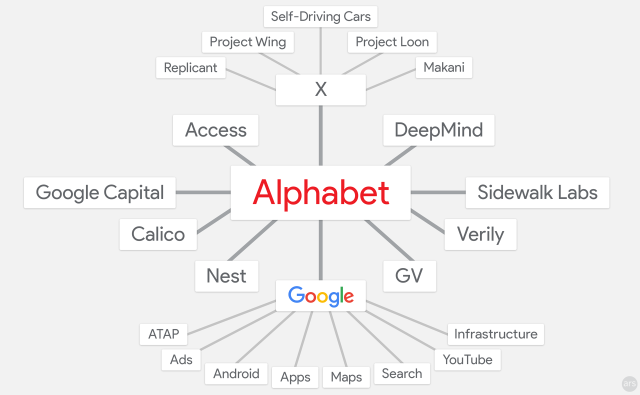
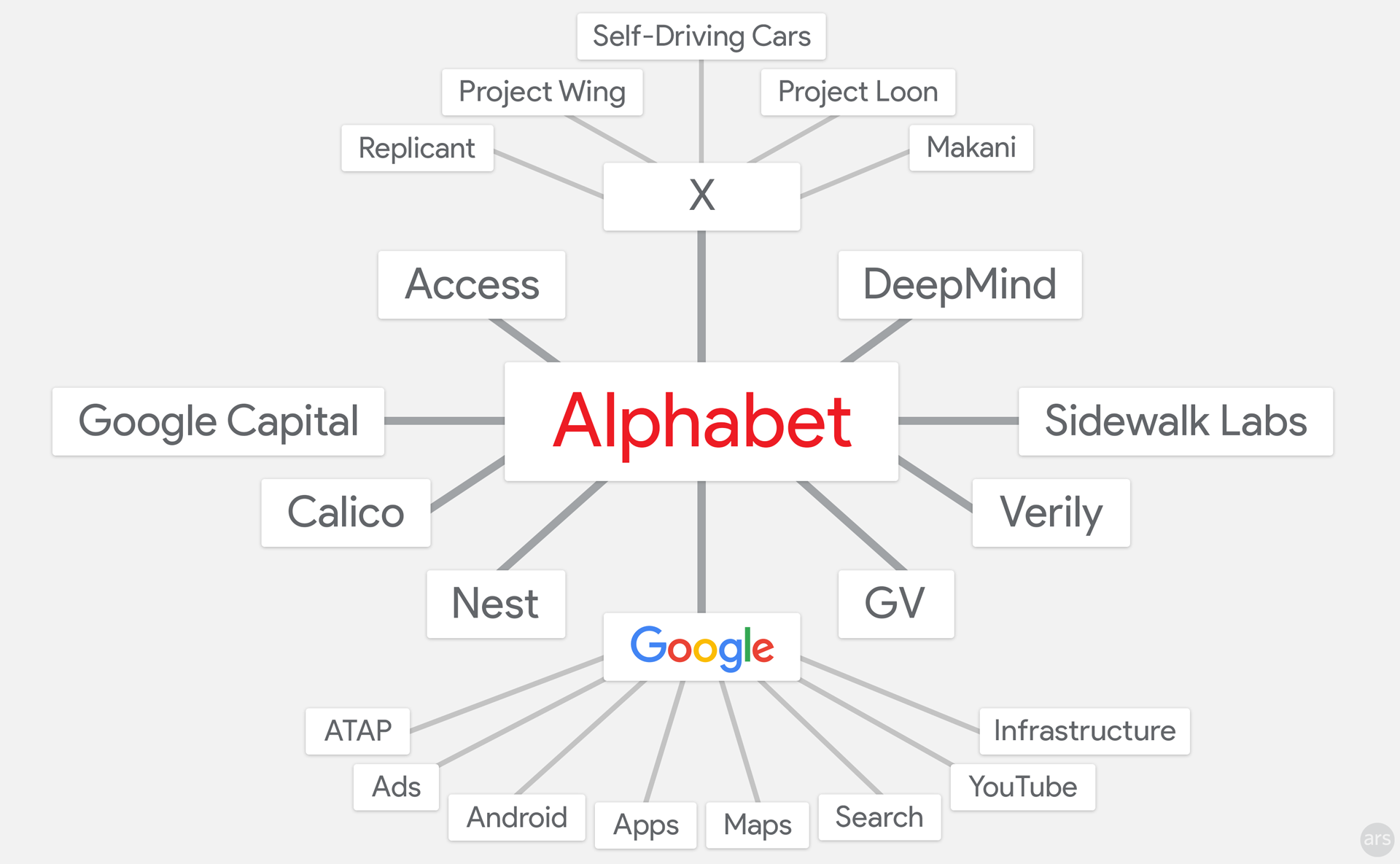
Google's intent to transition to "Alphabet"—a company-full-of-companies that better represents the current layout of Larry Page's conglomerate—was announced back in August 2015. After getting organized and actually going through with the transition, today marks the first quarter of Alphabet's existence and its first earnings report. It even has a brand new investor site to celebrate.

For Q4 2015, Alphabet beat analyst estimates of 8.10 per Class A share and 20.77 billion on revenue, with $8.67 per share and 21.33 billion in revenue. The news sent the price of Alphabet stock up over 6 percent in after-hours trading, sending Alphabet's market cap over $550 billion. Apple's market cap is sitting at $538 billion, which makes Alphabet the most valuable company in the world. Alphabet's position as highest company by market cap is a product of both Alphabet's rise and Apple's fall. The amount is a far cry from Apple's all-time high of ~774 billion in February 2015.

As the first-ever Alphabet earnings call, Google is breaking out the non-Google parts into a segment called "other bets." Other than Nest and Google Fiber, the "other bets" segment is basically made up of Alphabet's moonshots. The company says the "other bets" segment had $448 million in revenue for 2015 ($327 million this quarter), but overall Alphabet's non-Google companies lost $3.567 billion this year, with $1.942 billion of that coming just this quarter.

Read 1 remaining paragraphs | Comments

Report: Google wants to take “Apple-like” control over Nexus devices

To push the ecosystem forward, Google reportedly goes solo on designing the next Nexus.

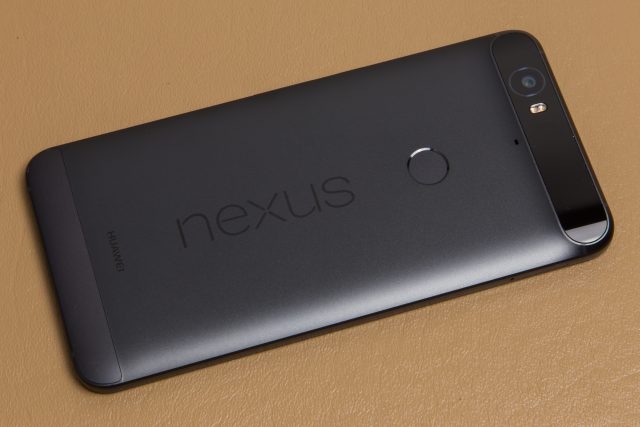
A report from The Information (subscription required) states that Google wants to take "greater control" over the design and building of Nexus phones. Currently, a Nexus device is a co-branded partnership between Google's Android team and an OEM, but this report says Google wants to move to a more "Apple-like" approach.

The report says that in the future, "hardware makers will be much more like order-takers, similar to the way contract manufacturers like Hon Hai (Foxconn) follow Apple’s directions for producing the iPhone." Apple designs its phones, SoC, and other parts and then ships the plans off to third-party factories to have them built.

Currently it's easy to draw comparisons to Pixel devices, which are also designed and branded by Google and built by third parties. Would this device be called a "Pixel Phone?" Pixel brand devices have typically come from the Chrome group, while Nexus has been from the Android Team. The branding isn't just about the operating system, it's also about which team inside of Google the product comes from. The Pixel group did recently create its first Android device, the Pixel C, but that seems to be more of a last-ditch effort to get the hardware out the door. The two operating systems are reportedly merging, though, so the line between teams and brands could get messier.

Read 5 remaining paragraphs | Comments

Report details Google’s “Project Skybender,” a 5G Internet drone program

Plane-like drones could someday beam 1Gbps to 10Gbps Internet down to Earth.

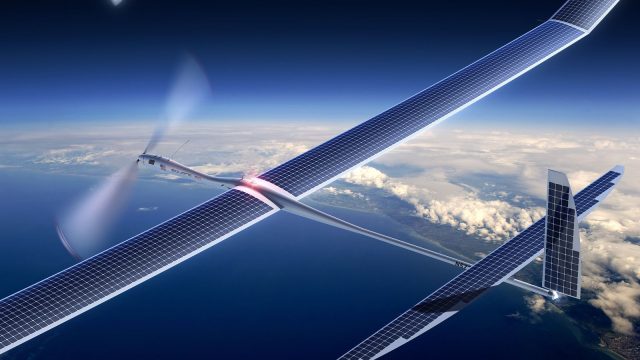
A Google Titan drone.

If a report from The Guardian is to be believed, Google has yet another Internet-in-the-sky program in the works. This one is called "Project Skybender" and aims to outfit drones with millimeter wave transceivers—radios that work in a slice of the spectrum that could be used in next-generation "5G" networks.

Apparently, Google currently has drones whizzing around the airspace of Spaceport America in New Mexico, where the project shares a hangar with Virgin Galactic. Currently, the drone hardware seems to be an "optionally piloted" commercial aircraft called the "Centaur," along with the solar-powered drones from Google Titan. Both aircraft are "plane like" drones with wings and front-facing propellers.

The report says that Google is using the drones to "experiment with millimeter-wave radio transmissions" and that the project "ultimately envisages thousands of high altitude 'self-flying aircraft' delivering Internet access around the world." The FCC has said that 5G millimeter wave networks could hit speeds between 1Gbps and 10Gbps. Currently engineers are working around natural distance and signal propagation issues inherent in the lower frequency. While millimeter-wave transceivers might eventually be integrated into a smartphone, Google is presently using several stationary antennas around Spaceport America.

Read 2 remaining paragraphs | Comments

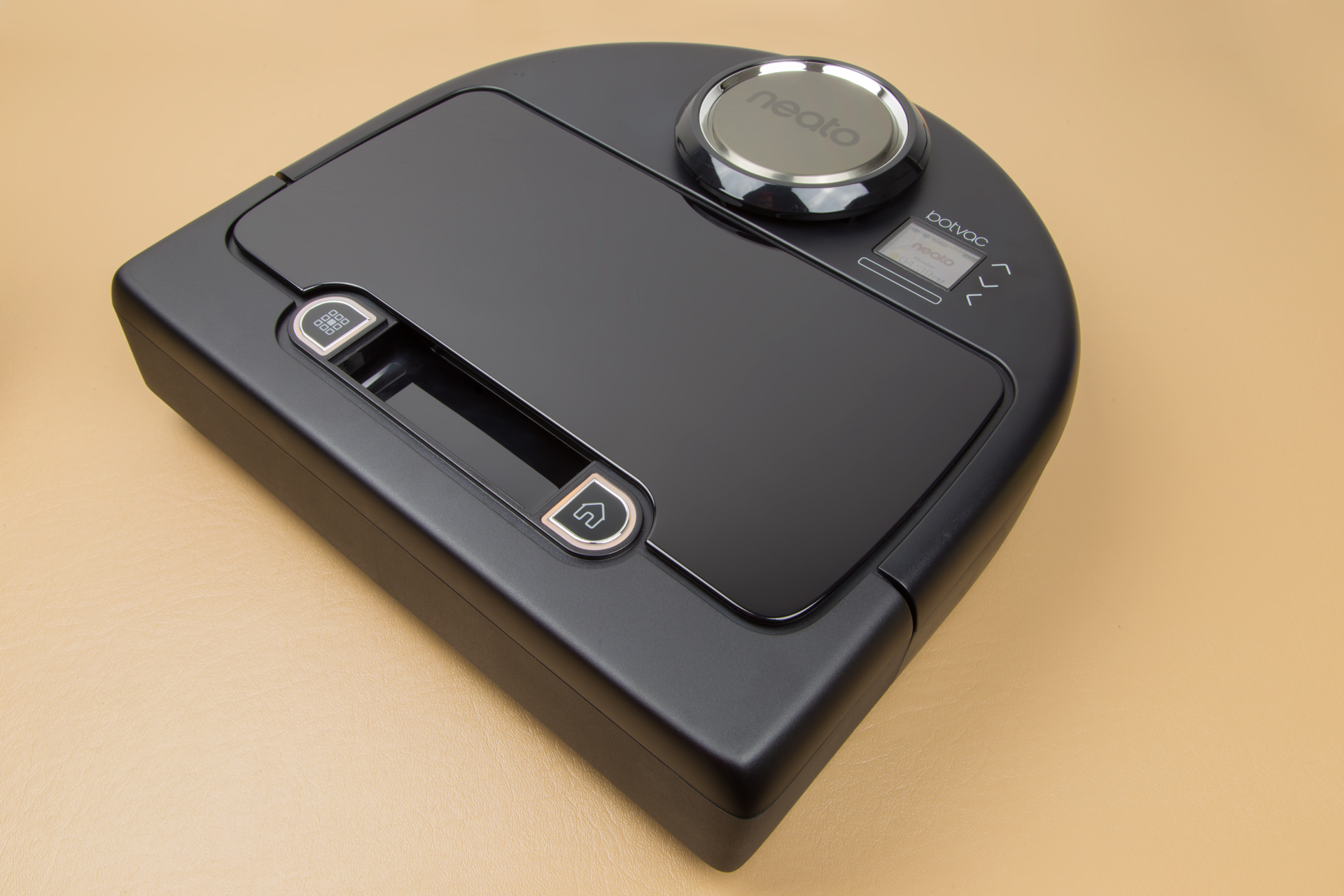
Neato BotVac Connected review: A LIDAR-powered robot vacuum is my maid now

Vacuuming is for chumps. Make a robot do it.

It's been about two months since I've vacuumed my house, and the floor has never been cleaner. That's because I haven't been doing it—a robot has. For the past two months we've had a Neato BotVac Connected rolling around the house, the latest robo vac in Neato's lineup. Like all Neato robots, this has a spinning LIDAR unit that maps out the house. In this new "Connected" version, it's got Wi-Fi and a smartphone app.

The household name in household robots is definitely iRobot's Roomba, a round robotic vacuum cleaner that popularized the idea of having a little bot clean up after you. The fundamentals of the Roomba haven't changed much since its introduction: it's a vacuum on motorized wheels with a bumper plate in the front. When the plate bumps into something, the robot knows it hit an obstacle and changes directions. Start a Roomba on floor and usually it will spiral outward until it hits a wall, try to feel out the perimeter of the room, and then ping pong all across the center of the house in an attempt to cover the interior space.

Most Roombas can't "see." Its only window to the outside world is the little bumper plate—it feels its way around a space by running into stuff. Roomba will say it takes this limited information and runs it through an algorithm to be a little smarter than "randomly driving around," but to the human eye, there's little logic to where the little disk is driving.

Read 31 remaining paragraphs | Comments

Google tells the FCC its secret airborne network is nothing to worry about

Google is still seeks approval for a nationwide test of what we assume is Project Loon.

(credit: Google)

In an FCC filing, Google has told the US government that it believes its secret airborne network won't interfere with any existing networks and won't harm any people or animals. Google has been hoping to perform a "two-year nationwide test" of the network and recently addressed some concerns people had raised about it.

In the filing, Google only calls the project a "nationwide testing of airborne and terrestrial transmitters in the 71-76 and 81-86 GHz bands (collectively, the E-band)." It wants to keep the project a secret, but all signs point to it being for Project Loon, Google's airborne network of balloons which it has primarily tested in New Zealand. The application is signed by Astro Teller, the head of Google's "X" division, which houses Project Loon.

The "E-Band" that Google says it will use is often deployed as a wireless backhaul option for network providers. Fiber is, of course, preferable, but Fiber is expensive and sometimes—like in the case of Project Loon—you just can't use a wire. Most E-Band applications use highly-directional antennas and are capable of multi-gigabit speeds over a mile or two. Google notes that it will have both terrestrial antennas that "will be pointed upward" along with airborne transmitters. In Project Loon, this would suggest the E-Band would be used for balloon-to-ground and balloon-to-balloon communication.

Read 3 remaining paragraphs | Comments
Google’s AI beats Go champion, will now take on best player in the world

Google sets a neural network loose on the ancient Chinese game Go.

Computers have already beaten the best humans at Checkers, Chess, and Jeopardy, but mastery of the ancient Chinese game Go has eluded computer scientists for the longest time. Deepmind, Google's artificial intelligence division, claims to have made a big breakthrough using neural networks, and it recently took on and defeated a Go world champion.

As Google's blog posts puts it, "There are 1,000,000,000,000,000,000,000,000,000,000,000,000,000,000,000,000,000,000,000,000,000,000,000,000,000,000,000,000,000,000,000,000,000,000,000,000,000,000,000,000,000,000,000,000,000,000,000,000,000,000,000,000,000,000,000,000,000 possible positions" in Go, which makes the game very complex. Mapping out every possible move won't work for Go, making it the one game computers can't beat humans at. Performing well at Go is considered by some to be a benchmark for artificial intelligence.

Deepmind's AI, called "AlphaGo," recently took on reigning three-time European Go champion Fan Hui and won all five games. In March, AlphaGo has a throw-down scheduled with Lee Sedol, who has been the top Go player in the world for the past decade.

Read 2 remaining paragraphs | Comments