Hands on with the LG V20—a big improvement over the LG G5

The V20 impresses with an all-metal body, removable back, and no modular gimmicks.

NEW YORK—Today LG took the wraps off its second flagship for 2016: the LG V20. The device is a sequel to last year's LG V10 and follows much of the same formula. The V20 is a high-end 5.7-inch smartphone with a secondary "ticker" screen just above the main screen.

The specs are about what you would expect for a 2016 flagship: a Snapdragon 820, 4GB of RAM, a 3200mAh battery, and a 5.7-inch, 2560x1440 IPS LCD. The V20's big eyecatcher is the always-on second screen, a small area above the main screen that can display a series of mini apps—power controls, app shortcuts, calendar events, music controls, or a text string.

We weren't enamored by LG's earlier 2016 flagship, the LG G5. But LG has made great strides with the V20 and seems to have solved most of the issues we had with the previous flagship. The G5's modular system is no more, along with the build-quality problems that it caused. Gone are the uneven seams and sharp edges, while the V20 keeps the removable battery and MicroSD slot by going with a more tradition removable back plate design.

Read 10 remaining paragraphs | Comments

Report: Huawei is building a successor to the Nexus 7

Evan Blass claims a small Google tablet is coming.

Enlarge / The 2013 Nexus 7.

Perennial product leaker Evan Blass claims that a new Google tablet is on the way. Huawei will apparently be building a 7-inch tablet for Google, making the device a follow-up to the Nexus 7. Blass says the device is due out before the end of the year.

Huawei-built "Nexus 7" rumors have been floating around for some time. Last year, TechTimes reported on a Huawei-made Nexus 7 that would launch in 2016, but the site's suggested launch time of "Google I/O" didn't pan out. Blass' comments are definitely the most reliable source of Nexus 7 rumors we've seen yet.

Of course "Nexus" probably won't be the name of this device. Google is undergoing the Great Hardware Unification of 2016, and according to a report from Android Police, the Nexus line is going away to make way for a unified "Pixel" line. The two upcoming Google phones are reportedly going to be branded "Pixel" and "Pixel XL." If that report holds true, this device would probably be branded a "Pixel," too.

Read 2 remaining paragraphs | Comments
Project Ara—Google’s modular smartphone—is dead

After delays and feature reductions, Google finally puts Ara out of its misery.

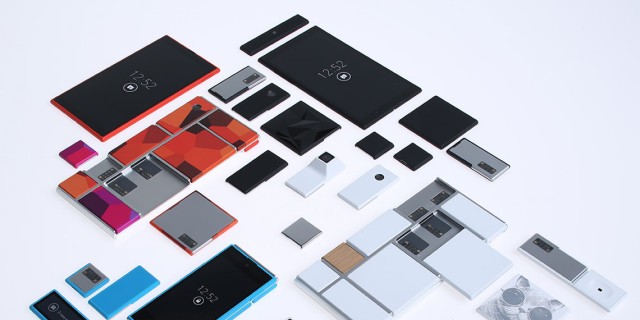
The original Project Ara concept render. (credit: Motorola)

It sounds like Project Ara, the ambitious modular smartphone concept birthed in Google's ATAP division, is finally dead. A report from Reuters says that Google has "suspended" Project Ara in an effort to "streamline the company's hardware efforts."

Project Ara never seemed like a particularly viable product, and after the announcement in 2013, progress didn't come quickly. The device was delayed past its 2015 commercialization deadline when plans for a Puerto Rican "food truck" pilot launch fell through. Earlier this year, the device was delayed again to 2017 and the Ara team announced that Ara would pivot from fully modular to having a fixed CPU, GPU, antennas, sensors, battery, and display. After that announcement, Ara was watered down so much it barely had a reason to exist.

If you were really hoping for a modular smartphone, not all hope is lost, Reuters says that while "Google will not be releasing the phone itself" licensing the technology to third parties is an option. Will anyone dare to pick up the modular smartphone torch when even Google has failed, though?

Read 1 remaining paragraphs | Comments

2016 “Nexus” phones will reportedly be branded “Pixel,” launching October 4

Report: Pixel Phones, Google Home, Daydream VR, and a 4K Chromecast will launch on 10/4.

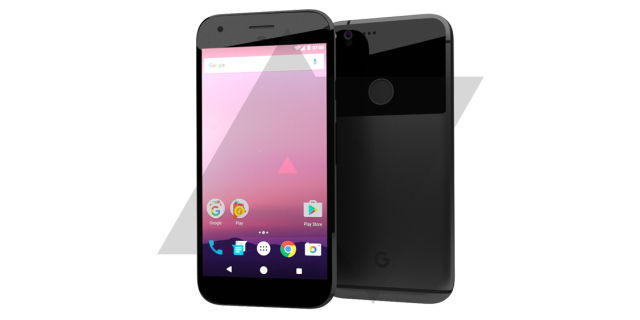
Android Police's mockup of the new Pixel Phones, based on inside information. (credit: Android Police)

A fresh report from Android Police claims that October 4th will be a Google extravaganza. The site says we're going to see the launch of Google's upcoming "Sailfish" and "Marlin" phones, along with Google Home, the company's answer to the Amazon Echo; Daydream VR, the company's answer to the Samsung Gear VR; and a Chromecast capable of 4K playback.

News about Sailfish and Marlin have been trickling out for months. We mostly know what they're going to look like (see above) and what specs they're going to have. The one thing we haven't known is what they're going to be called. Nexus phones? Google Phones? We've been referring to them as "Nexus Phones," since they're the followups to the Nexus 5X and 6P, but according to another Android Police report, the devices will actually be branded "Pixel" and "Pixel XL."

Assuming the new phones are branded "Pixel," so far we haven't seen much from them that lives up to the "Pixel" name. To date there have been three "Pixel" products: the Chromebook Pixel 1 and 2, which served as the flagship devices for Chrome OS, and the Android-powered Pixel C.

Read 2 remaining paragraphs | Comments

Samsung halts Galaxy Note 7 shipments after reports of “exploding” phones

Samsung halts sales of its latest flagship to do more safety testing.

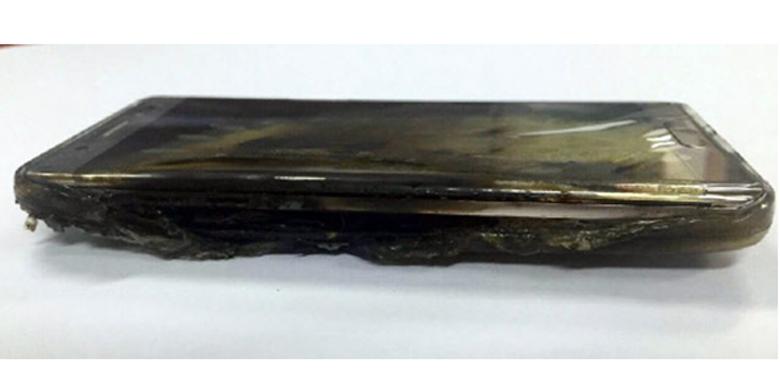
Enlarge / One of the extra-crispy Galaxy Note 7s after a charging accident. (credit: BusinessKorea )

Samsung's latest flagship, the Galaxy Note 7, recently began shipping out to carriers and countries around the world. Now Samsung's plans for the super-premium smartphone are being delayed after several reports from customers that the device "exploded" while charging.

The Galaxy Note 7 is the first Samsung phone to ship with USB Type-C connector. To ease the transition to the new standard, Samsung included a Micro-USB to USB Type C adapter in the box. This adapter could be to blame, or it could be faulty chargers—or the batteries themselves. Samsung SDI Co Ltd, one of the suppliers for the Note 7 battery, told Reuters that it had seen no evidence that its batteries were to blame.

Samsung has acknowledged the reports, with a representative telling The Korea Times, "We have acquired the handsets, which our customers say burst into flames while charging, to identify the reason. We will come up with a fix as soon as the investigation is finished. We suspended the supply of the phones earlier this week so as to double-check their safety." Another representative told the Yonhap News Agency that "[The] Results of the investigation and relevant countermeasures will be made public this weekend or early next week at the latest."

Read 1 remaining paragraphs | Comments

The Samsung Gear S3 smartwatch packs LTE into a giant 46mm case

The full suite of Samsung Pay features (MST and NFC) comes to a smartwatch.

Samsung announced a new smartwatch today, the Gear S3. Like the Gear S2, this is a Tizen-powered smartwatch with a stainless steel case and a rotating bezel.

Samsung is packing everything it can into its smartwatch this year. There's a bigger, 1.3-inch 360×360 display, an optional LTE version, the addition of MST (Magnetic Secure Transmission) technology for Samsung Pay, a speaker and microphone for calls, GPS, Wi-Fi, Bluetooth, and a barometer. Bigger isn't always better in the smartwatch world, though, and the Gear S3 sounds like a behemoth—the case has grown from 44mm to 46mm. Compare that to the Apple Watch, which comes in 38mm and 42mm sizes.

For specs, the S3 has a dual-core 1GHz "Exynos" chipset (no model given), 786MB of RAM, 4GB of storage, and a 380mAh battery. The watch is IP68 rated for water and dust protection. There are two different styles to choose from this year: the traditionally styled "Classic" watch—which does not have LTE—and a more rugged-looking "Frontier" version, which comes with LTE baked in. Samsung is promising "3-4 days" on a charge, but that's probably not with LTE turned on. Both watches are 12.9mm thick and are compatible with most 22mm watch bands.

Read 2 remaining paragraphs | Comments

Another shakeup at Nest as software responsibility heads to Google

The line between Alphabet and Google blurs as an “independent” company suddenly isn’t.

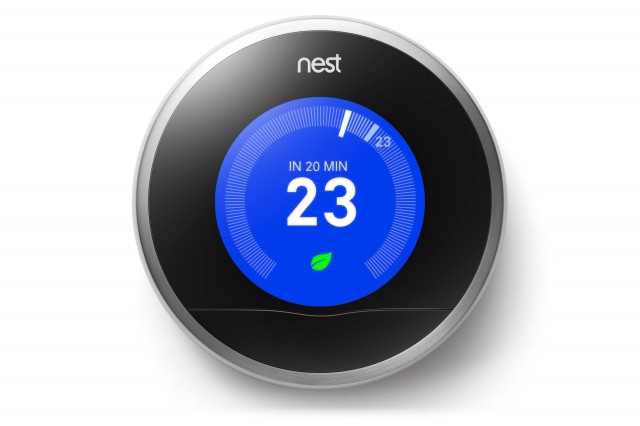
(credit: Nest)

Just three months after Nest co-founder Tony Fadell left the company and new CEO Marwan Fawaz took over, Alphabet's troubled smart home division, Nest, is apparently experiencing another shakeup. According to a report from Fortune, Google is "absorbing" Nest's software engineers in order to form a "unified Internet of things platform."

Hiroshi Lockheimer, the current head of Android, will lead the group. The Fortune report notes that the combined group will "continue to work" on Google Home, Google's forthcoming Amazon Echo competitor. A previous report from The Information (paywall) stated that Nest's request to work on Google Home was denied by Google. A Nest representative denied this statement and said the integration would be similar to the Amazon Echo.

Google and Nest were definitely not on a "unified" platform path before this. Nest created the "Works with Nest" program along with the wireless protocol "Thread." Google is working on "Brillo," a stripped down version of Android for IoT devices, and both companies are involved with the "Weave" communication standard. It's all very complicated and incomplete.

Read 3 remaining paragraphs | Comments

Google Cast gets built into Chrome

Chrome no longer needs an extension to beam media to your TV.

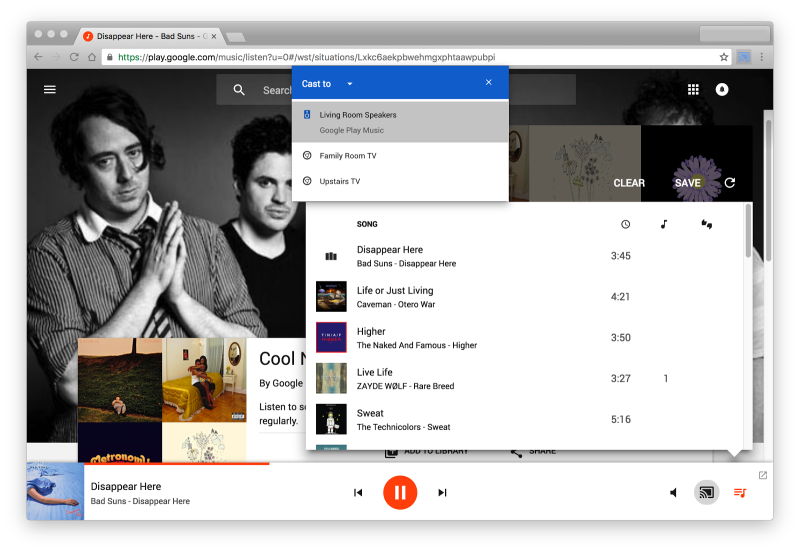
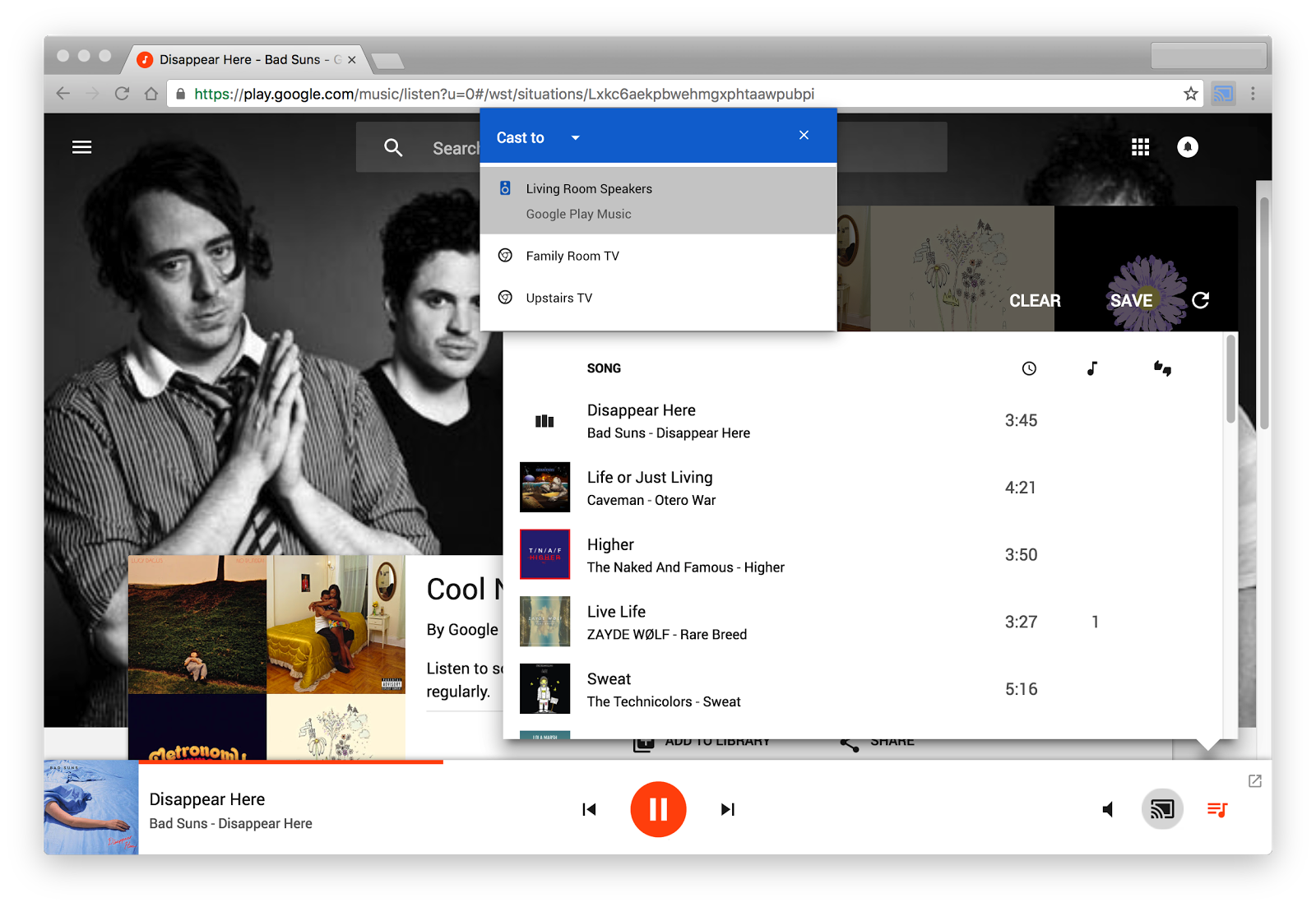
Enlarge / The Google Cast integration in Chrome. (credit: Google)

Google Cast—the protocol that powers Chromecast—previously worked inside of Chrome thanks to an extension released by Google. Buttons on YouTube, Google Music, and other sites allowed you to beam music and video to your TV or stereo system. Now you no longer need an extension to sling media across the room. Google has built the protocol directly into Chrome.

Like all Chrome features, Cast support started in the "Dev" and "Beta" versions. Cast has finally hit the stable channel that most consumers use. The Cast buttons in web site UIs will continue to work the way they always have, and if you click on the Chrome menu button, you'll be treated to a new "Cast..." option that can beam an entire tab to your television.

To get the new Cast functionality, you just need the latest version of Chrome and a Cast-aware device on your local network. According to this page, the old Cast extension will apparently still live on for those who want the tab-beam button in their toolbar.

Read on Ars Technica | Comments

Galaxy Note 7 review: What’s the opposite of “bang for your buck?”

Samsung’s latest offers the best of 2016 technology but with a 2013 price tag.


Samsung is back with the Galaxy Note 7, the sixth version of its flagship Galaxy Note handset. Wait—did Samsung forget how to count? The Note series skipped a number this year, apparently so that the Note 7 would look more like a sibling to the already-released Galaxy S7. The unified branding feels appropriate since—despite five months of development time between them—the Note 7 is more like the Galaxy S line than ever. You're getting the same Snapdragon 820 SoC, the same 4GB of RAM, and the same camera.

So what do you get in the Note 7 after five additional months of waiting? Beyond the usual 5.7-inch, 1440p display and the S-Pen, the Note 7 series brings an upgrade to USB Type-C, adds another biometric ID system in the form of an iris scanner, and comes with a really, really fat price tag. You're going to pay at least $850 for the 64GB version, the only version for sale in the US.

SPECS AT A GLANCE: Galaxy Note 7
SCREEN 5.7" 2560×1440 (515 ppi) AMOLED
OS Android 6.0.1 Marshmallow with TouchWiz
CPU US: Quad-core Qualcomm Snapdragon 820 (two 2.15 GHz Kryo cores and two 1.6 GHz Kyro cores)

Int'l: Eight-core Exynos 8890 (four 2.3 GHz Mongoose cores and four 1.6 GHz Cortex-A53 cores)

RAM 4GB
GPU US: Adreno 530

Int'l: Mali-T880 MP12

STORAGE 64GB with MicroSD slot
NETWORKING Dual band 802.11 a/b/g/n/ac, Bluetooth 4.2 GPS, NFC
Cellular Bands GSM: 800, 1900
CDMA: 800, 1900
UMTS: 850, 900, 1700, 1900, 2100
TD-SCDMA: 1880, 2010
LTE Bands: 1, 2, 3, 4, 5, 7, 8, 12, 13, 17, 18, 19, 20, 25, 26, 29, 30, 38, 39, 40, 41
PORTS USB Type C, 3.5mm headphone jack
CAMERA 12MP rear camera with phase detection autofocus and OIS, 5MP front camera
SIZE 153.5 x 73.9 x 7.9 mm (6.04 x 2.91 x 0.31 in)
WEIGHT 169 g (5.96 oz)
BATTERY 3500mAh
STARTING PRICE $860
OTHER PERKS quick charging, wireless charging, heart rate sensor, notification LED, IP68 water resistance, Iris scanner, Samsung Pay

Design and build quality

Seen a Samsung phone in the last few years? If so, you know what to expect here. The Note 7 has a metal frame with a glass back and highly reflective metallic coloring underneath.

Read 37 remaining paragraphs | Comments

“Samsung Scoop”—a portable Amazon Echo clone—spotted in FCC database

Samsung’s Bluetooth-speaker-and-microphone combo that looks a lot like an Echo.

Samsung is apparently working on an Amazon Echo clone. A circular Bluetooth-speaker-and-microphone combo called the "Samsung Scoop" was spotted in the FCC database by Android fan site Ausdroid.

The Scoop looks a lot like a mini Amazon Echo—it's a squat little cylinder about 80mm in diameter. There's a speaker on top with Play/Pause and volume controls around the perimeter. On the side is a power button and a flap hiding a USB plug (it looks like Type C?) and a 3.5mm headphone jack. The Scoop is so compact that it's apparently going to be portable. Samsung gave it a big leathery carrying handle and—if the circuit board labeled "battery board" is any indication—a rechargeable battery.

What Samsung plans to do with the software on the Scoop is a bit of a mystery. The majority of the functionality in Samsung's smartphones comes from Android, but there's no established operating system for these Bluetooth voice command speakers. Will the Scoop run Samsung's Tizen OS? Like "S-Voice" on a Galaxy smartphone, we'll expect a Nuance-powered voice command system, but with Samsung shutting down its Milk Music service, we aren't expecting too many home-grown services on the Scoop. It will be starting from scratch in the app ecosystem, too. There's also the possibility that the Scoop is a "dumb" device and would rely on a tethered smartphone for the voice commands to work.

Read 1 remaining paragraphs | Comments