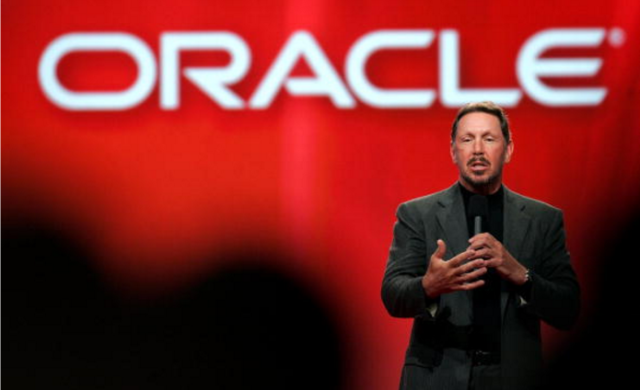
Former Oracle CEO Larry Ellison, pictured here speaking at a conference in 2006, was one of many former execs to take the stand in Oracle v. Google (credit: Justin Sullivan / Getty Images)
Despite a final verdict, the recent Oracle v. Google trial leaves plenty of questions about the future of APIs, fair use, copyright, development, and more. While their views do not necessarily represent those of Ars Technica as a whole, our staffers wanted to take a look at the outcome and potential ramifications from both sides. Below, Peter Bright argues that software is about to suffer. Elsewhere, Joe Mullin says Google's win sends a powerful message against a familiar legal tactic. You can also find guest op-eds from professor Pamela Samuelson (pro-Google) and attorney Annette Hurst (pro-Oracle).
Oracle's long-running lawsuit against Google has raised two contentious questions. The first is whether application programming interfaces (APIs) should be copyrightable at all. The second is whether, if they are copyrightable, repurposing portions of those APIs can be done without a license in the name of "fair use."
In the first trial between the companies, the court ruled that Google had copied portions of Java but that these copied portions were mere APIs; as such, they were not protected by copyright law. An appeals court later reversed this part of the decision, asserting that the "structure, sequence, and organization" of an API was in fact protectable by copyright. The case was then returned to the trial court to ascertain whether the (previously acknowledged) copying of (now copyright-protected) Oracle material was an infringement of copyright.
Read 42 remaining paragraphs | Comments