I’ve slept on it—I’m still baffled at Microsoft buying LinkedIn for $26.2B

Analysis: Microsoft is buying the cow when all it wants is some milk.

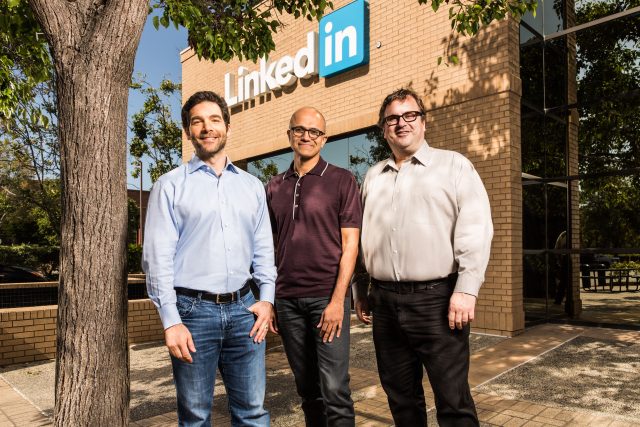
(credit: Microsoft)

Yesterday, Microsoft announced that it was buying business-oriented social network LinkedIn for a casual $26.2 billion dollars. It didn't make a whole lot of sense then, and now, having slept on it and taken the time to think it over, it still doesn't make a whole lot of sense.

Microsoft's track record at big budget acquisitions is poor. Marketing firm aQuantive was bought for $6 billion in 2007; that led to a $6.2 billion write-down in 2012. Nokia's mobile phone division was bought in 2014 for €5.4 billion (about $6.1 billion). This led to write-downs totalling about $8.5 billion in 2015 and 2016. The company bought Skype for $8.5 billion in 2011, and while Skype continues to be a going concern, it has ceded ground in many areas. Messaging platforms such as WhatsApp and Facebook Messenger have boomed, leaving Skype behind. Upstarts such as Discord are also becoming viable alternatives for many users, and Skype users continue to have gripes about the clients, the quality of the network, and Microsoft's uncertain strategy for future development.

The LinkedIn deal—$26.2 billion dollars for a company that doesn't make a (GAAP) profit—dwarfs these past purchases.

Read 9 remaining paragraphs | Comments
Microsoft teases Project Scorpio—the 6 TFLOPS, 4K60 gaming, VR Xbox—coming holiday 2017

Company promises to take performance lead, offer full Xbox One accessory compatibility.

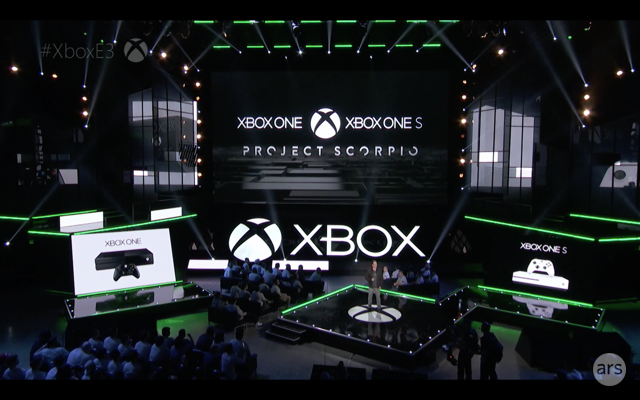
At E3 today, Microsoft announced the next member of the Xbox family: code-name Project Scorpio. The company calls it an uncompromised gaming machine. Project Scorpio will reportedly come with a 6 TFLOPS GPU, 8-core CPU, and 320GB/s of memory bandwidth. It will be capable of 4K, 60 frame per second gaming and support VR. What headset that VR support will use remains a mystery.

Microsoft emphasized that Scorpio will be a part of the Xbox family: all games and peripherals that work on Xbox One and Xbox One S will be fully compatible with Project Scorpio. Microsoft's Phil Spencer said this is the start of gaming beyond generations—entering a world where hardware improvements don't mean ditching your game library, echoing his previous promises about hardware upgrades.

Fallout 4 featured heavily in the launch announcement, suggesting that it will see a VR-enabled Scorpio-related update in the future.

Read 2 remaining paragraphs | Comments

Get your own customized Xbox One controller for $79.99

8 million different color combinations to choose from.

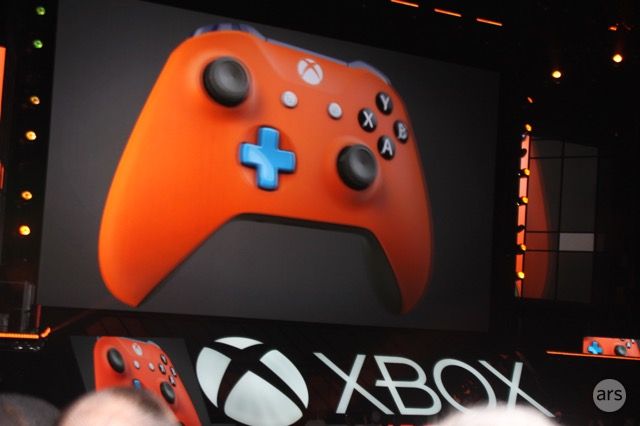
At E3 today, Microsoft updated the Xbox One's controller to go with the new Xbox One S. If white isn't your thing, there will now also be an alternative.

At the Xbox Design Lab you'll be able to pick custom colors for the front face, mushroom sticks, D-pad, and shoulder buttons. Microsoft says more than 8 million different color combinations are possible. Custom controllers will cost $79.99, and you can get them engraved with your gamertag for another $9.99.

Microsoft's E3 event has ended. We will continue to update this post as more information becomes available throughout the day. 

Read on Ars Technica | Comments

Minecraft Realms brings cross-platform play to Windows 10, iOS, Android, Gear VR

Mods and extensions will come later this year.

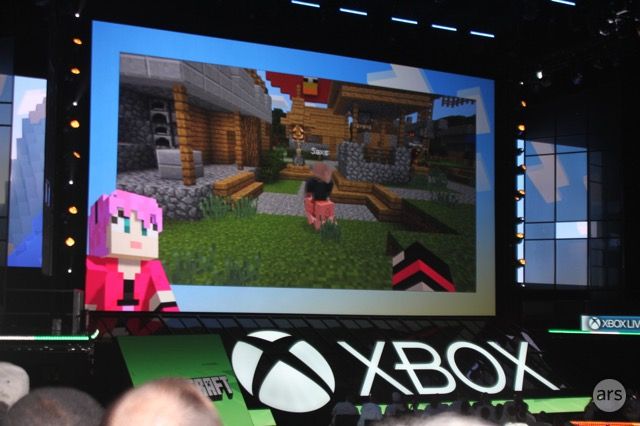
Minecraft for iOS, Android, Gear VR, and the version in the Windows 10 store, got a big upgrade today: Realms. Worlds built in the game can now be shared cross-platform, allowing users of the different versions to explore each other's creations.

Later in the year, these versions of the game will gain support for extensions, such as new skins that replace the zombies with fireball-shooting aliens, and mods. These capabilities will also come to the console version next year.

Read on Ars Technica | Comments

Xbox One S official: slimmer, 4K output, coming in August, starting at $299

It’s a beautiful white box.

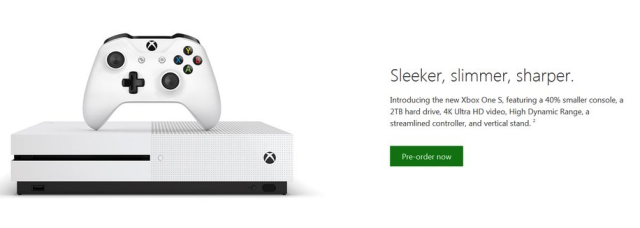
A leaked promotional image for the Xbox One S confirms news that Ars had gathered ahead of this year's E3 conference. (credit: Microsoft)

It leaked yesterday and now it's official: the Xbox One S, a slimmer, lower power, white Xbox One, is coming in August. Prices will start at $299.

Microsoft confirmed the information from a weekend leak at the company's E3 event today. The new Xbox supports 4K video output, including support for 4K Blu-ray discs, and high dynamic range (HDR) imagery. The system is 40 percent smaller than its predecessor, and it also does away with the bulky power brick that the first generation hardware uses.

With the streamlined Xbox comes an updated controller: it adds a texture to the back, extends the range, and also supports Bluetooth in addition to proprietary wireless.

Read 2 remaining paragraphs | Comments
Microsoft’s Windows 10 push is effective, damaging, desirable, and deceptive

Op-ed: A free Windows 10 upgrade is good. Forcing people to have it is not.

Danger!

Offering Windows 10 as a free upgrade to non-enterprise users of Windows 7 and Windows 8.1 was a sensible move on Microsoft's part. Microsoft wants developers to create applications for the Universal Windows Platform and to do that, it has to ensure that there are many people using this platform. The company has told the developer community that it expects 1 billion Windows 10 systems within the first two-to-three years, putting an end to the usual chicken-and-egg situation surrounding new Windows releases: developers never use the latest and greatest features, because there's nobody using the latest-and-greatest operating system; there's no reason to use the latest-and-greatest operating system, because software runs just fine on the current one.

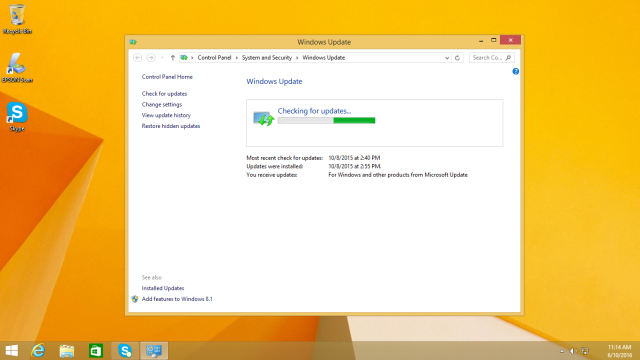
Knowing that few people will actively seek out a new operating system to upgrade their computers, Microsoft offered the Windows 10 upgrade through Windows Update. It also distributed updates that advertised the existence of the Windows 10 update to Windows 7 and 8.1 users. Initially, this merely allowed people to "reserve" their Windows 10 upgrade, but Microsoft has become progressively more aggressive. In the early days, this upgrade was found to be downloading the new operating system even before users opted in, and it was then accused of installing automatically.

In past weeks, the complaints have stepped up. Microsoft has been accused of changing the dialogs advertising the availability of the upgrade. Initially, pressing the X in the corner of the window canceled the upgrade; however, this was changed so that pressing the X merely delayed the upgrade.

Read 11 remaining paragraphs | Comments

Bad news, rich people: You won’t be able to use your GTX 1080 in 4-way SLI

Now only 2-way SLI is going to be possible.

(credit: Nvidia)

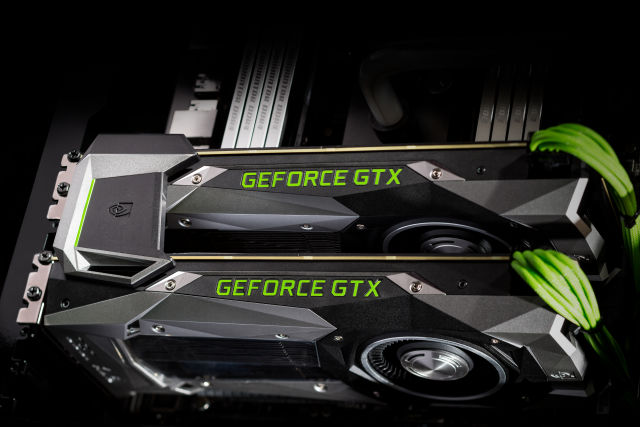
Nvidia's new GeForce GTX 1080 video cards will only support two-way SLI, the company has told PC Perspective, backtracking from claims made when the card was first launched.

Initially, Nvidia's plans for creating SLI setups with its latest and greatest GeForce GTX 1080 video cards were a little peculiar. Two-way configurations were supported using a new high-speed bridge to join the two cards together. Three- and four-way configurations were promised, too, but with a twist: first, these would need to use older, slower SLI bridges, and, second, system owners would have to generate a special "enthusiast key" to unlock access to three- and four-way SLI. Without this key, the system would stick to two-way.

The plan is now simpler but, for those rich individuals hoping to build the very fastest systems imaginable, somewhat worse. Configurations with two cards working in SLI using the new bridges will continue to be supported, but the company no longer plans to extend this to three- and four-way configurations at all, and the "enthusiast key" system is being dumped.

Read 4 remaining paragraphs | Comments

Surface offered for $32.99/month with new Membership Plan

New scheme lets enterprises buy a fleet of systems for a monthly fee.

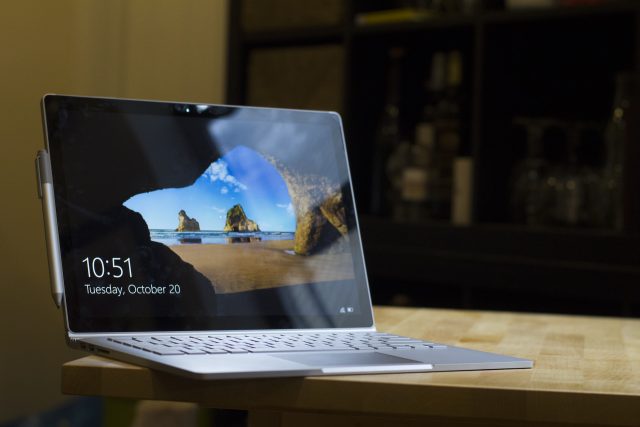
Microsoft's Surface Book. (credit: Nathan Fitch)

Microsoft quietly rolled out a new way for business customers to buy Surface hardware yesterday: the Surface Membership Plan.

Spotted first by Paul Thurrott, the scheme allows Surface hardware, from the Atom-powered Surface 3 all the way up to the Surface Book, to be bought on a monthly price plan. The plan also includes the Surface service plan with accidental damage protection, offering repair and replacement for dropped or damaged hardware, and some amount of personal training. Prices range from $32.99/month for a bottom spec Surface 3 bought over 30 months, up to $220.99/month for a top spec Surface Book bought over 18 months. This works out at a premium of about $400-$500 as compared to buying the hardware and service plan outright.

Multiple systems can be bought through this scheme, allowing companies to buy a whole fleet of machines without requiring the initial up-front capital outlay, underscoring the business positioning of the payment plan.

Read 2 remaining paragraphs | Comments

Startup aims to stop data leaks and ransomware both on prem and in the cloud

Egnyte Protect slaps policy-based protections on local and remote files.

Controlling sensitive data is a continuing challenge for enterprises. Hackers are responsible for more than their fair share of data leaks, but accidental disclosure by employees of things like social security numbers and banking details is also significant: folders get shared with too many people, e-mail addresses are fat-fingered to inadvertently include people outside the organization, and so on. The use of cloud-based apps like Salesforce, Google Apps, and DocuSign makes control of data even more complex, as even on-premises data can be inadvertently placed online. This isn't always done with the IT department's knowledge or oversight, as users turn to useful services to help them do their jobs without involving IT.

Mountain View-based startup Egnyte is hoping to offer a solution with its new Egnyte Protect service. It provides access control and will soon enable selective encryption and control over data residency and retention, spanning both local storage and common cloud services. Protect uses features of the files—things like "created by the finance department" or "contains a social security number"—to apply rules to them. For example, any files containing social security numbers can be blocked from public sharing, or any file with financial data must be encrypted.

Egnyte Protect is a software-as-a-service offering, using cloud-provided compute resources to continuously classify and analyze documents and file activity. Rules are a mix of IT-configured manual policies and automated rules from large-scale data analytics. These rules can be somewhat flexible; for example, sending an administrative alert only on the second attempt to share private data (so that accidental clicks don't necessarily cause an escalation and intervention). The rules are applied regardless of whether files reside on premises or in the cloud and are used both for local applications and online ones.

Read 3 remaining paragraphs | Comments

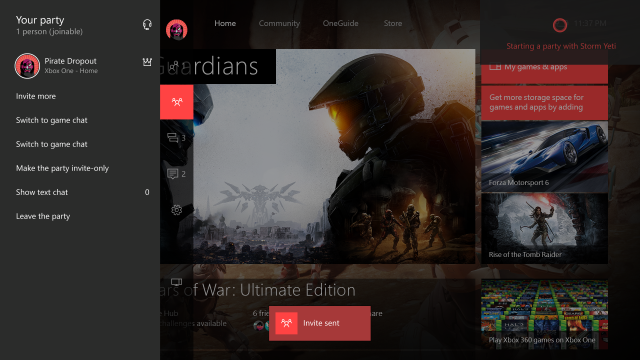
Xbox One preview with Cortana and apps coming later today

Xbox app in Windows 10 adds 60fps capture, Twitter sharing, too.

Cortana managing an Xbox party. (credit: Microsoft)

At some point today, a new wave of Xbox One preview updates will be rolled out to Xbox Ones that are registered in the preview program. This new version of the Xbox One software uses the unified OneCore Windows platform, and with that come two big new features: Cortana integration and apps for the Xbox.

Cortana-powered voice control was initially promised for last year's update, but the feature slipped. Cortana will subsume existing Xbox voice functionality, such as starting apps and navigating the interface. She'll also be used for more complex scenarios. For example, you'll be able to ask her to invite a particular friend to a party when they come online. As ever, Cortana is subject to various restrictions: she only speaks English (US and UK variants), French, Italian, German, and Spanish, so those are the only markets in which she'll work at first.

The Xbox Store has a new look. (credit: Microsoft)

With this update, the Xbox—just like Windows 10 PCs, Windows 10 phones, and even some Android devices—will be able to respond to "Hey, Cortana." We would hope that at some point Microsoft will add some kind of smarts to the system so that if it knows that I'm using the Xbox, my PC and phone should probably ignore the "Hey, Cortana" rather than having three devices spring to life and try to respond to my commands.

Read 3 remaining paragraphs | Comments