New Skype for Linux client released, built on Web technology

WebRTC client works on Chrome OS, too.

A new Skype for Linux client is now available as an alpha.

The Skype client for Linux had been long abandoned—it's stuck on version 4.3, compared to version 7 on Windows—but Microsoft has now belatedly recognized that Skype is at its most desirable when it's available on every platform. To that end, it has created an all-new Skype client.

The new client in fact has two versions. There's a Linux app for users of traditional Linux systems. There's also the Skype Web Client, which is supported in Chrome on Linux and Chromebooks running Chrome OS. Whether using the Web or the standalone app, the core code and capabilities are the same: it's using Chrome's WebRTC support to provide a plugin-free, Web-based Skype client.

Read 1 remaining paragraphs | Comments
Windows Server 2016 coming in September, with new servicing for Nano Server

The smallest installation of Windows Server will see Windows 10-style regular updates.

It's not quite an exact launch date, but Microsoft has announced that both Windows Server 2016 and System Center 2016 will launch at its Ignite conference (the successor to TechEd) this fall. Ignite runs from September 26-30 and is being held in Atlanta, Georgia.

Microsoft has also described how Windows Server 2016 will be serviced going forward. Full installations of the operating system—including the GUI and shell—will continue to be serviced on the "5+5" model that Microsoft has used for previous operating systems. That's five years of mainstream support, during which both bug fixes and feature improvements are made, and then five years of extended support, during which only security bugs will be fixed. The slimmed down Server Core installation will also be given this 5+5 servicing.

The new Nano Server option, however, will be handled in a different way. Nano Server installations will be updated more or less in tandem with the Windows 10 Current Branch for Business (CBB) release. CBB trails the main consumer branch by about six months, giving new features a bit of time to receive some real-world testing before being distributed to more conservative organizations. CBB is expected to be updated two to three times a year, and this will apply to Nano Server deployments of Windows Server 2016 just as it does to CBB deployments of Windows 10.

Read 3 remaining paragraphs | Comments

Valve can’t pass buck to third parties for teaching CS:GO kids to gamble

Opinion: Valve’s own Dota 2 and CS:GO much worse than third-party gambling sites.

The seedy world of video game gambling has recently been thrust into the spotlight after the revelation that a pair of successful YouTubers were promoting a gambling site, CSGOLotto, that they happened to own. They failed to disclose their relationship with the site, instead acting as if they merely stumbled across it.

That story has attracted a lot of attention to the massive world of game-related betting, and it has gotten players and critics riled up about the state of the third-party sites that promote and maintain those bets. But while those kinds of dubious-looking sites are easy to malign, the issue of kid-friendly gambling, and its rampant promotion, has reached a point where the problem can't be resolved if we don't assign blame to the game and online marketplace developer at the heart of everything: Valve Software.

Hats and skins, the chips of the online gambling world

Valve's two biggest games at the moment, Dota 2 and Counter-Strike: Global Offensive, enjoy unabashed popularity among gaming's bettors. Gambling sites routinely sponsor tournaments and streams, making the phenomenon hard to avoid if you have any interest in e-sports. Most gambling is of the straightforward "bet on who will win a professional game" type, though not all; CSGOLotto, for example, creates pools of in-game items that one person wins in a randomized draw.

Read 22 remaining paragraphs | Comments

Microsoft offers Surface-as-a-Service, more in enterprise hardware push

Microsoft cloud partners will now be able to sell both Windows and Surface subs.

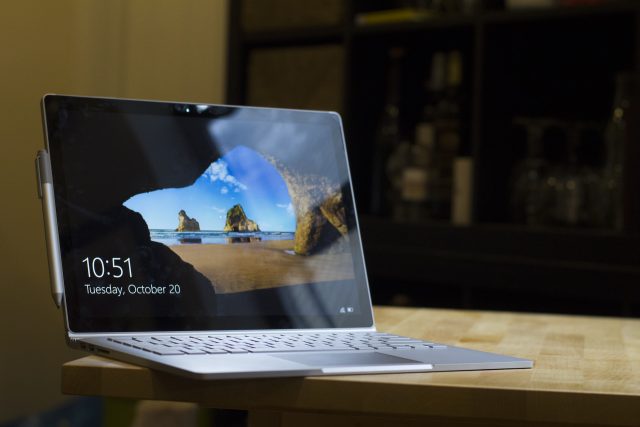
Microsoft's Surface Book. (credit: Nathan Fitch)

Microsoft is continuing to expand. At its Worldwide Partner Conference in Toronto, Microsoft announced new ways that its all-important partners can sell not just the company's software but also its hardware as it seeks to grow its Surface business.

At Surface's initial release, it was sold strictly as a consumer offering, available only from consumer retail outlets. As the product has grown more successful and better defined, Microsoft has expanded its sales channels to include a wider range of retailers, business suppliers, and earlier this year, the "Surface Membership Plan" rent-to-own offering. Today, the company added "Surface as a Service," a new leasing scheme that allows Surface hardware to be bought alongside Office 365 and Windows 10 subscriptions. The company says that customers of this scheme will have access to the latest hardware and faster device refresh cycles.

The expanded availability and better products have already seen the Surface business grow; Microsoft says that it has gone from generating $1 billion a year in revenue to $1 billion a quarter.

Read 2 remaining paragraphs | Comments

Windows 10 Anniversary Update nears RTM with bugfixes galore

Build 14383 is now out for both PC and mobile.

With its August 2 release date growing closer, the Windows 10 Anniversary Update is nearing completion.

A steady stream of new builds for Windows Insiders on the fast track has been released over the past few weeks. The latest build, 14383, came out today and includes a wide range of fixes. As with many of its predecessors, this build has been made available simultaneously for Windows 10 on the desktop and Windows 10 Mobile; Microsoft is intending to ship the Anniversary Update simultaneously for PC, phone, and Xbox One when that release date arrives.

Windows Central is reporting that according to its sources, the build one newer than today's release, 14384, is the first candidate for what would formerly be known as Release To Manufacturing (RTM). With Windows now being delivered "as a service," the old RTM terminology isn't favored by Redmond any more—not least because many people will download the update rather than have it preinstalled by a PC manufacturer—but the concept that RTM represents endures. The "RTM" build will be the one released on August 2 to people in the stable channel, and then after several months of regular Patch Tuesday updates, it will be released as the Current Branch for Business.

Read 1 remaining paragraphs | Comments
Microsoft’s attempt to recruit interns is a barrel of cringe

“bae,” “hella noms,” and “getting lit” should not be included in corporate comms.

It's always horrible when olds try to emulate the style of the kids, which makes this attempt by Microsoft to attract interns particularly toe-curling. Twitter user Patrick Burtchaell says that his roommate received the youth lingo-infused e-mail from a Microsoft recruiter, and it brings to mind that scene from 30 Rock.

How do you do, fellow kids?

Translation was needed for some of the more senior (in age rather than tenure) members of the Ars Staff: "bae" is a term of endearment equivalent in meaning to "babe," "hella noms" means "lots of food," and "getting lit" means "getting drunk or high."

The best, by which I mean worst, part of the e-mail is that it gets the lingo wrong. "Drank" does not mean "drink." "Drank" means "cough syrup;" specifically, cough syrup containing codeine and promethazine that is consumed recreationally. Opioids like codeine are routinely abused to get high, and, when combined with the antihistamine promethazine, can produce feelings of euphoria.

Read 3 remaining paragraphs | Comments

TP-Link forgets to register domain name, leaves config pages open to hijack

The domain name’s new owners want $2.5 million to give it back.

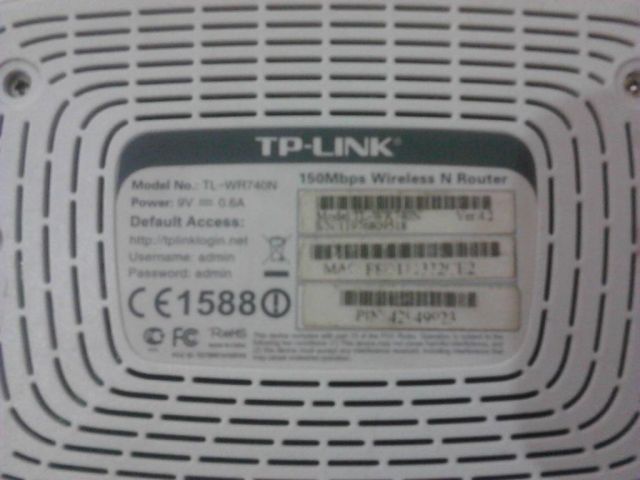
This (blurry) picture shows the bad domain name printed on the bottom of a TP-Link router. (credit: Amitay Dan)

In common with many other vendors, TP-Link, one of the world's biggest sellers of Wi-Fi access points and home routers, has a domain name that owners of the hardware can use to quickly get to their router's configuration page. Unlike most other vendors, however, it appears that TP-Link has failed to renew its registration for the domain, leaving it available for anyone to buy. Any owner of the domain could feasibly use it for fake administration pages to phish credentials or upload bogus firmware. This omission was spotted by Amitay Dan, CEO of Cybermoon, and posted to the Bugtraq mailing list last week.

Two domain names used by TP-Link appear to be affected. tplinklogin-dot-net was used, according to TP-Link, on devices sold until 2014. On initial setup, while the router's Internet connection is still offline, the domain name will be trapped automatically and correctly send users to the router's configuration page. But subsequent visits to the configuration page can use the real Internet DNS system to resolve the address, and hence those routers are susceptible to being hijacked. A second TP-Link domain name, tplinkextender-dot-net, was used by TP-Link wireless range extenders and is similarly vulnerable.

Together, these domain names appear to be quite busy; estimates based on Alexa's ranking suggest that tplinklogin-dot-net sees about 4.4 million visits per month, with another 800,000 for tplinkextender-dot-net. It's not known who the new owner of the domains is, but Dan tweeted that domain name brokers are offering the more popular of the two for $2.5 million. This high price tag is perhaps why TP-Link has declined to buy the name back.

Read 1 remaining paragraphs | Comments
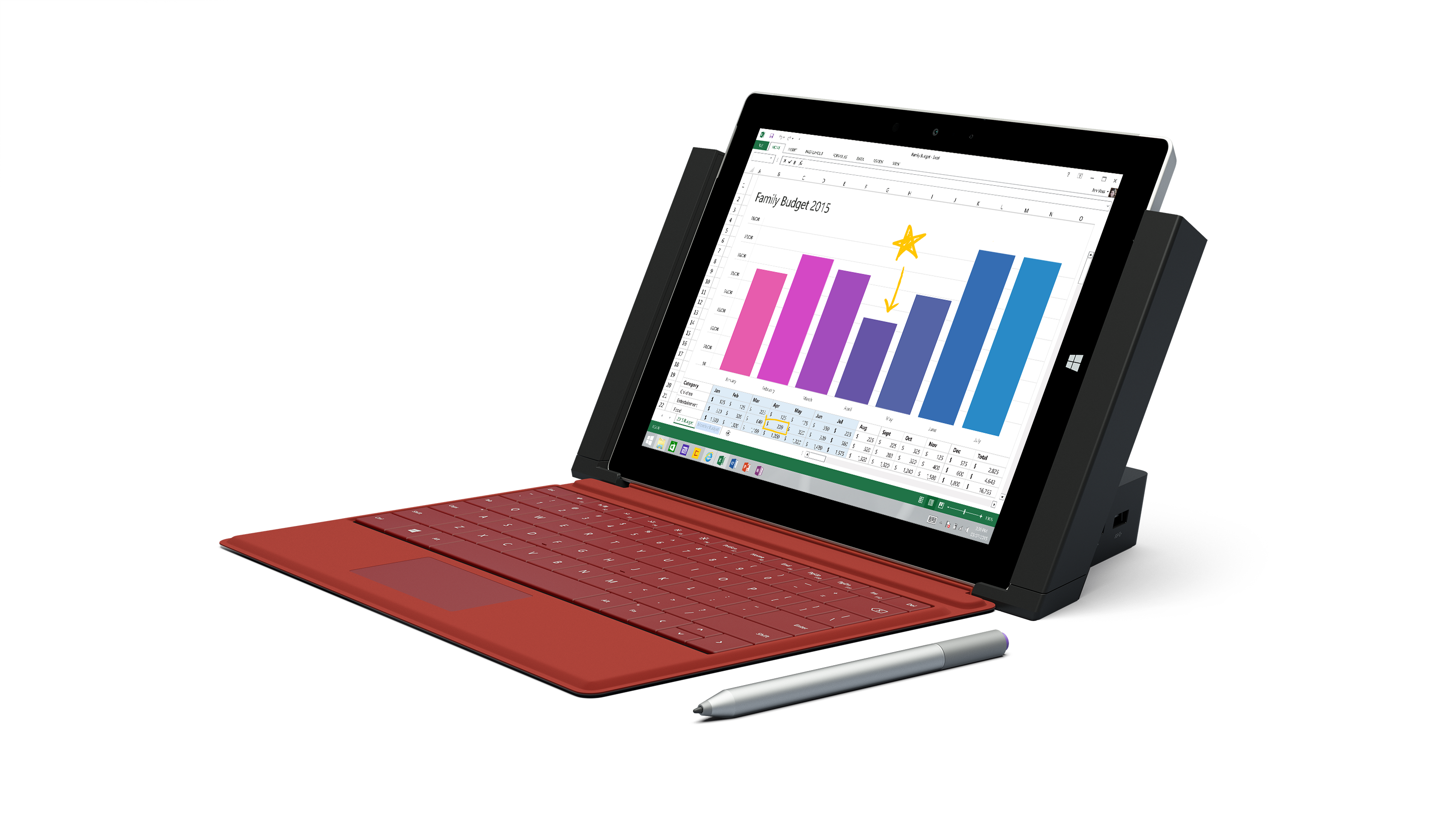
Microsoft rumored to be building a Surface PC for your living room

Could be coming as soon as this quarter.

Surface 3 in its docking station. (credit: Microsoft)


Yesterday, DigiTimes reported that Microsoft is building a new member of the Surface family: an all-in-one PC designed for the living room. The technology newspaper cites "industry sources," and today Daniel Rubino at Windows Central wrote that his own reliable source told him the same thing.

The new system is supposed to contain Intel's next generation Kaby Lake processor, which is itself shrouded in mystery. Intel has been awfully quiet about Kaby Lake, and while leaked slides originally spoke of it as a Q3 2016 product, it might slip into 2017. This is an issue not just for Microsoft's rumored all-in-one, but also the Surface Pro 4 and Surface Book, both of which are awaiting Kaby Lake's release before being refreshed.

Nothing else is known about the new Surface, but expect it to aim for the high end of the market and share the premium build of its predecessors. Unlike other Surface products, however, the all-in-one PC space has already been trod by Dell, Lenovo, HP, Apple, and others. Surface (and in particular Surface Pro 3) arguably defined a new category of two-in-one tablet-laptop hybrids, and Surface Book's detachable screen and GPU base added novel twists to the clamshell laptop. If the all-in-one Surface does not similarly push the market in a new direction and instead merely treads on the toes of Microsoft's OEM partners, expect a lot more grumbling of the kind that met the original Surface's announcement.

Read 1 remaining paragraphs | Comments

HP awarded $3B in damages from Oracle over Itanium database cancellation

Oracle found to be in breach of contract for ending Itanium software support.

Safra Catz, Oracle Corp. CEO, second left, exits superior court in San Jose in 2012. (credit: Photographer: David Paul Morris/Bloomberg via Getty Images)

A San Jose jury has awarded Hewlett Packard Enterprise (HPE) $3 billion (£2.25B) in damages from Oracle after Oracle breached its contract to provide Itanium support in its namesake database and Linux distribution.

Oracle unilaterally decided to drop support for Itanium systems running HP's HP-UX operating system in 2011. HP (as then was; the company split into two last year, with HPE retaining the interest in the server business) sued, claiming that Oracle was in breach of a 2010 contract between the two companies in which the database firm promised to support HP's Itanium systems.

That suit was decided in 2012 in HP's favor. The judge required Oracle to fulfill its contractual obligations to support HP's Itanium systems and decided that HP was due damages. Oracle resumed the software support in late 2012, but the damages portion was undetermined. The two companies were back in court some four years later to decide just what those damages should be.

Read 6 remaining paragraphs | Comments

New Lightning headphone dev kit another sign hinting at a jackless iPhone

Cirrus Logic kit offers native Lightning connectivity for headphones and headsets.

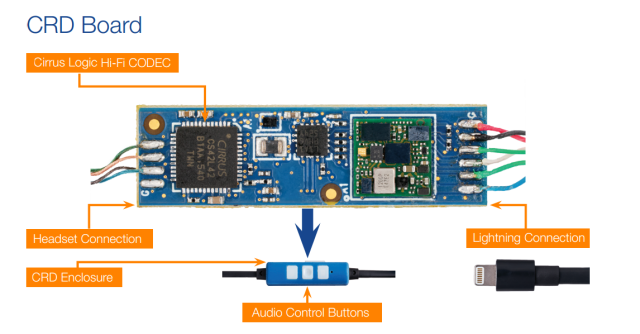
The reference board. (credit: Cirrus Logic)

Cirrus Logic has announced a development kit for hardware developers to make Lightning versions of audio hardware designed for the analog 3.5mm tip/ring/sleeve (TRS) or tip/ring/ring/sleeve (TRRS) connector, reports Apple Insider.

The development kit, named the Cirrus Logic CS42L42, is aimed at hardware developers wanting an easy way to quickly develop Lightning-native headsets. The kit includes a reference design circuit board, suitable for embedding into an inline remote or similar, that combines a 114dB digital-to-audio converter (DAC) with a 35mW headphone driver, and supports microphone input. The kit also provides a development board that has headers for logic probes, a 3.5mm audio jack for use with existing analog hardware, and remote buttons, to aid debugging and development. As well as the hardware, it also includes a sample iOS application.

The kit is available to developers registered in Apple's MFi ("Made For i-device") program.

Read 2 remaining paragraphs | Comments