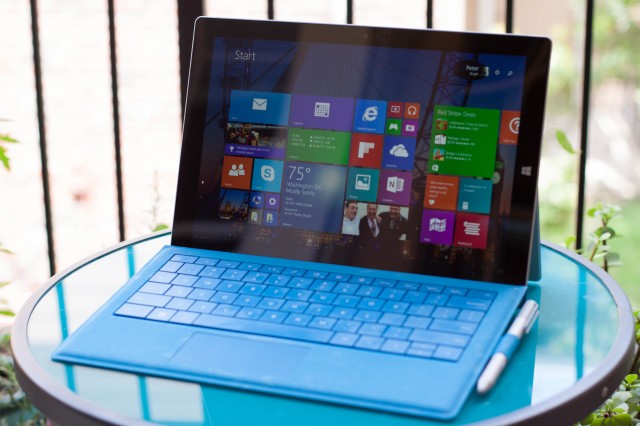
Some Surface Pro 3s with catastrophic battery life may get a software fix

Systems with Simplo batteries left with just minutes of battery life.

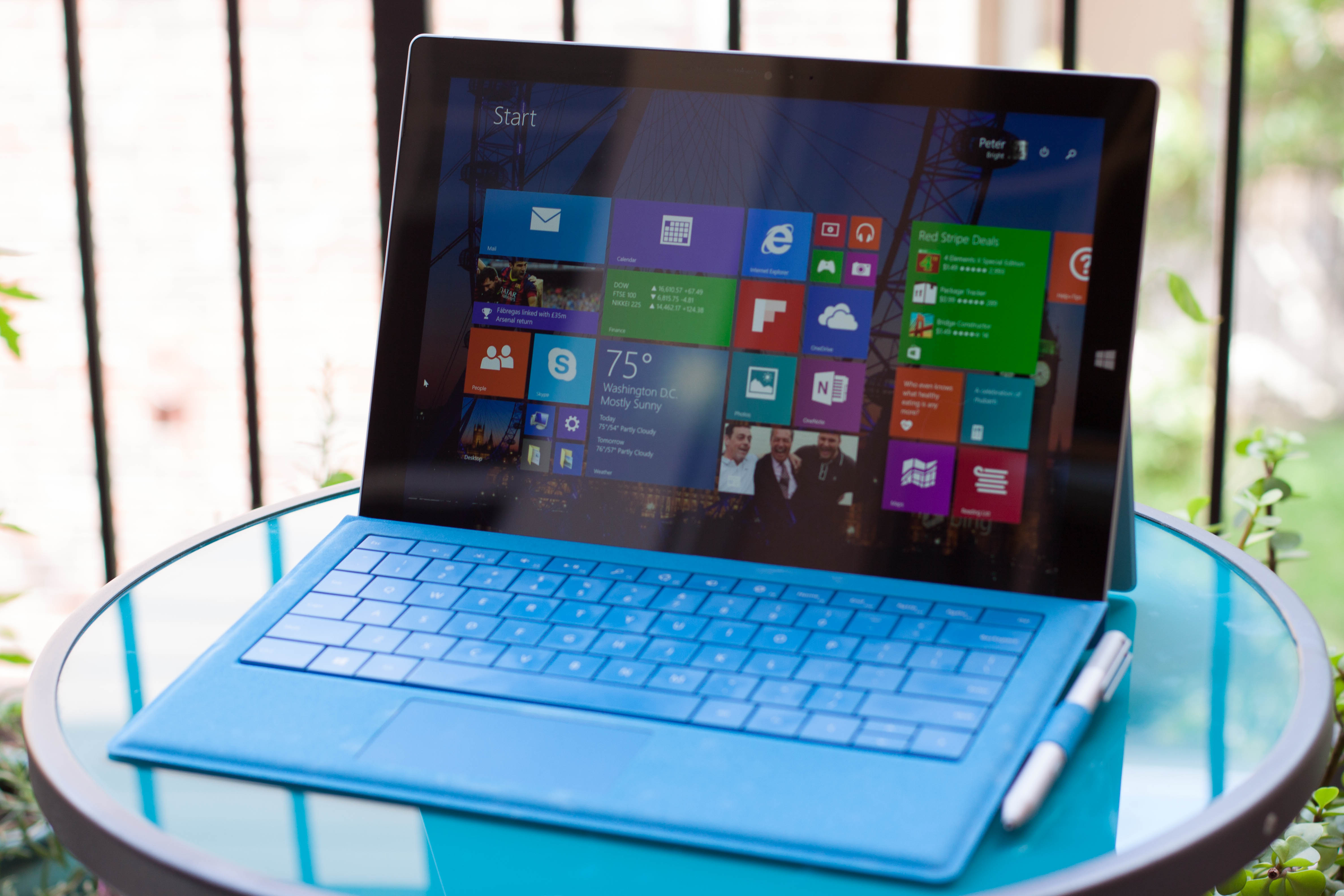
Enlarge / Surface Pro 3. (credit: Peter Bright)

Microsoft says that it is going to release a software update for Surface Pro 3 systems that should restore their battery life without requiring any hardware fixes.

Over the last few months, there have been scattered claims that some Surface Pro 3 systems are suffering from extremely poor battery life. Some amount of battery degradation over the lifetime of a system is to be expected, but some owners of Microsoft's tablet computer are saying that battery life has dropped to as little as one to two minutes, which is far below what it ought to be, even after many charging cycles.

Windows' own battery health reporting shows that the charge capacity of affected batteries has dropped precipitously, from the 42Wh they started with to, in some cases, less than 0.2Wh.

Read 2 remaining paragraphs | Comments

Now Tim Sweeney thinks that Microsoft will use Windows 10 to break Steam

Tim Sweeney says that Microsoft is already trying to make Steam stop working.

Epic Games Founder Tim Sweeney (credit: Epic Games)

Tim Sweeney doesn't like Windows 10 or Microsoft's Universal Windows Platform, the common development platform that allows developers to create software that can run on Windows on PCs, phones, tablets, HoloLens, and the Xbox. In March he published an op-ed in The Guardian saying that UWP "can, should, must, and will die" because, he claimed, Microsoft could use UWP to create a walled garden, with UWP games not available through competing stores such as Steam. Still apparently concerned with the health of the PC gaming industry, Sweeney is now claiming, through in an interview with the print-only Edge magazine, that Microsoft will use Windows updates to kill Steam.

Sweeney's complaints about UWP were technically off-base. His issues are based on the assumption that all UWP apps had to be individually vetted by Microsoft and could only be delivered by the Windows Store. This was somewhat true in Windows 8—apps built using the WinRT platform (the predecessor branding to UWP) could not be trivially sideloaded, as the ability was officially restricted to enterprise users only. But it's not true in Windows 10. Sideloading is enabled by default in Windows 10, and any third party store could download and install UWP-based games in much the same way as they already do for software that uses the Win32 API.

Sweeney's Steam concerns are once again driven by UWP:

Read 11 remaining paragraphs | Comments

Windows 10 Anniversary Update is ready to go and free for just a few more days

The Anniversary Update makes a compelling upgrade that bit more attractive.

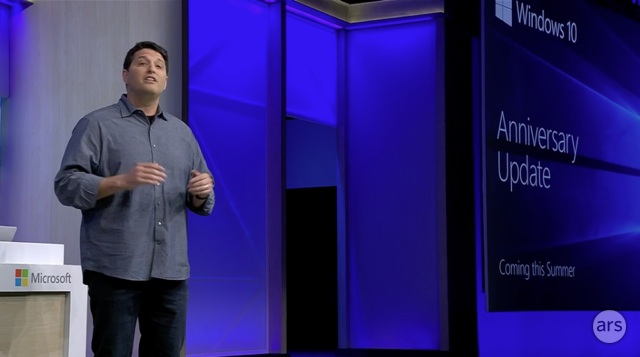
Microsoft's Terry Myerson details the Windows 10 Anniversary Update. (credit: Microsoft)

The final build of the Windows 10 Anniversary Update is build 14393. The update, which provides a range of new features and improvements, represents Microsoft's last big push to get Windows 7 and 8.1 users to upgrade to Windows 10.

The update is available right now to those who have opted in to the Windows Insider program, and it will be pushed out to Windows 10 users on the current branch on August 2. The free upgrade offer from Windows 7 and 8.1 to Windows 10, however, ends on July 29, leaving Microsoft hoping that the promise of the new update will be enough to get people to make the switch.

For consumers, the big Anniversary Update improvements are in stylus support and Cortana. For as long as Microsoft has been pushing pen interfaces on Windows—the specs for Windows XP Tablet edition came out about 15 years ago—the company has done so as a mouse alternative, with the only major pen-specific feature being handwriting recognition. This never worked well. Finger-based touch interfaces dominated with the rise of the iPhone, but Windows has always retained its pen support, with devices like the Surface Pro 4 and Surface Book shipping with pens.

Read 8 remaining paragraphs | Comments

Join Starfleet Academy at New Yorks’ Intrepid Sea, Air & Space Museum

If you like Star Trek and you’re in New York, you should check it out.

Our trip to the museum (video link)

New York's Intrepid Sea, Air & Space Museum here in sweltering New York City has a new Star Trek exhibition running through until the end of October: the Starfleet Academy Experience.

As a cadet at the academy, a wide range of interactive exhibits allow you to diagnose injured Klingons in sick bay, set phasers to stun in security, investigate the unknown at the science station, and more. After completing and signing in to each interactive portion with your RFID wristband, all Starfleet cadets must take the Kobayashi Maru test from the bridge of the Enterprise. At the conclusion of your training, the system says which part of Starfleet you'd be best at: are you captain material, or would you be better off as the next Mr. Spock? I learned that I'm not really cut out for security, because phasers are actually hard to aim. Gun-shaped guns turn out to be much easier!

Read 7 remaining paragraphs | Comments

Never mind tagging people in photos: OneDrive now tags your Pokémon

Finally, facial recognition technology put to good use.

Unfortunately, OneDrive did not recognize the Rattata sitting on my Coke can. (credit: Peter Bright)

In a surprisingly swift attempt to ride the Pokémon Go bandwagon, Microsoft has released, of all things, Pokémon detection for photos stored on OneDrive. If you have an iPhone or an Android handset and enable camera uploading to OneDrive, any screenshots or photos you take with the Pokémon Go camera tool will be stored on Microsoft's cloud system. Once there, your Pokémon will be recognized, and the images will be tagged accordingly, letting you easily find your best Pikachu snaps.

Microsoft is also rolling out some other features: automatic generation of galleries from pictures taken at around the same time in around the same place, better presentation of folders with lots of photos in them, and better display of OneDrive photos in the Windows Photos app.

Pokémon Go for HoloLens concept.

It's just too bad there's no version of Pokémon Go for Microsoft's own platform. Mock-ups of Pokémon Go for HoloLens have been created, and they look awesome. But, alas, creating a game for a $3,000 developer kit probably isn't high on Niantic's priority list.

Read on Ars Technica | Comments

Stack Overflow brings its gamified peer support to documentation

The same collaborative approach to writing docs as for peer support.

For many developers, Stack Overflow has become the go-to place on the Internet for getting programming questions answered. The site's community-based question-and-answer model, combined with extensive gamification, has made it not just an essential resource for programmers of all kinds, but one of the most visited sites on the Internet. Today, the company announced a new product that aims to tackle another long-standing developer bugbear: documentation.

With this new product, named Documentation, Stack Overflow is hoping to bring the same influences that made Stack Overflow a success to the world of creating developer documentation that is rich with sample code to meet the needs of developers. As with the Q&A site, the intent is to develop a community that is rewarded for its contributions through upvotes and badges, giving a way to thank people for adding value and to offer recognition to those who consistently improve the content.

The first focus of Documentation is the development of code samples. Stack Overflow has worked with a handful of companies including PayPal, Dropbox, and Twitch in a closed beta. These companies all offer APIs that are already documented. The value that Documentation adds is the ability to extend those references describing the names of functions and the meanings of the parameters to include much richer content showing how to use those APIs in ways that the user community finds useful. Useful sample code is often missing from API documentation, and even when it exists, it's often narrowly tailored to do the bare minimum to demonstrate how a particular API or APIs are used. The hope with Documentation is to go far beyond this, creating a system where developers can offer a much wider range of examples.

Read 5 remaining paragraphs | Comments

Skype finalizes its move to the cloud, ignores the elephant in the room

The move away from peer-to-peer has its virtues, but much is left unanswered.

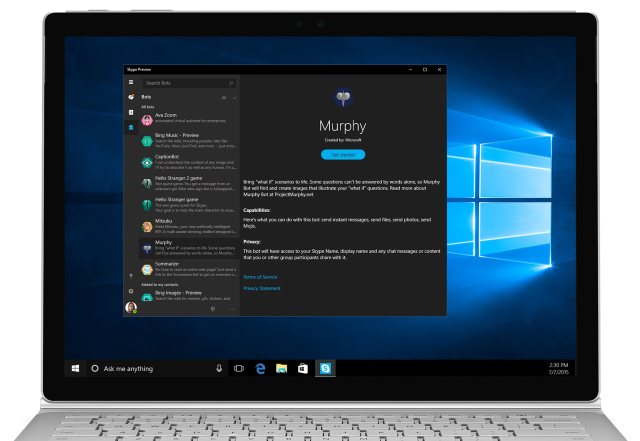
The new UWP Skype client. (credit: Microsoft)

It has been a slow transition, but Skype is finalizing its move away from a peer-to-peer system to a cloud-based one.

When it was first created, the Skype network was built as a decentralized peer-to-peer system. PCs that had enough processing power and bandwidth would be elected as "supernodes" and used to coordinate connections between other machines on the network. Similarly, text, voice, and video traffic would flow between peers, directly when possible (when intervening firewalls and routers were cooperative) or indirectly through other systems on the network when required.

This peer-to-peer system was generally perceived as being relatively private; with no central servers the assumption was that there was no central ability to perform wiretaps or other forms of eavesdropping. This belief was in fact mistaken.

Read 18 remaining paragraphs | Comments

Windows surprisingly strong in Microsoft’s $20.6B fourth quarter

Cloud numbers still lack clarity, and the less said about the phone the better.

(credit: Julien GONG Min)

Microsoft posted revenue of $20.6 billion in the fourth quarter of its 2016 financial year, a decline of 7 percent year on year. Operating income was $3.1 billion, compared to a $2.1 billion loss in the same quarter last year. Net income was also $3.1 billion, as compared to a $3.2 billion loss, and earnings per share were $0.39.

The full 2016 financial year figures were revenue of $85 billion, down 9 percent year on 2015, operating income of $20.2 billion, up 11 percent, net income of $16.8 billion, up 38 percent, and earnings per share of $2.79, up 42 percent. Those 2015 losses were substantially a result of the $7.6 billion write-down of Nokia's assets. 2016 also included a further, final Nokia-related write-down but this one was a mere $950 million.

The company offers non-GAAP financials wherein all Windows 10 revenue is booked at the point of sale, rather than allocated piecemeal over two to four years (with the exact timeframe depending on the customer type). The revenue deferrals are due to the "Windows as a Service" model wherein support and development commitments for the operating system are an ongoing task that continues after the sale of the software license. The non-GAAP results also change how the company accounts for impairment, integration, and restructuring charges. Under this alternative reporting regimen, revenue for the quarter was was up 2 percent to $22.6 billion, operating income was down 3 percent to $6.2 billion, and net income was up 8 percent to $5.5 billion.

Read 12 remaining paragraphs | Comments
Microsoft’s uncertain Skype strategy continues with new app for Windows phones

Microsoft keeps wavering between task-oriented separate apps and an all-in-one client.

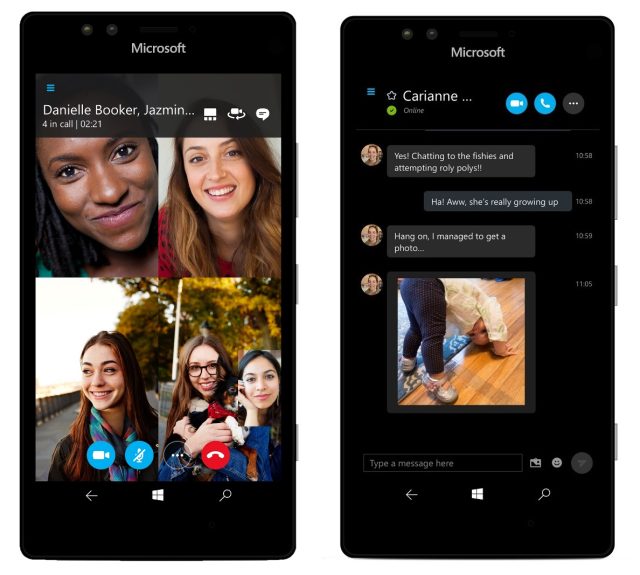
The new mobile client. (credit: Microsoft)

Microsoft's preview of the new, modern, Universal Windows Platform (UWP) version of the Skype client received a big upgrade today: it's now available for devices running Windows 10 Mobile as well as Windows 10 PCs.

In addition to supporting Windows phones, the client has been given a big functional upgrade as Microsoft continues to rebuild all the old Skype client's functionality within the new app. Calls to landlines, voicemails, screen sharing, and integrated translation of audio and video calls are all now available. The company says that the new client is faster, too.

Overall, the development of Microsoft's Skype client continues to confuse since the strategy at large remains unclear. The company initially developed a (rather feature deficient) Windows 8-style Skype client, but in June last year Microsoft said that client was to be discontinued.

Read 7 remaining paragraphs | Comments
Wiped out phone market means that Windows 10 will miss one billion user mark

Windows 10 is growing fast, but without 50 million phones a year it’s not fast enough.

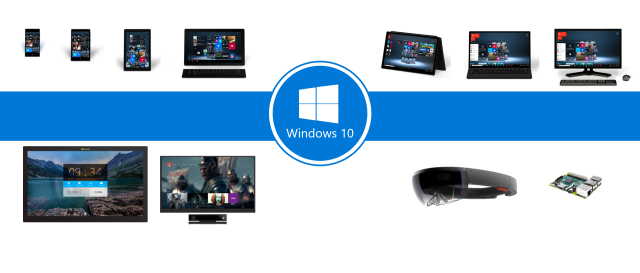
Windows 10 runs on many different kinds of hardware, from the giant Surface Hubs down to itty bitty IoT things.

As part of its pitch to developers, Microsoft said that it was aiming to have 1 billion devices—PCs, tablets, phones, Xboxes, HoloLenses, and whatever else can run the operating system—within the first two to three years of its availability. That target is now off the table, reports Mary Jo Foley.

In a statement, the company said:

Windows 10 is off to the hottest start in history with over 350M monthly active devices, with record customer satisfaction and engagement. We're pleased with our progress to date, but due to the focusing of our phone hardware business, it will take longer than FY18 for us to reach our goal of 1 billion monthly active devices. In the year ahead, we are excited about usage growth coming from commercial deployments and new devices—and increasing customer delight with Windows.

The issue is mobile. At the time of the prediction, Microsoft was counting on selling 50 million Windows phones a year. These were an important part of the 1 billion devices, because one of the key selling points of Microsoft's Universal Windows Platform is the way it enables developers to easily adapt their software for the many different form factors that Windows supports. Phones were expected to be the largest of the non-PC form factors, but a series of missteps has seen Microsoft's phone sales collapse.

Read 1 remaining paragraphs | Comments