Skylake support on Windows 7 and 8.1 given a one-year extension

Security patch availability is also being improved.

Microsoft announced earlier this year that support for Skylake processors in Windows 7 and 8.1 would be quite limited: compatibility, reliability, and security fixes would only be offered until July 17, 2017. After that date, only security fixes would only be made available, and those security fixes would only be created if they had no implications for the compatibility or reliability of others platforms. Full support for Skylake processors—and its successors—was only to be offered to Windows 10.

Perhaps unsurprisingly, this has resulted in some pushback from enterprises, and Microsoft has shifted its policy in response. The window for compatibility, reliability, and security fixes has been extended by a year to July 17, 2018. The limitations on security fixes have also been removed; now all security fixes will be made available—until January 14, 2020 for Windows 7 and January 10, 2023 for Windows 8.1.

Nonetheless, Microsoft still asserts that Windows 10 is the best option for new systems. Installing Windows 7 on a Skylake system can be challenging; Windows 7 has no built-in support for the Intel integrated USB controller (so booting from a USB stick to install it is difficult) and no built-in support for NVMe storage (which is increasingly an issue in laptops). It also cannot take advantage of Skylake's new power management capabilities or use virtualization to improve security. Windows 10 is still set to be the only option for the next generation of processors, including both Intel's Kaby Lake and AMD's Zen.

Read on Ars Technica | Comments
Edge browser now has extensions in the latest Windows 10 preview

The Maps app now lets Cortana give you turn by turn directions.

One of the biggest features promised for Microsoft's new Edge browser was support for extensions written in HTML and JavaScript. Google developed an API for such extensions for Chrome, and it is being substantially adopted by Firefox. Microsoft said that it too would adopt this API for Edge, but extensions didn't make the cut in the November Update.

Since the November Update, Microsoft has released a series of Insider Preview builds that so far didn't actually change a great deal that was visible. But the latest build, version 14291, changes all that, as it includes the first preview of the extension support in Edge. Microsoft has three extensions thus far: two it developed itself (one to perform automatic translation of foreign language pages, another to enable mouse gestures), and a ported version of the popular Reddit Enhancement Suite (RES).

Right now, installing extensions is rather clunky—when this is feature is released to end users, extensions will be included in the Windows Store and subject to some amount of vetting and oversight, but that's not plumbed in yet. Once installed, however, the extensions just seem to... work.

Read 8 remaining paragraphs | Comments

Windows 10 Mobile upgrade now available for (some) Windows Phone 8.1 handsets

Subject to carrier approval, of course.

Four months after the first phones with Windows 10 Mobile preinstalled shipped, Windows Phone 8.1 devices can now officially be upgraded to Windows 10 without the use of Insider/Preview builds.

Unfortunately, not all Windows Phone 8.1 devices will be upgradable. Some phones, mostly (though not exclusively) older models, aren't going to be upgraded. Frustratingly, this includes some phones that were previously eligible for the Windows Insider Program, meaning that they could run the previews and betas but aren't going to get the final stable release. Handsets including the Lumia 920 and HTC One M8 both fall into this awkward category. It's possible that these phones will be added later.

For now, the list of supported phones is: Lumia 1520, 930, 640, 640XL, 730, 735, 830, 532, 535, 540, 635 1GB, 636 1GB, 638 1GB, 430, 435, BLU Win HD w510u, BLU Win HD LTE x150q, and MCJ Madosma Q501.

Read 2 remaining paragraphs | Comments

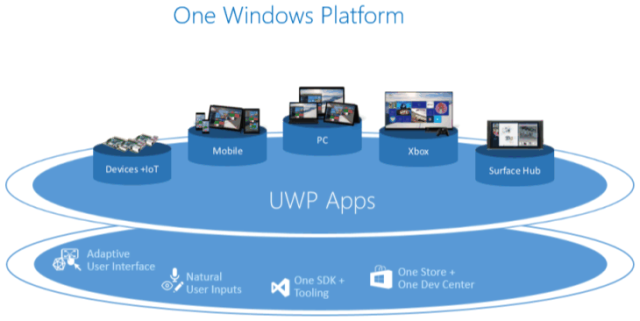
Universal Windows Apps coming to Xbox One this summer

The moment Microsoft has been promising for years.

One Windows Platform for every form factor. (credit: Microsoft)

Windows developers will be able to build Universal Windows Platform apps for the Xbox One this summer, Microsoft finally confirmed at the Game Developers Conference in San Francisco today.

One way or another, Microsoft has been telling Windows developers to think about running apps on a TV screen using an Xbox for more than seven years now, first as part of the "three screens and a cloud" vision, and more recently as part of the Universal Windows Platform. Microsoft also said that the Windows Store and Xbox Store would be merged.

Developing for phones, desktops, and tablets has always been more or less open, with even the gatekept phone platform easy to access with no particular entry requirements. But the Xbox has always been treated differently. Building traditional Xbox games meant buying expensive Xbox development units (which aren't available on the open market), with Microsoft exercising tight control over the finished game and being deeply involved in things such as the delivery of patches.

Read 2 remaining paragraphs | Comments

Julia Child is the next PBS star to get a Twitch marathon

Streaming service continues its exploration of collaborative viewing.

(credit: Julia Child with a fish.)

After the success of the charming and emotional Bob Ross marathon on Twitch, the company is expanding the range of its creative streaming with a new marathon. This time around, the topic is cooking—the new Food channel will be broadcasting all 201 episodes of Julia Child's The French Chef. The stream starts today at 5pm EDT and should last around four days.

Twitch started out in 2011 as a video game-oriented offshoot of the Justin.tv lifecasting platform. In August 2014, the original Justin.tv site was closed down so that the company could focus exclusively on Twitch. A few days after this change, Amazon announced that it was buying the company for $970 million.

The Bob Ross and Julia Child streams both represent an attempt to broaden Twitch's appeal in two ways at once. The focus on creativity rather than gaming is one element. While there's a certain amount of crossover—streamers have cast things like making cosplay costumes and creating game-related artwork—as Bob Ross demonstrated, the appeal is broader. Adding cooking into the mix takes things even further from the core gaming audience.

Read 3 remaining paragraphs | Comments

Xbox indie gaming opens the door to playing against PlayStation owners

MonoGame is also welcomed to the Xbox One, finally filling the XNA hole.

Rocket League, which gains Xbox One to PC multiplayer.

Microsoft's efforts to court indie developers continued today at the 2016 Game Developers Conference with a pair of announcements designed to make the Xbox One a more attractive platform for indie gaming.

Microsoft is opening up the Xbox One to enable cross-platform multiplayer. This feature will most obviously support play between the console and Windows 10 PCs, but Microsoft isn't stopping there. Developers can also support multiplayer against non-Microsoft multiplayer networks. While Microsoft never actually names names, the announcement opens the door to Xbox games that support play against PlayStation gamers or those who bought PC titles on Steam.

One of the first games to gain the feature will be Rocket League. The game already supports play between PlayStation 4 and PC owners; it will now also support games between Xbox One and PC owners, with Microsoft saying that there's an "open invitation" for other networks to get involved. Reading between the lines, this statement suggests that Sony has some prohibition against PlayStation 4 to Xbox One connectivity and that it's now up to the Japanese company to lift the restrictions.

Read 2 remaining paragraphs | Comments

Bitcoin payment support in the Windows Store quietly removed [Update: or not]

Existing balances can still be spent, but no new bitcoin funds can be added.

Update: Microsoft now claims that the FAQ update was "a mistake," and that bitcoin support isn't going anywhere after all.

Original story: A little over a year ago, Microsoft rolled out Bitcoin support for Microsoft accounts, enabling the crytpocurrency to be used to buy games, apps, music, and video on Xbox Live, Windows Store, and (as it was then) Xbox Music and Xbox Video.

Bitcoin users could add up to $100 to their accounts at a time, with BitPay providing the necessary back-end support.

Read 2 remaining paragraphs | Comments

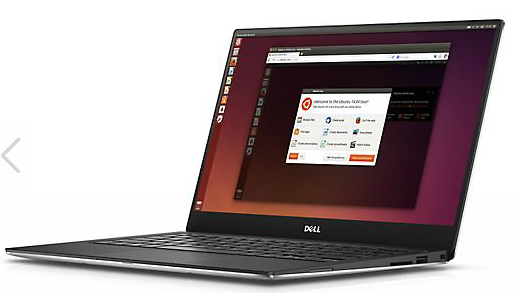
Dell’s Skylake XPS 13, Precision workstations now come with Ubuntu preinstalled

Some of the best laptops we’ve tested—now with Linux.

A Dell laptop running Ubuntu. (credit: Dell)

We really liked the updated Skylake-powered Dell XPS 13, and its bigger brother, the XPS 15, was also pretty great.

But if you're looking at those machines and thinking "well the hardware is nice, I just wish they came with Linux," Dell has some good news. The company's "Developer Edition" program has just been updated to include the newest Skylake systems.

The Developer Edition XPS 13s are slightly different from the Windows versions, as they use Intel Wi-Fi adaptors (instead of Dell-branded parts). Otherwise little has changed, save for coming with Ubuntu 14.04 LTS instead of Windows 10. The range of configurations available is also rather narrower. Currently, only the i7 processor is available with the beautiful 3200×1800 touch display. This can be had with 8GB RAM and 256GB SSD, or 16GB RAM and 512GB or 1TB of SSD. Dell says that later on an i5 model with 8GB RAM, 256GB SSD, and the 1920×1080 non-touch display will be available.

Read 4 remaining paragraphs | Comments

A typo costs bank hackers nearly $1B

But they still managed to get away with $81 million.

Making a typo in a tweet that then gets retweeted is bad enough, but imagine how dumb these hackers feel. Reuters reports that hackers broke into Bangladesh's central bank in February and started transferring large sums to accounts in the Philippines and Sri Lanka from an account held at the Federal Reserve Bank of New York.

Unfortunately for the hackers, only four of these transfers, for a total value of about $81 million, went through successfully. Not because the break-in was detected by the Bangladesh Bank or because heavily armed police kicked down the hackers' doors and arrested them all at gunpoint... but because one of the transfers had a typo. Attempting to transfer $20 million to a Sri Lankan non-governmental organization called the Shalika Foundation, the hackers instead attempted a transfer to the Shalika "Fandation." Staff at Deutsche Bank spotted this error and got in contact with the Bangladeshis to ask for clarification. The ruse was discovered and the remaining transfers were canceled.

Reuters writes that the NGO does not in fact appear to exist.

Read 3 remaining paragraphs | Comments

There are ways the FBI can crack the iPhone PIN without Apple doing it for them

Getting Apple to write new firmware is the easiest route—but probably not the only one.

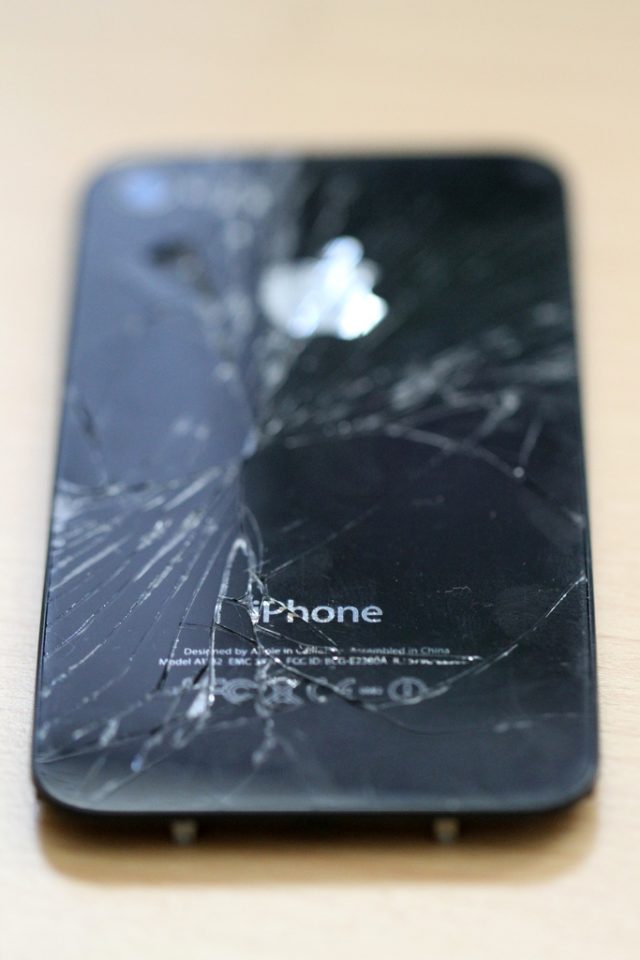
Not that kind of crack. (credit: Geoff Parsons)

The custom firmware that the FBI would like Apple to produce in order to unlock the San Bernardino iPhone would be the most straightforward way of accessing the device, allowing the federal agency to rapidly attempt PIN codes until it found the one that unlocked the phone.

But it's probably not the only way to achieve what the FBI wants. There may well be approaches that don't require Apple to build a custom firmware to defeat some of the iPhone's security measures.

The iPhone 5c used by the San Bernardino killers encrypts its data using a key derived from a combination of an ID embedded in the iPhone's processor and the user's PIN. Assuming that a 4-digit PIN is being used, that's a mere 10,000 different combinations to try out. However, the iPhone has two protections against attempts to try every PIN in turn. First, it inserts delays to force you to wait ever longer between PIN attempts (up to one hour at its longest). Second, it has an optional capability to delete its encryption keys after 10 bad PINs, permanently depriving access to any encrypted data.

Read 28 remaining paragraphs | Comments