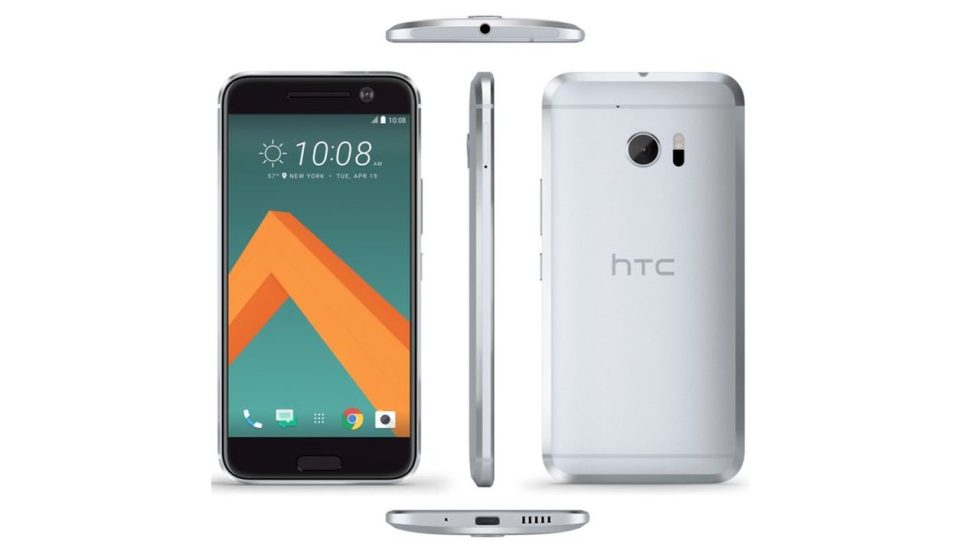
HTC 10 (née HTC One M10) outed in leaked renders

Features a bold chamfered metal back, 2560×1440 display, and 5-inch size.

(credit: @evleaks)

You'd be forgiven for thinking that HTC only made VR headsets nowadays, such is the anticipation for its first Steam VR, room-scale headset, the Vive. But HTC's roots are in phones, and for those who are fans of the company's famously attractive unibody metal designs and finger-friendly five-inch screens, the company has something special on the way.

The HTC 10—or HTC One M10, depending on who you ask—has been the subject of numerous leaks since HTC sent out its cryptic teaser image at tail end of this year's Mobile World Congress. But, thanks to serial leakers @OnLeaks and @evleaks on Twitter, that teaser image isn't so cryptic any more. @evleaks has posted supposed renders of the HTC 10, showing a unique bevelled edge on the rear of the phone, which matches up with the earlier teaser image.

As you'd expect from HTC, the rear of the phone appears to be all metal, along with a centrally placed camera module. Besides the module is an LED flash, along with what might be the apparatus for laser autofocus, similar to the system used in the likes of the Nexus 6P, LG G5, and HTC's own (Taiwan-only) HTC One M9+ Aurora Edition.

Read 5 remaining paragraphs | Comments
Epic CEO: “Universal Windows Platform can, should, must, and will die”

UWP first step towards “locking down the consumer PC ecosystem,” says Tim Sweeney.

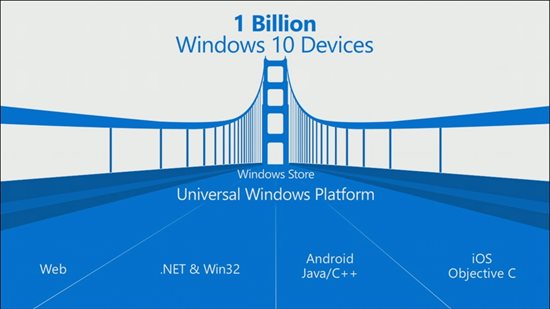
In a scathing editorial in the Guardian, Epic Games co-founder Tim Sweeney has spoken out about Microsoft's Universal Windows Platform (UWP) initiative, calling it a "fiasco" and "the most aggressive move Microsoft has ever made."

"With its new Universal Windows Platform (UWP) initiative, Microsoft has built a closed platform-within-a-platform into Windows 10, as the first apparent step towards locking down the consumer PC ecosystem," says Sweeney. "Microsoft has launched new PC Windows features exclusively in UWP, and is effectively telling developers you can use these Windows features only if you submit to the control of our locked-down UWP ecosystem."

"PC UWP can, should, must and will, die as a result of industry backlash."

Read 14 remaining paragraphs | Comments

AMD wants to standardize the external GPU

But thanks to Thunderbolt 3, hasn’t this been done already?

(credit: Robert Hallock)

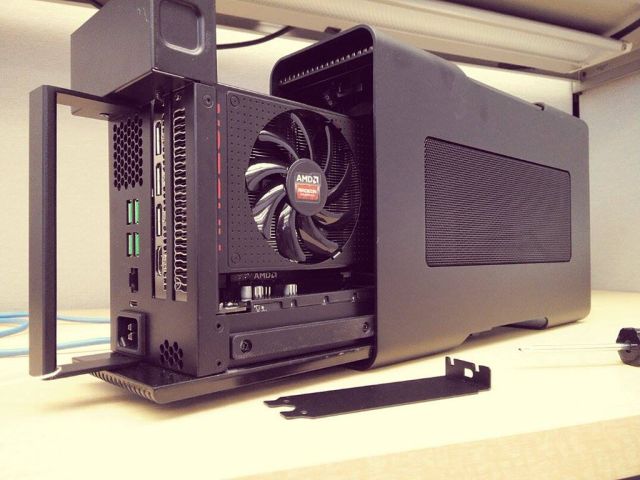
AMD hints that it's working on a new external graphics card solution that promises to be "the answer" to "ultrathin" laptop gaming, according to technical marketing head Robert Hallock.

"Ultrathin notebooks are awesome to carry, but nobody in their right mind would confuse one for a gaming notebook," says Hallock. "But there's still a HUGE appetite for thin notebooks that can game. I also bet there's a bunch of gamers out there who, as they get into their 30s and 40s, wouldn't mind condensing their entire computing life down into one device that does it all... External GPUs are the answer. External GPUs with standardised connectors, cables, drivers, plug'n'play, OS support, etc."

AMD isn't saying what those "standardised connectors" might look like just yet, but Hallock promises that the company will share "more info very soon." With GDC 2016 just around the corner, AMD could opt to discuss its plans there, although a quick scan of the sessions taking place during the conference—which mostly revolve around DirectX 12—reveals little.

Read 5 remaining paragraphs | Comments
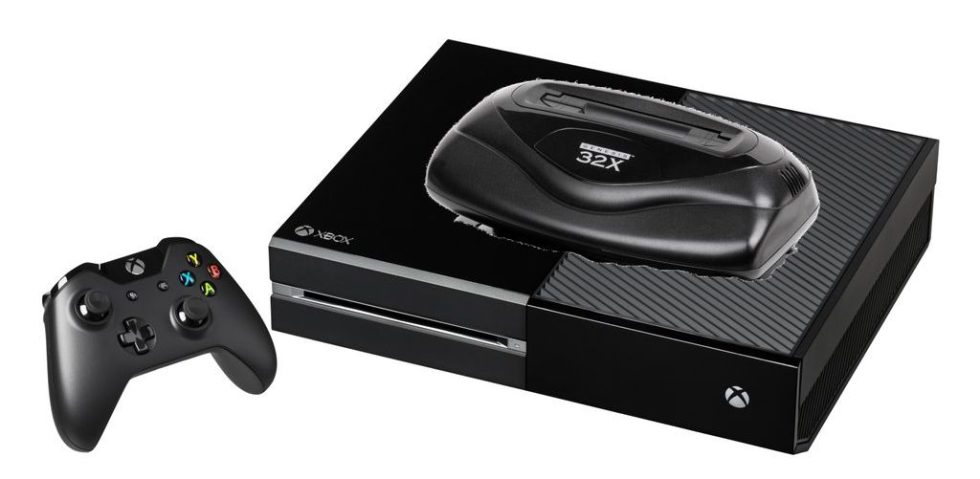
An upgradable Xbox One? Think this one through, Microsoft

Despite what it says, the rules of the PC market won’t fly on console.

(credit: Dan Adelman)

While Microsoft might have hoped that its free-to-play PC version of Forza would grab headlines, its press showcase in San Francisco was far more notable for Xbox chief Phil Spencer's strong hint that the Xbox One's hardware will be upgraded.

After neglecting the PC gaming market for several years, it sounds like Microsoft may now go much further than merely throwing the likes of Quantum Break and Gears of War onto the platform. Microsoft may be trying to apply the whole concept of PC gaming—that is, extremely wide backwards compatibility along with various hardware configurations—onto the appliance-like console market.

"Consoles lock the hardware and the software platforms together at the beginning of the generation. Then you ride the generation out for seven or so years, while other ecosystems are getting better, faster, stronger," Spencer said. "When you look at the console space, I believe we will see more hardware innovation in the console space than we've ever seen. You'll actually see us come out with new hardware capability during a generation allowing the same games to run backward and forward compatible because we have a Universal Windows Application running on top of the Universal Windows Platform."

Read 13 remaining paragraphs | Comments

Technics SL-1200G costs $4,000 because original manufacturing tools “were gone”

Company toyed with reissuing the SL-1200MK2 turntable, but had to start from scratch.

As much as it was exciting to see Technics unveil a followup to its legendary SL-1200 turntable, there is the small issue of its price. Priced at £3,000/$4,000, the new SL-1200G will cost far more than the original SL-1200MK2, which was just £400 before it was discontinued in 2010. And if you're a DJ that needs two of them for cutting, scratching, and mixing, you may need to sell a kidney first.

Paying a premium for audio equipment certainly isn't unheard of in audiophile circles—see the £300 Ethernet cable—but Technics has been taking some flak for the SL-1200G's high price, particularly as it doesn't boast things like a "monofilament" bearing system, or a "low resonance sandwich construction." Speaking to What Hi-Fi, Technics CTO Tetsuya Itani claimed that because the SL-1200G was a complete redesign—requiring a new manufacturing process and new tools—the price had to go up.

"Because the original 1210 turntables were manufactured for so many years, the manufacturing process had got to a very low cost. Now we need to invest in all the tools again, and the price now is much higher than the 1970s," Itani explained. "We began to study just a few months prior to IFA, maybe summer 2014, for the new SL-1200. We learned that it was impossible [to make the same deck], as almost all the tools for manufacturing were gone or heavily damaged—only one die remained, and that was for the dust cover."

Read 4 remaining paragraphs | Comments

Microsoft needs to stop forcing console-like restrictions on Windows Store PC games

With the upcoming Quantum Break a Windows Store exclusive, users are up in arms.

With the news that Remedy Entertainment's upcoming Xbox One and PC exclusive Quantum Break would only be be available for Windows 10, and only run under DirectX 12, there's been something of an uproar in the PC gaming community. Along with lamenting the cessation of support for the likes of Windows 7, of course—a sadly inevitable decision given Microsoft's aggressive push of its latest OS—there's also some incredibly steep recommended system requirements, which call for a Core i7, Nvidia GTX 980 Ti or AMD Fury X, and 16GB of system memory.

But the biggest problem stems from Microsoft's distribution method of choice: the Windows Store. The Windows Store is Microsoft's own platform for selling apps and games directly to consumers, which some may remember Valve's Gabe Newell calling "a catastrophe for everyone in the PC space" when it debuted with Windows 8 back in 2012. Steam OS arrived just a year later. Games and apps sold through the Windows Store differ from those sold on the likes of Steam and GOG in that they're built as a Universal Windows Platform (UWP) app, rather than as a standard desktop app.

That's fine for downloading the likes of Candy Crush, Minecraft: Pocket Edition, and Dropbox—even if the latter has some issues—but UWP apps have some limitations that dramatically affect top-tier PC games. Square Enix's Rise of the Tomb Raider recently debuted on PC both on Steam and on the Windows Store. Those that forked over for the Windows Store version were disappointed to find a host of limitations, including not being able to turn v-sync off, no SLI or Crossfire support, and no .exe file that can be loaded into Steam for use with its overlays or Big Picture mode.

Read 7 remaining paragraphs | Comments
Multi-GPU DirectX 12 shootouts show AMD with performance lead over Nvidia

Want to pair a 970 with a Fury? They’ll work together, but not very smoothly.

One of the most exciting parts of Microsoft's DirectX 12 API is the ability to pair graphics cards of varying generations, performance, or even manufacturers together in a single PC, to pool their resources and thus make games and applications run better. Unfortunately, testing "Explicit Multi Adaptor" (EMA) support under real-world conditions (i.e. not synthetic benchmarks) has so far proven difficult. There's only been one game designed to take advantage of DX12's numerous low-level improvements—including asynchronous compute, which allows GPUs to execute multiple command queues simultaneously—and the early builds of that game didn't feature support for multiple GPUs.

As you might have guessed from the headline of this story, it does now. The latest beta version of Stardock's real-time strategy game Ashes of the Singularity includes full support for EMA, meaning that for the first time we can just what kind of a performance boost we can get by doing the previously unthinkable and sticking an AMD and Nvidia card into the same PC. That's not to mention seeing how EMA stacks up again SLI or Crossfire—which have to be turned off in order to use DX12's multi-GPU features—and whether AMD can repeat the ridiculous performance gains seen in the older Ashes benchmark.

Benchmarks conducted by a variety of sites, including Anandtech, Techspot, PC World, and Maximum PC all point to the same thing: EMA works, scaling can reach as high as 70 percent when adding a second GPU, and yes, AMD and Nvidia cards play nicely together.

Read 13 remaining paragraphs | Comments

Watch out, Apple and Samsung: Xiaomi’s Mi 5 phone is coming for you

China’s favorite phone-maker pulls out all the stops for new flagship.

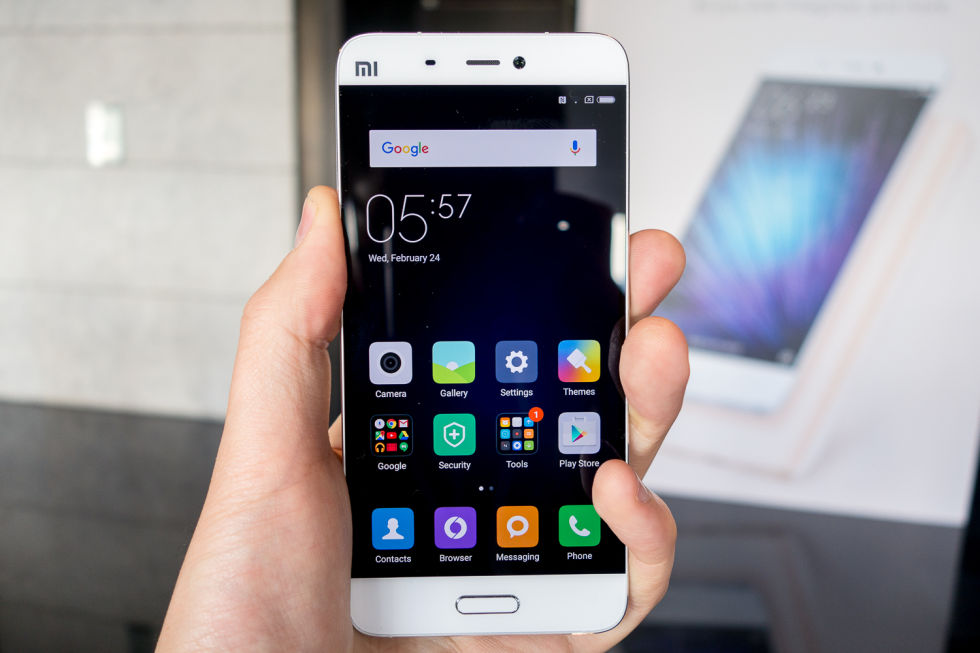
BARCELONA—You might not have heard of Xiaomi, or used any of its products before. And even if you have, you might be wondering why one of China's largest smartphone makers—which historically hasn't sold to the US and Europe—is here at MWC to talk about its new flagship smartphone, the Mi 5. The answer, it seems, isn't to launch a dramatic assault on the Western market in the same way Huawei has, but rather to warn the likes of Apple and Samsung that Xiaomi is coming, and people are going to love it.

In a surprisingly slick, if odd press conference—VP Hugo Barra glided through the room on one of Xiaomi's own Ninebot mini scooters—the company pitted its new Android-based Mi 5 phone against the likes of the Samsung Galaxy S7 and iPhone 6S. And on paper at least, Apple and Samsung have plenty to worry about. The Mi 5 sports the latest Snapdragon 820 SoC running at 2.2GHz, a 5.15-inch 1080p edge-to-edge display, up to 4GB of LPDDR4 RAM, up to 128GB of UFS 2.0 storage, a 16MP f/2.0 camera with 4-axis OIS (a first, it claims), NFC, a fingerprint scanner, 3000mAh battery, and a gorgeous metal and glass (or ceramic) body.

The price for that little lot? An impressive 2,600 yuan ($354, €321) for the high-end 128GB model with a ceramic body, and 1,999 yuan ($262, €238) for the entry-level version with 3GB of RAM and 32GB of storage. A 64GB version will also be available. All will have black, gold, and white colour options, and all will ship with Android 6.0 running Xiaomi's MIUI 7 interface. The phones will be sold direct from Xiaomi's website in China on March 1, making the Mi 5 one of the first commercially available phones with Qualcomm's latest SoC.

Read 9 remaining paragraphs | Comments

Noveto’s audio tech wraps you in bubble that is silent to outside world

3D face-tracking, and positional audio speakers make for a formidable combo.

BARCELONA, Spain—I'll admit to being a little sceptical as I sat down to listen to Noveto's private speaker system.

The current prototype—which like an old iPod speaker dock of the sort you'd find knocking around the bargain bin of a supermarket in the early '00s—doesn't exactly inspire me with confidence. Neither do the cheesy infomercial-like videos, which highlight the various ways in which having a private speaker—that is, one that only you can hear—might prove useful. And yet, as a focused beam of audio hit my ears with a clarity far richer than the robotic din of the MWC show floor might otherwise allow, it's hard not to be impressed.

Noveto, a small startup from Israel, hopes that its private speaker system might one day eliminate the need for headphones—no wires, no wireless, no nothing, just crystal clear audio. You could imagine a busy office where, instead of having to hold a phone up to your ear to take a call, you could whack it on a private speakerphone, leaving your hands free to take notes. Or, you could play a split-screen game, with each player able to hear a completely unique audio track. Those who struggle with their hearing could have a louder audio beam for themselves.

Read 6 remaining paragraphs | Comments

HTC Vive unveiled: This is what the final consumer version looks like

Subtle differences over the Pre, but now we know what $799 will get you.

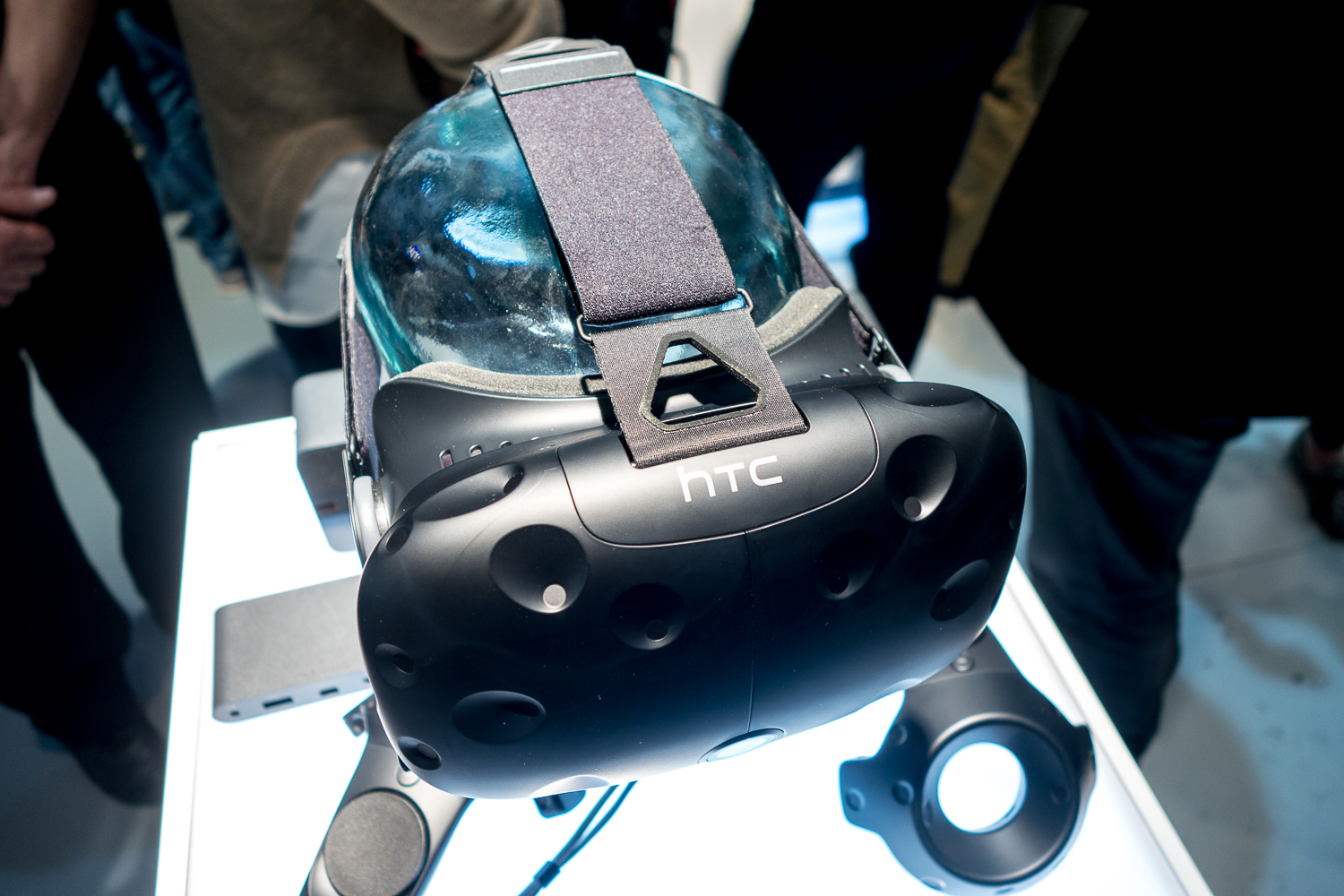
BARCELONA—Hot on the heels of announcing a substantial $799 (~£650) price for the Vive VR headset, HTC finally gave us a look at the consumer edition here at MWC. This is the same version of the Vive that will go out to customers when it ships in April, and while the differences are subtle, there are differences.

For starters, the HTC branding that adorned the controllers of the Vive Pre has been ditched in favour of a Vive logo, while the "Vive Pre" text on the headset has been removed leaving just the HTC logo. The headband design is largely the same, although there's now a cutout for keeping the Vive's many cables tidy. The Lighthouse tracking boxes have a glossy black finish on the front, while the I/O box—which contains HDMI and USB inputs—thankfully has a matte finish.

Now that the consumer version of the Vive is here, are you ready to stump up £650/$800 for the privilege of owning one? The market might just be willing to put up with the prices—the Oculus Rift certainly hasn't suffered—although for us mere mortals with less than ideal bank balances, sacrifices may have to be made.

Read 1 remaining paragraphs | Comments