Google’s Gmail April Fool prank backfires in spectacular style

Users complain “Gmail Mic Drop” offended friends, coworkers, and lost jobs.

Google's April Fools' Day prank for Gmail backfired in spectacular style today after users claimed that it caused them to inadvertently offend friends and family, or in some cases lose their job.

The now-removed "Gmail Mic Drop" function allowed users to "send and mic drop" an e-mail, which automatically attached a GIF of a minion—yes, those weird yellow ones from Despicable Me—dropping a mic, before muting the conversation and archiving it. The prank is mildly amusing, but it wasn't so much the prank itself as the execution that caused problems.

Instead of functionality that users opted into, or was made distinct from Gmail's regular functions, the "send and mic drop" button replaced the often-used "send and archive" button, which lets users close a conversation and file the thread away. Many users typing with muscle memory, not aware that the functionality had been changed, or even that just misclicked—the button does sit right next to the send button after all—took to Twitter saying they had accidentally sent the e-mail to bosses, clients, and others that wouldn't have found the GIF particularly amusing.

Read 9 remaining paragraphs | Comments
Final Fantasy 15 gets release date, Platinum Demo, CG film, anime series

Square Enix is going large for FFXV with multiple collector’s editions and more.

Check out the new Final Fantasy XV: Reclaim Your Throne trailer.

After nearly a decade of tumultuous development, Final Fantasy XV (née Final Fantasy Versus XIII) has a worldwide release date for PlayStation 4 and Xbox One: September 30, 2016.

Not only that, but publisher Square Enix is going all-out with promotion for the long-awaited game by also announcing: a strange Platinum Demo that's available to download on PS4 and Xbox One right now; a free five-part anime series called Brotherhood Final Fantasy XV that's going out on YouTube (you can watch the first episode here); a full-blown CG movie called Kingsglaive: Final Fantasy XV; and a FFXV-themed pinball game for Android and iOS called Justice Monsters Five. Plus, there are two collector's editions of the game, the priciest of which—the Ultimate Edition—will go for a cool £189.99 ($269.99) and will be limited to 30,000 units worldwide. UK artist Florence + the Machine is handling the title track with a cover of Ben E. King's "Stand By Me."

So, where to start? How about the Platinum Demo, which—unlike its pre-order only counterpart Episode Duscae—isn't taken from the main game at all, and is instead a standalone experience complete with its own odd story. FFXV protagonist Noctis stars, but as a young boy, where he encounters recurring guardian/summon Carbuncle, a fox-like creature that can only communicate using a smartphone. You shrink down and drive toy cars, collect gems, and turn into an adult to battle a boss. The crystals you collect unlock panels that offer up weapons and items, change the time of day, and alter weather effects to showcase the game's fancy engine.

Read 8 remaining paragraphs | Comments
Report: PlayStation 4K to be announced just before PS VR launch

Wall Street Journal sources say new hardware will launch in October.

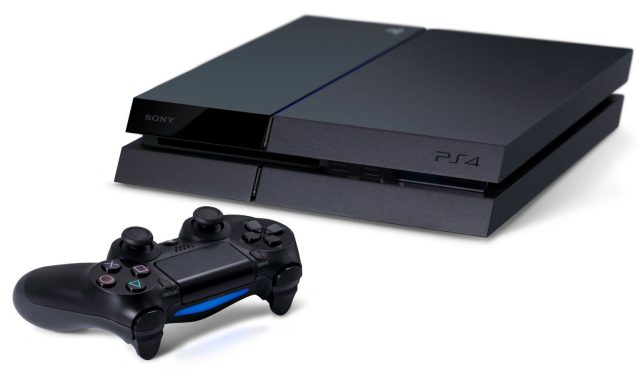
The more powerful version of the PlayStation 4, currently dubbed PlayStation 4K or PlayStation 4.5, will be announced shortly before the release of PlayStation VR in October, according to a report by The Wall Street Journal. The publication's sources indicate that Sony will not stop production of the original PS4 on release of the new, more powerful version, while also noting that "it is likely" both consoles would share the same software catalogue.

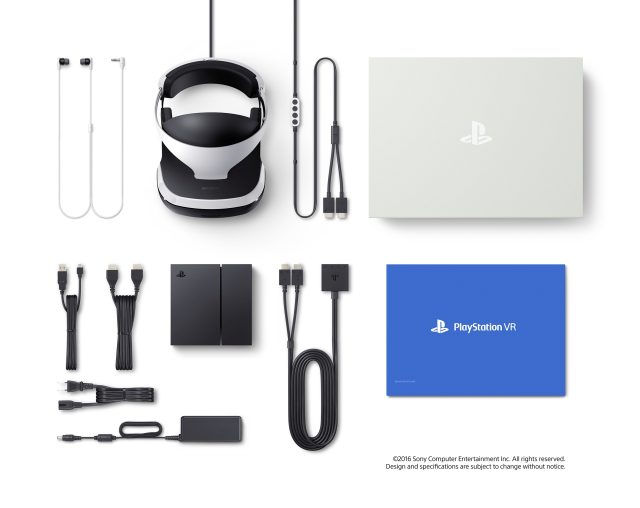
Sony's goal with the console, according to those same sources, is to compete with high-end PC-based virtual reality experiences such as the Oculus Rift and HTC Vive, which offer a higher graphical fidelity than the current PS4. While it's possible that a more powerful PS4 will be able to increase the sharpness and graphical effects of PS VR games, the headset itself sports a mere 1920×1080 OLED display, equating to 960×1080 per eye, compared to the higher 2160×1200 screens of the Rift and Vive.

For those not into interested in PS VR, the increased processing power of the new PS4 will allow it to output UHD (4K) resolution, say the WSJ's However, it's not yet clear whether that will only apply to new games, or whether older software will be upscaled too.

Read 6 remaining paragraphs | Comments

Sony’s ForwardWorks takes another stab at mobile gaming

Will “leverage” the IP of PlayStation to create iOS and Android games.

(credit: Flickr)

Less than a year after Sony shuttered its PlayStation Mobile service—which brought PlayStation content to Android devices—Sony has launched ForwardWorks. The new division will "leverage the intellectual property" of PlayStation games to create games for iOS and Android devices, but only in Asia and Japan.

ForwardWorks will leverage the intellectual property of the numerous PlayStation dedicated software titles and its gaming characters as well as the knowledge and know-how of gaming development expertise which was acquired over the years with PlayStation business to provide gaming application optimized for smart devices including smartphones to users in Japan and Asia. The company will aim to deliver users with opportunity to casually enjoy full-fledged game titles in the new filed [sic] of the smart device market.

Details on ForwardWorks are thin on the ground, but Sony appears to be taking a similar approach to mobile gaming as Nintendo, which is using selected franchises, characters, and developers to create mobile-specific games. The first of Nintendo's efforts, Miitomo, launched in Japan earlier this month and was downloaded by a million users in just three days.

While ForwardWorks doesn't appear to be a platform as such, then—unlike PlayStation Mobile, which offered developers an SDK—Sony's statement does note that the divison will "deploy new services" as well as games when it launches on April 1.

Read 2 remaining paragraphs | Comments

Planet Coaster: A theme park sim so good its developers forgot to develop it

The deep theme park simulation genre returns, thanks to Frontier Developments.

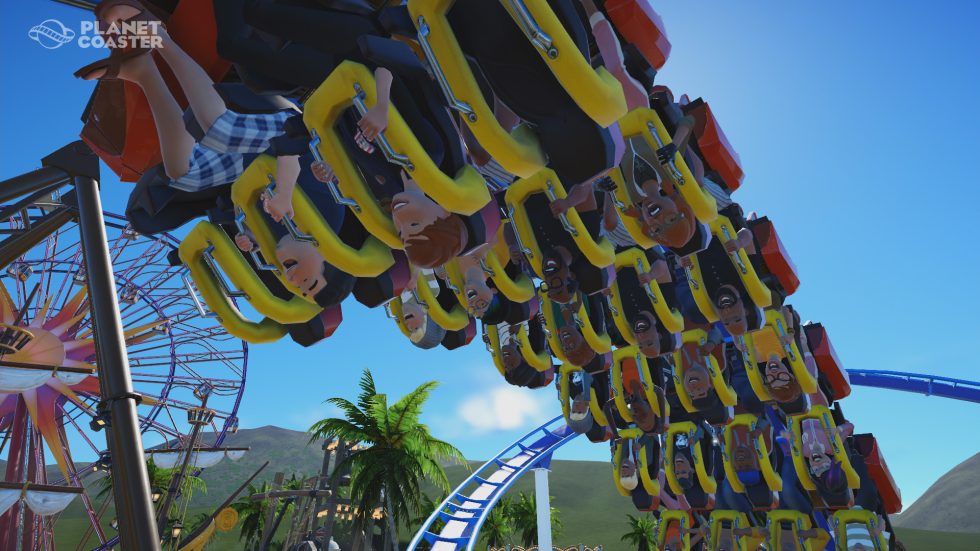
A few weeks before the launch of the Planet Coaster closed alpha—a perk for those who bought the "Early Bird Edition" of the game—Frontier Developments' Jonny Watts is scolding his team. Rather then work on squashing bugs in the game's complex path-finding system, or making sure that the tiny details on flat (pre-made) rides were correct, they were making roller coasters and theme parks. Some of them had been at it for days, obsessively chipping away at their creations using tools like environmental deformation and coaster editing that wouldn't even be in the alpha.

"We still have jobs to do," he told them.

Deadlines or not, how better to show a game works than a group of people who can't stop playing it? At the very least, there was plenty to show on press day. There are wonderfully complex roller coasters that slide effortlessly through the sides of hills and across other rides, and parks with a slick pirate theme made up of carefully placed wooden barrels and caged skeletons. Most impressive is a coaster that twirls around a huge tree in the middle of a park, a product of careful track placement and the game's pre-production environmental deformation tools.

Read 16 remaining paragraphs | Comments

PlayStation VR launch lineup has five slick Sony-made games

PlayStation VR Worlds and The Playroom VR to become the Wii Sports of PSVR.

Come October, Sony's PlayStation VR will hit the shops for the princely sum of $399/£349/€399. That's far cheaper than the likes of the Oculus and the Vive, even when you take into account the price of PlayStation Camera (£39, $44), and Move Controllers (£24, $28 each) that aren't included. But while the hardware is attractive, what matters most is what games you can play on it—and Sony's got some honest-to-goodness proper games in the launch lineup.

While over 50 games are promised for the two months between launch and December of this year—CCP's Eve Valkyrie is pencilled in for launch day—Sony's tapped its in-house studios to make sure five of them are ready for when players get the PSVR home. While Sony hasn't confirmed it, I suspect that the first—PlayStation VR Worlds—will get bundled in with the headset at some point. PlayStation VR Worlds is a collection of five mini-games developed by Sony's London Studio—the same studio behind the likes of Eyepet, SingStar, and Wonderbook—many of which have been used to demo the PSVR at its various public outings.

PlayStation VR Worlds.

The first of the minigames is The London Heist, a homage to the classic PlayStation 2 game The Getaway, and uses dual PS Move Controllers, or a DualShock 4 controller to simulate a robbery, complete with a suitably explosive car chase escape. Into The Deep sees players take on the role of a deep sea diver who (in what sounds like my own personal nightmare) encounters marine life small and large. VR Luge is, as it sounds, a game about rolling down a hill like a nutter atop a luge. Danger Ball sees players using their heads to strike and spin the ball, while Scavenger's Odyssey is a sci-fi adventure where players take on the role of an alien treasure hunter.

Read 5 remaining paragraphs | Comments

Radeon Pro Duo mashes two Fury GPUs together for 16 teraflops of performance

AMD wants $1,500 for it and you’ll need three PCIe power plugs to use one.

After first being teased at E3 2015, AMD has finally made its dual Fury GPU official. Dubbed the Radeon Pro Duo, the card combines two of AMD's top tier Fiji GPUs (as used in the Fury X and Fury Nano) onto a single card, resulting in a claimed 16 teraflops of compute performance. The price for such power? A mere $1499 (UK pricing TBC, but probably around £1200). The Radeon Pro Duo goes on sale in "early" Q2 2016.

While that price might seem steep, it is substantially less than Nvidia's most recent dual dual-GPU offering, the Titan Z, which launched at $3000 (£2399) before dropping to $2000 (£1499). AMD's previous dual-GPU card, the R9 295X2, launched at $1500 before dropping to less than $1000 months after launch.

You do get a lot for your cash, though. Both GPUs on the Radeon Pro Duo sport the full array of 4096 stream processors, 256 texture units, and 256 ROPs. There's 8GB of high bandwidth memory on board, split between the two GPUs, running at 1GHz on a substantial 4096-bit bus for 512GB/s of bandwidth. Like the Fury X, the Radeon Pro Duo is liquid cooled via an all-in-one unit with a 120mm radiator.

Read 7 remaining paragraphs | Comments

AMD GPU roadmap reveals HBM2-powered Vega and Navi

But AMD’s Raja Koduri hints Polaris may be limited to GDDR5 and HBM1.

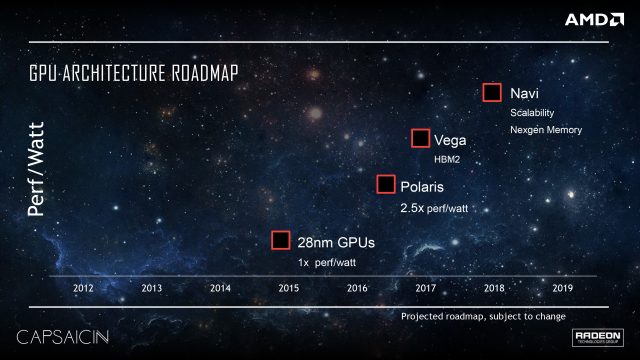
For the first time in a long time, AMD has an honest-to-goodness GPU product roadmap, and it names the company's next two GPU architectures: Vega and Navi.

Revealed at this year's Game Developers Conference during the AMD "Capsaicin" event, the roadmap is light on details, but it does hint at what the future might hold for AMD's GPUs. For starters, Vega is due to arrive early in 2017, not long after the release of Polaris. Interestingly, the roadmap explicity calls out Vega's use of HBM2 memory, a feature that was originally supposed to be a part of the upcoming Polaris architecture and used alongside traditional GDDR5 memory.

In an interview with PC Perspective, AMD's Raja Koduri hinted that Polaris would instead use HBM1, rather than its more accomplished counterpart. Of particular concern is that current HBM1 implementations are limited to 4GB stacks—HBM2 can go as high as 16GB—which could carry over to Polaris. Given that GPU memory requirements have skyrocketed over the past year, that could put Polaris at a significant disadvantage, particularly when Nvidia has confirmed that at least some Pascal parts will use HBM2.

Read 4 remaining paragraphs | Comments

Microsoft is using Minecraft to train AI and wants you to help out

Open source AIX platform will be released for free this summer.

Computer scientists at Microsoft have developed a new artificial intelligence platform atop the hugely popular video game Minecraft. Dubbed AIX, the platform hooks into Minecraft and allows the AI to take control of a character and learn from its actions. It's early days for the project; so far, the scientists have been hard at work getting the the AI to learn to climb a hill.

It's a simple enough task to program directly, but for an AI that starts out knowing nothing at all about its environment or what it's supposed to be doing, that's a big ask. The AI not only needs to understand its surroundings, but it also needs to figure out the difference between day and night, why walking on lava is probably a bad idea, and when exactly it has achieved its goal via a system of rewards.

Microsoft's AI isn't quite there yet, but those wanting to program their own can do so this summer when the AIX software will be released for free and as open-source code. Budding programmers and researchers need only purchase a licence for the Java version of the game, which currently goes for £17.95 ($26.95/€19.95). AIX will run on Windows, Linux, or Mac OS, and researchers can programme their AI in any programming language they like. The only proviso is that AI experiments won't be able to interact with other players online—at least not yet.

Read 5 remaining paragraphs | Comments

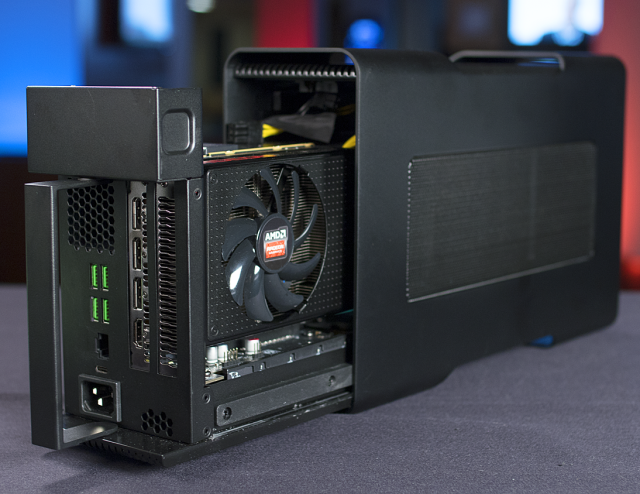
AMD XConnect wants to make external GPUs easier to use

Allows “surprise removals,” switching between discrete and integrated graphics.

AMD has introduced XConnect, a form of driver-level support for external graphics cards, as part of its latest Radeon 16.3 driver. XConnect allows users to add and remove a Thunderbolt 3 external graphics device (eGFX) such as the Razer Core, without needing to restart the PC, as well as switch between discrete and integrated graphics on-the-fly.

The XConnect driver can also detect what applications are running on the external GPU, giving users the option to close them individually, or shut them all down at once from a pop-up menu in the system tray. Even if users forget to close down applications before removing the external GPU, AMD claims that the system will remain functional after a "surprise removal."

The first device to use XConnect will be the Razer Blade Stealth and Razer Core. AMD promises that its XConnect driver will be compatible with other systems and external GPU devices, provided they meet a few criteria. Devices must be running Windows 10 build 10586 or later and Thunderbolt firmware v.16 or higher; feature a Thunderbolt 3 port and 40Gbps Thunderbolt 3 cable; and pass Thunderbolt certification. Most importantly, the systems must have BIOS ACPI extensions for Thunderbolt eGFX.

Read 5 remaining paragraphs | Comments