
From Paintbox to PC: How London became the home of Hollywood VFX

All it took was talent, fortuitous insight, and 30 years of relentless tech advances.

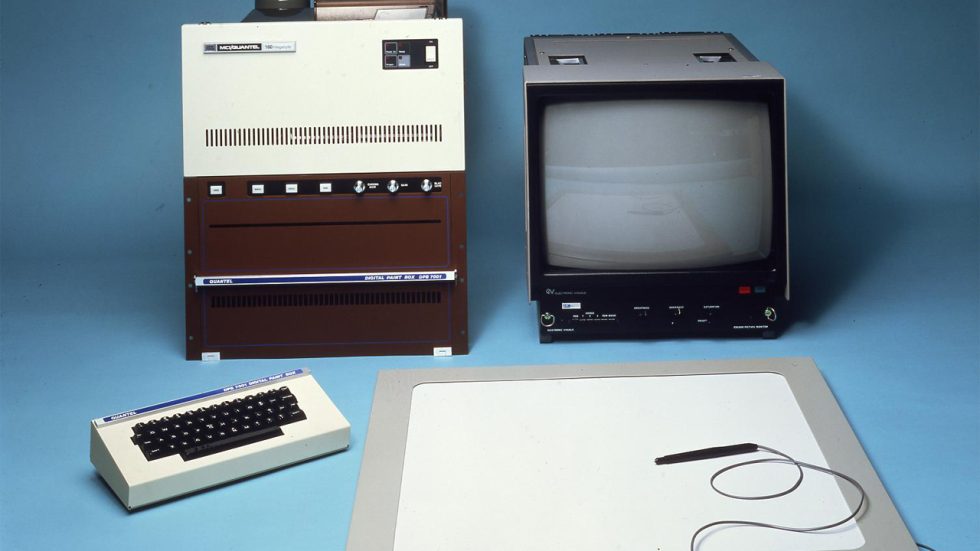
In a darkened room on the backstreets of London's red light district, Mike McGee stared at a screen. Surrounded by a thick wall of cigarette smoke and impatient chain-smoking clients, he swiped a pen across the table, his movement replicated with surprising accuracy as a pixel-perfect line on the screen above. The clients—TV producers from the BBC—were impressed. In just a few short minutes, McGee had transformed a single frame of video into the beginnings of a title sequence. In a world where labour-intensive optical effects and manual rotoscoping were the norm, this was a revelation.

For 12 years, McGee worked out of this room, painting onto the screen, his eyes left bloodshot and burning from the smoke as runners dashed in and out to empty overflowing ashtrays. It was a painstaking process; the Quantel Paintbox and its pressure-sensitive stylus were groundbreaking pieces of technology when they were released in 1981, but they had their limitations. The huge 14-inch platter hard drive could store 160MB of data, enough for just over six seconds of video at 25 FPS. Longer pieces required playing out each frame to tape before wiping the hard drive, a risky process that resulted in McGee and his staff working eight-hour shifts around the clock to minimise cockups.

The Paintbox and its multi-frame follow up Harry—which could store up to 30 seconds of footage and manipulate multiple frames of animation at once—would come to dominate the TV industry throughout the 1980s and early '90s, defining the decade's iconic visual style (see Dire Straits' "Money For Nothing" video). It would even star in its own TV show on the BBC, Painting with Light, alongside artists like David Hockney. And for McGee, a graduate of the famous Central Saint Martins College of Art and Design, the Paintbox would spark a career in the visual effects industry spanning nearly three decades.

Read 55 remaining paragraphs | Comments

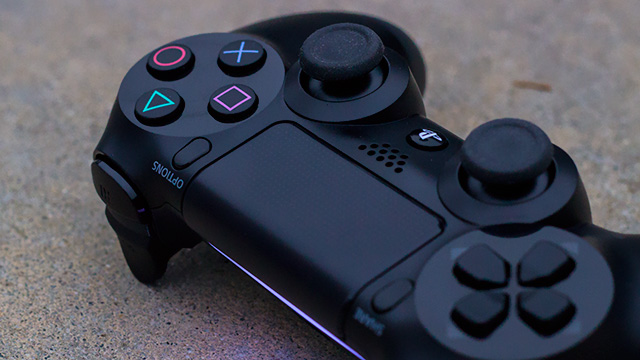
PS4 boosts Sony to first full-year profit in three years

17.7 million PS4s shipped, but smartphone business continues to struggle.

(credit: Flickr)

Sony shipped 17.7 million PlayStation 4 consoles over the fiscal year ended March 31, bringing the total number of consoles shipped to an impressive 40 million. The strength of the PS4 helped Sony to reach its first full-year profit in three years, bringing in ¥‎147.8 billion (£936 million, $1.36 billion). Last year the company reported a loss of ¥126 billion (£798 million, $1.16 billion).

Strong demand for the PS4 and games led to an 11.8 percent jump in sales for Sony's Game and Network Services division. Interestingly, Sony's PlayStation Network alone brought in ¥529 billion (£3.3 billion, $4.9 billion) in raw sales, which is more than the whole of Nintendo brought in (¥504 million, £3.1 billion, $4.6 billion) for its last fiscal year.

While Sony's new-found profitability marks a dramatic turnaround for a company that has struggled to deliver consistent profits over the past decade, not all of it is performing well. Breaking it down by quarter, Sony actually made a ¥88.3 billion (£559 million, $816 million) loss in its fourth quarter, booking a charge against its chip business, as well as assessing damage from an earthquake that shut down its main plant for camera sensors.

Read 7 remaining paragraphs | Comments
AMD’s Polaris will be a mainstream GPU, not high-end

But with AMD promising to grow the VR install base, it may be just as powerful.

AMD's upcoming Polaris 10 and Polaris 11 graphics chips won't be powering high-end graphics cards, according to recent comments by AMD. In its latest financial report, the company noted that Polaris 11 would target "the notebook market," while Polaris 10 would target "the mainstream desktop and high-end gaming notebook segment."

In an interview with Ars, AMD's Roy Taylor also confirmed that Polaris would target mainstream users, particularly those interested in creating a VR-ready system.

"The reason Polaris is a big deal, is because I believe we will be able to grow that TAM [total addressable market] significantly," said Taylor. "I don't think Nvidia is going to do anything to increase the TAM, because according to everything we've seen around Pascal, it's a high-end part. I don't know what the price is gonna be, but let's say it's as low as £500/$600 and as high as £800/$1000. That price range is not going to expand the TAM for VR. We're going on the record right now to say Polaris will expand the TAM. Full stop."

Read 7 remaining paragraphs | Comments

Huawei P9 review: Great camera, great design, and ghastly software

Emotion UI and its questionable Android tweaks are alive and well.

Specs at a glance: Huawei P9
Screen 5.2-inch, FHD (1920x1080)
OS Android 6 Marshmallow with Emotion UI 4.1
CPU Huawei Kirin 955 (64-bit), Octa-core (4x 2.5GHz A72, 4x 1.8 GHz A53)
RAM 3GB/4GB (64GB model)
GPU Mali-T880 MP4
Storage 32GB or 64GB, plus micro SD expansion
Networking 802.11 Wi-Fi a/b/g/n/ac (2.4 & 5 GHz)
Ports USB Type-C, headphone jack
Camera 2x 12MP Sony IMX286 sensors, Leica Summarit H 1:2.2/27 lenses,  f/2.2, 27mm focal length
 Dimensions 145mm x 70.9mm x 6.95mm
Weight 144g
Battery 3000mAh
Network Bands Bands 13, 25, 29, 30, and 41 are not supported
Other perks RAW image support
Release date Available to pre-order now; release date in the UK will be sometime in May
Price £449/€599 for 32GB model

A few years ago, in a classic ham-fisted fumble involving a pint of beer and a cat video, I dropped my Nexus 5. The colourful 1080p screen that I had spent so much of my free time pawing at was left shattered and unusable. Money was tight at the time, and so rather than get the Nexus fixed or buy an entirely new phone, I called in a favour from a journalist friend. The next day, I was the proud borrower of a Huawei P7, the Chinese company's first real stab at a flagship Android phone.

I'd never used a Huawei phone before, and at first I was pleasantly surprised. The build quality was excellent even if the design was rather nondescript, and it had a bright 1080p IPS screen. My excitement dwindled, however, when I flicked the P7 on and was presented with one of the most outrageously aggressive Android skins I'd ever seen. The icons had been squished, and given an odd iOS-like sheen, while the app drawer I loved from the stock KitKat build on the Nexus had been entirely removed in favour of shoving all the apps onto the home screen.

Indeed, the deeper I dove, the more I found had been changed by Huawei's Emotion UI. Settings weren't where I expected to find them, while various menu designs had been given a visual tweak that didn't match other parts of the OS. In short, the P7 was mess—and it was slow and laggy too. This was a classic case of great hardware being marred by terrible software, and it wasn't long before I bit the bullet and bought a new phone just so I could get back to something that at least vaguely approached a stock Android experience.

Read 24 remaining paragraphs | Comments
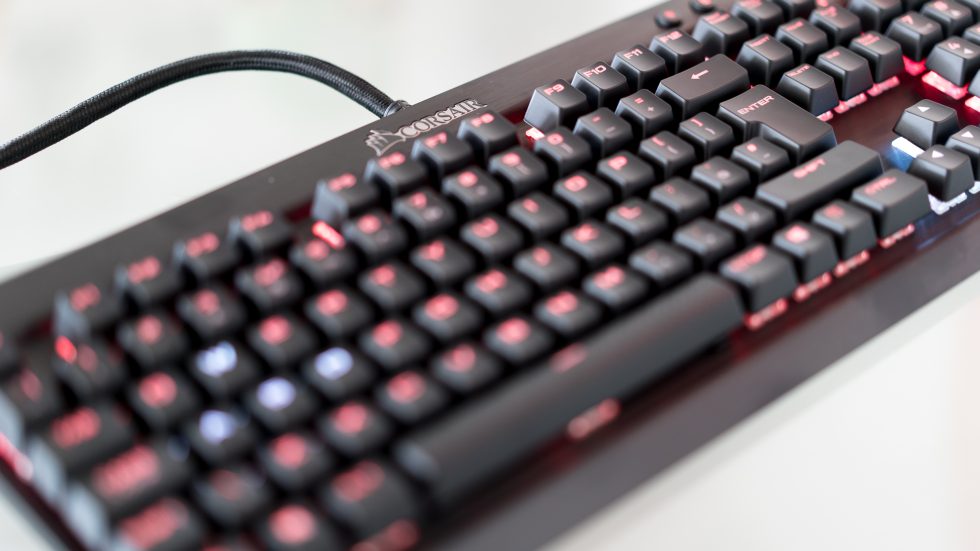
Corsair Rapidfire mini-review: Low-profile mechanical keys, anyone?

Cherry MX Speed switch isn’t satisfying to type on, but pro gamers may like it.

(credit: Mark Walton)

Part of the reason, if not the reason people buy mechanical keyboards from the likes of Corsair and Das Keyboard is for that sweet, sweet extended key travel. The mushy membrane keyboards included with most desktops and the cursory chicklet keyboards of laptops simply don't have the depth of key travel and tactile feedback that rapid fire typists and gamers demand. If you fall into either of those camps, I'd urge you to give a mechanical keyboard a try—it really does make a world of difference.

Weirdly, though, Corsair thinks that the key travel of a good mechanical switch is a little too high for the most l33t of gamers—they might even be losing precious e-sports dollars because of it. Enter the K70 and K65 Rapidfire keyboards, which are kitted out with the all-new mechanical Cherry MX Speed switch. The MX Speed boasts an actuation distance—that is, the point at which its switch is activated—of just 1.2mm and a light 45g actuation force. By contrast, my mechanical switch of choice, the Cherry MX Brown, has a much larger 2mm actuation distance and 55g actuation force. The idea is to give an advantage to e-sports players by shaving off precious milliseconds (microseconds?) from each keystroke.

Now, I know what you're thinking, and no, if you're not into your mechanical keyboards, it's doubtful you'll be able to tell the difference between an actuation distance of 2mm and 1.2mm. Hell, even if you are, the difference is subtle. But, there is a difference, and I'm not so sure it's one I like. Side-by-side with a Cherry MX Brown keyboard, the Rapidfire's keys aren't as comfortable to type on. There's no discernible bump or click—one of the key selling points of many mechanical switches that helps identify when a key has been pressed—and the shallower travel makes it far easier to bottom out when typing.

Read 8 remaining paragraphs | Comments

Sony PS4K is codenamed NEO, features upgraded CPU, GPU, RAM—report

PS4 NEO said to feature AMD’s new Polaris architecture.

Sony may be tight-lipped for now, but it's looking increasingly likely that it will release an updated version of the PlayStation 4 later this year. So far the rumoured console has gone under the moniker PS4K or PS4.5, but a new report from gaming site GiantBomb suggests that the codename for the console is "NEO," and it even provides hardware specs for the PlayStation 4's improved CPU, GPU, and higher bandwidth memory.

Original PS4 NEO
CPU 8 Jaguar Cores @ 1.6GHz 8 Jaguar Cores @ 2.1GHz
GPU AMD GCN, 18 CUs @ 800MHz Improved AMD GCN, 36 CUs @ 911MHz
Memory 8GB GDDR5, 176GB/s 8GB GDDR5, 218GB/s

Those specs include a CPU clock speed bump from 1.6GHz to 2.1Ghz, an improved AMD GPU with 36 Compute Units (CU) running at 911MHz, and a memory bandwidth bump up to 218GB/s. While GiantBomb noted that the CPU cores remain based on AMD's Jaguar architecture—which was originally a chip developed for laptops—the GPU specs tie into recent rumours that AMD had landed big design wins for its new Polaris architecture.

Should the PS4 NEO GPU feature 36 CUs, that would mean around 2304 stream processors—effectively doubling the amount from the old chip. According to TechPowerUp, those specs are extremely similar to AMD's Polaris 10 "Ellesmere" chip, which is rumoured to be used in an upcoming standalone Radeon R9 480 graphics card. While AMD has refused to comment on the scuttlebutt—telling Ars "we do not comment on rumour or speculation"—the company has noted in the past that the focus of Polaris is on power efficiency and "console-class gaming on a thin-and-light notebook."

Read 10 remaining paragraphs | Comments

HTC 10 hands-on: A return to form, or too little too late?

The HTC 10 isn’t groundbreaking, but a solid phone might be exactly what the company needs.

Hands on with the HTC 10 (video link)

Specs at a glance: HTC 10
Screen 5.2 inch, Quad HD (2560x1440, 564 pixels per inch) Super LCD 5 with curved-edge Gorilla Glass
OS Android 6 Marshmallow with HTC Sense
CPU Qualcomm Snapdragon 820 quad core up to 2.2GHz
RAM 4GB
GPU Qualcomm Adreno 530
Storage 32GB or 64GB, plus micro SD expansion
Networking 802.11 Wi-Fi a/b/g/n/ac (2.4 & 5 GHz)
Ports USB 3.1 Gen1, Type-C, headphone jack
Camera 12MP "Ultrapixel" rear camera with 1.55 micron pixels, OIS, laser autofocus, and f/1.8 lens. 5MP "Ultrapixel" selfie camera with OIS and f/1.8 lens.
Size 145.9mm x 71.9mm x 9.0mm
Weight 161g
Battery 3000mAh
Network Bands 2G: 850/900/1800/1900MHz, 3G: 850/900/AWS/1900/2100MHz; 850/AWS/900/2100 MHz (US), 4G: (EMEA/Asia): FDD bands B1, 3, 5, 7, 8, 12, 20, 28, 32; TDD bands B38, 40, 41 4G (USA): FDD bands B1, 2, 3, 4, 5, 7, 12, 13, 17, 20, 28, 29, 30
Other perks Quick Charge 3.0 support, 24-bit DSP and DAC, RAW image support
Price £570 / $700 / €700

HTC has taken the wraps off its latest and greatest flagship, the HTC 10 (yup, the company has dropped both the "One" and the "M"). But it isn't some grand reinvention of the smartphone—it isn't even a reinvention of an HTC smartphone. Instead, what we have here is the result of years of refinement from a company that's in sore need of a win. The HTC 10 is a phone that focuses on nailing the basics: the screen, the camera, and the battery life. And while that might not make for the most exciting of product launches, perhaps that's exactly what the company needs right now: a solid, well-designed smartphone with mainstream appeal.

Inside, there are few surprises. The HTC 10, like nearly every other 2016 flagship, sports a Snapdragon 820 SoC with 4GB of RAM and 32GB or 64GB of storage. There's an SD card slot that supports Android 6.01 Marshmallow's adoptable storage feature. There's NFC support, too. Wireless charging isn't available, but Qualcomm's Quick Charge 3.0 is, and a quick charger is bundled in the box. HTC says the charger can charge the phone's pleasingly large 3000mAh battery to 50 percent in under 30 minutes. Promised battery life is up to two days thanks in part to the larger battery and improvements like a screen that dynamically changes its refresh rate based on the kind of app that you're using.

Read 18 remaining paragraphs | Comments

Huawei unveils P9 and P9 Plus phones with Leica-engineered dual cameras

Huawei’s new flagship phones are here, with solid design, hardware, and fancy cameras.

Following on the from the success of last year's P8—not to mention Mate S and Nexus 6P smartphones—Huawei has unveiled the P9 and P9 Plus, a pair of sharp all-metal smartphones. The P9 sports a relatively pocketable 5.2-inch 1080p edge-to-edge display, while the P9 Plus has a 5.5-inch 1080p display. Both smartphones have not one but two cameras co-engineered with iconic camera company Leica.

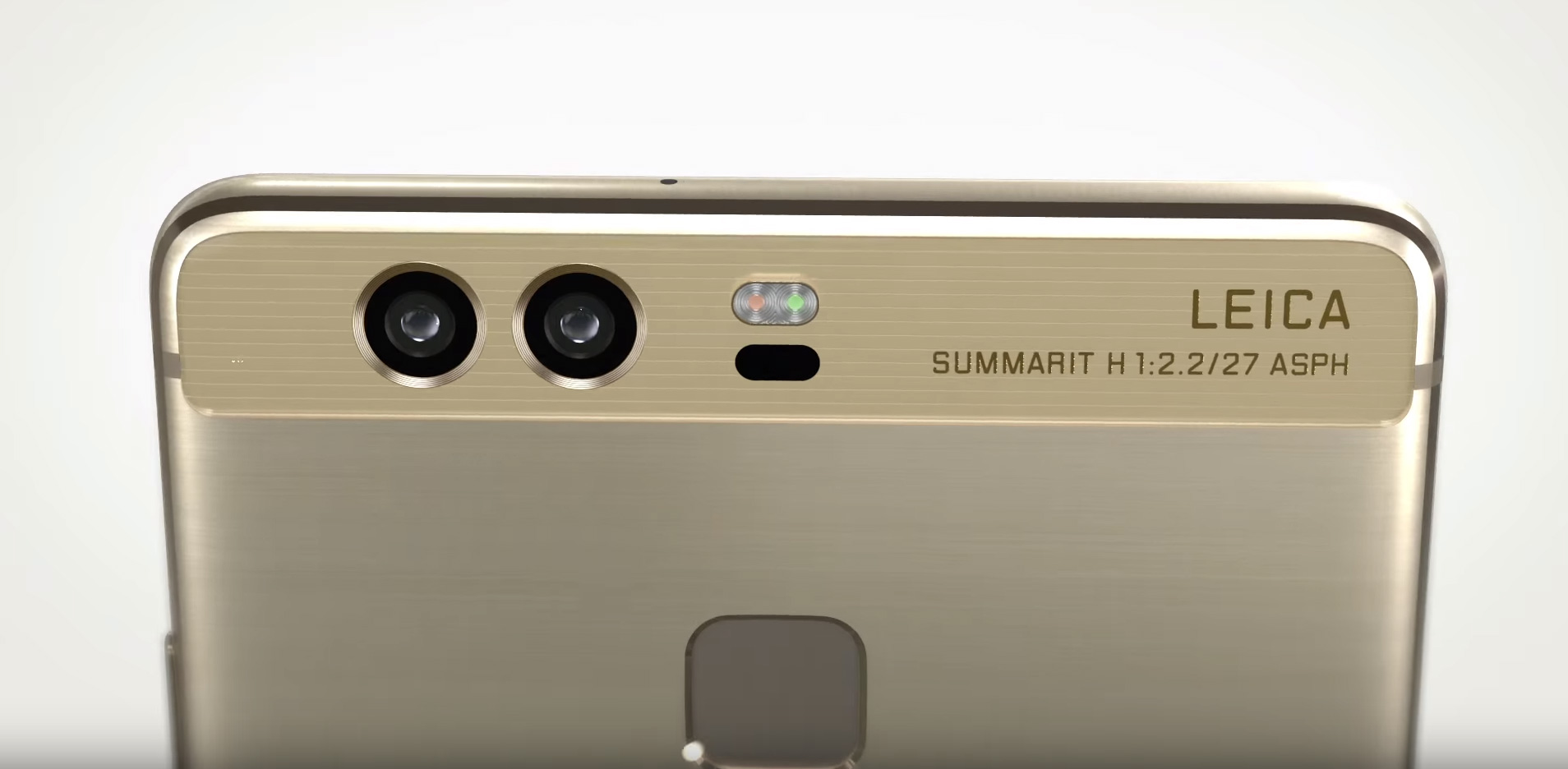
Sat above Huawei's now-standard fingerprint sensor on the rear of the phone are a pair of 12-megapixel Sony 12MP IMX286 sensors, which are mated to a pair of Leica Summarit H 1:2.2/27 lenses (f/2.2 aperture, 27mm focal length). One sensor records in full RGB, while the other is monochrome. While both sensors have the same 1.25µm pixels, Huawei says the monochrome sensor lets in 300 percent more light, making for far better low light photography, faster focusing, and a much wider colour gamut. The company even claims the P9's twin cameras gather 270 percent more light than iPhone 6S—although it's not clear how it got to this figure.

Like other phones that have been armed with dual camera sensors in the past—the HTC One M8 being a prime example—the P9 allows users to adjust the focal point after they've taken a photo, as well as producing what Huawei claims is "Leica-quality" bokeh (the out-of-focus blurry bits). Helping things along is a new camera UI designed by Leica that has both simple and fully manual modes. There's also a hybrid autofocus system that uses a laser for short range shooting up to 1.2 metres, the two sensors and a dedicated depth ISP for long range depth focusing focusing, and contrast focusing. For the full Leica experience, Huawei's even added the Leica shutter sound (yes, really).

Read 8 remaining paragraphs | Comments

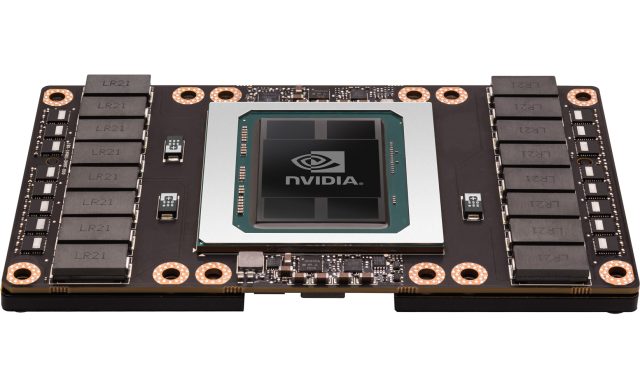
Nvidia unveils first Pascal graphics card, the monstrous Tesla P100

With HBM2 and 40% performance boost over Titan X, Pascal is going to be a beast.

The first full-fat GPU based on Nvidia's all-new Pascal architecture is here. And while the Tesla P100 is aimed at professionals and deep learning systems rather than consumers, if consumer Pascal GPUs are anything like it—and there's a very good chance they will be—gamers and enthusiasts alike are going to see a monumental boost in performance.

The Tesla P100 is the first full-size Nvidia GPU based on the TSMC 16nm FinFET manufacturing process—like AMD, Nvidia has been stuck using an older 28nm process since 2012—and the first to feature the second generation of High Bandwidth Memory (HBM2). Samsung began mass production of faster and higher capacity HBM2 memory back in January. While recent rumours suggested that both Nvidia and AMD wouldn't use HMB2 this year due to it being prohibitively expensive—indeed, AMD's recent roadmap suggests that its new Polaris GPUs won't use HBM2—Nvidia has at least taken the leap with its professional line of GPUs.

The result of the P100's more efficient manufacturing process, architecture upgrades, and HBM2 is a big boost in performance over Nvidia's current performance champs like the Maxwell-based Tesla M40 and the Titan X/Quadro M6000. Nvidia says the P100 reaches 21.2 teraflops of half-precision (FP16) floating point performance, 10.6 teraflops of single precision (FP32), and 5.3 teraflops (1/2 rate) of double precision. By comparison, the Titan X and Tesla M40 offer just 7 teraflops of single precision floating point performance.

Read 9 remaining paragraphs | Comments

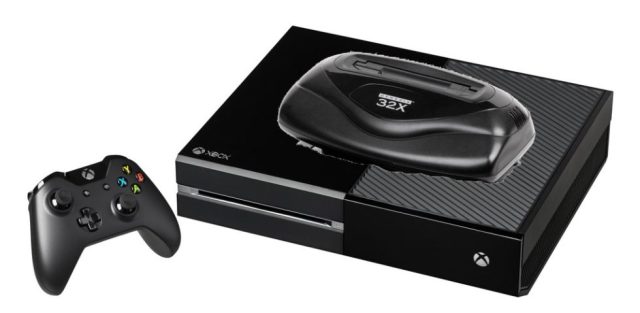
Xbox boss backtracks on “Xbox One and a half” upgrade rumors

“If we’re moving forward, I want to move forward in big numbers,” says Phil Spencer.

The about-face is almost complete. Following earlier statements that Microsoft would "come out with new [Xbox One] hardware capability during a generation," Xbox chief Phil Spencer has said that he's not keen on releasing an upgraded version of the console.

His comments come despite strong rumours pointing to Sony unveiling an upgraded version of the PlayStation 4—currently dubbed PlayStation 4K—this October.

"I'm not a big fan of Xbox One and a half," Spencer told Game Informer. "If we're going to move forward, I want to move forward in big numbers. I don't know anything about any of the [PS4K] rumours that are out there, but I can understand other teams' motivations to do that. For us, our box is doing well. It performs, it's reliable, the servers are doing well. If we're going to go forward with anything, like I said, I want it to be a really substantial change for people—an upgrade."

Read 7 remaining paragraphs | Comments